
(Credits: Far Out / Amblin Entertainment / DreamWorks Pictures / Paramount Pictures)
Sat 21 March 2026 20:45, UK
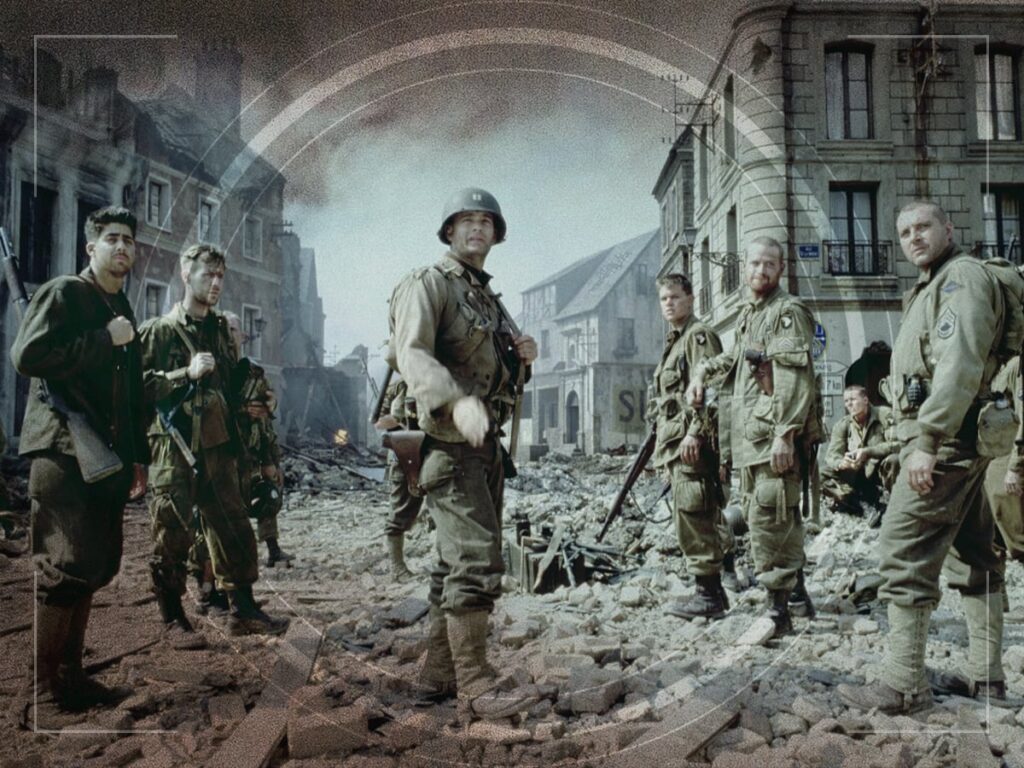
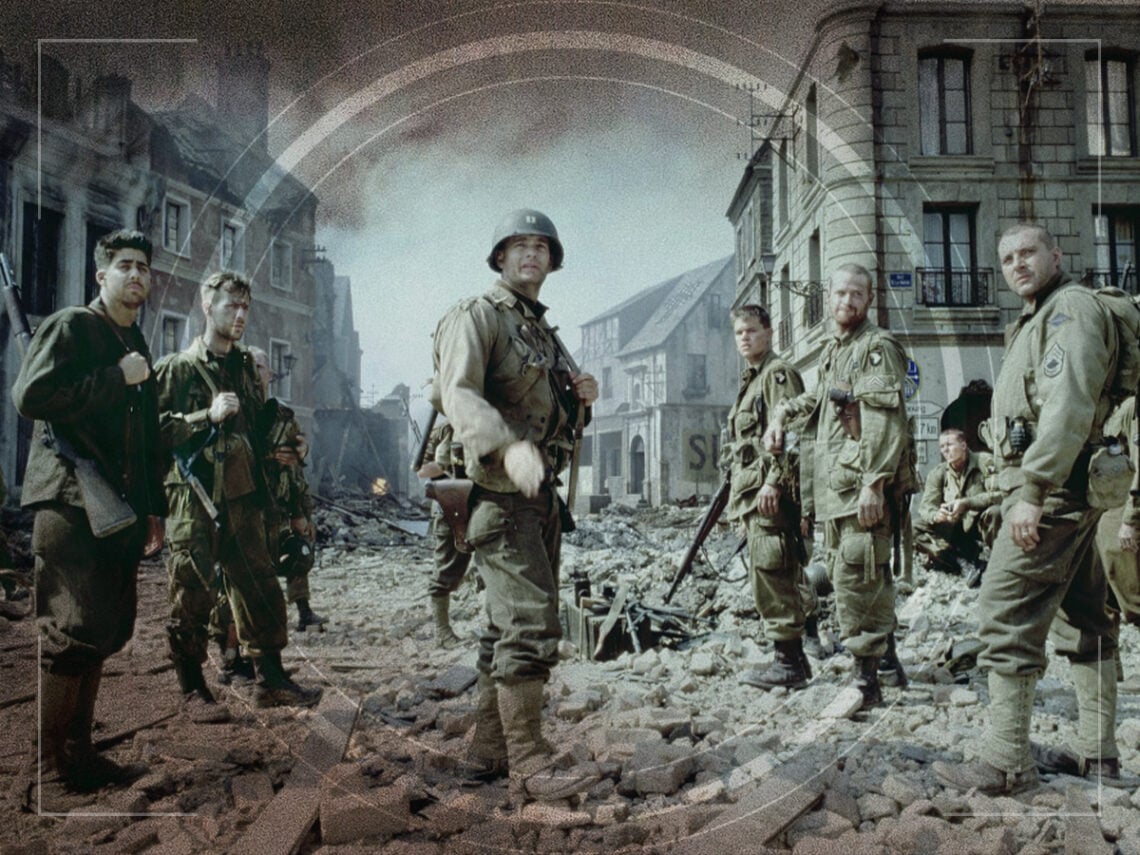
When Steven Spielberg was developing Saving Private Ryan, his intention was to make one of the most authentic depictions of World War II ever committed to the big screen. Most people would say he succeeded, but not necessarily the US Army.
Audiences were equal parts enthralled and aghast at the seminal D-Day landing sequence, which ranks as one of the most incredible battle scenes in cinema history, not to mention one of the definitive set pieces of Spielberg’s legendary, three-time Academy Award-winning career.
By and large, Army personnel and veterans alike were impressed with how the filmmaker had managed to capture the visceral, deafening ordeal on camera, with realism driving his approach from conception to execution. And yet, when the military sought to rank the five most realistic war films ever made, Saving Private Ryan didn’t make the cut.
To celebrate the 250th anniversary of America’s armed forces, Dave Hogan, who spent 37 years at the US Army Centre for Military History in Washington, DC, which means he knows his stuff, selected a quintet of pictures that he felt delivered the most accurate portrayal of what life was like for those who served.
Ridley Scott’s Black Hawk Down came first, with Hogan praising the “feeling of isolation trying to work with each other in this environment.” David Ayer’s Fury was second, From Here to Eternity third, Cold Mountain fourth, and in an ironic twist, given that they were stuck with the ‘twin films’ label in 1998, the fifth and final spot was occupied by Terrence Malick’s The Thin Red Line.
“There was something about that movie that I just found more convincing than Saving Private Ryan, in terms of how it portrayed the way Nick Nolte plays the officer, and trying to make this advance against an unseen enemy,” he explained. As for Spielberg’s masterpiece, he felt it became a little too Hollywood.
“So much was invested in that opening scene of the assault on the D-Day beach,” the long-time military historian reasoned. “They really did capture a lot of the realism of that.” You’d hope so, because that was the point, but it was everything to come after that cost Saving Private Ryan a spot in the top five.
“But the rest of the movie struck me as a typical World War II movie,” Hogan added. “I just felt that the whole premise, sending a unit deep behind enemy lines, through disputed territory, to try to just notify this guy that he no longer had to serve, was just far-fetched.”
He’s more qualified than we are to pass judgment, and no matter how much you think Saving Private Ryan is an inherently realistic World War II film, which it is in almost every respect, someone who spent four decades developing their knowledge of military history thinks it would only be the sixth most realistic of all time, at best.
ADD AS A PREFERRED SOURCE ON GOOGLE 