
Warner Bros.
Before becoming the best-selling sci-fi author of “The Martian” and “Project Hail Mary,” Andy Weir was a programmer. He’s also the son of a physicist, which means he has plenty of opinions on science and technology-based entertainment. Sadly, Christopher Nolan failed to meet his standards with one aspect of his 2014 film “Interstellar,” with Weir criticizing the idea that it would be easier to colonize another planet rather than fix our own.
At this point, it’s surely a well-established fact that “Interstellar” is Nolan’s emotional masterpiece. Sure, “Oppenheimer” absolutely dominated the 2024 Oscars and “The Dark Knight” is still somehow even better than you remember it, but Nolan perfectly melded his predilection for a more cerebral approach to storytelling with just the right amount of heart with his 2014 sci-fi drama. It remains the film that was, in some ways, his most expansive and yet most personal project.
The fact that “Interstellar” is remarkable for its scientific accuracy only bolsters the case for it being Nolan’s best. Of course, that’s to be expected if you have Nobel Prize-winning physicist Kip Thorne shepherding your project. Thorne went above and beyond while working as a consultant on “Interstellar,” explaining in multiple interviews that every aspect of the film was vetted by experts. When Neil deGrasse Tyson took a run at him and the film on his StarTalk podcast, the physicist remained unperturbed, deftly answering every one of Tyson’s objections with a solid, science-based answer.
But Thorne didn’t reckon with the likes of “Project Hail Mary” author Andy Weir, who claims some of the plot conceits in “Interstellar” are “questionable.”
Andy Weir thinks Matthew McConaughey should have stayed on Earth in Interstellar
Warner Bros.
When he isn’t writing his hit sci-fi novels, Andy Weir shares his opinions on other sci-fi entertainment. For example, Weir didn’t hold back about “Black Mirror,” claiming the hugely-successful sci-fi horror anthology series was anti-technology. The “Project Hail Mary” author also has one major issue with the Star Trek franchise, though, as you might expect, he’s quite fond of the movies based on his own books.
Weir has praised “Project Hail Mary” and 2015’s “The Martian,” both of which were based on his novels. In the latter’s case, star Matt Damon was hesitant to take on the lead role after having appeared in “Interstellar” the year prior, in which he also played a stranded astronaut. He needn’t have been. “The Martian” was different enough from Christopher Nolan’s film that it too became a big hit. What’s more, Damon managed to make a movie that Weir didn’t actually have an issue with for once.
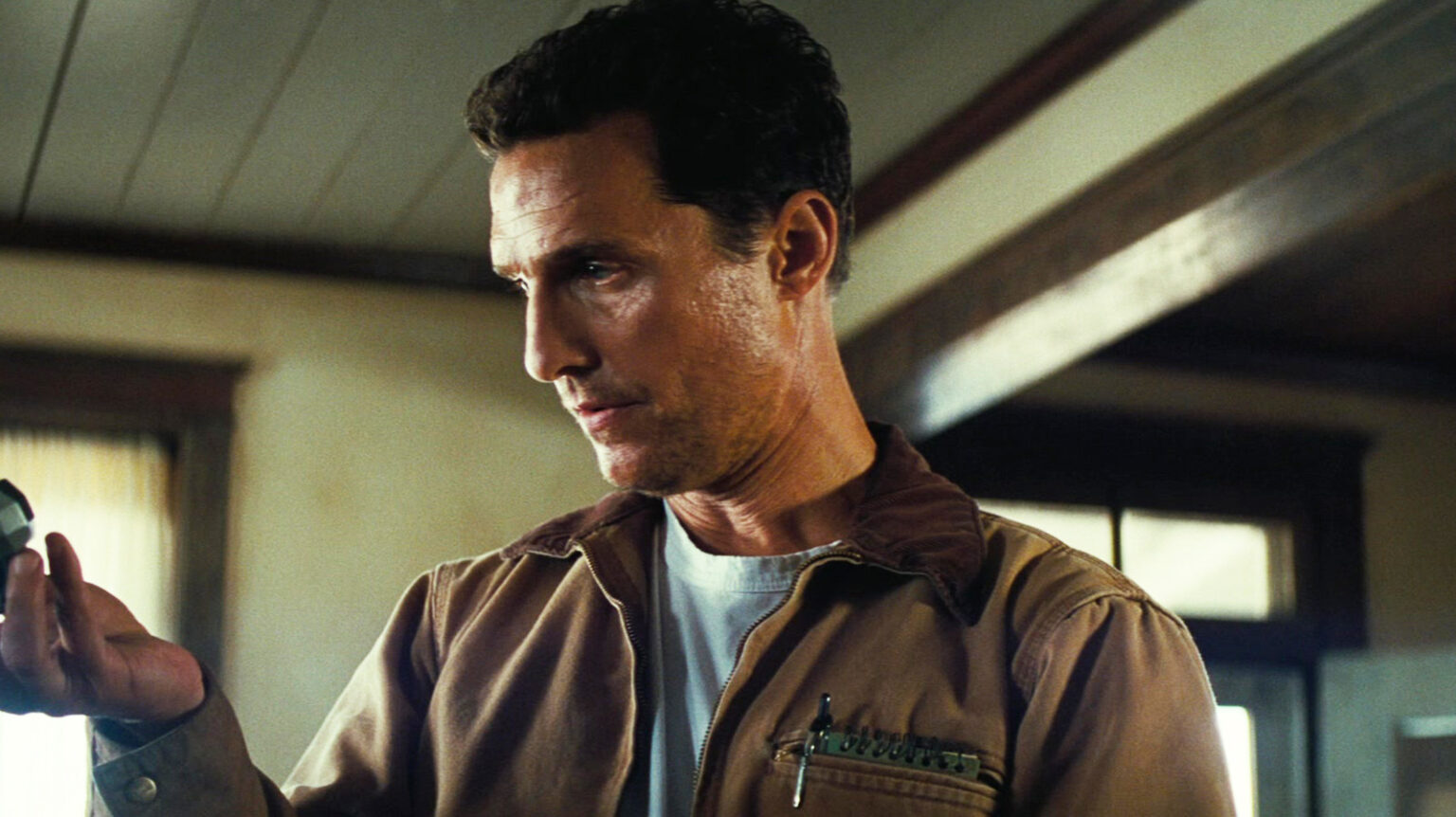
“Interstellar,” however, was a little too far-fetched for the writer in one specific way. The movie sees Matthew McConaughey’s Joseph Cooper travel across the universe in search of a suitable planet to colonize after Earth becomes ravaged by dust storms and crop blights. In a 2016 interview with the Huffington Post, Weir was asked about Nolan’s movie and said that while “the science about black holes [was] accurate” and the “time travel stuff [was] internally consistent, if not actually possible,” there was one glaring issue. “I feel like some of the basic non-scientific plot conceits are questionable,” he added. “I assure you, however bad the ecology of Earth gets, it’ll always be easier to fix Earth than it will be to colonize another planet.”
Andy Weir is probably wrong about Interstellar

Warner Bros.
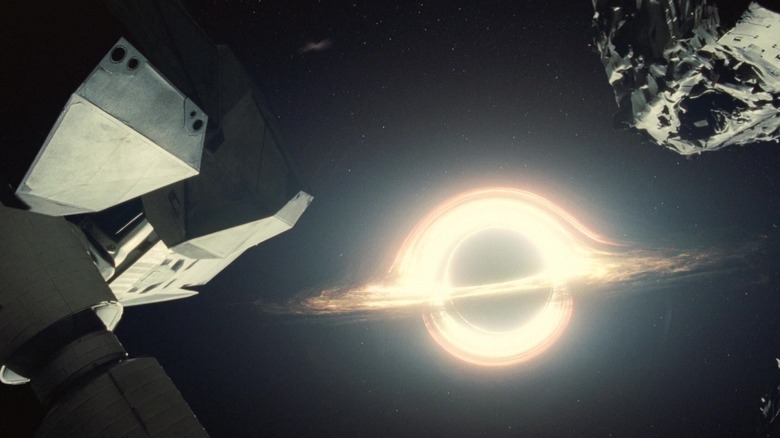
Christopher Nolan’s “Interstellar” did accurately predict how a black hole might look. When the New York Times published the first-ever image of a black hole in 2019, it looked a heck of a lot like Gargantua, the supermassive black hole in Nolan’s film. But if you’re Andy Weir, the only thing that matters is that Nolan and Kip Thorne got the whole colonization aspect of the story wrong.
Little did Weir know, however, that Thorne had already thought about this objection. During his appearance on StarTalk, the physicist was asked by Neil deGrasse Tyson, “Whatever effort it takes to find another Earth, it seems to me to be a bigger effort than just telling the biologists [to] come up with a serum that could fix the crops.” As Thorne explained, he and the “Interstellar” crew spoke directly to “the best biologists,” none of whom had any fact-based opposition to what the physicist called a “vicious generalized blight.” Thorne continued, “It’s something that biologists have never seen, but they cannot rule it out.” Such a thing, which forms the basis of the story in “Interstellar,” would by its nature be incredibly difficult, if not impossible to reverse, and according to the experts, it’s not outside the realm of possibility.