
Sign up for the Slatest to get the most insightful analysis, criticism, and advice out there, delivered to your inbox daily.
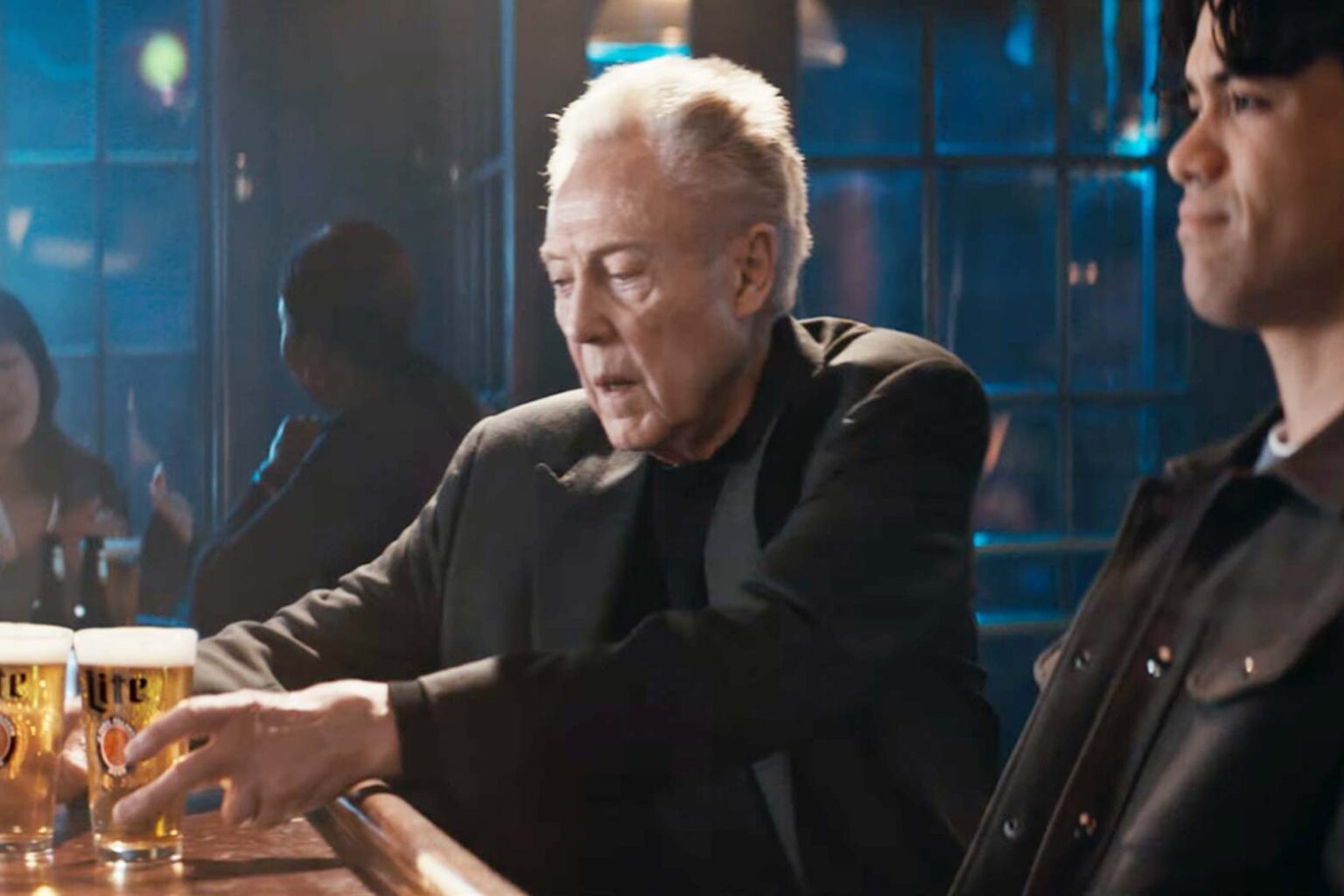
A young guy catches the eye of a demure twentysomething at the bar. He looks back down at his phone, thumb poised to return to scrolling (or worse, perhaps, swiping). Suddenly, 82-year-old Christopher Walken appears seated beside him. “Don’t just like somebody on the app,” Walken scolds, “like them in real life.” The young man, equipped with the stately actor’s counsel and two pints of beer, walks over to the young lady and makes an introduction.
Walken, still sedentary, concludes, “Legendary Moments Start with a Lite.”
I’d undoubtedly heed Walken’s advice if one of his famously villainous characters were breathing over my shoulder at the pub, but Miller Lite’s newest marketing campaign seems to lean more into the actor’s wisdom and age than his signature menace. “Christopher Walken is one of those rare cultural figures who genuinely transcends generations,” Sofia Colucci, the chief marketing officer for North America at Molson Coors Beverage Company, wrote of Walken’s role via email.
The early 2026 advertisement for one of America’s top-selling beers falls in line with a broader trend in mass-market, light-beer salesmanship—and one that may surprise, given the sardonic tone in which Gen Zs are wont to say “OK boomer.” To court young consumers, the country’s Midwestern megabreweries are turning to analog experiences touted by the trusted voices of a much older generation. It’s as if all the high-powered marketing minds of Madison Avenue have come to a consensus: The kids might not listen to us, but they’d better listen to their elders.
The Walken advertisement for Miller Lite, owned by Molson Coors, is joined by those from others in their cohort, like Michelob ULTRA, owned by AB InBev, which debuted a Super Bowl spot this year featuring 75-year-old Kurt Russell starring as “the ULTRA Instructor.” In what is not a dissimilar plot, a mature and accomplished leading man suddenly appears seated at the bar beside a hapless guy who is far worse at winter sports than his après-ski entourage. But the rugged, white-maned Russell gives the man the Winter Olympics version of the Rocky Balboa treatment. By the end of the ad, the improved skier is back at the bar with friends smiling over a pint. Again, lived experience remedies youthful ineptitude.
In both of these high-profile megabrewery ads, we sense a dread for tangible social embarrassment—the rejection of a romantic opening, the defeat of an athletic endeavor. For Gen Z, these plots depict the potential of real-world cringe. But leathery Hollywood legends lend their hands (grasping a beer, of course).
Miller also recently worked with Laurie Cooper, a New York City realtor turned influencer who dispenses dating advice and going-out tips to a much younger (Cooper is in her 80s) urban audience on TikTok. “Millennials and Gen Z are my biggest fans,” Cooper told me. “They are smart. That’s why they listen to me. They can spot fake a mile away. I’m as real as it gets and they see that. I love life and they love that about me … They feel I’m wise, experienced, and knowledgeable, and they trust me.”
Not only did Cooper promote Miller’s Damp January Club, the beer brand’s answer to Dry January, she also spearheaded a viral dating craze last fall she called “Sit at the Bar September.” “I think they need role models because the internet made things too easy,” Cooper says of the traction her unique take on lifestyle influencing has had. “You can do everything from your phone just sitting on your couch. They want to get out and do things, they just feel like they have forgotten how.”
Many Gen Z drinkers came of age at a time when going out was, well, impossible due to a certain virus. They’ve also aged up into drinking at a moment when the light-beer market has increasingly seen competition from nonalcoholic options and beer alternatives like popular seltzers and ready-to-drink canned cocktails. “The competition for their attention isn’t just other beer brands—it’s everything,” Colucci commented. “Streaming, gaming, social media, wellness trends, spirits. That’s why we focus on occasions like social gatherings, sporting events, and birthdays, where we can remind people of moments when beer naturally belongs.”
Despite all those non-hoppy distractions, the demographic is actually trending upward in its adoption of beer, but still does not compare to their older counterparts. In 2023, 53 percent of Gen Z drinkers in the U.S. reported drinking beer in the last six months, and by 2025, that number had grown to 57 percent, according to data provided by IWSR, the global leader in beverage alcohol data and insights. Boomers who drink alcohol, on the other hand, have reduced their reliance on beer from 64 percent in 2023 to 61 percent in 2025. Gen Z still has some catching up to do at the taproom.
But can the likes of Walken really pass on the pub-going habit? The youngest generation of drinkers have proven their penchant for nostalgia and a keenness for the analog age in other areas of the economy. Whether they’re thrifting clothes from a decade of their choosing, buying the latest print magazines to leaf through, or patronizing a vinyl listening café, Gen Z has already put consumer dollars behind pre-digital products. While retail sales of alcohol are declining (meaning people are drinking less at home), spending at bars is still strong.
“Beer is arguably secondary,” says Andrew Coplon, founder of Craft Beer Professionals, of how he thinks about filling stools. “The question isn’t what type of beer to brew—while that is important—it’s what other types of experiences you give people that give them a sense of urgency to visit these locations.” Pining for an age that not even millennials can remember, it makes a certain kind of sense for Gen Z to turn to boomer spokespeople to show them what socializing at the pub must have been like before the iPhone.
“The reason many of us love going to these spaces is the sense of community,” Coplon continues. “When you see people from all walks of life, all different ages, all different levels of social drinking experience—that’s why it’s fun. That’s what reinvigorates so many people.”

N.C. Stevens
GLP-1s Have Forced a Startling Change in the Drinks Industry. Will You Be Able to Stomach It?
Read More
I Cover Religion. Even I Was Shocked by the New Fox Show About Women and the Bible.
A Strange Toy Followed Me Across the Internet. I Hated It. Then I Bought It.
As a marketing strategy, the listen-to-your-elders angle has recently been proven a success by the late, great Catherine O’Hara. Last year during the Super Bowl, Michelob ULTRA debuted a commercial depicting O’Hara and William Defoe as conniving beer fiends willing to hustle much younger and fitter pickleball opponents to win a pint. Despite their age, they aced, spiked, and sipped their way to victory. In the wake of the commercial, Michelob ULTRA overtook Modelo to become the most sold beer in America by September. A year on, the brew seems to have gotten a bit stronger, and young consumers seem to be liking it.
“The through line isn’t age, it’s experience,” Colucci clarified of Miller’s strategy via email. “Showing up. Living your life in real time. If anything, it reinforces the idea that connection matters at every stage of life. That’s not a generational message, it’s a human one.”
So perhaps it’s missing the point to read the new face of beer sales as “elderly.” The casting of Russell, O’Hara, Walken, and Cooper as the new peddlers of light beer captures the vivacity and vigor of a kind of individual who maintains the lifestyle and currency of youth well into the usual years of retirement. These are personalities who have held on to the cachet of coolness over the decades—something light beer is hoping to do at a pivotal time. As boozing begins to show its age, these light beers are looking to icons who have defied time to learn how to do it with style.

Sign up for Slate’s evening newsletter.