
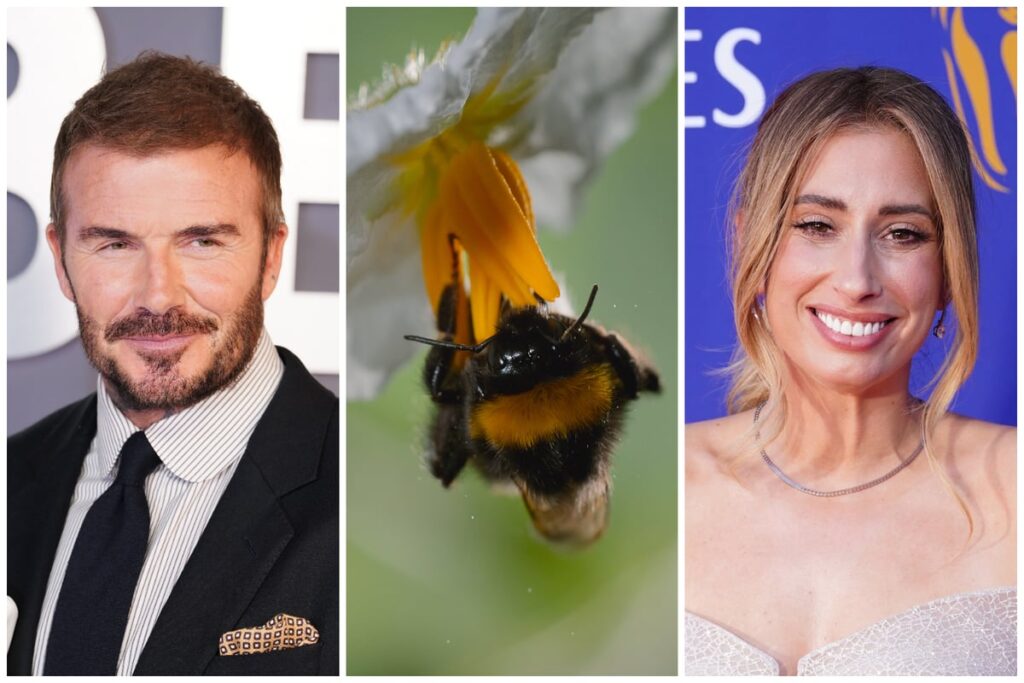
Wildlife filmmaker Bertie Gregory has warned the celebrity-led beekeeping trend may be doing more harm than good.
Stars including David Beckham and Stacey Solomon have embraced keeping hives in recent years, with Beckham taking up the hobby during the Covid lockdowns and now producing his own honey at his Cotswolds home. The trend has also been adopted by figures such as Rod Stewart and Ed Sheeran.
But Gregory, 33, said the well-meaning push to “save the bees” has been widely misunderstood.
In Secrets of the Bees, he describes them as “one of the most important creatures on the planet”, noting they are responsible for around a third of the food we eat, with more than 20,000 species ranging from familiar honeybees to more unusual varieties.
“If you want to help bees, the best thing you can do is not get bees yourself, it’s instead plant more wildflowers,” he told the Standard while promoting his new two-part National Geographic docu-series Secrets of the Bees.
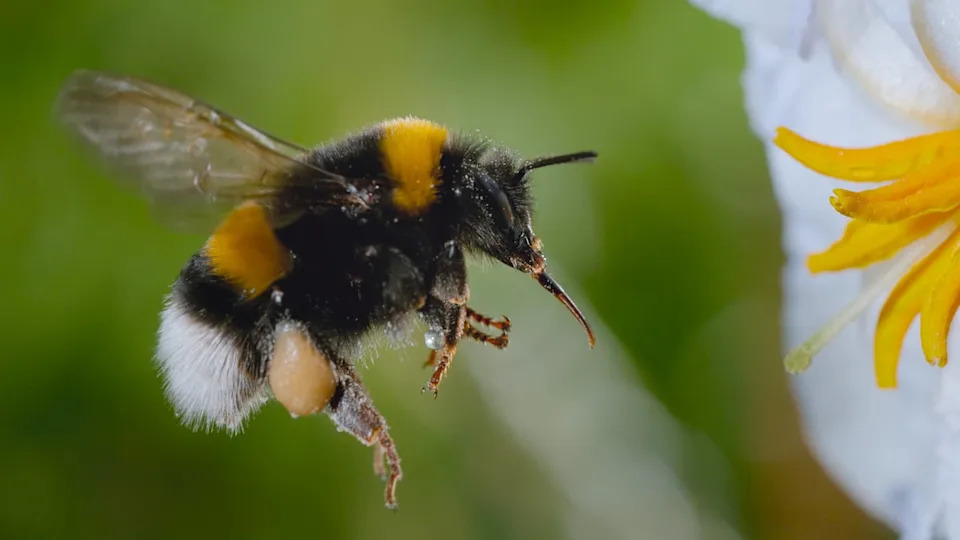
Wildlife filmmaker Bertie Gregory says the best way to help bees is to plant wild flowers (National Geographic)
“Particularly if you live in a city, our cities are actually full of too many beehives.
“You’ve got to remember that honeybees in a hive, when you sort of get them, they’re domesticated. So it’s like saying, I want to save wild birds, so to do that, I’m going to buy a load of chickens. I mean, that makes no sense at all.”
The visually striking series, the latest instalment in National Geographic’s Secrets of franchise following Secrets of the Penguins, is hosted and narrated by Gregory and executive produced by James Cameron, using pioneering macro filming technology to reveal the hidden world of bees in extraordinary detail.
Filmed over three years using specialist probe lenses and motion-control rigs, it offers a rare “bee’s-eye view”, capturing remarkable behaviours rarely seen before.
These include so-called “broomstick” bees building stick fortresses, vulture bees feeding on meat, and bumblebees solving multi-step puzzles, as well as new research suggesting bees have individual personalities and complex decision-making abilities.
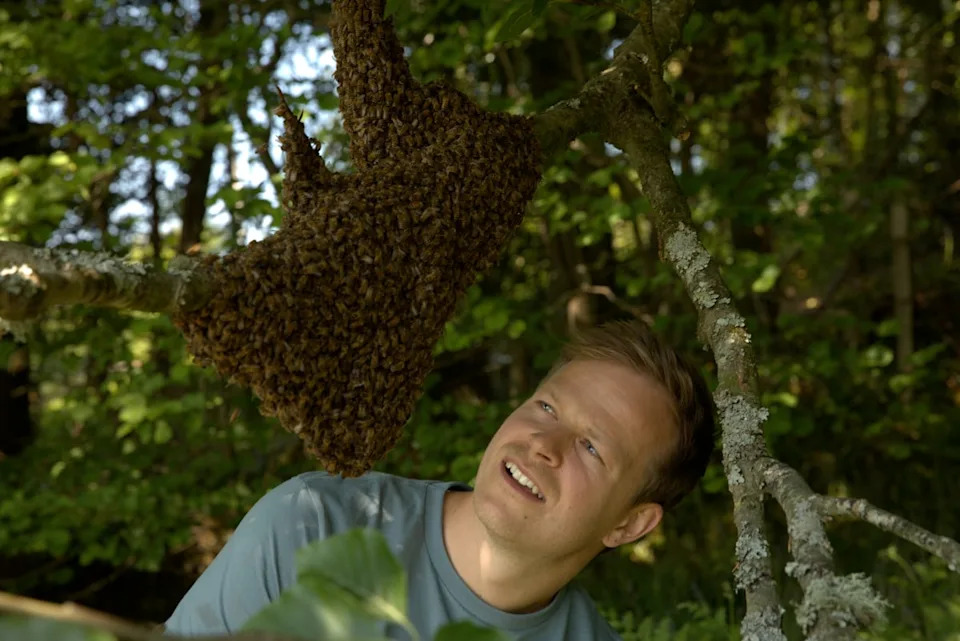
Bertie Gregory (pictured) discovered he had a strong reaction to bee stings after being stung in the face during filming (National Geographic/Huw Cordey)
Gregory admitted the project also came with personal risks, revealing he discovered he had a strong reaction to bee stings after being stung in the face during filming.
“My face sort of ballooned and I couldn’t see out of my right eye for a few days,” he said.
Elsewhere, the presenter addressed the growing role of artificial intelligence in wildlife content after clips from his Disney+ documentary Cheetahs Up Close were mistaken for AI online.
“The reason people like nature documentaries is because they are real and a documentary,” he said.
“A lot of the videos… people have been saying are AI. So yeah, I take great pride when I put a video out and someone says it’s AI, I’m like, thanks, that’s really kind.
“Real life nature, when it’s at its best, is so much better than anything AI can generate.”
He also hinted that further instalments in the Secrets of series are already in development.
Despite spending his career filming some of the world’s most dangerous animals, Gregory said there is one species he remains most wary of.
“The most dangerous animal on the planet, humans,” he said wryly.
Secrets of the Bees premieres on National Geographic WILD at 7pm on 1st April and streams on Disney+ the same day.