
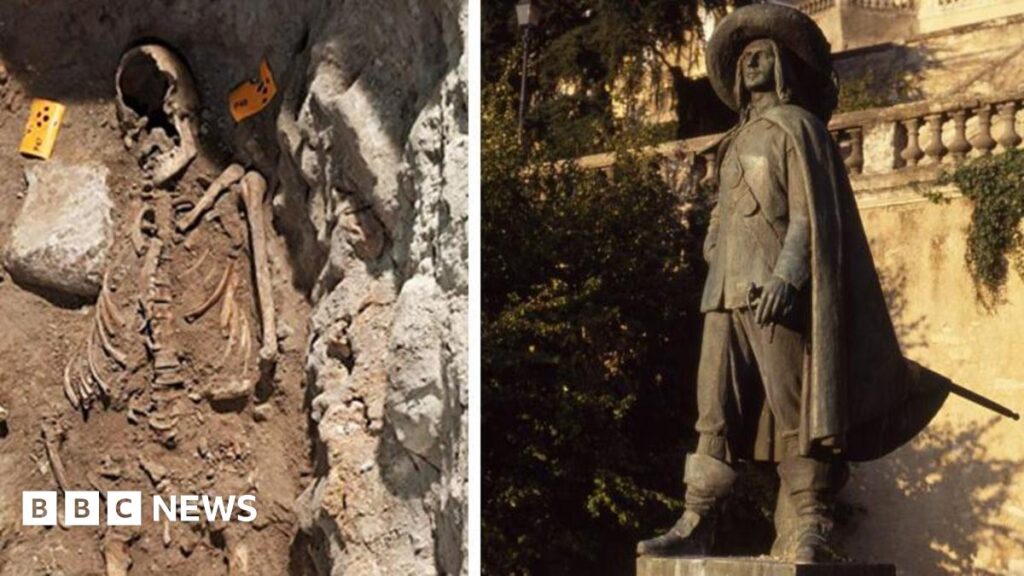
The archaeologist who took part in the excavation is more cautious.
“I’m a scientist, but my expectations are high,” Wim Dijkman told regional public broadcaster Omroep Limburg, adding that he preferred to wait for DNA confirmation of the skeleton’s identity.
A sample has been taken from the remains and is currently being analysed in Germany, while some of the bones have been taken to the Dutch city of Deventer to assess the skeleton’s age, where it is from and whether it is male or female.
“I’ve already been researching d’Artagnan’s grave for 28 years. This could be the highlight of my career,” said Dijkman.
D’Artagnan is believed to have been hit in the throat by a musket ball as Louis XIV sought to capture Maastricht.
The French army decided that as it was mid-summer they would bury him locally, and their camp had been set up close to the church in the Wolder area in what is now the south-west corner of Maastricht.
Although d’Artagnan was modelled on a historical figure, the three musketeers were fictional characters who may have been inspired by three members of an elite corps who provided protection for the king and took part in military action.