
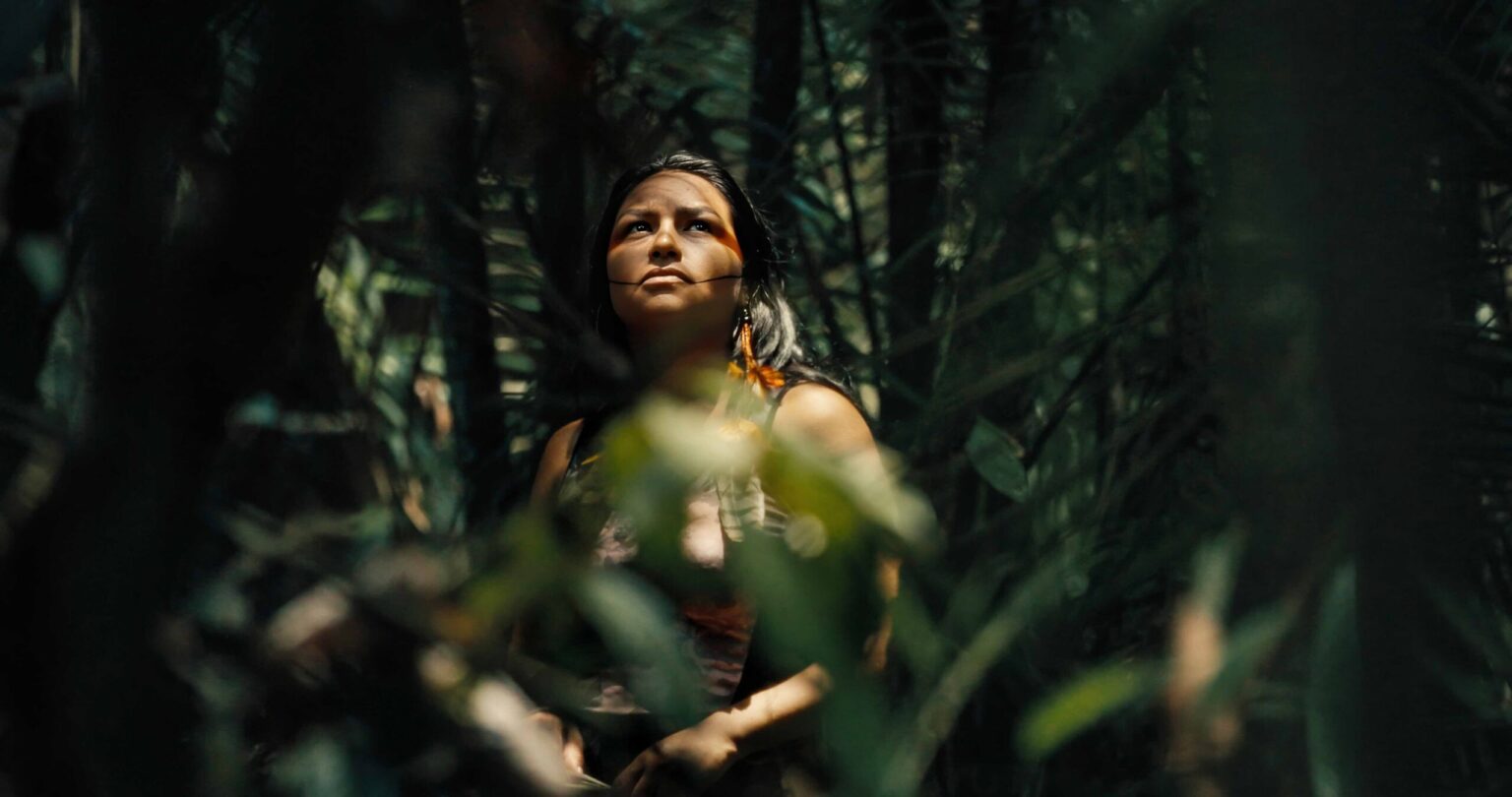
A new documentary film, “Yanuni,” highlights the journey of Juma Xipaia, an Indigenous chief from the Brazilian Amazon, as she moves between two worlds: Brazil’s capital, Brasília, and a remote village in the Xipaia Indigenous Territory.The film focuses on her ongoing battle to protect the Amazon, alongside her husband, Hugo Loss, the head of Special Operations at Brazil’s environmental protection agency (Ibama), who leads dangerous operations to crack down on illegal mining deep in the Amazon.In an interview with Mongabay, director Richard Ladkani shares behind-the-scenes insights into the filming process, important conversations and actions that helped shape the narrative and more details about some of the critical moments and events it covers.
See All Key Ideas
Austrian director and cinematographer Richard Ladkani knew little about the Amazon Rainforest before he decided to make a film about it.
It was 2019. Fires raged across the Amazon. Ladkani had just finished his film Sea of Shadows, about the desperate effort to rescue the critically endangered vaquita porpoise in the Sea of Cortés and the drug cartels and traffickers threatening its habitat.
He was inhaling news about the fires, which got him thinking: “Is there a movie out there that really explains to people, emotionally, that this is our Amazon? That we’re losing not a remote place far away in Brazil or South America, but that this actually relates to us, wherever you live on the planet?”
Ladkani soon found that the impact-driven film he envisioned did not exist. And so, the first seeds of Yanuni were sown.
Filmed across two worlds, the Brazilian capital Brasília and a remote village in the Xipaya Indigenous Territory, the documentary film focuses on Juma Xipaia, an Indigenous chief from the Brazilian Amazon. It centers her ongoing effort to confront illegal gold miners, land grabbers and multinational corporations threatening the Amazon’s forests, alongside her husband, Hugo Loss, the head of special operations at Brazil’s environmental protection agency, IBAMA, who leads dangerous operations to crack down on illegal mining deep in the rainforest.
The film captures the personal realities environmental defenders face in the Amazon and features rare video of an IBAMA mission to combat illegal miners.
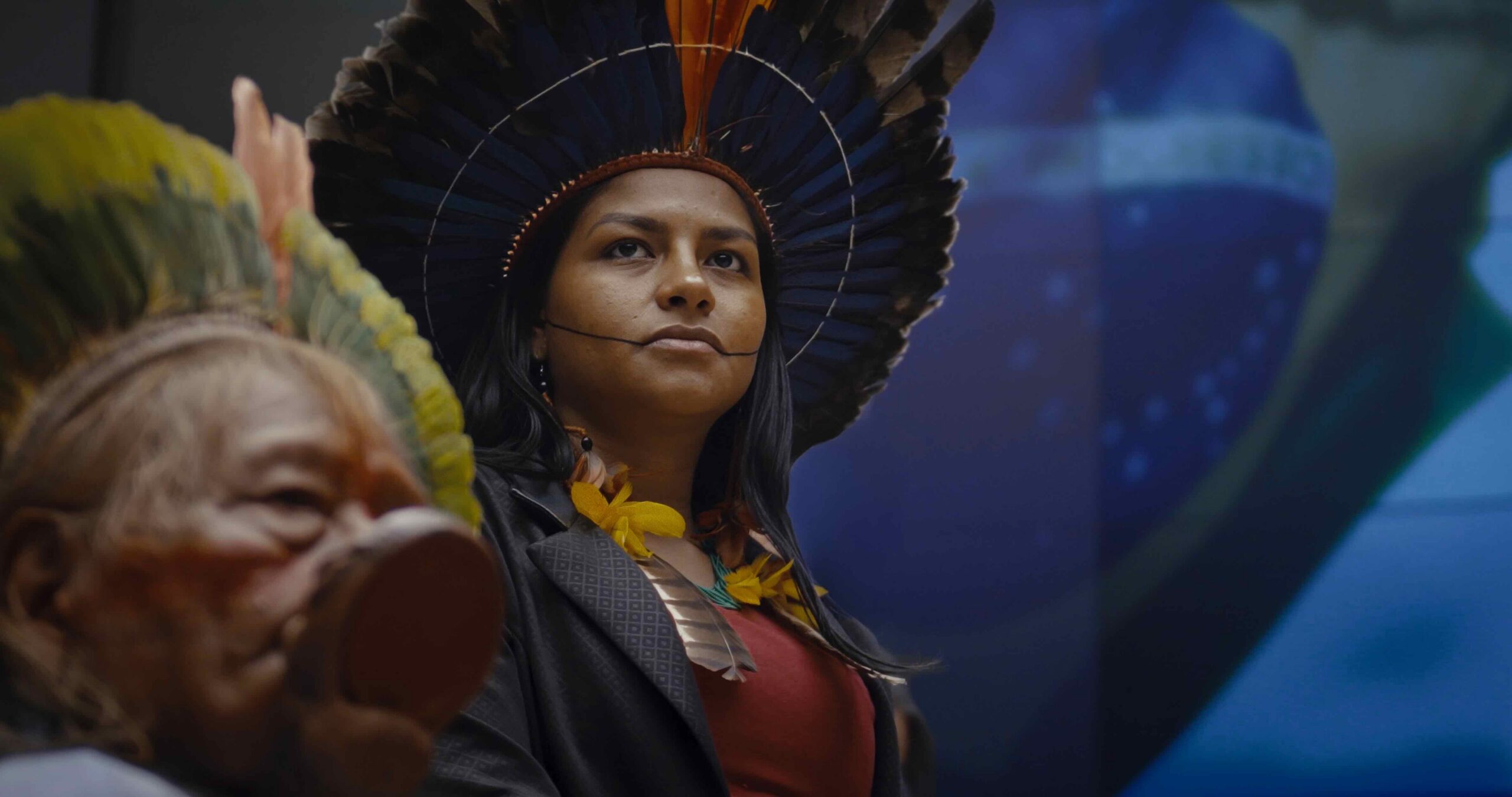 Juma Xipaia is central to the movie which showcases her ongoing effort to confront illegal gold miners, land grabbers and multinational corporations threatening the Amazon’s forests. Image © Malaika Pictures.
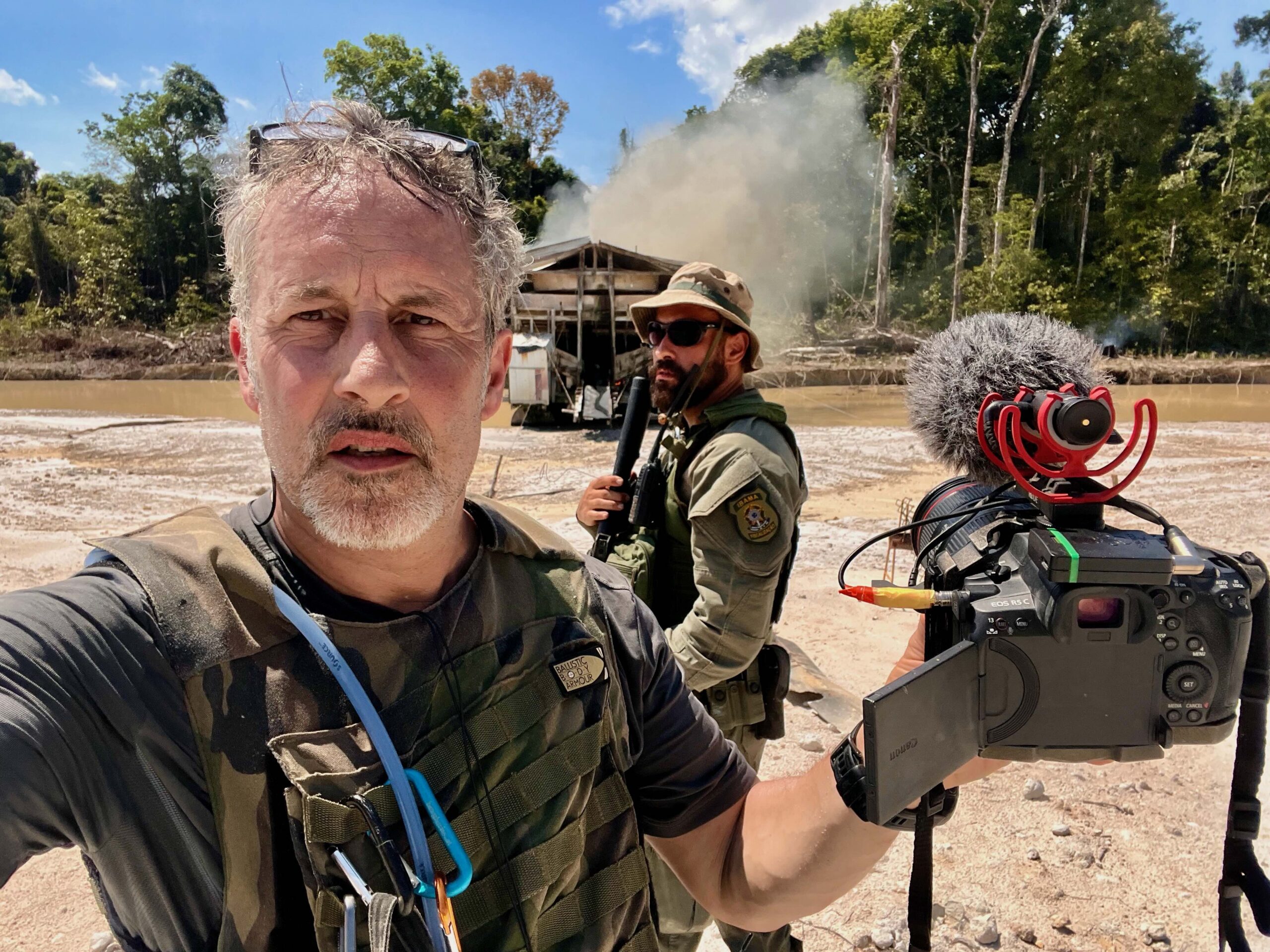 Richard Ladkani with Hugo Loss during a mission. Image © Malaika Pictures.
Yanuni will be screened in Washington, D.C., on March 28 at the DC Environmental Film Festival (DCEFF), where Mongabay is a media partner.
In an interview with Mongabay’s Aimee Gabay, Ladkani shares behind-the-scenes insights into capturing the life of the Indigenous conservation leader, the filming process, important conversations, and the critical events in Yanuni that bring the Amazon’s dramatic stories to the big screen. The interview has been lightly edited for length and clarity.
Mongabay: Why did you decide to focus on this story?
Richard Ladkani: I had no idea about the Amazon before I started this. Like, zero. I just knew it was there, and it is very important. That got me fully engaged. I was talking with my wife — who produced the film and was like, “I think we need to start a project, you know, put a research team together, find some development money and go deep, find out what angle we could take, what’s new, how we could approach this in a way that will engage with people emotionally, not just facts, but emotion. Stories that actually reach people’s hearts.”
That was the idea, and that’s how it all started.
In the beginning, I was going to make a film about the Amazon and about the deforestation of the Amazon. They’re logging, they’re taking the trees, they’re burning the bush. They can bring in the cattle and the soybeans. I had no idea, though, how much poison gold mining is bringing into the Amazon and how destructive it is. This was new to me, and that is why, in the film, we actually talk quite a lot about gold mining. That is a big focus.
It was when Juma Xipaia, an Indigenous chief and former secretariat of articulation and promotion of Indigenous rights at Brazil’s Ministry of Indigenous Peoples, first talked about the gold mining ships and mercury poisoning of the rivers that it got my attention. But then also Hugo Loss, her husband, the head of special operations for IBAMA, said that his main objective is to go after the gold mining sites. I was like, “Why?” He explained that these gold mining sites that are popping up by the thousands all across the Amazon — that they are the source of all evil, that they are like the origin of the cancer that is destroying the Amazon.
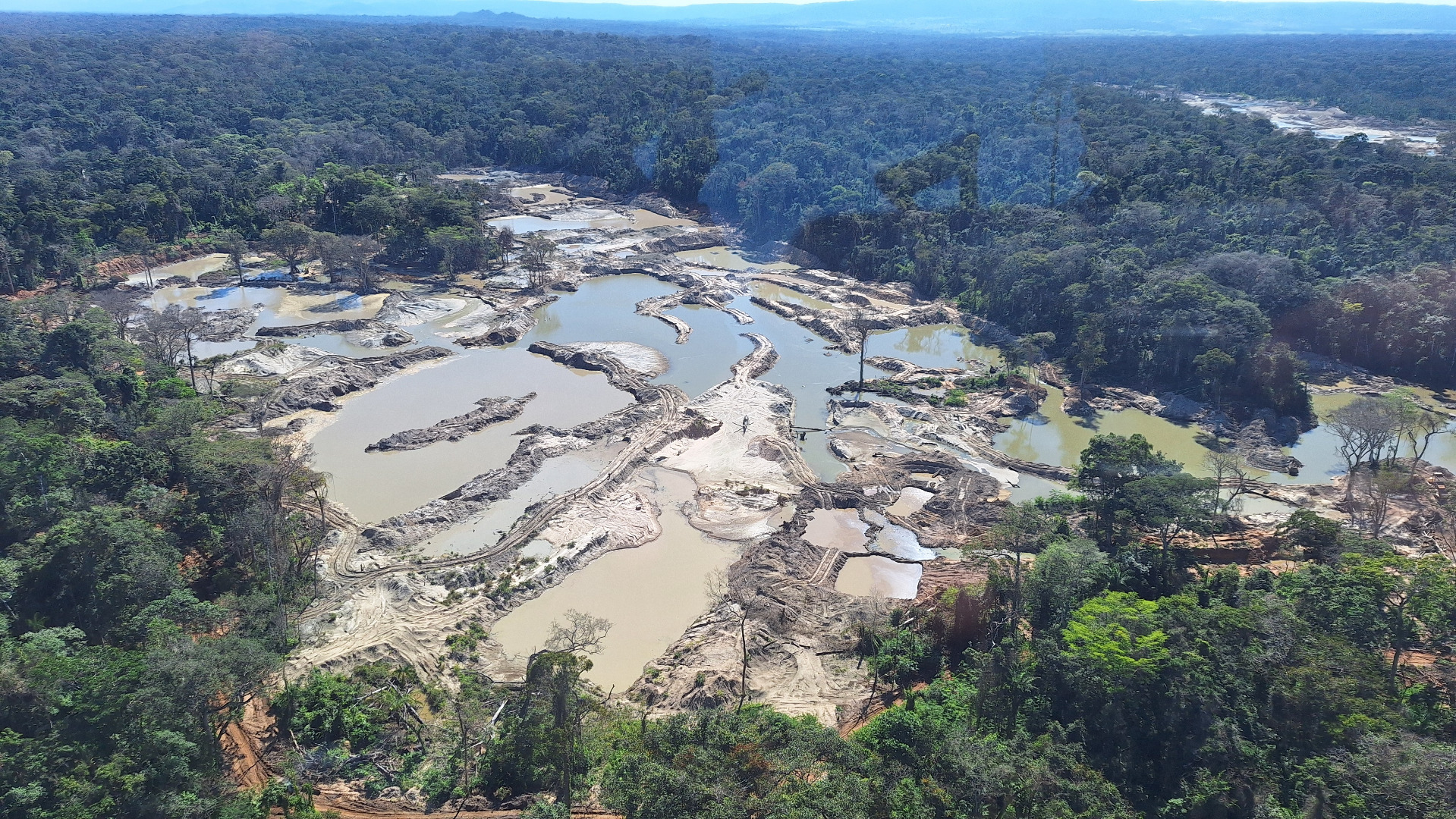 Devastation left behind by illegal gold mining within the borders of the Sararé Indigenous territory in Mato Grosso, Brazil. Image courtesy of IBAMA.
The gold mines are the first stakes that these illegal criminals put in the ground. If they find gold, then this becomes a new base for them. Then that base is further explored by building a road to the gold mining site. With the road come the trucks, with the trucks come new roads that go left and right and find new ways of approaching. That’s also when they start to take out the big trees; they scout for which are the most valuable and they take out the big trees with the trucks. Then they bring the fire, and then they clear the underbrush, and once that is clear, then they bring in the cattle, and then they bring in the soy. But it always starts with the mines.
The mines are a source of income that is very important to them. It’s a lot of money. The gold price has tripled since we started production. When we started in 2021, an ounce of gold was $1,500 on the market. Now, it’s $5,500. It’s become so expensive. The gold rush that is hitting the Amazon is a huge problem, and it’s very hard to manage. Even for IBAMA, which is very effective and destroying as many of these sites as they can, it’s like trying to dampen a fire that is spreading faster than you can take out because it’s everywhere.
I thought it was very important that the world understands the relevance of these gold mines and how evil they are and how terrible they are, and that this is a very hard problem to solve. With the price being so high, there is little that is holding them back. The cartels that are taking over most of the gold mining production are making so much money by investing more and more into gold mines that are poisoning the Amazon.
Its destruction is accelerating because of this gold rush, and that’s something that is a focus in the film. It’s not the main focus. The main focus is Juma’s fight, in every way — the personal fight and what it means to fight for your people, risking everything you have.
But the whole gold mining aspect is important, especially because the context of IBAMA makes more sense when you understand what they’re fighting about and what they’re focusing on, and why I decided to follow this big operation, Xapiri, in the Munduruku Indigenous Territory. It is an example of this fight, which is ongoing right now, and hasn’t stopped since the filming stopped. It is even worse.
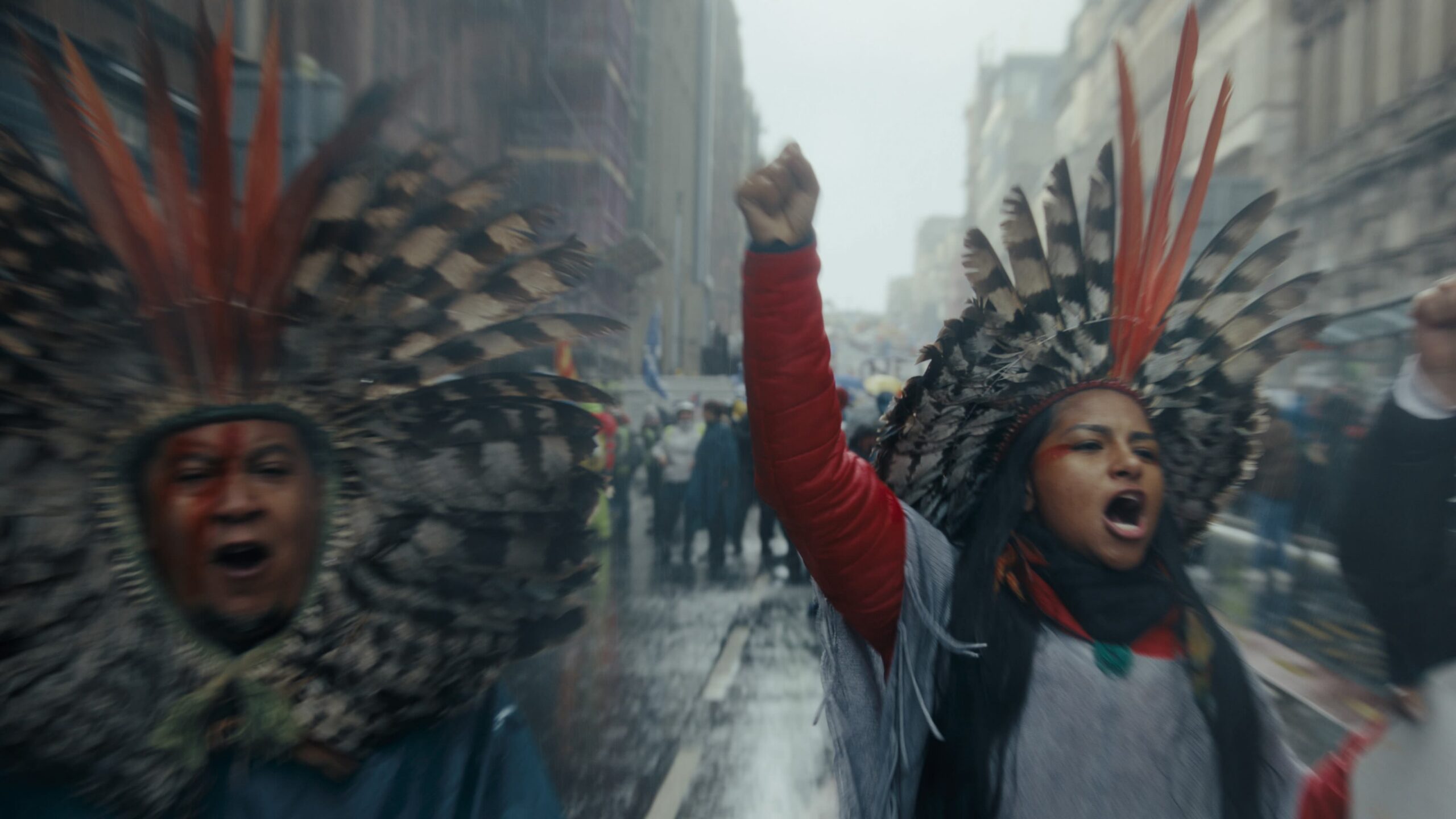 Juma Xipaia at a protest in Glasgow. Image © Malaika Pictures.
Mongabay: Yanuni starts with a tense scene outside of the National Congress in Brasília, which turns violent and riot police open fire on protestors. How did the film team manage this scene?
Richard Ladkani: The idea was to stay close to Juma for as long as possible in times of crisis. Basically, Juma told me about this protest happening, and that it could turn into anything — it could turn violent, it could be peaceful, it could be nothing. She said, “I’m going there with a big group of people, thousands of us, and we’re gathering for a resistance march.” I thought, “OK, this has potential for some really interesting moments.”
The idea was that whenever Juma would let me know that something exciting or interesting would happen, we would try to be as close to her as possible. I was like, “How’s Juma going to react? What is she going to do?”
By then, I decided that Juma is the story of the film. She represents her people in the best possible way. She’s a woman. She’s a leader. Female leaders were a new thing, to me at least, but it was like an up-and-coming thing, that more and more Indigenous leaders were female, and that was interesting in its own way. I thought, “Juma is so powerful and interesting. Let’s see how she does in this protest, right?”
When the protests turned violent, we stuck to this concept of whatever happens, don’t tell me everything. Tell me what Juma was going to do. Show me the process of her dealing with it. If she gets hurt or if something happens, this needs to be personal. It needs to be identifiable. As an audience member, I always want people to be like, “I could be like her, but do I have the courage? Am I as resilient? How would I react?”
I wasn’t the cameraman who shot the scene, but the cameraman had been briefed extensively to keep the camera on Juma, and when this scene happened, on day 10 or 11, towards the very end of the protest, we couldn’t have anticipated it.
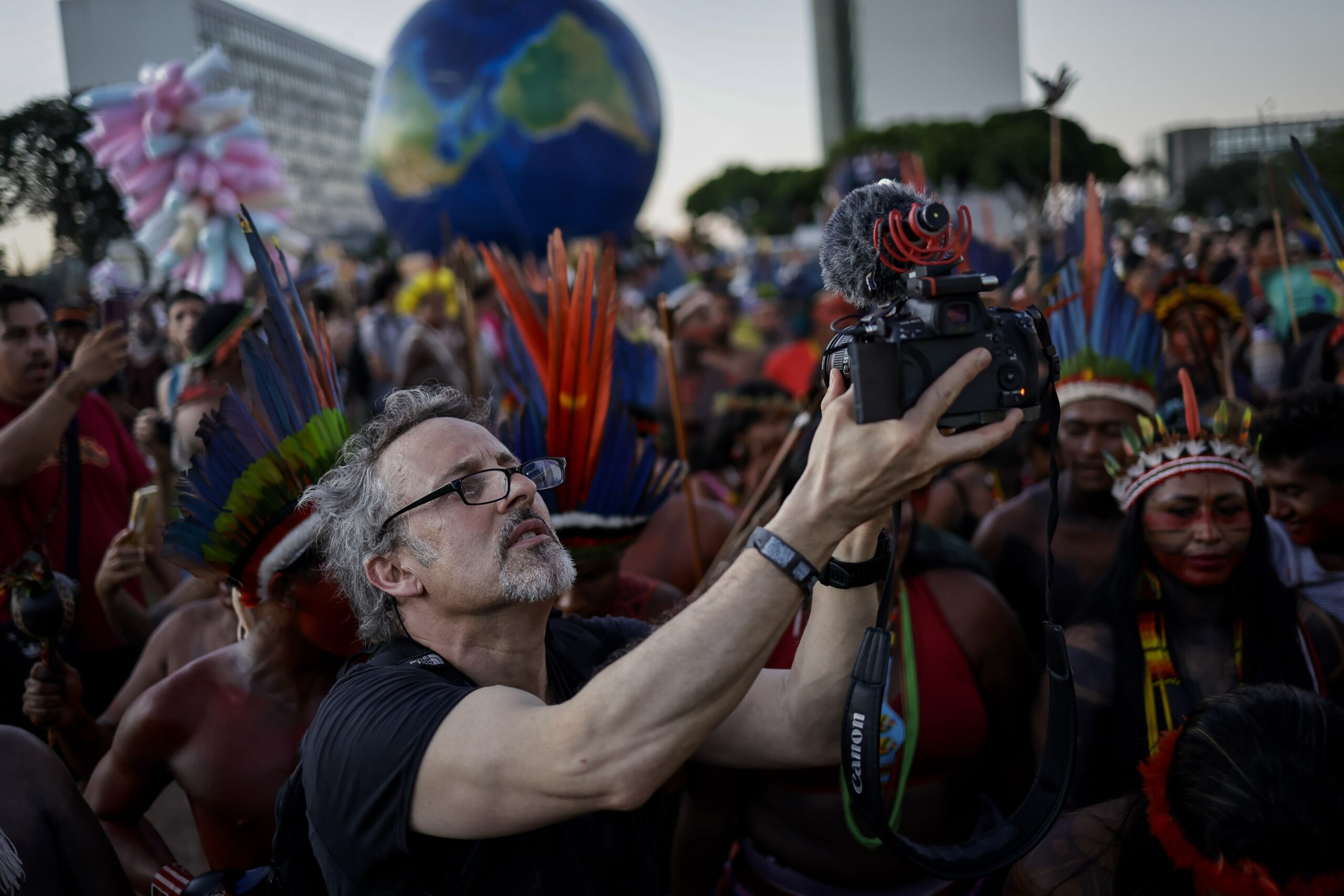 Richard Ladkani during an Indigenous protest. Image © Malaika Pictures.
It started like any other day. They were marching, they were protesting, but suddenly things got out of control very quickly. What triggered that moment? We can’t recall. It was too much chaos. All we suddenly saw was shooting and firing and tear gas and people screaming and chaos breaking out. But what was most important to me, and most amazing, was that Juma would not let go of this fallen Indigenous warrior.
I don’t think they knew each other well. They knew of each other. Alcebias Sapará is his name, and he was hurt. He was unconscious, but he wasn’t dead. People thought he was dead. But she stayed with him under fire and wouldn’t leave him. And that, to me, was absolutely remarkable. It just showed when everyone ran away, all of them, all the men, all the women, everyone was gone, she stayed with him and tried to protect him from the tear gas and wouldn’t leave him behind as a fallen victim of this riot, and that’s when I knew we found someone really special.
This was actually the first real film production shoot we had. It was the very beginning of our film. This proved the point that Juma was special. She was different. She didn’t run away. Under fire, she was incredibly courageous, incredibly protective. She was still commanding the moment by screaming for people to come back and help her get him to safer ground. I was like, “This woman is amazing, you know?” It proved to me that I found someone very significant, out of the ordinary, someone that we should stay with for as long as possible.
Mongabay: It seems to me that a lot of this film was possible because of the relationship you formed with Juma. The information she provided to you, the trust, the access to her life and everything. How did this relationship come about? How was trust built, and what were some of the discussions you had at these early stages with Juma that shaped the film?
Richard Ladkani: When I was first put in touch with Juma, it happened through a common friend of ours. She was a contact of ours, but she became a friend: Eliane Brum. She’s a very well-known writer and journalist, and she was the one to point my research to Juma. She said, “Do not start your project until you have talked to Juma.”
Juma was very, very difficult to reach. She was just a name to me. I found very little about her on the internet. It turned out that she was in hiding at the time because she had just survived the sixth attempt on her life, and she had decided to hide in the forest, in a remote location, and to break off contact with the world and be on her own. To disappear.
But Eliane had had contact with her. She still had her phone and was able to reach her. She said, “Juma, you should really meet this person. Richard Ladkani. He’s a filmmaker. He seems very serious. I’ve checked him out. Why don’t you take one call with him?” So that’s what she arranged.
Back then, it was a Skype call. It was a really bad video connection, but I still remember it vividly. Juma really, really shook my heart. She touched me deeply. I almost cried when she told me her story about not being able to be with her children, about being afraid that they would be kidnapped or killed, and that she was living this life in darkness right now. She had decided to remove herself from the world because she didn’t want to die.
So, here I come with a proposition to her that I would like to shoot a film about her. For her, it was ludicrous. It was the opposite of what she wanted: more attention. But then I made a case that I would want her to lead this project. I would want her to be a producer on the film so that she could decide where this film goes, and that she would also have control over the narrative. I didn’t have any set script or idea. All I wanted was to be close to her for as long as possible and see the story unfold.
Then, she was intrigued. Because that proposition had not been made to her before, that she could have a real say in how the story is told, and that she could also control it for security reasons, for internal reasons of how to deal with her family and her life and everything. And so we agreed to keep talking.
One thing that I also realized was that during these first conversations, I needed to use a translator, because I didn’t speak Portuguese. And that was a real problem, because that translator was actually a security risk for her. She didn’t know that person, but that person was listening to everything we were saying, and she was really holding back because of that, holding back on information, on details, on how she talks to me. So, the very first decision I made was to learn Portuguese as fast as possible. That’s what I did. I took an intensive course, and then I used the apps and everything, and about six months later, I was able to talk to her, maybe even less than that, without the need for a translator.
It was a trust-building process. She saw I was really serious. She saw that I was also willing to go over the edge and learn a new language and conform to her risk assessments, that the translator is a risk. That started our relationship.
Then, in 2021, we started filming, first remotely, and then I was able to go to Brazil for the first time in 2022.
We met, and we started filming. That’s when the relationship really started to become more personal and more trusting, and she saw me. When she looks at you, she looks into your soul, and she will decide, “Do I trust you or not?” She decided to trust me, and I tried to deliver on that trust.
Of course, I had a very big team of amazing people who were part of this film that helped me navigate her people’s way of doing things, of really understanding procedures, of giving them as much empowerment and flexibility as possible. I was really learning to listen to Indigenous thinking, the way that they wanted to do things, the procedures, and the way they like them to happen. So, it was a great way of learning and getting close, because we were taking it easy and carefully.
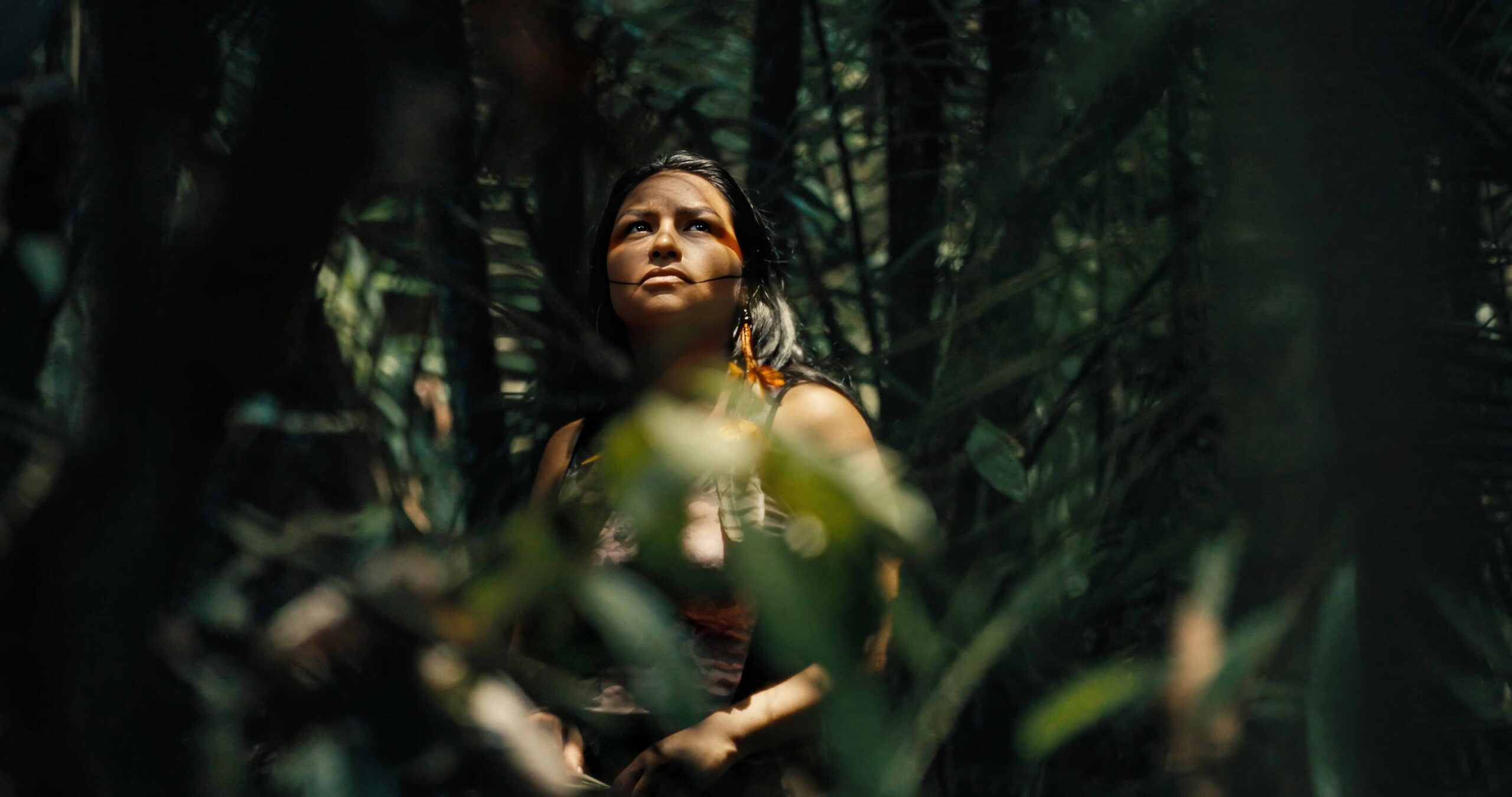 Juma Xipaia, an Indigenous chief from the Brazilian Amazon. Image © Malaika Pictures.
Mongabay: Aside from politics and military action, the film is also rife with romance as the main characters navigate their work to protect their territory while balancing their own safety and family life. How was the film team trusted to show such intimate moments?
Richard Ladkani: One of the strategies that I saw as a way of making this film was to really downsize as much as possible the team. I didn’t want a big production team. I was used to working with five to 10 people on a crew, and in this case, I really thought the most effective way to shoot this would be if I were alone.
Often, that wasn’t possible because of the production. It meant I needed a second or third person at minimum. I would say maybe 60% of the film I shot myself, just me alone, and then 40% I used a second cameraman with me, the great Brazilian cameraman called Fabio Nascimento, who I met through the production. Sometimes I used a sound person.
But the idea was to get as intimate as possible. To get close and become invisible. To have the smallest footprint possible.
The second camera angle helped me to sometimes film a scene in a way that it could also be edited in a good way, because if you’re alone, you just have one perspective. I would ask Fabio to maybe shoot on a long lens through the window, or from the other room, or just get some close-ups, some other faces that can help me kind of montage it together. That was key.
We sort of tried to become part of their family. We were there from morning to evening. We would have lunch together. We would do things together. I would kind of be a friend that’s always around and try to be as unproblematic and inconspicuous as possible, like the fly on the wall. It really takes time to really get close and to get them to forget you’re even there. But this was my goal from the beginning.
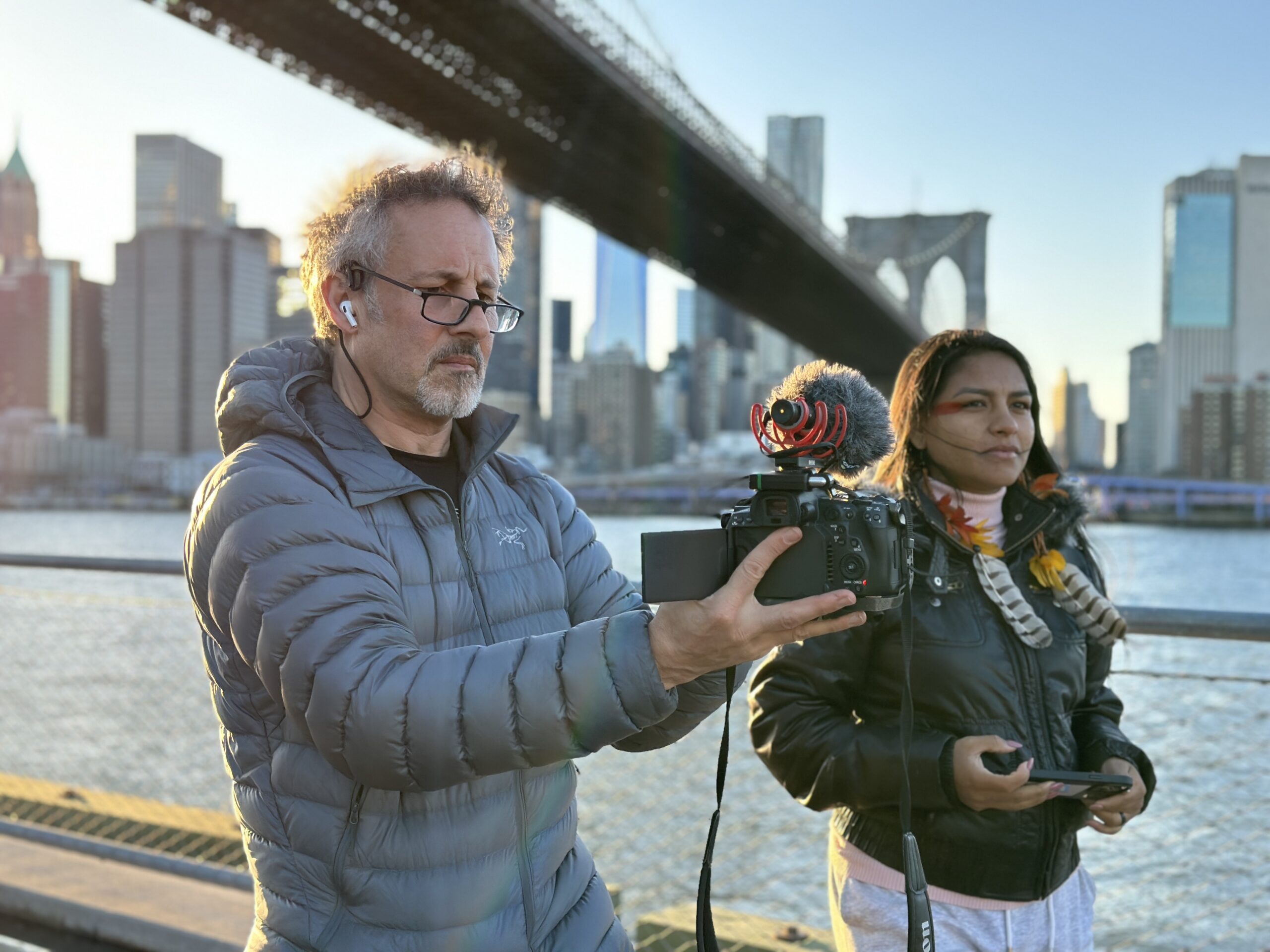 Juma Xipaia with Richard Ladkani in NYC. Image © Malaika Pictures.
You get the best films if people are just who they are, and you can observe moments, especially emotional or tense moments, or crisis moments, in their natural way, where you are not interfering whatsoever in what is going on. Your biggest task as a filmmaker is to capture the moment as it happens. Do not let the moment pass, and make the most of it.
But this is a technique that needs a lot of funding, because you need a lot of time on the ground, which is expensive. You need to be able to capture scenes as they happen in a cinematic way, and you also need to be aware of what is happening around you, because security was another big thing.
I never wanted to put more risk on Juma or her family, which meant that in public, I wouldn’t want to appear with a big crew or even a big camera. I used the smallest possible professional camera I could find, and sometimes even removed the top mic, just to look like a photographer. So, it looks like a photo camera. I used an SLR camera, which basically looks like a tourist camera that any tourist would use, which made you like a YouTuber or someone who’s taking photos, but they wouldn’t think of me as a threat. I was hoping for that. This is how it worked. Stay invisible and stay out of the way.
I remember this worked really well, because at some point, towards the later part of the film, they sometimes got very tense or intimate, or they were like discussing very personal things, Juma and Hugo, her husband. There was a real moment where she was telling him, “Don’t go, I’m really worried.” He got annoyed and angry, saying “I need to do my job, I need to go out there and do what I do.” She was heavily pregnant, and she was in tears. They were really arguing and having a real moment.
There should not be a stranger in the room or in the house in these moments, because this was life and death. He was going on a super dangerous mission. She was afraid to lose her baby, or to have the baby when he’s gone, and not to have him around. It was very emotional. And I was there in the bathroom, dark window, lights out, and I was shooting on a long lens. They were mic’d, and they obviously had forgotten that they were mic’d, and I was thinking, “Are they even aware I’m still here?”
When the whole thing calmed down, and it was like a half-hour scene, I made myself noticeable by saying “Hey.” And they both looked at me like, “Oh, you’re still here.” They had totally forgotten I was there. And then Juma laughed and said, “My God, you have become like that piece of furniture in the corner that you forget even exists.” And I’m like, “Happy to hear that. Thank you.”
That’s what you want, and that’s how you get personal. That’s how you get this kind of storytelling.
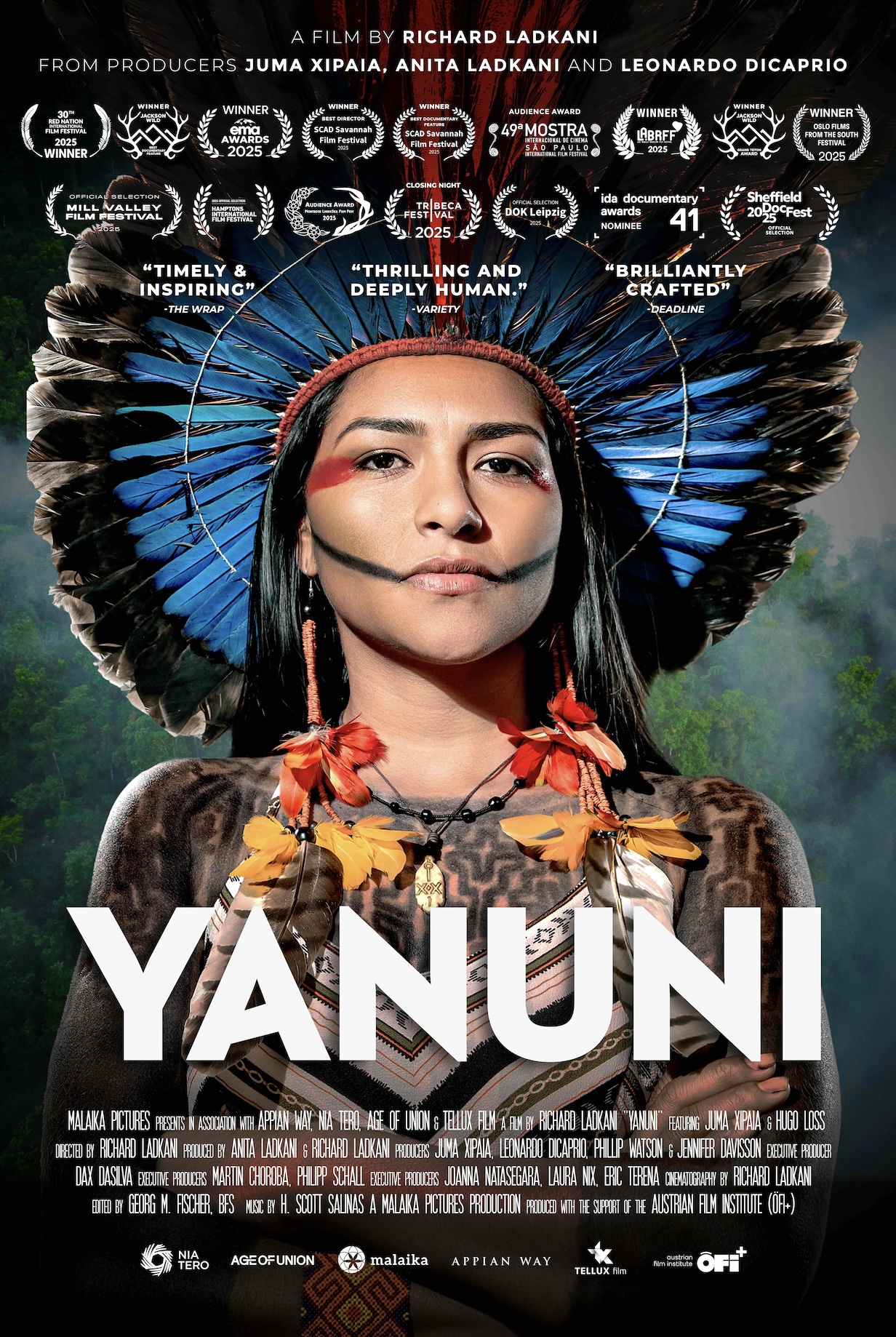 Yanuni will be screened in Washington, D.C., on March 28 at the DC Environmental Film Festival (DCEFF). Image © Malaika Pictures.
Mongabay: The film also shows the destructive advance of illegal mining in the Munduruku Indigenous Territory and IBAMA’s special operation to crack down on the miners. Mongabay published a series last year that covered this operation, and one thing agents told us was that logistics, such as how to access remote mining sites, was one of the greatest challenges the federal task force faced. This included the recruitment of Indigenous peoples by criminals. What were some of the complexities you had to navigate while shaping and filming Yanuni, and what was it like to deal with these nuances or challenges?
Richard Ladkani: That’s a big question, because the operation lasted six months. I was involved from the very beginning until the end. There were three major phases of that operation. First of all, I want to say that it was an extreme privilege for me to be allowed to go on these operations with them. It was also the first time that IBAMA had allowed a filmmaker to really follow them on real risk missions that were not show-off moments, or like, “let me take you on a tour for a few hours, and we take you back to your hotel,” but to actually be embedded with them.
Every time we went out, it was for two to three weeks at a time, and I needed to be completely independent of them. I needed to work completely out of my own resources, meaning I needed to bring my food, and I needed to bring all the equipment I needed. I also needed to think about security myself, because they told me, “We would not be able to protect you, because you are actually taking the seat on the helicopter of a soldier who is now missing in the operation. We’re one soldier down. Our security is lessened because of your being involved. You have to really watch out for yourself, because we will need to take care to have a successful operation and ensure that everything goes well. You being around that makes things harder, right?”
It was a compromise. I was allowed to go, but they had to deal with me. I tried to obviously be as much of a team member as possible, but it was also very high stakes because I wasn’t going in feeling very protected, to be honest, anything could happen.
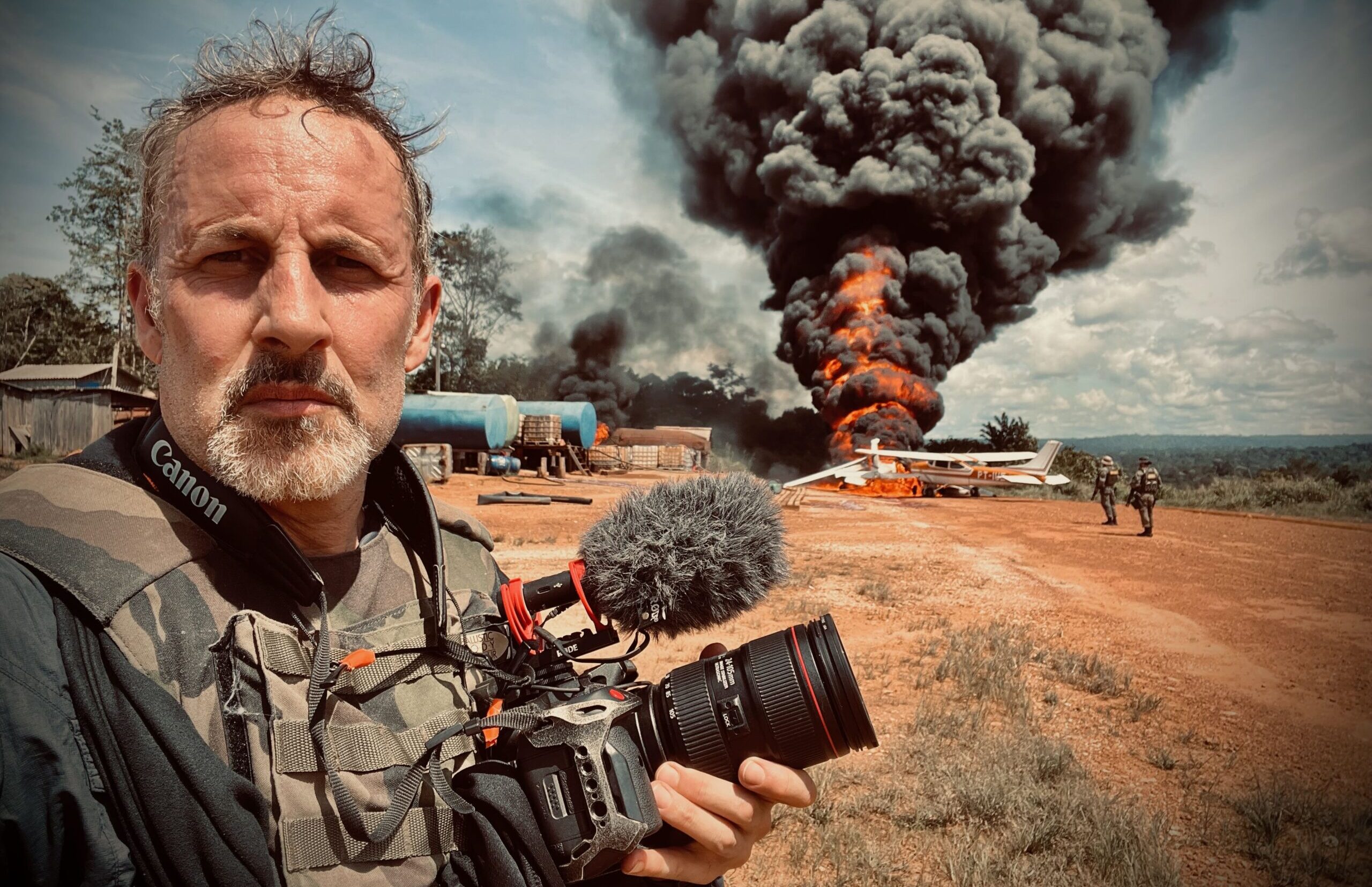
So, I trained for that. I did some hostile environment training. I had really great help from my security team to kind of prepare for what I need and how to survive and get out of a kidnapping situation. Or, in case you get under hostile fire, and all these things. How to wear a bulletproof vest and how to make sure it’s effective and useful against what kind of bullets. A lot of preparation went into that.
Once we went on these operations, it was really incredible, because again, I became part of the team, and I think they understood very quickly that they have a real asset with me, because I’m going to be able to tell the story to the world of what is actually happening and how they actually operate and how effective they can be, and also how hard it can be to do their job.
So, they quickly saw me as an asset, thinking, “Finally the world is going to understand who we are and what we do and how we operate.” It was productive. They were absolutely amazing. They were so helpful. They were so kind, and they really made me feel part of the team very quickly.
The hardest thing, I think, was for me to capture what was happening in real time, keeping up with the extreme difficulties of the operation, the heat, the danger, the fire, dealing with helicopters, jumping in and out, dealing with quicksand and dealing with river rapids. These were different kinds of operations.
The first happened on a helicopter, where we attacked the airfields and the planes. The second operation was an undercover operation where we went deep into the Munduruku territory, disguised as fishermen. We were really undercover, dressed as civilians, trying to get as deep as possible into the territories and understand from the ground how they operate. How does it work? Where are the ships? How easy is it to access them? What is going to be the right approach to destroy as many of these sites as possible?
The third wave was actually the big attack wave, where they used eight or nine helicopters. I think the entire fleet that was available to them. And then they attacked relentlessly day in, day out for 10 days. They destroyed, I think, 100 ships. It was massively effective, massively important.
From the filming side, it was really hard to keep up with them. Often I had to use GoPro’s. GoPro’s need batteries changed every two hours. I had to use a drone. The drone is very tricky to use because there are helicopters all the time moving around. A helicopter and a drone colliding would be the worst possible thing. But also, just the air of a helicopter can knock a drone out of its path. It was very high adrenaline, extreme moments, very quick and very effective.
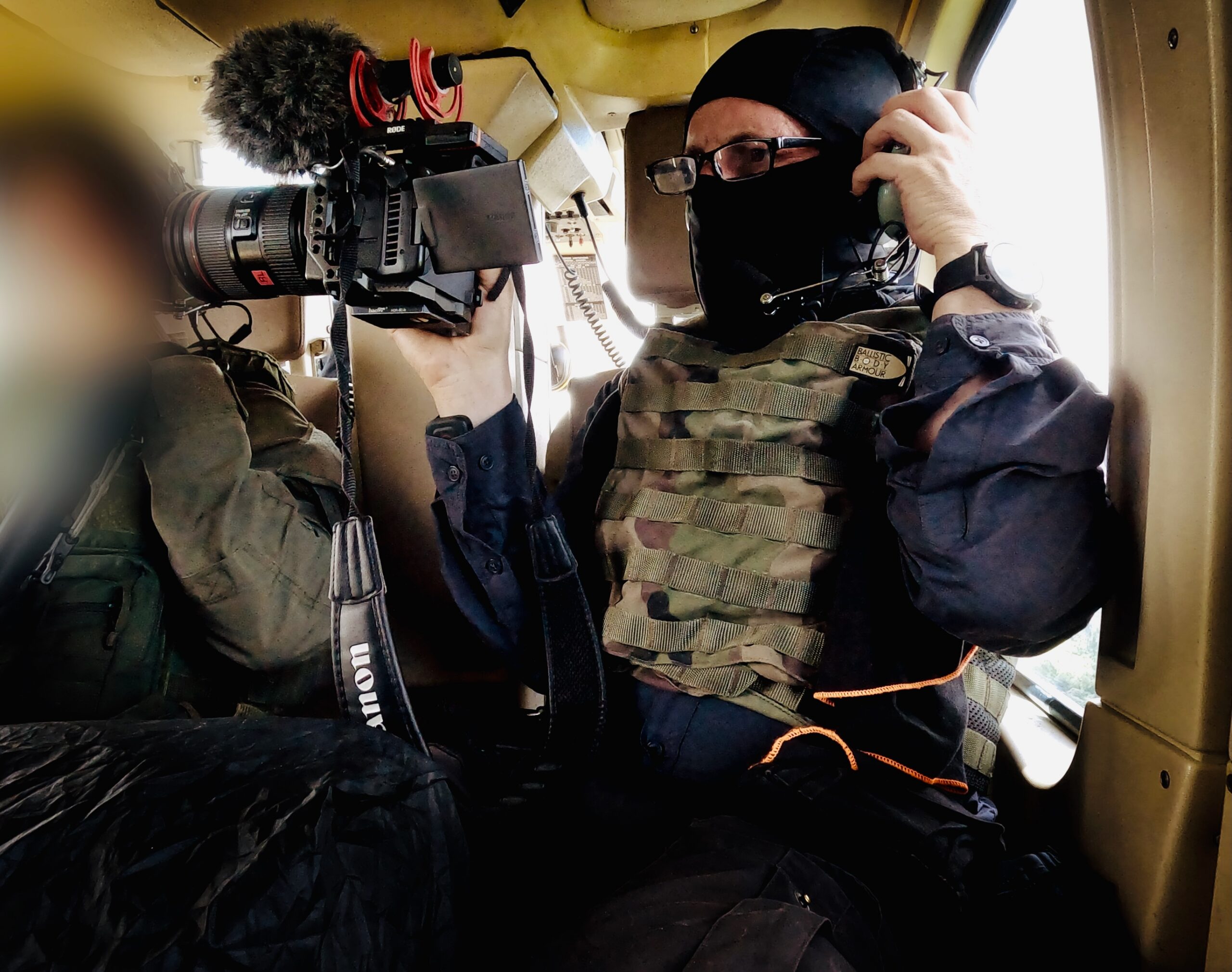 Richard Ladkani undercover in a helicopter. Image © Malaika Pictures.
Sometimes shots were fired, and you had to really duck and understand what kind of fire is this? Who’s shooting, and where from? What should I do? They often use tear gas. And [IBAMA agents], they’re somehow numb already to the tear gas I feel. I remember them using the tear gas sometimes, and then the wind would blow the tear gas cloud towards us, and I would literally suffocate. It was already hot enough and dense enough, but suddenly your eyes were tearing up, and you couldn’t breathe, and it was really hard.
Sometimes they would jump in the water and swim to the other side, and I couldn’t jump in, I have gear all over me, my sound, my cameras, my drone, so I had to stay behind. I felt quite vulnerable being alone while they were doing some operation, destroying a ship or something, while I was hoping nobody would show up and find me while I was waiting for them to come back.
There were all these things that I had to deal with, but overall, I felt extremely privileged to be able to tell that story. I think I could easily make a feature length, one-and-a-half-hour film, just on those operations. But the film was about Juma. Her as the main protagonist, which was always our way to follow. We really had to size down on how much weight we give to IBAMA and that story in order to not to misbalance the film.
The story became so big so fast that it was actually then necessary to eliminate 95% of what I witnessed in order not to throw off the balance, the fragile balance of this film, which is Juma’s story and fight for her people. That was the initial idea. We wanted to stay true to that idea. Even though her husband is so amazing and does amazing work, we had to make sure it’s still focused on this personal story of Juma Xipaia.
Mongabay: What were some of the moments that most stood out for you while filming on the ground?
Richard Ladkani: So many moments. What is something that stood out to you that you would want to know more about?
Mongabay: Besides the protest at the beginning of the film, another emotional scene was when Juma attended a conference, and she was shown images of the Yanomami who were suffering severely from a health crisis in their territory. Juma was so worked up that she had to remove herself from the room.
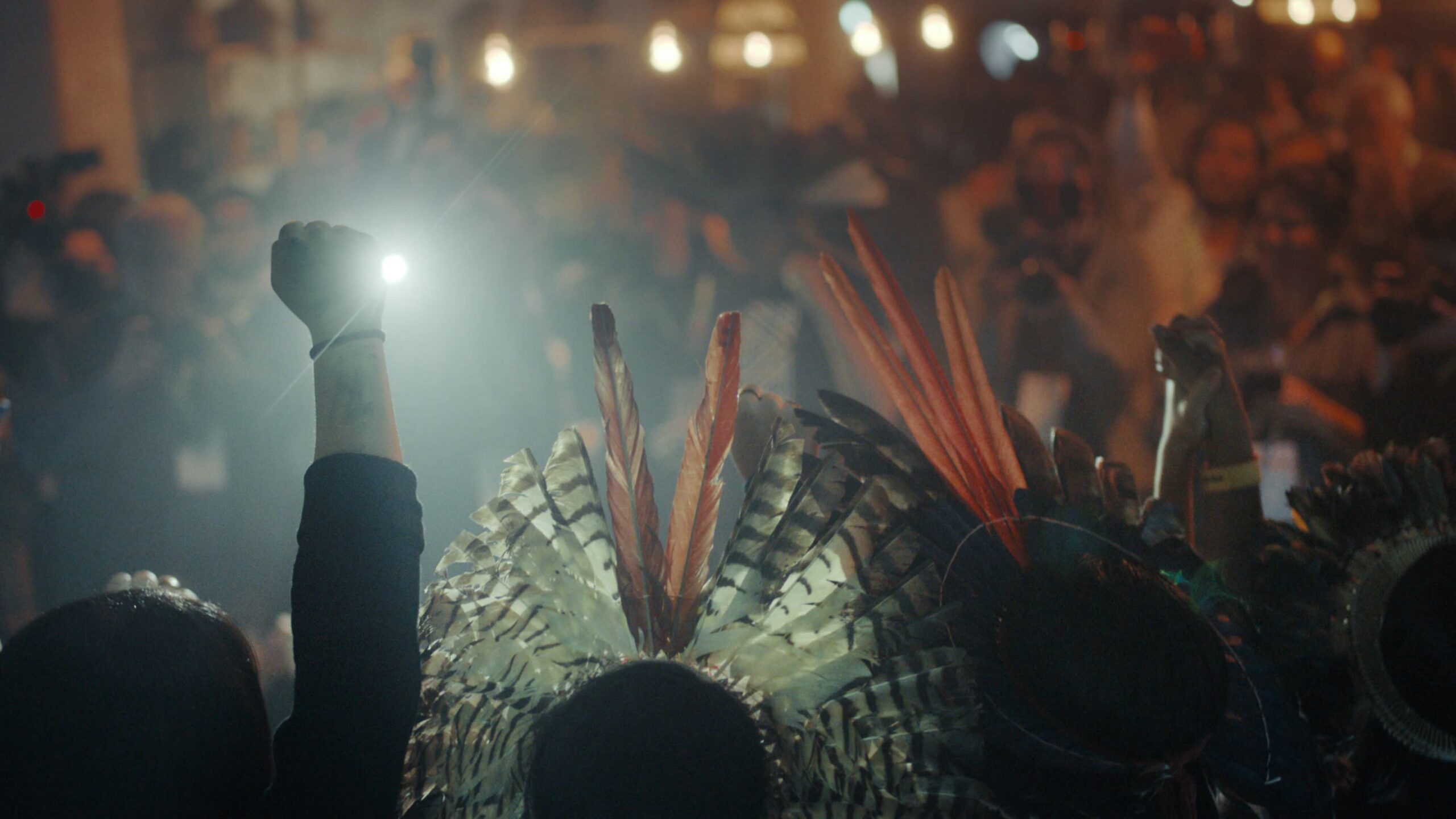 Juma Xipaia at the New York Climate Hub, COP26, Glasgow. Image © Malaika Pictures.
Richard Ladkani: This was in New York, when she was invited to speak at a conference about what’s happening in the Yanomami territory. She related so much to the story of her Indigenous friend, a woman who was a witness to the atrocities that had happened in the Yanomami territory, who had seen the raping and the malnourishment of the children and the devastation that mining is causing to their communities.
Juma really took it to heart. I remember she needed to walk outside and take a break. I was like, “What is happening?” I saw her tear up and remove and lower her feather dress, which is always a moment of “I need my space.” She left the room in the middle of a conference. I was like, “What am I going to do? She is in the middle of an ongoing conference.”
I decided, delicately, to follow her. She went out to the hallway, and there was a glass door between us, and I wasn’t sure if I should step into the hallway, because then it would have been like invading her privacy. She wanted to get away, and here I am following her. I started filming through the glass.
At first, I saw how she was really having a hard time handling all that information and the emotion of the moment. Quietly, I stepped into the hallway. I made sure she recognizes I’m there, but she’s not bothered. I started filming her quiet grief over what is happening. But then I saw her change from grief and processing into determination, and she got up and went back into the room, and I followed her.
She then gave one of her best speeches ever, and she really hit home, because she wanted to know from the people there if they’re even listening to them, if anyone is actually really listening. That struck everyone in the room, and me as well, because that’s an honest question, and it’s something we have to ask ourselves: “Are we listening to them? Are we hearing what they have to say? Do we feel what they have to say?”
That was something that was key to making this film. I felt that the world is overwhelmed with facts and devastation and information, we have all become numb, and we can’t relate, and we block our emotions to protect ourselves. I do get it, of course. But then the honest question: “Are you even hearing us?” It goes deep. It’s honest.
Because if you ask yourselves, “Well, am I listening? Am I really listening? Is it just information and facts, or am I listening? Because if I’m listening and understanding what is going on, I am going to react.”
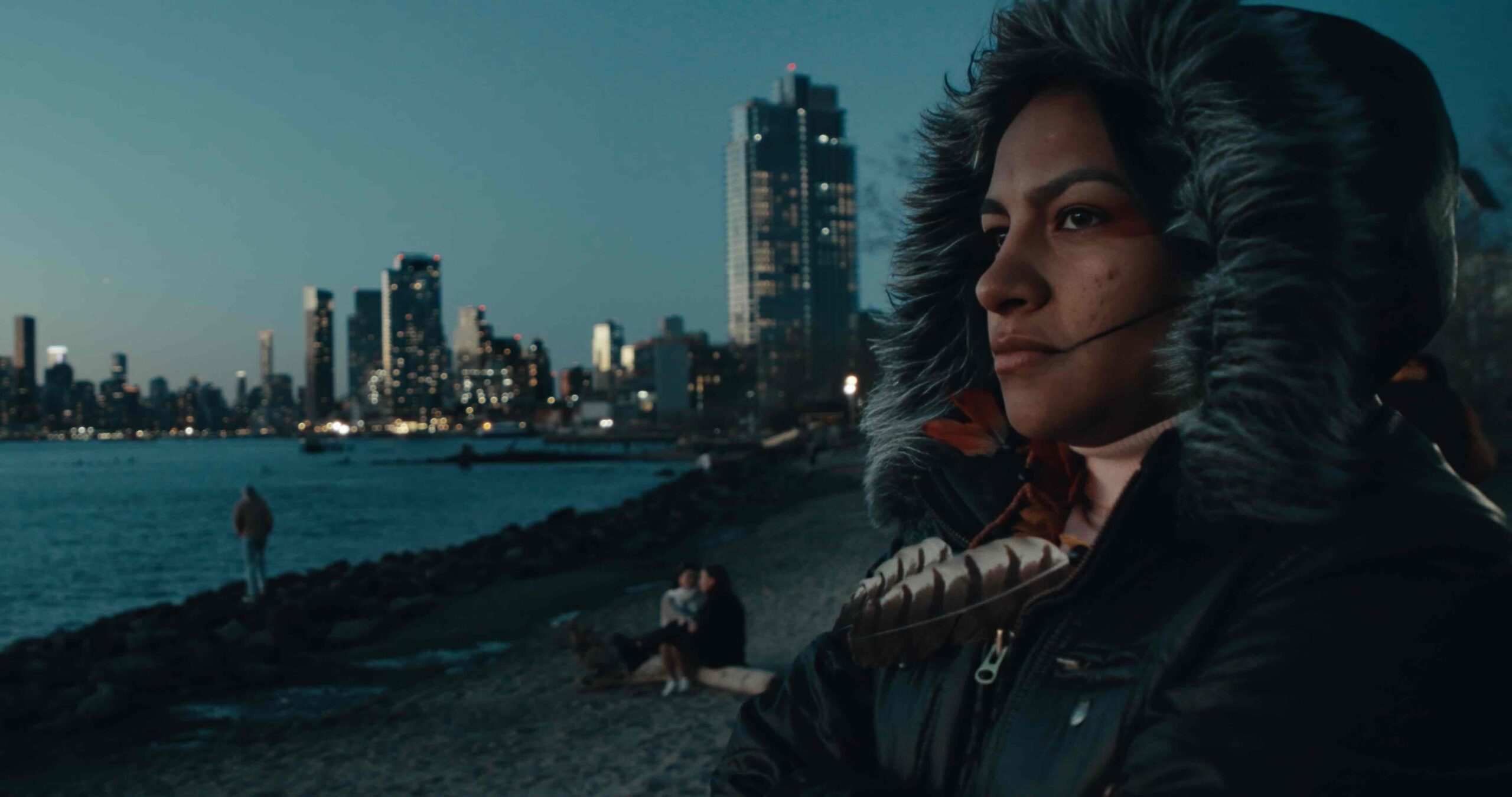 Juma Xipaia in New York City. Image © Malaika Pictures.
And that is what is missing from the Western world: we are often just not reacting. We’re listening, but we are numb to the information she wants us to reach. She wants what they have to say to reach our hearts and that we react, that we get up and do something to make the situation better. That was something that caught me.
I remember also that evening, we went to the Brooklyn side of New York, and we were looking at the skyline as the sun was setting. I actually wanted to give her a breather and to get away a little bit from Manhattan. She was looking at the skyline, and in my eyes, it was a beautiful moment. It was New York City in front of you. It looked amazing in all the lights, and the Brooklyn Bridge, and the ships going by. It was like a magnificent scene.
Then Juma asked, “Are these people living in these concrete boxes even capable of understanding what we have to say?” Because they have, in her opinion, lost all contact with nature.
[Juma] said, “If you live like this, how can you understand what it means to preserve a forest, to preserve nature as it is, with all its billions of biodiversity, of insects and animals of all kinds?” If we have lost that connection because we’re living in these concrete boxes, then we will never be able to understand what they have to say.
That shook me hard, because I saw a beautiful skyline of Manhattan, and she saw concrete boxes of sadness, of people who have lost touch with nature, and that is what is so remarkable about Juma, is that she can flip your mind and actually make you look at things her way.
That’s why I think the film is so effective, and that’s why I really wanted to make this film about her, because she has this very special gift of communicating so that it reaches your heart.
Banner image: Juma Xipaia, an Indigenous chief from the Brazilian Amazon. Image © Malaika Pictures.
Nine takeaways on Brazil’s crackdown on illegal mining in Munduruku lands
Latest podcast episode: ‘We will not know what we lost’: Conservation fallout a year after USAID shutdown. Listen here:
Feedback: Use this form to send a message to the author of this post. If you want to post a public comment, you can do that at the bottom of the page.
