
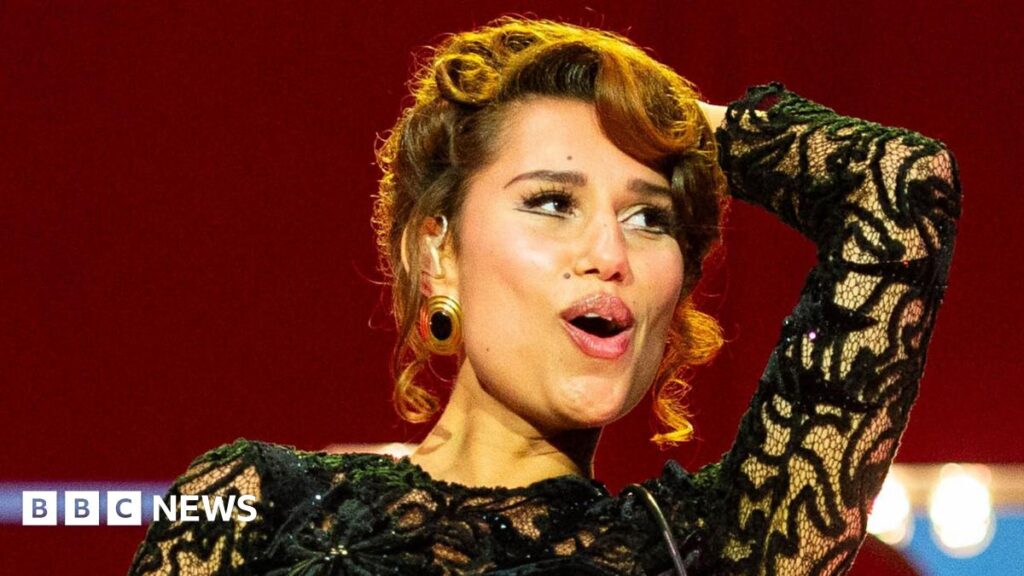
How satisfying has it been to witness the transformation of Rachel Agatha Keen?
Five years ago, the singer – better known as Raye – made a bid for freedom, cutting ties with record label who’d forced her to make generic dance tracks she dismissed as “really boring”.
Liberated from those constraints, her emotionally-charged, instantly catchy debut album My 21st Century Blues showcased an artist of remarkable depth.
Powered by singles like Escapism and Oscar Winning Tears, it won a record-breaking six Brit Awards, including album of the year, which resulted in Raye “ugly crying on national television”.
So how do you follow that up?
Speaking to the BBC last year, she admitted to a momentary crisis of confidence.
“When you haven’t written for a long time, you start being extremely self-critical. So I was hating everything I was coming out with,” she said.
“I think the pressure is always going to be there, no matter what. But the luxurious thing now is that the pressure comes from me – because that wasn’t the case in the past.”
That anecdote tells you a great deal about This Music May Contain Hope, a concept album about overcoming heartbreak and self-doubt and internet trolls and stupid men.
Rather than surrender to those setbacks, Raye saddles up and sets off in search of happiness. Musically-speaking, she comes out swinging.
“There’s a there’s a thing I miss in in pop music today, which is that kind of Motown feeling, that classic feeling, that analogue feeling,” she told me last year. “So I was really excited to really, really experiment with that quite vividly.”
The spirit of old-school jazz, blues, big band and soul inhabits the record, which stretches out over 71 minutes, as Raye flexes her compositional muscles.