
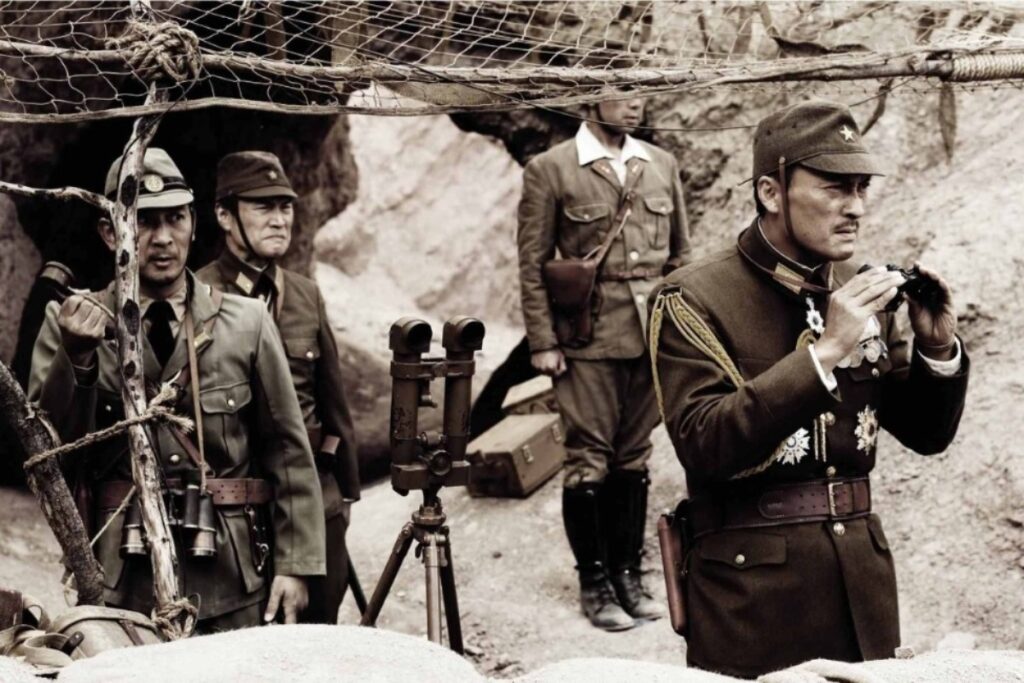
How did a director famed for American myths deliver the war film that makes you question which side you’re on? Nineteen years later, its quietest voices are still the ones you can’t shake.
Clint Eastwood’s Letters from Iwo Jima, released in 2007, peers into the island’s tunnels and finds aching humanity where history often lists only positions and dates. Told from the Japanese side and anchored by General Kuribayashi’s resolve, its chorus of unearthed letters turns a brutal battle into a conversation across time. Critics from daily papers to cinephile journals have praised its precision and emotional force, and audiences have kept the flame alive with high marks on Allociné. Today it remains within easy reach on HBO Max.
A cinematic triumph worth revisiting
Released on February 27, 2007, Clint Eastwood’s Letters from Iwo Jima turns 19 with undimmed force. The film still feels bracingly current, a 21st‑century essential for anyone tracking how war is portrayed on screen. Its power lies in a stark, humane view from the Japanese perspective, a choice that reframed a famous battle and broadened empathy. Nineteen years on, its clarity is striking.
Why war films matter
War films anchor collective memory and probe character under duress. This is the case with works that stage combat itself, not its lingering aftermath. Unlike The Pianist or Son of Saul, Letters from Iwo Jima confronts battlefield choices head‑on. It weighs moral dilemmas, fragile comradeship, and the cost of war, inviting reflection without sermonizing.
An era of modern war films
Eastwood’s drama sits comfortably among 21st‑century landmarks that redefined the genre. For example, recent decades delivered muscular reenactments and tense survival tales that test form and patience. Each pushes scale, rhythm, and perspective in distinct ways.
Dunkerque — Christopher Nolan’s gripping evacuation study
1917 — Sam Mendes’ nerve‑tightening, single‑shot odyssey
The Hurt Locker — Kathryn Bigelow’s taut portrait of bomb disposal
Da 5 Bloods — Spike Lee’s layered Vietnam reckoning
The enduring brilliance of ‘Letters from Iwo Jima’
Letters from Iwo Jima stands apart by staging Iwo Jima’s defense (1945) through Japanese eyes. General Tadamichi Kuribayashi’s unbending strategy stretches the fight to 40 days, turning caves and ash into a labyrinth. The soldiers’ buried notes and final messages add intimate texture, transforming strategy into memory. Eastwood foregrounds humanity over heroics, and the performances breathe with restraint and dread.
A legacy that still resonates
The film’s legacy endures in reception and reach. On Allociné, it holds stellar ratings (4.5/5 by critics, 4.1/5 by viewers). French outlets like Les Inrockuptibles and Les Cahiers du Cinéma salute its precision and emotional charge; Libération calls it a summit. In addition to a 2h20 runtime that never sags, it’s now streaming on HBO Max, an easy route to revisit.