
Amazon MGM Studios
If you thought getting rocketed to another solar system, linking up with an alien, and working together to save multiple worlds was hard enough, imagine actually trying to film all that. Don’t let “Project Hail Mary” and its breakout box office success fool you — this big-budget adaptation was a massive risk and the furthest thing from a safe bet. Not that it looks that way from the outside looking in, of course. Directors Phil Lord and Chris Miller are the authorities on making the impossible look impossibly easy.
That’s what makes it even more fascinating to hear about the behind-the-scenes work involved in bringing “Project Hail Mary” to life. One would imagine that nothing posed a bigger challenge than pairing star Ryan Gosling with the alien Rocky (James Ortiz), animated through a mix of old-school puppeteering and cutting-edge visual effects. Or maybe it was the adapting process itself, with screenwriter Drew Goddard carefully picking and choosing what to preserve (or change) from author Andy Weir’s original novel. To hear Lord and Miller tell it, it was none of the above.
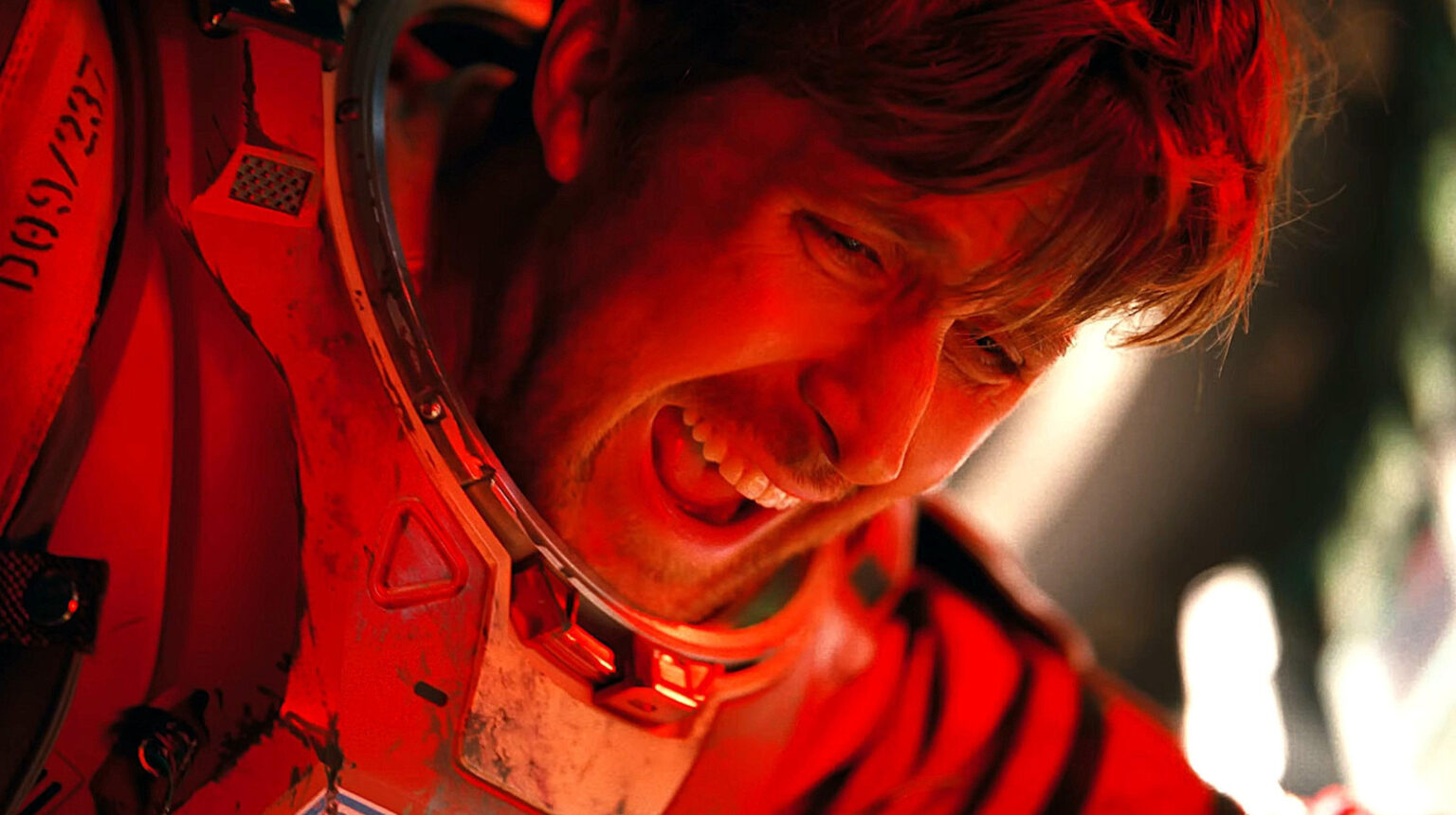
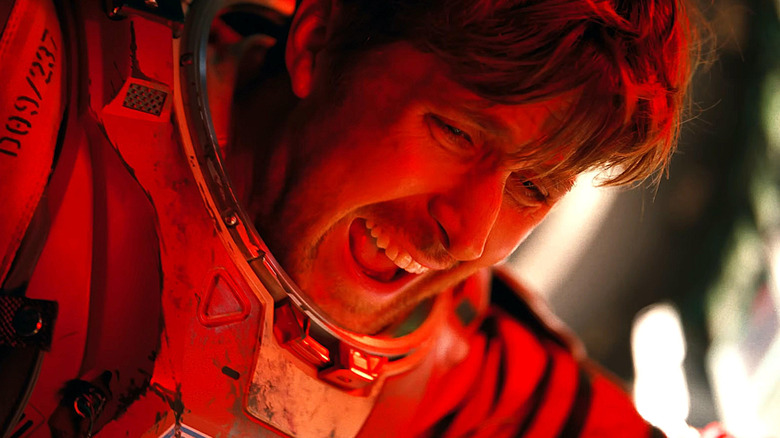
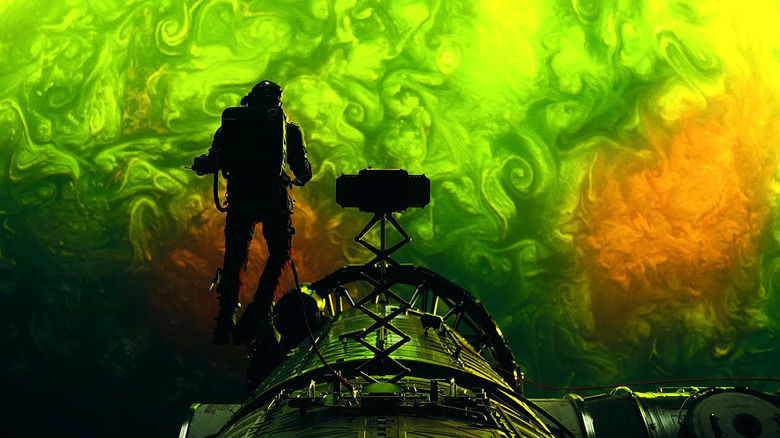
Remember that stunning visual of astronaut Ryland Grace taking a spacewalk outside his ship and suddenly being bombarded by red “astrophage,” the otherwise invisible algae-like organisms devouring the sun? Not only did that become one of the most enduring images of the film during its marketing, but it also doubled as the toughest scene to fully realize. Both directors said as much during a recent episode of The Big Picture podcast with Sean Fennessey. At roughly the 90-minute mark, Miller explained that this “took a while to R&D but, when we got it, it was crazy magical.” He explained, “We get a moment to visualize what an [infrared] camera would be seeing and what’s actually all around him.”
Phil Lord and Chris Miller explain how they filmed the ‘magical’ astrophage sequence in Project Hail Mary
Amazon MGM Studios
In space, nobody can hear or see you devour the sun and threaten the continued existence of multiple spacefaring civilizations. Despite all the complicated science sprinkled judiciously throughout the film, the pesky astrophage at the center of “Project Hail Mary” are a simple enough threat for the layperson to understand: The sun is dying and these microorganisms are eating it, oh no! Actually visualizing that for a mainstream audience, however, was another issue entirely. During their appearance on The Big Picture podcast, Lord and Miller went into further detail, explaining how they figured out the ideal way to film this moment practically. As Miller laid out:
“The way that we did that was, you take a filter out of the camera that’s blocking [infrared] light and made this beautiful pinkish, reddish color. And what we did was put Ryan [Gosling] on a stage surrounded by a bunch of chicken wire filled with infrared lights that were sparkling.”
If that already sounds technical enough, Lord chimed in to reveal that there was even more work involved in crafting this rig. “[Cinematographer Greig Fraser] built an aquarium, sort of like a double-glass window with a hose that was dripping water through it.” According to Miller, this water would drip in front of a handheld camera and Fraser would then stand around Gosling while he acted out the scene — which was a source of endless amusement on set, by all accounts, since nobody could actually see the final infrared results with the naked eye.
Project Hail Mary is taking viewers to (film) school in the best way
Amazon MGM Studios
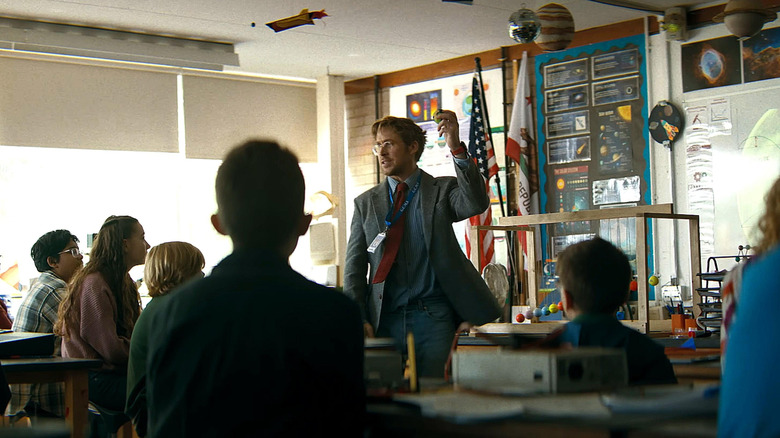
Who knew a movie like “Project Hail Mary” would end up giving viewers a crash course in infrared light, xenon gas (or solids, as we see in the film), interstellar travel, and all sorts of other nerdy topics? In a neat twist that a teacher like Ryland Grace would appreciate, the fun doesn’t stop there. While the standard marketing cycle for this blockbuster has been as effective as you’ll ever see, directors Phil Lord and Chris Miller have been putting in even more work on social media.
Just the other day, Miller took to X (formerly Twitter) to provide an inside look at how they shot the astrophage sequence discussed above. It’s one thing to read about the technical wizardry and ingenuity required to pull this off — it’s quite another to see it. As he explained:
Here’s a video I took while we were shooting. You can see on the upper right Tomas pouring water into a tube that runs between 2 panes of glass in front of the handheld camera Greig operates, giving a smeary, drippy look. Ryan stands in a cage of blinking IR lights which are… https://t.co/9B1w540Zfa pic.twitter.com/hVfYEJzsMY
— Christopher Miller (@chrizmillr) March 30, 2026
“Here’s a video I took while we were shooting. You can see on the upper right Tomas pouring water into a tube that runs between 2 panes of glass in front of the handheld camera Greig operates, giving a smeary, drippy look. Ryan stands in a cage of blinking IR lights which are invisible to the naked eye, but in the monitor it’s beautiful. We used this method for closeups. Medium-wides we did on the spaceship set with fewer lights & a lot of digital augmentation/replacement from ILM, and wides were fully digital from ILM, to match this look.”
Based on the overwhelmingly positive reactions from moviegoers (especially those fortunate enough to catch this on giant IMAX screens), this was a job well done by the entire creative team. A little bit of creativity goes a long way — who knew!
“Project Hail Mary” is now playing in theaters.