
Buena Vista Pictures
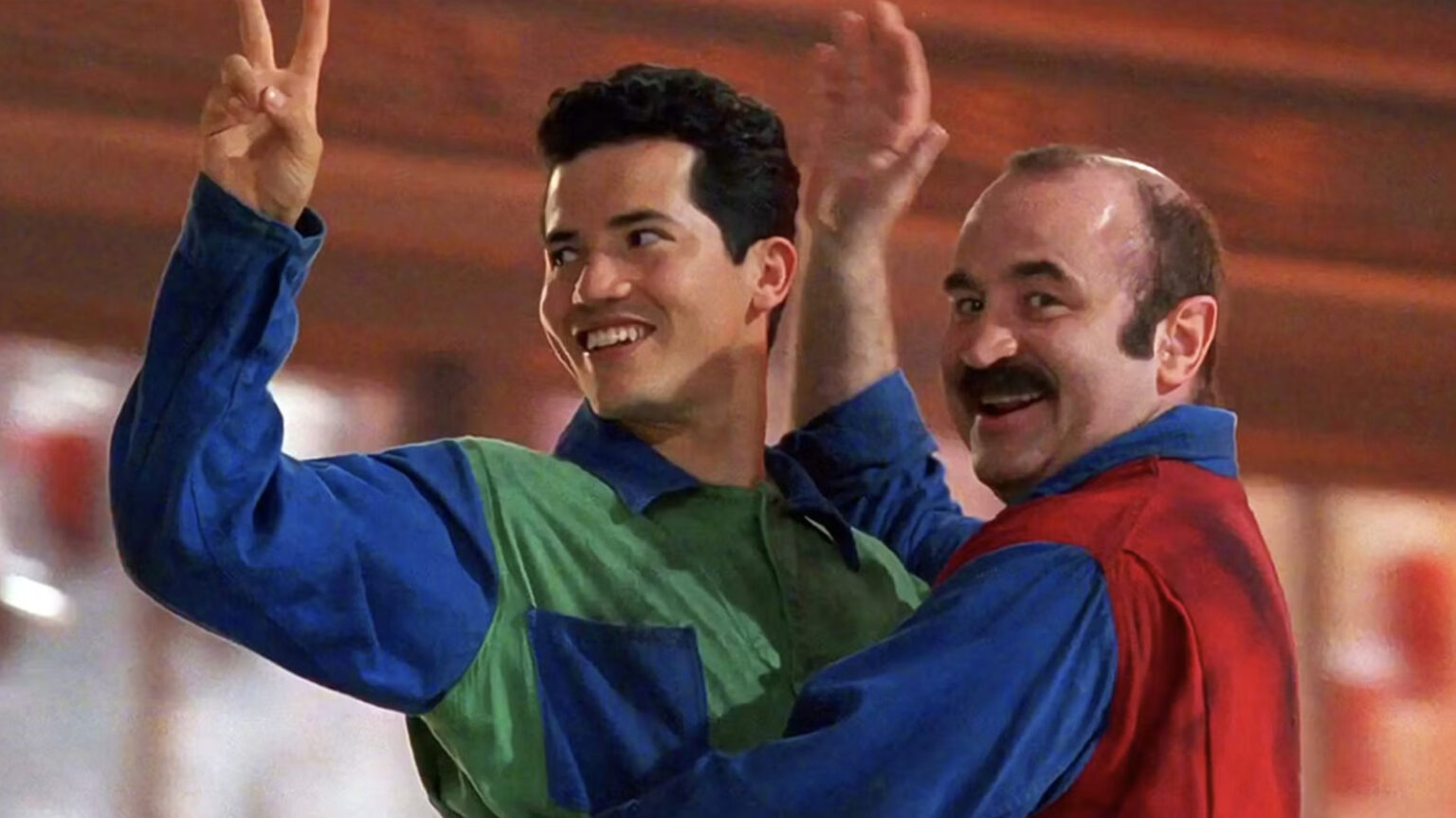
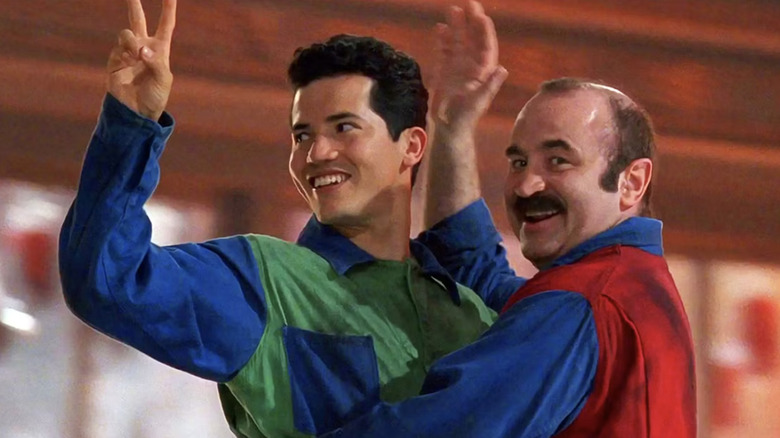
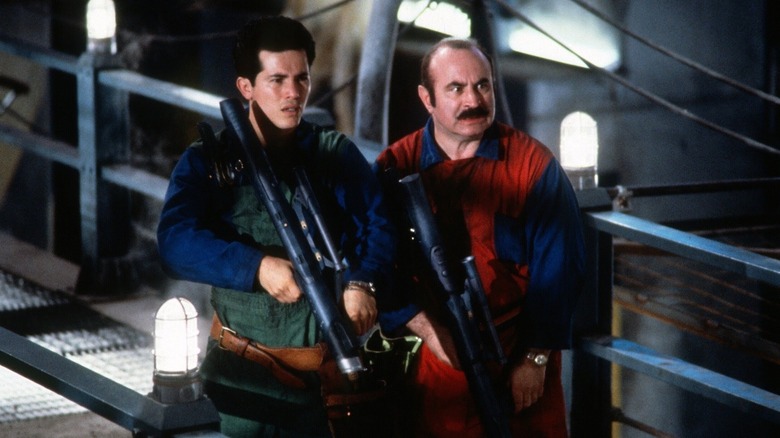
When it comes to the perennial enmity between Hollywood filmmakers and video game fans, 1993’s “Super Mario Bros.” was a massive flop at the box office and has been held up as the most egregious example of a disconnect between source material and adaptation. While the “Super Mario” games had a reputation for being bright and colorful, the film by co-directors Rocky Morton and Annabel Jankel is a dark, gritty vision of a dystopian world. This shouldn’t have come as a surprise to anyone familiar with their debut feature film, which was the bleak film noir “D.O.A.,” not to mention their co-creating the Cyberpunk satire “Max Headroom.” Despite the obvious visual disparities, many elements from the video game were retained in the live-action film. In addition to two plumbers being magically transported to a realm ruled over by an evil lizard in which a princess needs rescuing, there are sentient dinosaurs, power-ups, lots of jumping, and more.
As the film stands, it either infuriates those fans who’d been hoping to see the exact visual aesthetic of the games translated to the screen or delights those of us who like adaptations to have their own identity. To be fair, the disparity in the case of “Super Mario Bros.” is very apparent. Ironically, this was the intention from the start, at least on Morton and Jankel’s part, since the script (which was admittedly in a state of flux throughout shooting) ended with a scene that put a button on why the movie looked so different from the games. Sadly, despite being shot, the scene was cut. According to Morton, had the scene remained, it might have helped sidestep much of the animosity leveled at the film upon release, if not saved its reputation entirely.
The cut scene that could’ve explained ‘Super Mario Bros.’
Buena Vista Pictures
As part of an oral history of the film conducted by Inverse in 2023, co-director Rocky Morton sought to give his side of the story behind the tumultuous and controversial making of “Super Mario Bros.” In addition to explaining his perspective on the various issues that arose during filming, Morton detailed how the movie’s original ending was absolutely “crucial” to the film he and his then-wife Annabel Jankel were making. As Morton explained:
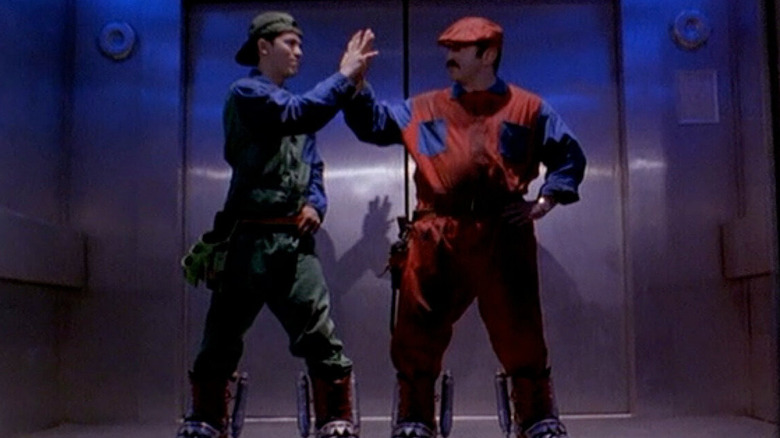
“[…] The Mario brothers were back in Brooklyn. And there’s a knock-knock-knock on the door, and it’s two executives from Japan from Nintendo. They’ve come to buy this story — the life story of the Mario brothers — because they want to use it in this video game they’re producing. They write down the story, dictated to them by Mario and Luigi, and it all gets lost in translation.”
He continued, “That was the crucial scene of the movie because it made sense of the entire movie and why the movie was so different to the video game, because it got lost in translation by Nintendo. We shot it, and everything, but [the producers] cut it out.”
It’s not hard to understand the varied perspectives regarding what happened here. The entire movie has a clever thread of satire running through it, featuring jokes and dialogue poking fun at capitalism and fascism that are snuck in between kooky set pieces. Yet while this original ending would’ve been the punchline to the film’s satire, one can see how Nintendo would balk at their representation as ignorant of the facts presented to them by their own characters. Clearly, corporations hadn’t reached the “in on the joke” level of “The LEGO Movie” or “Barbie” quite yet.
The post-credits scene tried to retain the original ending
Buena Vista Pictures
Ironically, with this in mind, one can see how Rocky Morton and Annabel Jankel attempted to retain the film’s original meta punchline in the post-credits scene that made it into the theatrical cut. In the scene, two representatives of Nintendo (though the company is never named in the dialogue) are explaining to off-screen characters how they’d like to make a movie about their exploits. The camera pans to a couch, only it isn’t Mario Mario (Bob Hoskins) and Luigi Mario (John Leguizamo) sitting there.
Instead, it’s the lunkhead Koopa duo Iggy (Fisher Stevens) and Spike (Richard Edson), who pitch the reps on a video game in which they’re the heroes. Sure, it’s a goofy little post-credits gag, but knowing what the original ending was, you can see how Morton and Jankel were still trying to introduce the idea of Nintendo getting the “real” story of the Mario brothers “wrong” in their games.
Ultimately, the vitriol against “Super Mario Bros.” was too large for one single scene to save the movie or its reputation. After all, it wasn’t just irate fans coming for it, but film critics, a good portion of the movie’s cast and crew, too. Stars Bob Hoskins and Dennis Hopper were very vocal at the time about their displeasure with the film, and it even took John Leguizamo years to come to terms with it. Yet, had the original ending remained, it’s possible that the film’s reappraisal might’ve happened sooner, or perhaps its initial release wouldn’t have been so maligned. Sometimes, as with the intention of that original ending, it can help a lot to let people in on the joke you’re telling.