
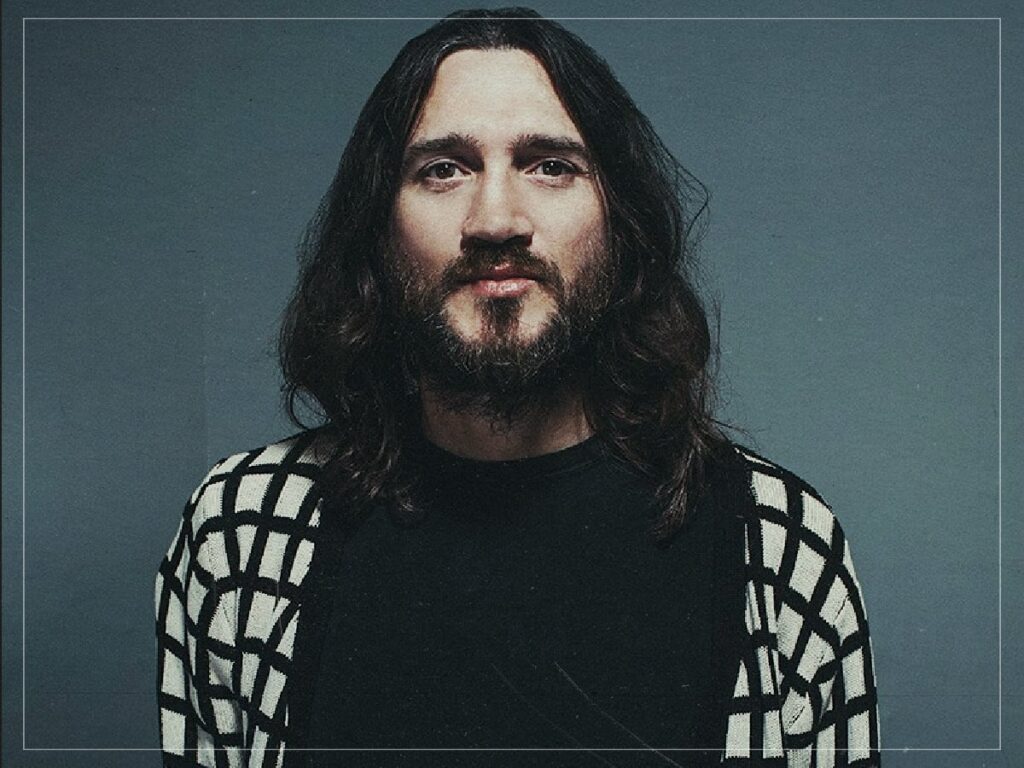
(Credits: Far Out / John Frusciante)
Fri 3 April 2026 10:56, UK
Like any guitarist of distinction, John Frusciante is far from a one-trick pony.
Drawing influence from a diverse array of musicians, including Jimi Hendrix, Daniel Ash, and Adrian Belew, the Red Hot Chili Peppers maestro has ventured far beyond his funk rock roots. Across his various projects, he has explored multiple genres, always favouring innovative artists who bring a fresh perspective to what’s already out there.
One genre that was particularly authentic and made a tremendous impact on Frusciante’s development of his ear and style was punk. He’s consumed it in many conditions, whether it be the first wave, post-punk, goth, or hardcore. Because of this, the likes of Gregg Ginn, Pat Smear, Joe Strummer, Bernard Sumner, and Keith Levene – in addition to Ash – were all key to honing his distinctive approach to the fretboard and method of subverting sonic standards.
Yet, despite Frusciante being an ardent follower of punk in all its forms, there was one band that pushed the formula to new heights that he didn’t care for in the beginning: Nirvana. They brought the punk ethos to the masses and fused the sound of the 1980s underground with infectious pop hooks, re-writing the handbook by doing.
In fact, Cobain even viewed Nirvana as a straight punk band rather than grunge. He went as far to say, “In Webster’s terms, ‘nirvana’ means freedom from pain, suffering and the external world, and that’s pretty close to my definition of punk rock.” Frusciante didn’t see it that way.
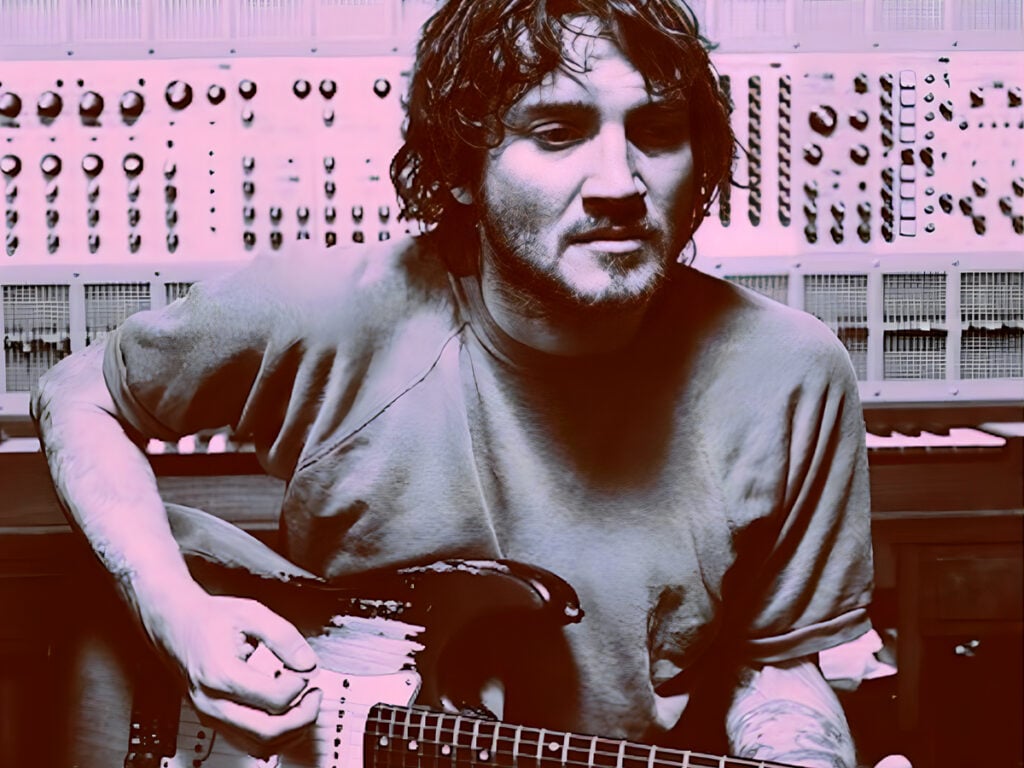 (Credits: Album Cover)
But when speaking to Rick Rubin on the Broken Record Podcast in 2022, Frusciante admitted that some of his dismissal was tactical. “I used to try to hide the Nirvana influence because I felt like they were our contemporaries,” he said, “and I didn’t want people to know I loved them.” “
It was when Frusciante was in his lowest period after he’d left Red Hot Chili Peppers in 1992, and his heroin addiction was at its most severe, that he started to get into Nirvana. He realised that their fusion of punk and pop was actually genius, as he loved both individual forms. Kurt Cobain’s band also offered him sonic comfort amid his personal issues.
Despite Frusciante later expressing great respect for Nirvana, during his first stint with the Red Hot Chili Peppers, the ‘Smells Like Teen Spirit’ band opened for them on three dates of the Blood Sugar Sex Magik tour, just as Nirvana was on the cusp of exploding into global fame.
Barely 20 years old, Frusciante refused to watch Nirvana live due to his ardent love of punk and what Nirvana was doing with the formula. He explained: “I wasn’t into them then. I resented the whole idea of a pop-punk thing at the time…”
Nirvana’s final album, In Utero, the dark return to their sonic roots, produced by punk tastemaker Steve Albini, convinced him. “When I first heard them and liked them, I was in a rehab, and that In Utero album had come out. I still think that’s their best album, and that was what got me real excited about them,” Frusciante said.
Adding, “Once I heard them sound, actually, like, raw, just like guys playing in a room, that’s when I realised. And I didn’t even watch them when they opened for us. I was just in my own head.”
It’s quite the turnaround in perspective that Frusciante had on Nirvana. In the notorious 1994 interview, when he was deep in the throes of his heroin addiction, was out of Red Hot Chili Peppers, had lost an incredible amount of weight, and his teeth had rotted, he had some stinging words about Cobain’s suicide. While admitting he cried at the news, he questioned the frontman’s decision, given he had a baby daughter, saying, “I just don’t think he has very many guts.”
But later, the Chili’s did pen him an ode of sorts with the song, ‘One Hot Minute’. With lyrics that address his suicide, the tear-jerking track looks back at two bands and different sides that oddly circled each other for a brief spell.
Recalling the moment he learnt of Cobain’s death, Anthony Keidis writes in his memoir, “It was an emotional blow, and we all felt it. I don’t know why everyone on Earth felt so close to that guy; he was beloved and endearing and inoffensive in some weird way. For all of his screaming and all of his darkness, he was just lovable.”
ADD AS A PREFERRED SOURCE ON GOOGLE 