
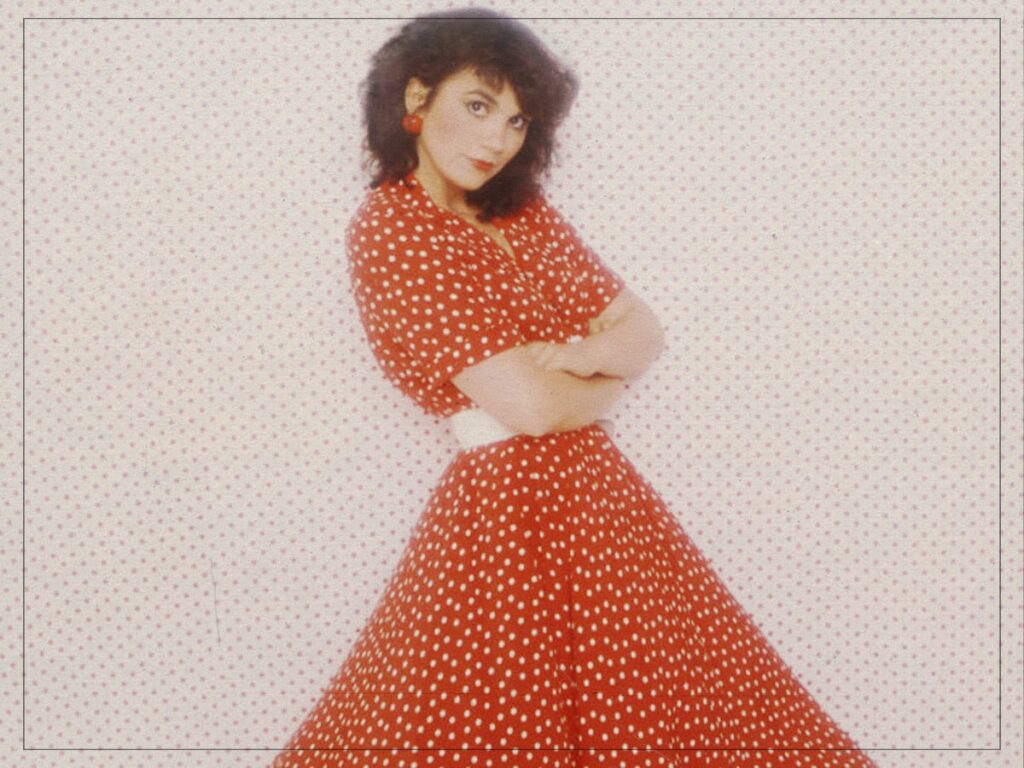
(Credits: Far Out / Linda Ronstadt)
Fri 3 April 2026 21:15, UK
No one listening to a Linda Ronstadt record is focusing on anything else except that voice whenever she starts singing.
She was born to sing live whenever she was able to, and even though some of her songs weren’t meant to last too long in her setlist, she was determined to do anything she wanted as long as she could sing from the heart whenever she was finished. And while Ronstadt had a great deal of respect when the right songwriter came around, she felt that the musicians mattered just as much when she started working on her records.
Because if you had to ask her about the real meaning behind a lot of her records, it usually came down to having the right people in the studio with her. Heart Like A Wheel wouldn’t have been the same if she didn’t have the other members of Eagles singing along with her every step of the way, and when looking at some of the biggest songs that she made outside of rock and roll, Nelson Riddle is responsible for getting her songs into shape when she started singing the same kind of tunes that Frank Sinatra was used to singing.
But when she finally reached her evergreen period, she felt like her heart always went back to country music. Her albums with the Trio are still the stuff of legend for anyone who missed the days of Johnny Cash and Merle Haggard, but bluegrass was never that far away from country, either. And for Ronstadt, the biggest part of working with a new cast of musicians was seeing what Alison Krauss brought to the table whenever she started working on some of her tunes.
Krauss was already one of the finest singers in the bluegrass world, but Ronstadt was more focused on how accomplished she was as a violinist, saying, “Her pitch is completely stunning! I’m a pitch nazi, and she’s even a little more strict than I am, in terms of pitch. And the thing that I like the very best about her playing is her rhythm. She’s got that great, easy, loping sense of the groove that bluegrass players generally don’t have. When it’s right, of course, it’s got a great swing to it. I consider her as good as any musician I’ve ever worked with.”
And when you look at the biggest rock and roll stars of all time, that’s a lesson they have yet to learn also. It’s called rock and roll for a reason, and while there are many people that try to play the same riffs over and over again and hope to God that they have something interesting on their hands, what gives every song the breath that it needs is being able to swing the rhythm a little bit and make the music flow a little better.
You have to remember that even rock and roll was the kind of music that people danced to when it first came out, and while Krauss wasn’t looking to make a hoedown-style song every time she pulled out her instrument, she was still bringing a sense of groove to every song she played. After all, all music goes hand-in-hand with dancing, and even if Krauss wasn’t dancing as she was playing, you could feel that sense of grace even when she didn’t have a drummer next to her.
Anyone else would have needed that sense of pulse, but Krauss was looking to be the all-around great musician when working on her records. It takes a special kind of musician to be able to give Robert Plant a run for his money when he collaborates with them, but it’s not like Krauss wasn’t up to the challenge whenever she was working with him on Raising Sand, especially considering she was already in her musical wheelhouse.
So while Ronstadt was more than happy to have the songs arranged without needing to worry about the subtle inflexions here and there, she always had time to hear what Krauss was doing on any of her records. Her sense of timing and tone was as close to a human voice as she had ever heard, and she could always appreciate when someone was making raw beauty out of nothing.
ADD AS A PREFERRED SOURCE ON GOOGLE 