
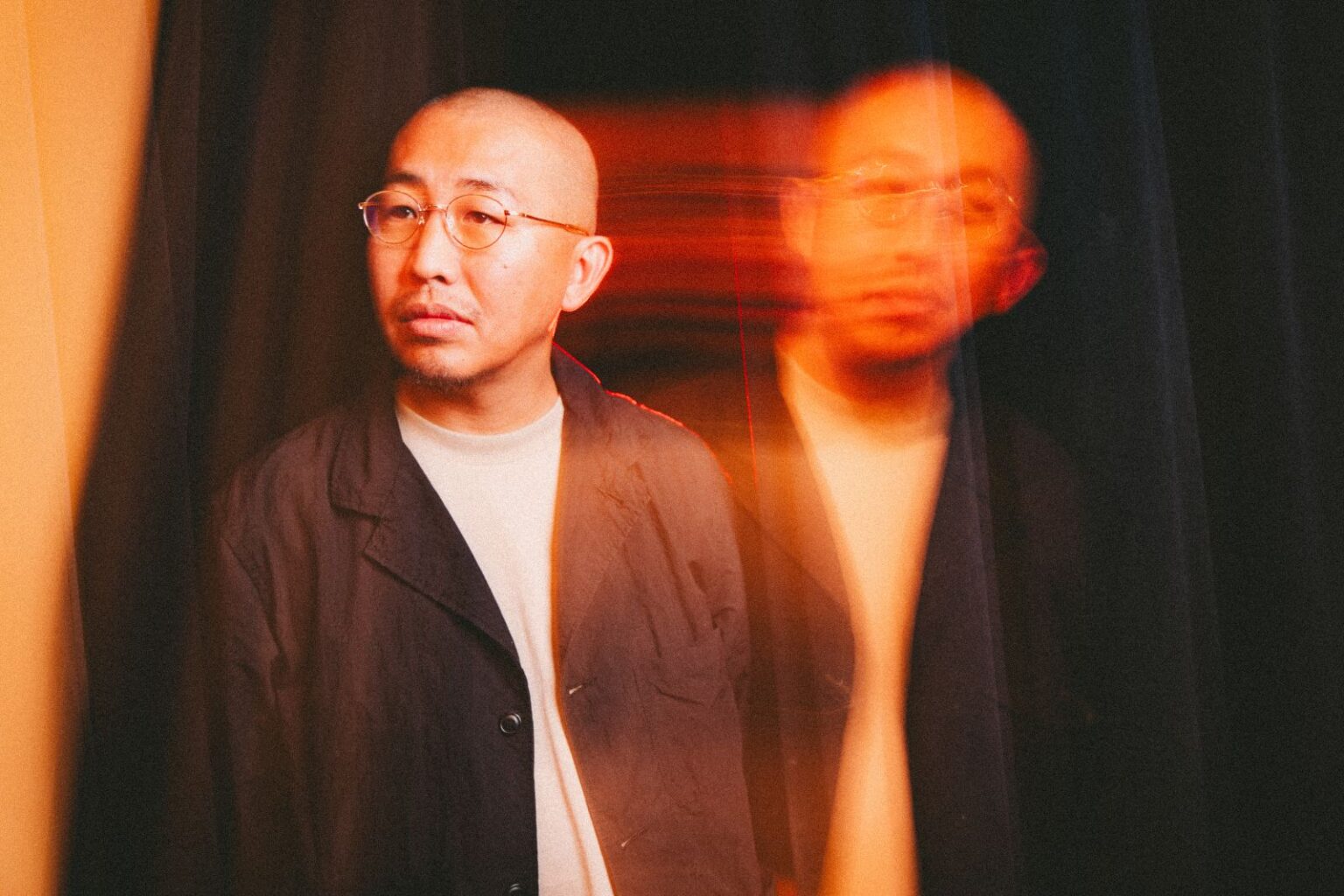
Somewhere in a tower block, a Korean woman (Shim Eun-kyung) sits at a table in front of a blank piece of paper and pauses to think. After a moment, she begins to write. From her pencil, a scene emerges, and soon we are inside it. A young woman (Yuumi Kawai) awakens in the blue-hued backseat of a car and looks out upon the vivid, volcanic vistas of Kozushima Island––a short trip away from Tokyo by boat. Down at the beach, she meets a young man (Takada Mansaku), and they begin to walk and talk together––discussing their memories; their philosophies; their impressions of one another. As they wade into the sea, we pull back from the frame. The Korean woman is presenting this very film, fielding questions about it from a gathered audience (somewhat unsuccessfully). She retreats again—this time physically––to a snowy cabin lodge where she meets an innkeeper who takes a while to warm up. In two seasons, two strangers meet. (Neat and fitting as this English title is, the original Japanese title is in fact Tabi to Hibi, lit. “Journeys and Days.”)
Sho Miyake’s delicate, gorgeously picturesque fifth feature is structurally wise––simple in its moment-to-moment interactions and cumulative in its feeling. With a lightness of touch, it carries the complexities of our everyday existences that we share with the people and places we come into contact with—the things that we say, and the things that we leave unsaid.
After winning the Golden Leopard at Locarno last year––a rare feat for a Japanese feature––Two Seasons, Two Strangers now heads to North American shores. Miyake and I spoke at the tail-end of his film’s New Directors/New Films engagement and ahead of its Metrograph opening this Friday, exploring the many paths that the film’s characters take together and alone, and the journeys that its creative team made to get there.
Thanks to Monika Uchiyama, who provided interpretation.
The Film Stage: I want to start by asking you about stories inside stories––a delightful quality of this film. Are there any particular films or works of literature that sparked your interest in this narrative device?
Sho Miyake: I’ll give you two examples of works that served as inspirations. The first is Buster Keaton’s Sherlock Jr., and the second is Tony Scott’s Déjà Vu.
This film combines two unrelated manga short stories from the late Yoshiharu Tsuge: A View of the Seaside and Mr. Ben and His Igloo. What attracted you to adapting them, and what made you want to bridge them together into one film, recontextualising each?
Both of the manga adapted in the film are stories that I really liked. The similarities between them are that they’re both about encounters between strangers who don’t even know each other’s names, and the short time that they spend together. I was also interested in combining a summer story and a winter story into one film, because I thought that it would provide an interesting new sensation for not only the viewer, but for myself as a filmmaker.
I love the self-reflexivity of this film, and the way you allow space for the audience and the character to take in a location and its peculiarities, following their curiosities wherever those might lead them. I observe parallels to the cinema of Laura Citarella, to Hong Sangsoo, and, at home, to Nobuhiko Ōbayashi and Shinji Sōmai. I’d love to know what filmmakers shaped your approach here, and whether you feel this film is in dialogue with wider traditions of a literary, extrapolative cinema.
Hong Sangsoo, who you mentioned, is a very important filmmaker to me, and certainly very inspiring. But for the summer portion of this film, I was really looking at the French filmmakers who worked on these “vacation” films––I’m thinking about Éric Rohmer––that kind of atmosphere was very important to me. For the winter portion, I was looking at some of the more traditional Japanese filmmakers, such as Yasujirō Ozu and Mikio Naruse. But their influence on me is not just on this work, but on my filmmaking as a whole.
To add one other name––of the same generation as Ozu and Naruse––Hiroshi Shimizu was incredibly important, particularly to this work. Especially in how he was able to film outside of the studio and go on location. He had a special knack for filming how people move through nature. That was a huge inspiration.
Where was each portion of the film shot?
The summer portion was filmed in Kozushima Island––which is part of Tokyo prefecture, but you would have to travel there by boat from Tokyo for about three hours. The winter portion was filmed in Yamagata prefecture, in an area called Shōnai, which has very heavy snowfall.
There’s a strongly evocative and tangible sense of place in this film, especially in the scenes of simply walking around. Did you know exactly which places and spaces within each location you wanted to shoot and where exactly you would want to place the camera, or was it more a process of on-location discovery, much like that of your characters?
For the summer portion, there were some shots and locations that I’d already decided on prior to arriving on location. But, when production began, a lot of it was decided through exploration with the actors themselves. We tried to find areas that would be evocative.
For the winter scenes, what became complicated is that we couldn’t leave footprints––so that process of exploration wasn’t really possible. I was much more specific about where we wanted to shoot and the framing––that was all decided beforehand.
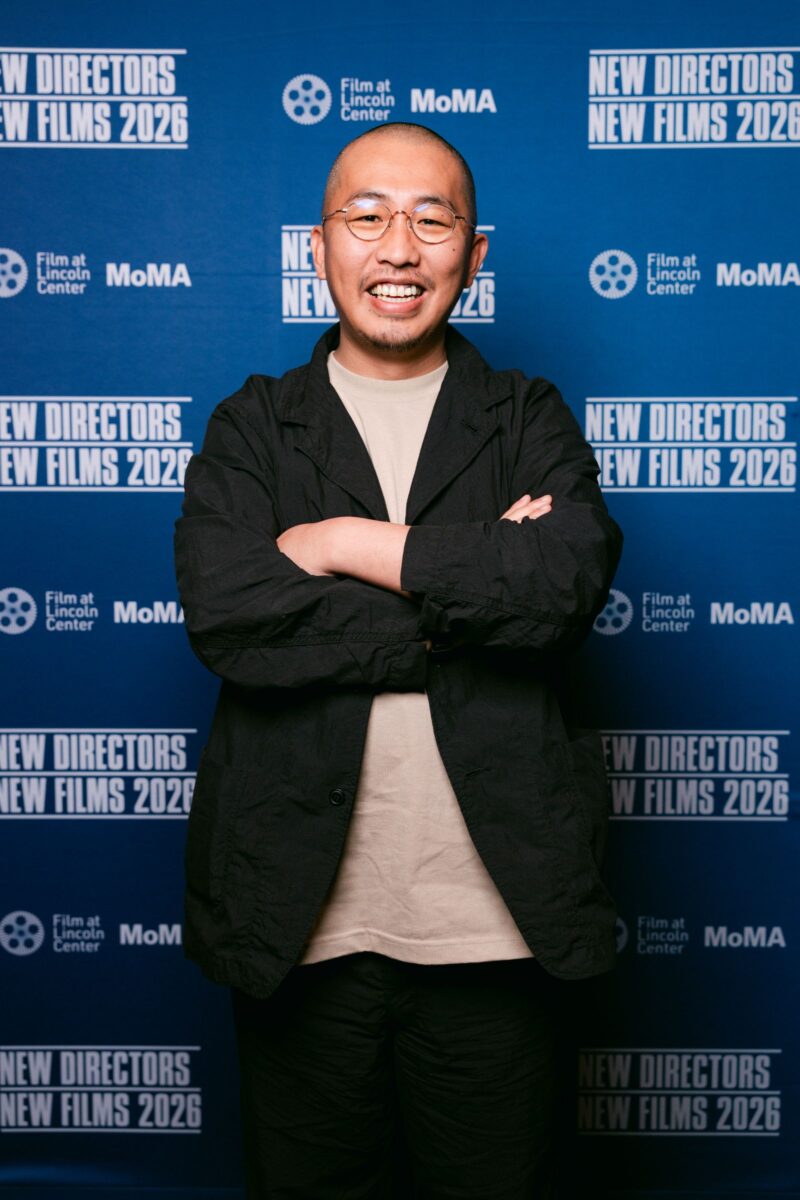
Photo by Arin Sang-urai. Courtesy of Film at Lincoln Center.
More generally speaking, are you the type of filmmaker who likes to know exactly where they’re going with what they’re making, or do you like to find yourself drawn down unexpected pathways and side alleys as you develop a work?
When the film is based on two manga, I didn’t want to stray too much from the original work. Tsuge’s manga forms the bones of the story. But then there are details such as changes in weather, the appeal and beauty of nature, and the invisible histories of each location that we filmed in. I wanted to make sure that that was imbued within the work––it was something that I was consciously exploring as I wrote.
You mentioned that you explored these locations with your actors. What’s your process of bringing them into that space and seeing what they will look like on-camera within that space, and how you want to frame them? Talk me through your process with your performers.
To give you an example to answer your question: I’m thinking about this moment in the summer portion of the film, where the two characters are sitting on the fence on the cliff and the sun is gradually going down. I could have framed the shot by either pointing the camera towards the setting sun or pointing the camera towards the actors––either would have been very beautiful. But what I wanted to capture was that, as the sun was setting, the way that the actors interacted with each other changed drastically. As they were gradually becoming unable to see each other’s faces, they had to instead act in response to one another’s voices. That kind of reaction—how they were adapting with their bodies—became much more interesting, and that’s why that shot is framed in such a way that it’s a long shot where we see the sun gradually setting and the reactions of the actors changing.
Could you tell me about the choice of color within the film? Much like the framing of shots, everything feels very exact, precise, and intentional.
With regards to the color: a lot of that has to do with the work of the director of photography, Yuta Tsukinaga, as well as other parts of the crew and staff, such as the art department and costumers. They came forward with strong intentions about what they wanted to accomplish with color in the film. I think my process is less to do with giving them very clear-cut plans for how I want something to look, but rather that I try to receive ideas from them and then we shape things that way.
Would you say, then, that your filmmaking process mirrors this film, in that it’s a dialogue between people and a sharing of ideas?
Yes, exactly. That dialogue is so important. The way that I communicate with my team is how I’m able to shape my films. When I was younger, I experienced a lot of difficulties in collaborating with others and making work with other people. Today, I can’t even imagine why I would go to the effort of trying to make something by myself––I think it’s only possible because of these collaborative efforts. I make films because I want to experience the joy of filmmaking with a group of people.
In what film did you first see Shim Eun-kyung, and what qualities of her acting brought her to mind as being a good fit for this film?
I first saw her in Miss Granny (2014). Of course, her performance in that film is wonderful, but what really drew me to her was when I met her in-person. She’s completely different in real life from her character in that film and has a very specific appeal. I think it’s her straightforwardness and how direct she is. In fact, I think she’s probably a terrible liar, and perhaps has never lied in her life. Moreover, it’s her work ethic and the seriousness that she approaches acting with. I feel that she approaches acting with an honesty, and a sincere concern for what she’s able to accomplish.
How was the film received at the Busan International Film Festival last year?
I got the sense that it was beloved by the audiences there. And of course, that has to do with Shim-san being such a popular actress. But I also think about the line that she speaks in the film that describes being trapped in a cage of words. I think each spectator understood and interpreted that in their own way––both maybe in their work life, but also thinking about how ,when we communicate in contemporary society, we’re constantly thinking about what the appropriate words might be.
For instance, you might not want to call something “tasty”; you might want a better word to describe that sensation. People use social media to recommend things to one another––they’re always thinking about whether there’s a better or more appropriate expression to convey what they’re trying to say. Or maybe it’s not through words, and we’re trying to find a means of communication beyond language. I think each person was able to receive the work and apply it to their own life and circumstances.
You open the film with the act of writing, which made me wonder about your writing process. What’s your own process when you sit down to write a screenplay?
Of course, I first try to sit at my desk, but I always find that I can’t make any progress. So I take a lot of walks. I find that when I’m walking around my neighbourhood is when my best ideas come to me. I worked on this script by myself, but typically––on my previous films––I’ve worked with a screenwriting partner, and he and I will discuss the script over the Internet. That’s how we work together.
Tell me about premiering the film in Locarno. That town feels like the perfect place to screen a film like this––an extradiegetic extension of its fabric almost, as the film is so grounded in a sense of an unfamiliar, beguiling place to discover. Watching Two Seasons, Two Strangers reminded me of the experience of visiting a new film festival for the first time.
As you say, I think Locarno was a fitting festival at which to premiere this film in particular. In fact, my first time participating in a film festival was in 2012, in Locarno. To be able to revisit that town again with this film was such an honor. I also think about that festival as being very special because it’s one where the entire city is activated––it transforms into this utopia of cinema. The fact that everyone can come together, transcend our individual nationalities, and unite around the joys of cinemagoing is incredibly special.
How concerned are you with the notion of “the Japanese cinema” as a wider entity, and your place within it? Shiguéhiko Hasumi praised this film as “a true masterpiece,” and at Locarno it was the first Japanese film in many years to win the top prize.
When I’m making a film, I’m not thinking, “I’m making ‘a Japanese film.’” It’s after I complete it and start receiving responses and reactions that I think, “Oh, I guess it is a Japanese film.” But it’s not something that I think about too deeply.
It’s a Japanese film which stars a Korean actress, so in that sense you’re drifting away from static notions of national cinema.
I see what you’re saying, yes. International cinemagoers may have an idea in their heads of what a Japanese summer looks like, or what a rural area in Japan looks like––there are various symbols in film that are used to typify or concretize an idea of Japan. An example of that would be the image of cherry blossoms––they become a symbol of people meeting or breaking up. And that’s not something that I want to include in my films. I wanted to portray the place where I live honestly, through my own kind of expression.
Thinking further on ideas of national cinema from a different angle, cinematographer Tsukinaga and yourself seem very intentional with your images. At times, it feels as if you’re echoing specific images from past films in Japanese canon. Is that a conscious effort?
It’s not limited to ideas of Japanese cinema. We have a strong sense of making films with a consideration of the history of cinema itself.
Whether with each other or with a place, this is a film that feels very much about connection and discovery. Do you consider yourself to be a romantic person, a romantic filmmaker?
[Laughs] I don’t think of myself as a romantic filmmaker, but I have been told that I’m a romantic, so I don’t know. What do you think?
I think you are, yes. This film, and your filmography as a whole, has a sensibility to it that suggests that about you.
I was having difficulty answering that because I’m not sure I understand the criteria for being a romantic, but I do think about how, for my characters, what’s important to them is that they’re all searching for a kind of happiness, and they have an optimism that they will one day be happy. If that makes me a romantic, then maybe I am.
Did you find yourself discovering or learning anything new about the manga that you adapted as you adapted it?
Yes, certainly. When I first encountered [Yoshiharu Tsuge’s] work when I was a university student, I was struck by the absurdity of his narratives, and the fact that he was so different from any other mangaka that I had read. I found his work very difficult to understand. In the three or four years that I’ve been engaging with his work in this serious way, I’ve read through a lot of his work many times over. I feel that he’s an accomplished and great writer, and even now I perhaps still only understand about 50% of what he’s doing. I hope to continue to engage with his work after this.
Expanding on this idea of growing and understanding more through making, have you grown to understand more about yourself––either as an artist, or as a person––by making this film?
There are many things that I learned. For instance, I learned about the joys of capturing humor on film, and also this idea that simplicity is often the strongest gesture you can make––that’s something that I’ve come to realize again through the making of this film.
I always ask filmmakers this question as a final question, and so I’m going to ask it to you. What do you want this film to leave its audiences with when the lights come up and they leave the cinema––whether that’s an idea, a feeling, or an impulse––anything at all that springs to mind?
I want people to leave the theater entering back into the exact same scenery, but seeing it in a brand-new way––or at least noticing slight differences in the world that they’re returning to. I’ve had that experience leaving the cinema myself. I haven’t figured out what kind of film triggers that feeling, but I certainly want people to leave the cinema and approach their world in a new way. I also want them to feel encouraged to keep coming to the cinema––that they’ll want to come back and watch a movie tomorrow or next week. These are the kinds of feelings that I’d like them to be left with.
Two Seasons, Two Strangers opens at Metrograph on Friday, April 24.