
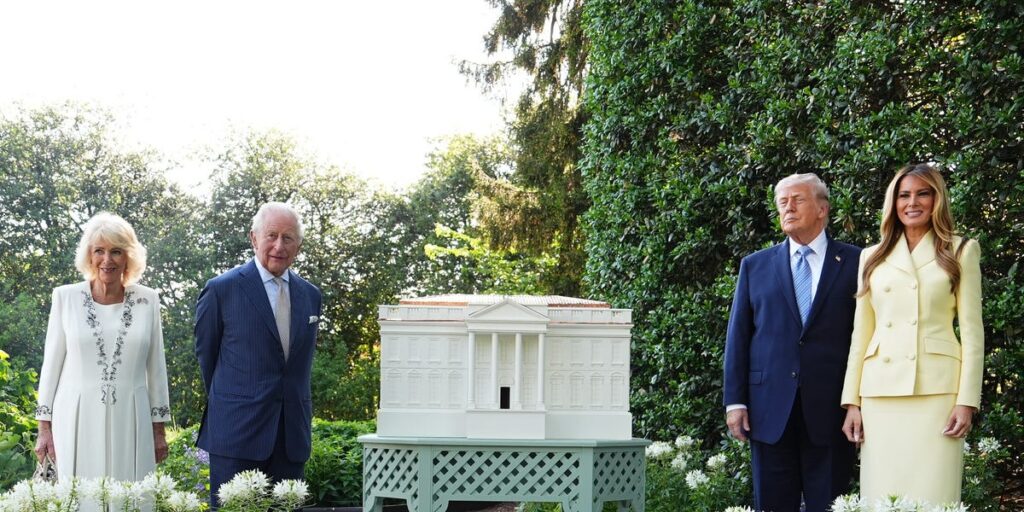
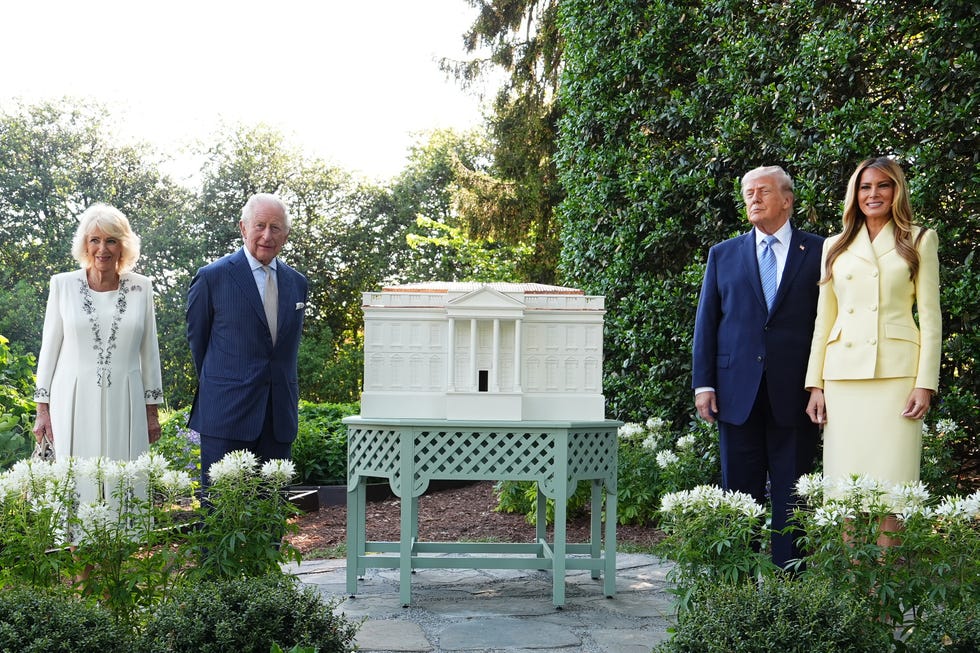
One of the first stops King Charles and Queen Camilla made during their State Visit to the U.S. today was touring the new beehives on the White House South Lawn.
 AARON CHOWN//Getty Images
King Charles, Queen Camilla, President Trump, and First Lady Trump pose with the new White House beehive on the South Lawn.
Both royals are passionate beekeepers—King Charles keeps at least three beehives at his private home, Highgrove House, while Queen Camilla produces her own honey at her home at Ray Mill House—and have a long love for apiculture. As the royal family’s official website notes, “The Royal Family are keen beekeepers, and beehives are a regular feature across the Royal Residences.”
In light of today’s visit, here, a look back at the history of royal beekeeping:
Bees were used to support the British monarchy.
The association dates back to The Feminine Monarchie, or the History of Bees, published by Charles Bulter in 1609. As the University of Reading explains, the book, published six years after the death of Queen Elizabeth I, “revolutionised beekeeping by confirming the existence of the queen bee. This was an important advancement as it implied that God had ordained female leadership. It was no coincidence that this discovery came soon after the reign of Elizabeth I.” In the Elizabethan era, in particular, the hive became associated with the monarchy, as William Shakespeare had the Archbishop of Canterbury say in Henry V: “So work the honey-bees / Creatures that by a rule in nature teach / The act of order to a peopled kingdom. / They have a king and officers of sorts”.
Researchers at the University of Reading also note that decades later, “Moses Rusden, King Charles II’s official beekeeper, attempted to use the beehive to justify the divine right of kings in 1679. He harked back to the language used by Thomas Hill, in the very first beekeeping treatise, by arguing that man and bee would both perish without royal leadership.”
 Print Collector//Getty Images
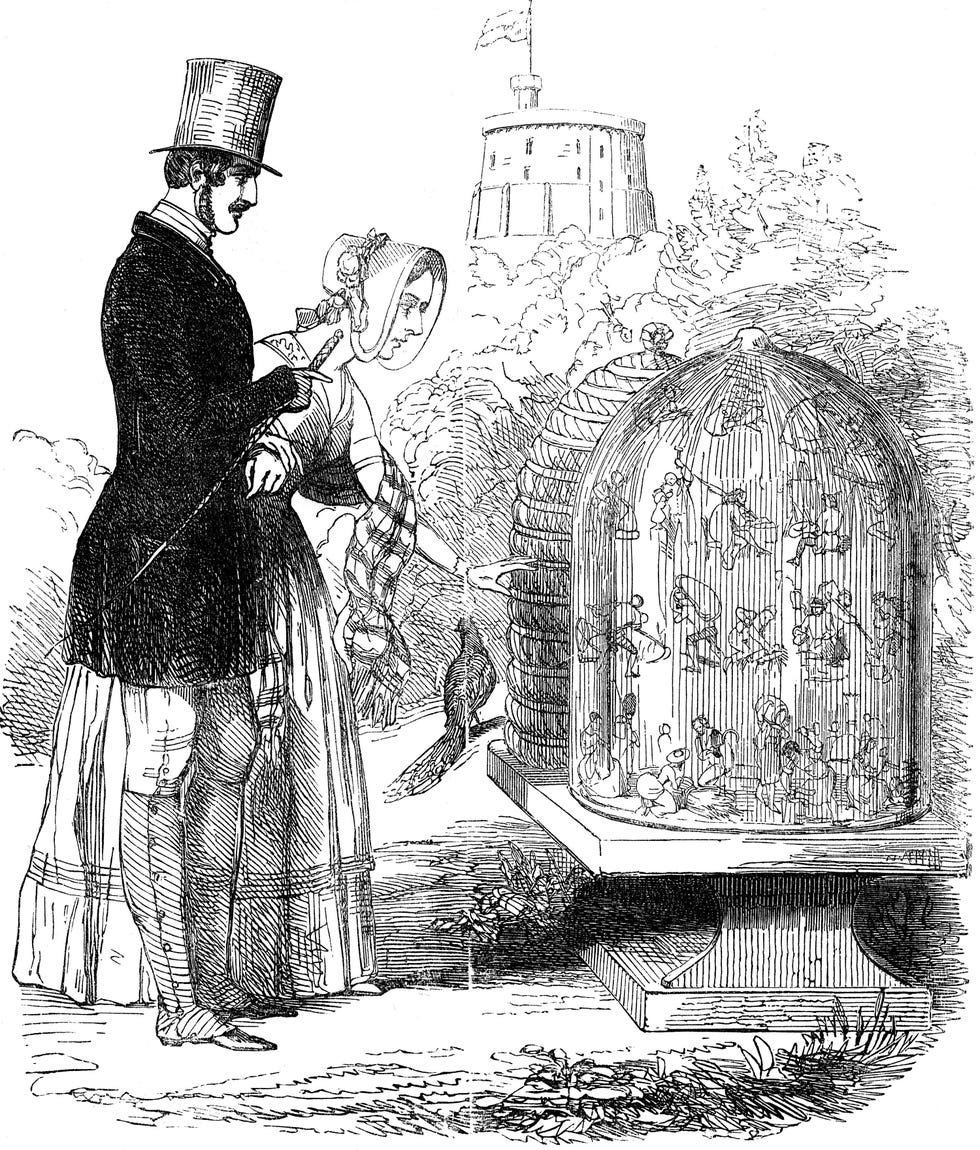
Albert, Prince Consort, showing his hives to Queen Victoria in a drawing.
Evidence of royal beekeeping dates back centuries. “His Royal Highness Prince Albert, as we stated in No. 117 of our journal, has lately taken much interest in the management of bees,” The Illustrated London News wrote in 1844, “and Mr. [John] Sholl has had the honour of presenting to the Prince two of his newly-constructed hives, for the apiary just completed on the royal farm near Windsor.”
Buckingham Palace is now home to four beehives.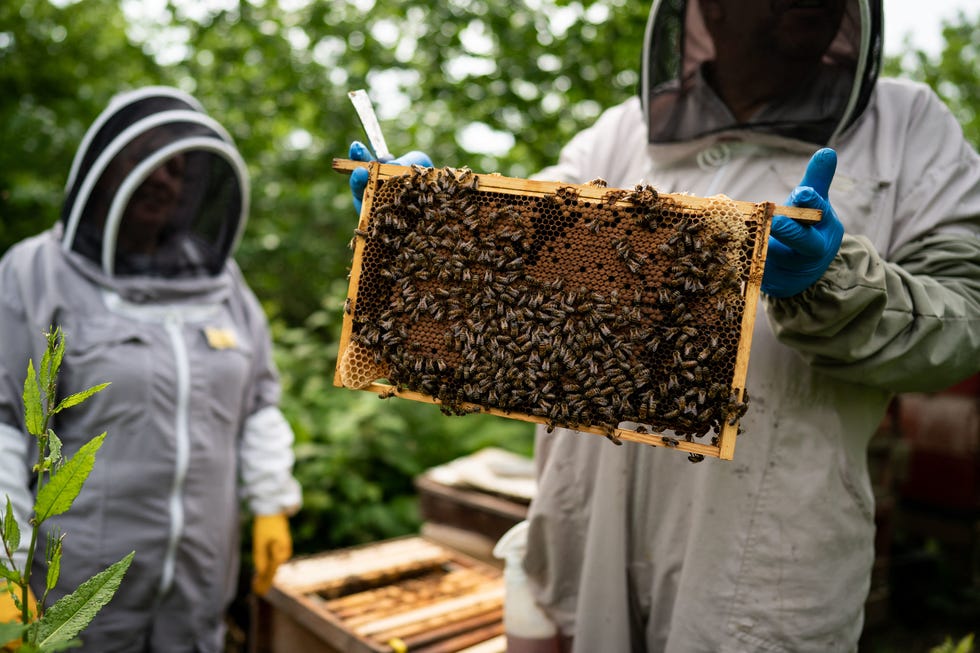 AARON CHOWN//Getty Images
Royal beekeepers John House and Caroline Geheran handle a frame from one of the hives in the gardens of Buckingham Palace in London on May 18, 2023
Royal beekeepers work in the Buckingham Palace gardens. According to the royal family’s website, “Buckingham Palace honey is used by Palace chefs throughout the year for guests at events, Garden Parties and receptions. The honey is often served in honey madeleines, as a filling for chocolate truffles or in honey and cream sponge.” In addition, “The late Queen Elizabeth II was very proud of the honey produced at Buckingham Palace and even gave a jar to Pope Francis as an official gift at their first meeting in 2014.”
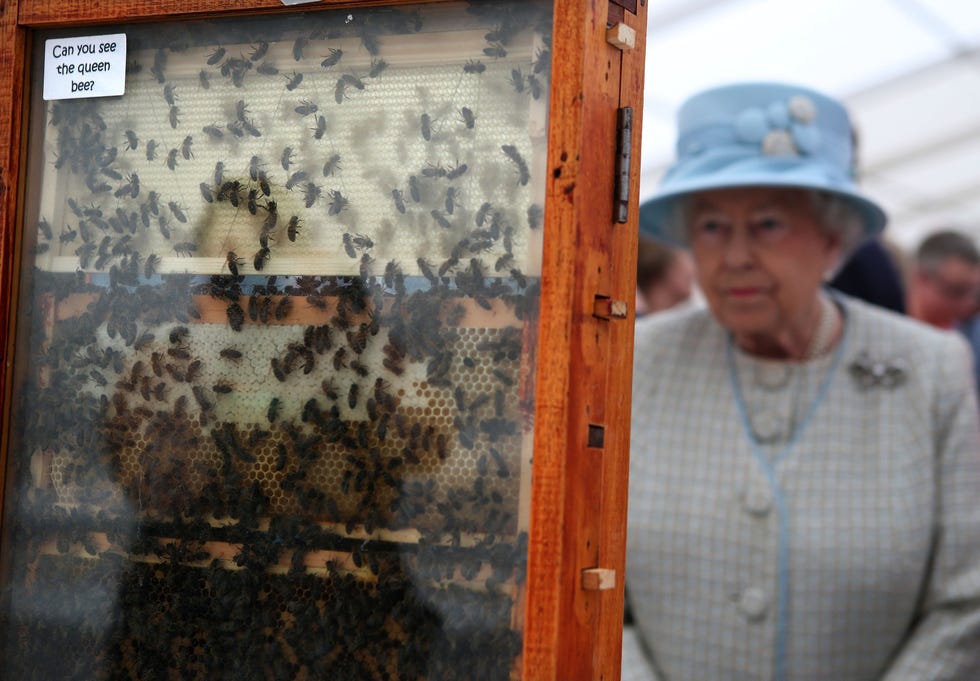 Andrew Milligan – PA Images//Getty Images
Queen Elizabeth II is shown bees by Aberdeen Bee Keepers Association’s David Findlater as she visited the 150th Anniversary Turriff Show in Turriff, Aberdeenshire.
After Queen Elizabeth died in 2022, the royal beekeeper, John Chapple, informed the bees they had a new master. “It is traditional when someone dies that you go to the hives and say a little prayer and put a black ribbon on the hive,” Chapple shared at the time. “The person who has died is the master or mistress of the hives, someone important in the family who dies and you don’t get any more important than the Queen, do you? You knock on each hive and say, ‘The mistress is dead, but don’t you go. Your master will be a good master to you.’ I’ve done the hives at Clarence House, and I’m now in Buckingham Palace doing their hives.”
King Charles is an avid beekeeper.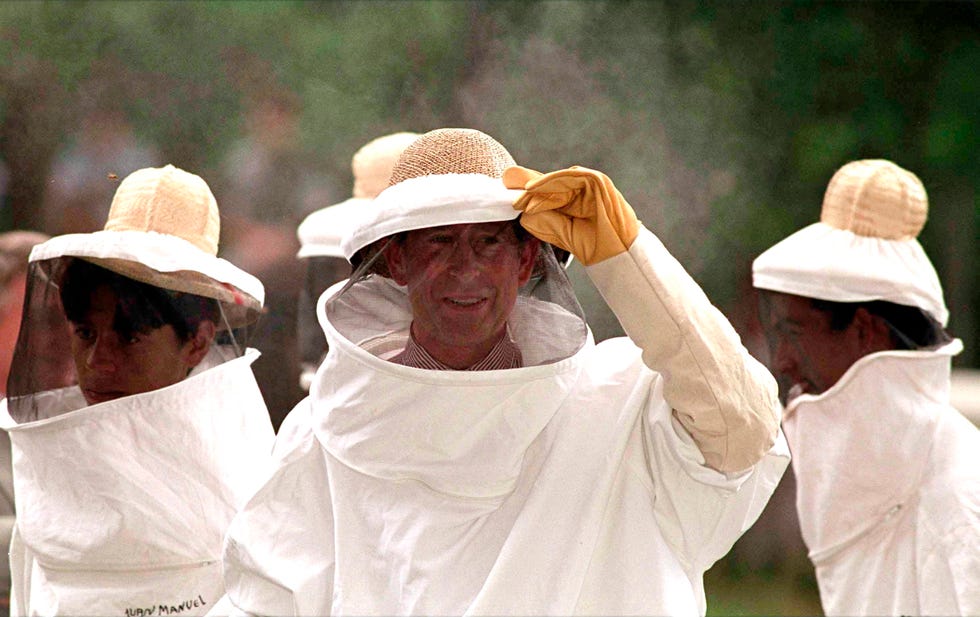 Tim Graham//Getty Images
Charles in a beekeeping suit, 1999.
Charles has long kept hives at his homes, including Highgrove House and Sandringham Estate. At Sandringham in particular, “there are a number of beehives, with each batch of honey having its own distinct flavour depending on where the beehives are situated at time of collection. The honey could have notes of the lime trees which line the roads at Sandringham, or heather and lavender.” Visitors can purchase Sandringham honey as a souvenir.
In addition, Highgrove Gardens sells honey “produced from the myriad of royal bees who call Highgrove home.” In addition, in the gardens of Balmoral and Highgrove, “bee friendly flowers are planted in the garden to encourage wild bees and other pollinators,” according to the official royal family website.
From the Archives:Queen Camilla is patron of Bees for Development.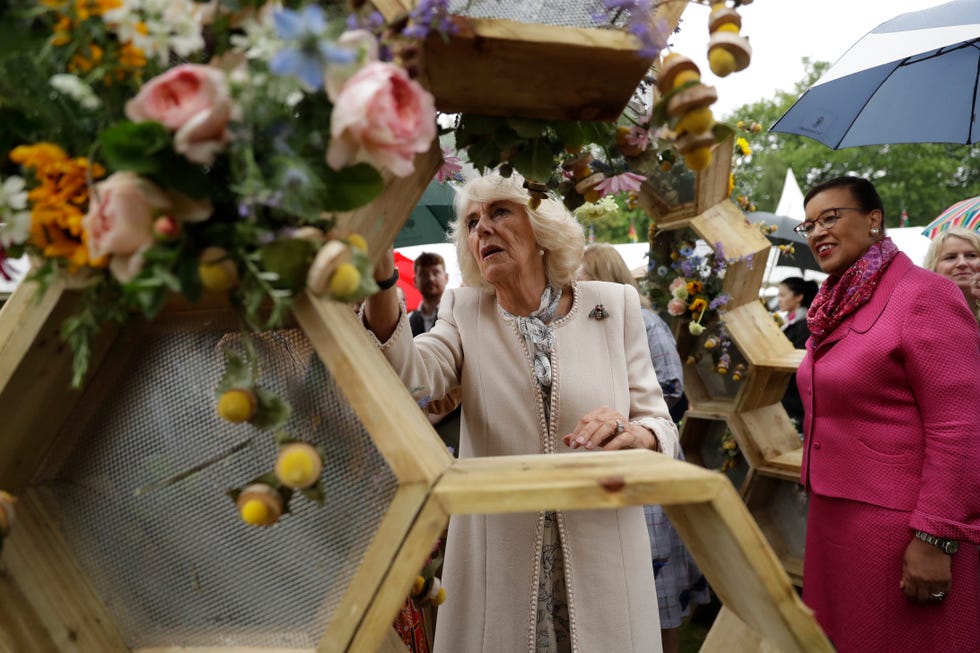 WPA Pool//Getty Images
Camilla at the Bees for Development biennial Bee Garden Party at Marlborough House on June 12, 2019.
Camilla was named patron of the organization in 2020, when she was the Duchess of Cornwall. The organization promotes the role of bees in sustainable development worldwide, noting on their site, “Across the world, nature-based beekeeping offers a simple, affordable way for families and communities to earn an income, strengthen food security and care for their natural environment. We work alongside local partners to share practical skills, knowledge and confidence so that beekeepers can succeed on their own terms.”
Camilla also has hives at her Wiltshire home, Ray Mill House; honey from them is sold at Fortnum & Mason to raise money for charity.
Kate Middleton keeps bees at Anmer Hall.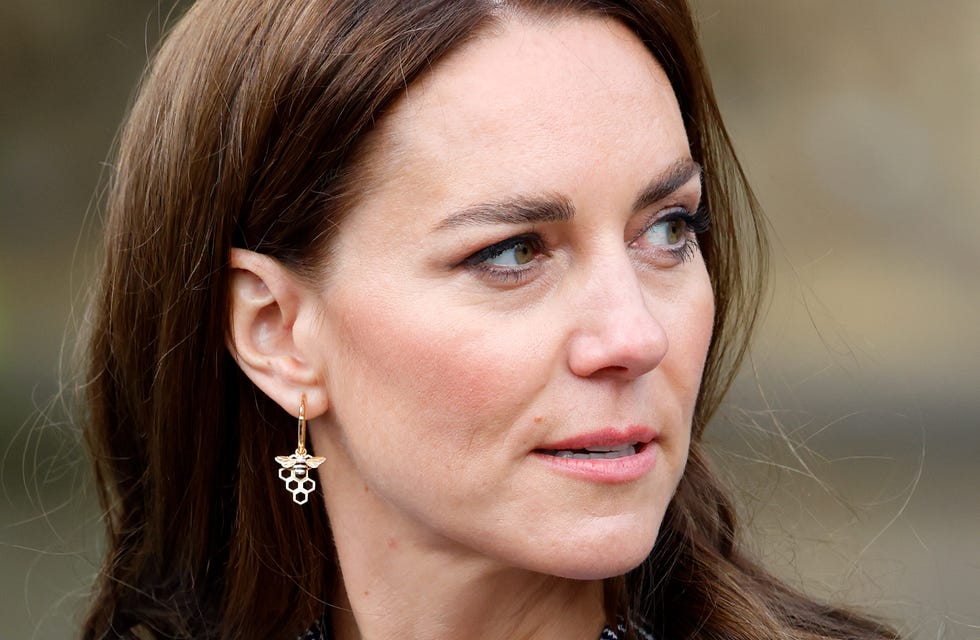 Max Mumby/Indigo//Getty Images
Kate wears bee earrings in 2022.
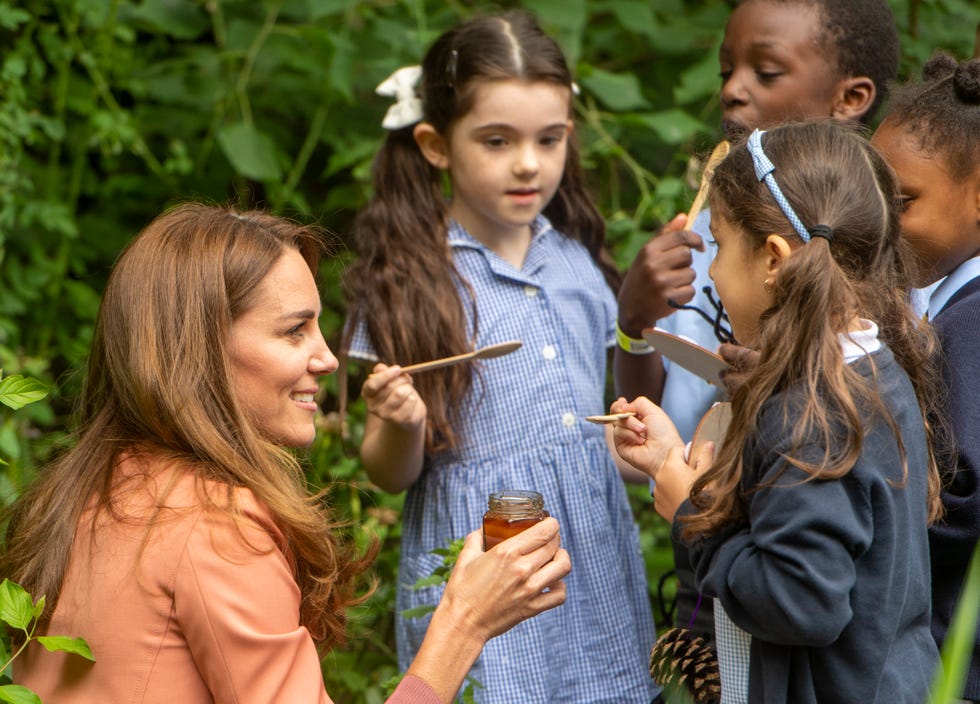
The Princess of Wales is also an avid beekeeper. On one engagement earlier this year, Prince William said, “Catherine’s got her own bees. She knows a lot about bees.” In 2021, she brought honey from her hives, which she keeps at Anmer Hall in Norfolk, to an engagement at the Natural History Museum, telling children, “This came specially from my beehive. Every time you see a bee, say thank you so much because they make delicious honey.”
In addition, when Kate hosted First Lady Melania Trump this past fall in Frogmore Gardens, the children they met were given special packed lunches that featured sandwiches with honey from the Anmer Hall beehives.
 WPA Pool//Getty Images
Kate with honey from her Anmer Hall hives, 2021.
Her brother, James Middleton, has also long been a beekeeper. In 2020, he wrote an essay about the hobby, sharing the he now has half a million bees in eight hives at Bucklebury Manor in Berkshire. “Beekeeping to me is a meditation. It’s a chance to escape my mind and be so consumed by something that hours can pass by without knowing it. Meditation is a wonderful tool to help with stress, anxiety, depression and doesn’t just need to be practiced sitting down!” he posted on Instagram.
His first beehive was a gift from his sisters, Kate and Pippa Middleton. Last year, James revealed his sister Kate “shares a love of bees and has a few hives herself.” He added, “I wouldn’t say it’s a competition, but we definitely compare notes.”
Meghan Markle has a backyard apiary in Montecito, California.
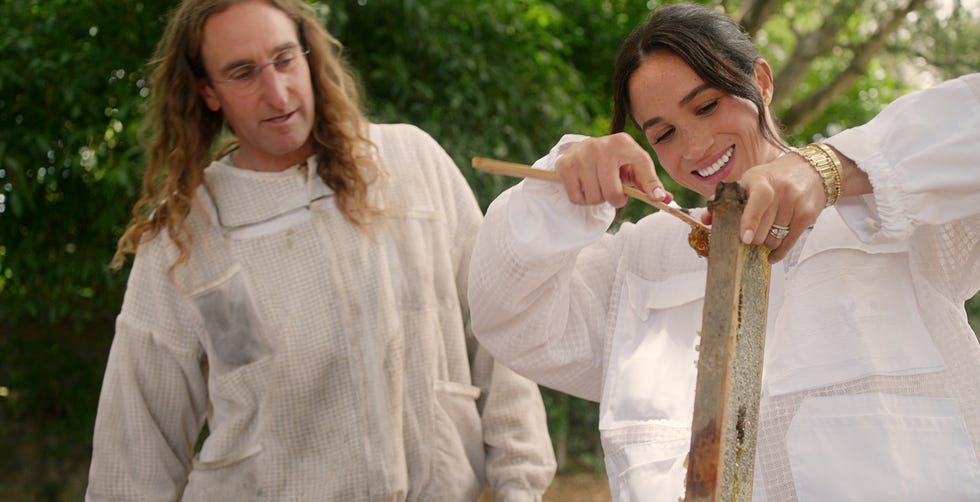
Like her sister-in-law and father-in-law, Meghan, too, keeps bees. The opening scene of With Love, Meghan featured her harvesting honey from her backyard hive. She described the process as “a little reminder to do something that scares you a little bit. I think that’s part of it, but I’m trying to stay in the calm of it. Because it’s beautiful to be this connected.”
 netflix
Branden Aroyan, beekeeper, with Meghan, Duchess of Sussex in episode 101 of With Love, Meghan.
Meghan has also shown glimpses of her beekeeping with her daughter, Princess Lilibet, on Instagram.
In addition, Meghan’s brand, As Ever, sells honey, including “Sage Honey with Honeycomb,” described as “100% California-harvested honey kissed with sage is a sweet reminder to pause and savor the moment.” The brand also notes the honey is “Reminiscent of warm days spent tending to the abundant varieties of sage growing in her own garden, this honey holds a special place in Meghan’s heart.”

Emily Burack (she/her) is the Deputy Digital Editor for Town & Country, where she covers entertainment, celebrities, the royals, and a wide range of other topics. Before joining T&C, she was the deputy managing editor at Hey Alma, a Jewish culture site. Follow her @emburack on Instagram, Twitter, and other social media platforms.