

April 28, 2026 — 10:56am
Save
You have reached your maximum number of saved items.
Remove items from your saved list to add more.
AAA
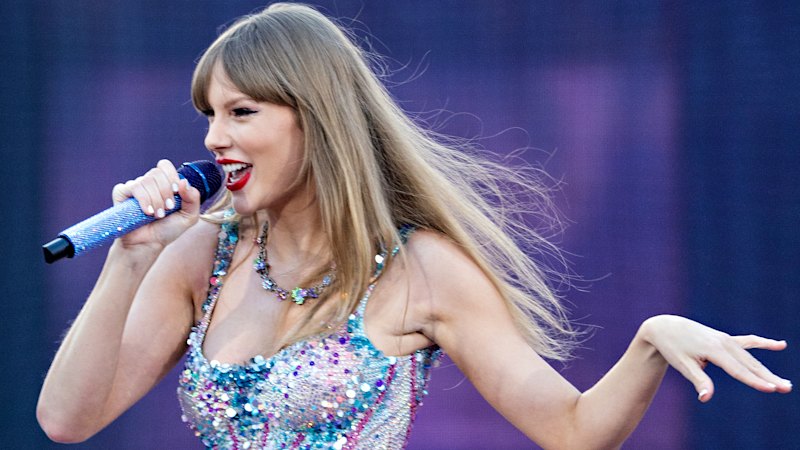
Now that artificial intelligence is clearly here to stay, celebrities are taking notice and pushing back. Pop juggernaut Taylor Swift recently filed three trademark applications, seemingly in an attempt to protect her voice and likeness from being recreated without her consent.
Her applications, filed with the US Patent and Trademark Office late last week, cover distinct “sound marks”, namely the singer saying “Hey, it’s Taylor Swift” and “Hey, it’s Taylor”. They also cover one image trademark, specifically of the artist holding a pink guitar while standing on-stage in a multicoloured bodysuit and silver boots (one of her signature Eras Tour looks).
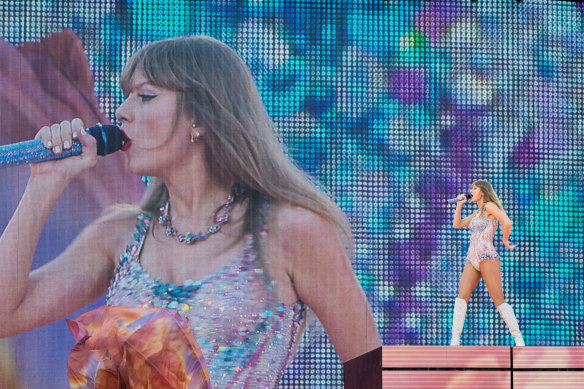 Taylor Swift has applied to have her voice and image trademarked. Note: this image is not the visual used in her application.Jason South
Swift isn’t the first to take such measures in the uncertain age of AI. Hollywood star Matthew McConaughey was granted eight trademarks in 2025, including an audio snippet of him saying, “alright, alright, alright” – his famous line from the 1993 indie comedy Dazed and Confused – among other audio and video clips.
There are existing copyright protections for creative types. In the US, copyright law protects songs, but this is complicated by AI, given that the technology can now generate entirely new creations based on an artist or actor’s voice. Beyond that, an individual’s likeness or image is protected by “right of publicity” laws in certain states.
Related Article
However, intellectual property attorney Josh Gerben wrote in his blog that Swift and McConaughey’s recent filings “test new theories on how trademark law will work in the AI age”.
Gerben, the first to spot Swift’s filings, said her trademark could theoretically allow the singer to claim that any use of her voice or image that resembles the registered trademarks violates her trademark rights. They technically don’t have to be identical reproductions – if the creation is “confusingly similar” to her trademark, she could have a case.
“It’s a shot across the bow,” according to Dr Kathy Bowrey, a professor in the Faculty of Law and Justice at UNSW. Bowrey says Swift is arguing “that if AI content is going to be generated, then she is claiming an entitlement to a share of whatever pie there is to have, and theoretically also trying to control some of those uses, especially those she isn’t comfortable with”.
Sounds rather foolproof, right? Surely, every celebrity will jump on a similar bandwagon as AI continues to evolve. Well, not quite.
Swift and McConaughey are among the first to use trademarks to try to protect their voice – such a case has yet to be fully brought to court, especially regarding AI. No precedent exists, though they could eventually set one.
Such trademarks are partially limited to the country in which they’re granted since they apply to specific jurisdictions. “Without Australian trademark registrations, for example, they wouldn’t work here,” Bowrey said.
Celebrity rights legislation applies in some parts of the world, “but it doesn’t work particularly well in Australia – we don’t have an analogue for that. We have competition laws. If something is, in practice, deceptive and misleading, then you can prevent that. But there isn’t anything that creates an ownership-right over image or likeness.”
For now, it seems such a trademark could give US artists and actors additional protections – or further ammunition – in the fight against non-consensual AI creations that mimic their persona.
Related Article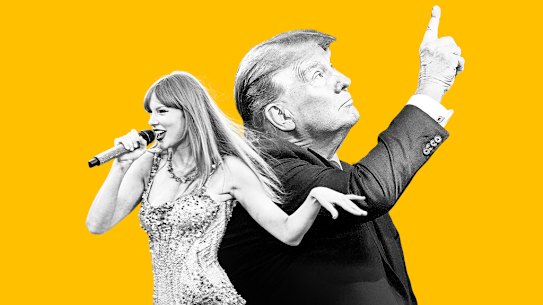
It’s unsurprising that someone like Swift would find this appealing. She has been mimicked by AI several times without her permission. Last year, Meta’s unauthorised AI chatbots of virtual celebrities, including Swift, reportedly “routinely made sexual advances”, forcing the tech giant to take them down. The singer has been the subject of pornographic “deep fakes”, and US President Donald Trump even shared an AI-generated image of her during the 2024 election campaign that falsely suggested she endorsed him.
This is becoming an increasing challenge for celebrities, who make money from singular personas. The entertainment industry’s growing unregulated use of AI was one of the major issues during the dual Hollywood strikes in 2023.
The studios struck a deal that ensured significant AI guardrails, but it remains a contentious issue. British television presenter Jeremy Clarkson applied to trademark his face earlier this year after his image was used without consent in various advertisements. Meanwhile, Scarlett Johansson hired lawyers in 2024 after finding her voice “eerily similar” to an OpenAI chatbot.
It remains to be seen if Swift’s filings will work as intended. According to Gerben, “A Federal Court will need a case to stress-test the legal theories behind the filings. That said, the legal theories behind the filings [seem] strong.”
Must-see movies, interviews and all the latest from the world of film delivered to your inbox. Sign up for our Screening Room newsletter.
Save
You have reached your maximum number of saved items.
Remove items from your saved list to add more.
 Nell Geraets is a Culture reporter at The Age and The Sydney Morning Herald.Connect via X or email.From our partners