
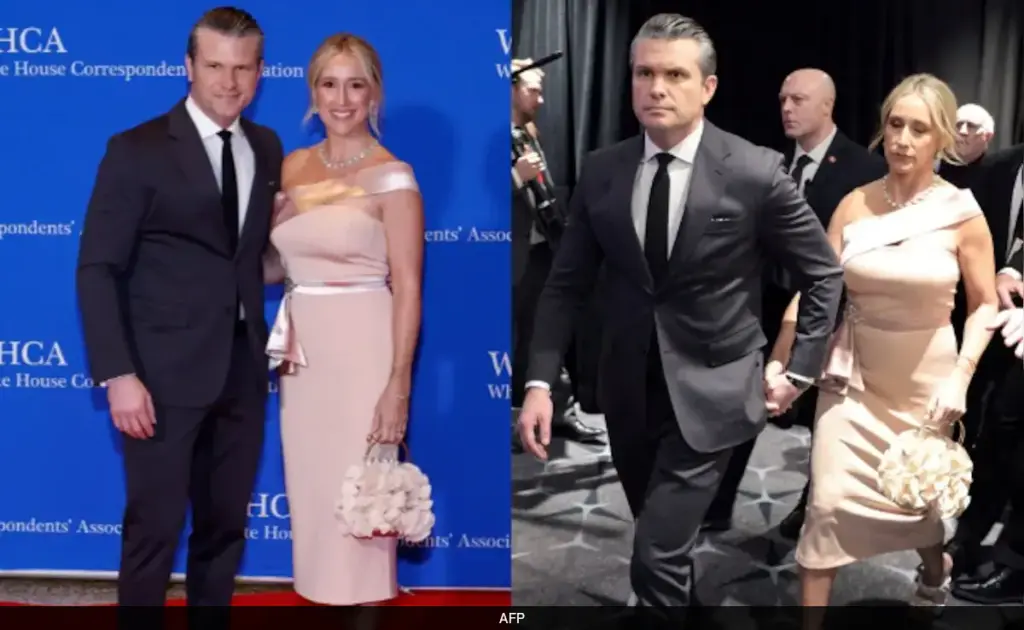
A dress worn by Jennifer Rauchet at a major Washington event has triggered a sharp online debate, bringing together questions of politics, fashion and ethics. Rauchet attended the White House Correspondents’ Dinner with her husband, Pete Hegseth. Soon after, images from the event went viral, with several social media users claiming that her gown closely resembled a low-cost dress sold by Chinese fast fashion platforms such as Shein and Temu. According to a report by The Guardian, similar dresses were listed online at prices between $40 (approximately Rs 4000) and $60.
The controversy has largely centred on accusations of political contradiction. Critics argued that wearing an inexpensive imported outfit appeared inconsistent with the “America First” stance often associated with Hegseth and his political circle, especially at a time of tense US-China trade relations. The same Guardian report highlighted how the debate quickly moved beyond fashion into political messaging.
Also Read | Who Is ‘Indian Illegal Alien’ Atharva Vyas? The Man Accused Of Biting A 3-Year-Old Girl
However, not everyone agreed with the criticism. A report by The Daily Beast noted that many people defended Rauchet, saying her choice made her seem more relatable and pushed back against the idea that public figures must wear luxury designer clothing.
So folks are melting down over Pete Hegseth’s wife’s dress she wore to the WHCD event.
Apparently it’s from Temu. If it were expensive, you’d call her privileged or something. But because it’s supposedly from Temu you call her poor and cheap.
Never happy.
Who cares. She… pic.twitter.com/XqkjsWJ97u
— Jay Bee (@TheRealJBx) April 27, 2026
The discussion also opened a wider conversation about fast fashion. Experts pointed out that companies like Shein and Temu have faced repeated criticism over labour conditions and environmental impact, raising ethical concerns about affordability versus responsibility. The episode shows how even a personal fashion choice can turn into a political flashpoint, reflecting deeper divisions over consumer habits and global trade.