

The latest headlines from our reporters across the US sent straight to your inbox each weekdayYour briefing on the latest headlines from across the USYour briefing on the latest headlines from across the US
A father-daughter duo has admitted to orchestrating an elaborate art forgery scheme that defrauded New York City’s most prominent fine art auction houses and unwitting buyers out of at least $2 million. Karolina Bankowska, 26, and her father Erwin Bankowski, 50, pleaded guilty on Tuesday to charges of wire fraud conspiracy and misrepresenting Native American–produced goods.
The sophisticated operation involved creating at least 200 meticulously designed imitations of artworks by celebrated artists such as Banksy, Andy Warhol, and Andrew Wyeth. These fakes were then passed off as genuine, often targeting lesser-known pieces to avoid immediate suspicion.
New York City art dealer Robert Rogal recounted a visit from Karolina Bankowska a little over a year ago, when she presented a framed painting purportedly by Wyeth. Rogal, intrigued, accepted the piece on consignment, estimating its auction value between. “The provenance was a little fuzzy,” he said. “But she seemed credible. It wasn’t an obvious counterfeit.” Rogal now believes the painting was a fake.
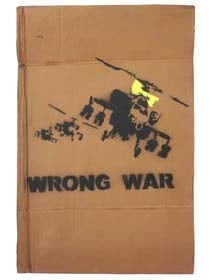 The purported Banksy work was sold for $2,000 (Department of Justice)
Prosecutors revealed that the counterfeits were forged in Poland by an unnamed co-conspirator, often using antique paper and fabricated stamps of defunct galleries to lend an air of authenticity.
The most lucrative fake, a purported work by artist Richard Mayhew, was sold by DuMouchelles auction house last October for $160,000. A representative for DuMouchelles confirmed cooperation with federal authorities but declined to comment further. Other targeted auction houses, including Bonhams and Phillips, either declined to comment or did not respond to inquiries.
The Bankowskis, Polish citizens residing in New Jersey, face the possibility of more than three years in prison under federal guidelines, along with $1.9 million in restitution and potential deportation to Poland. The charge of misrepresenting Native American–produced goods stems from their duplication of works by Luiseño artist Fritz Scholder.
In court, Karolina Bankowska stated, “My conduct was wrong and I am guilty.” Her attorney, Todd Spodek, noted his client had placed over $1 million in an escrow account. Erwin Bankowski, through a Polish interpreter, also apologized, with his attorney Jeffrey Chabrowe adding that his client had “regrettably made a terrible decision in an effort to support his family.”
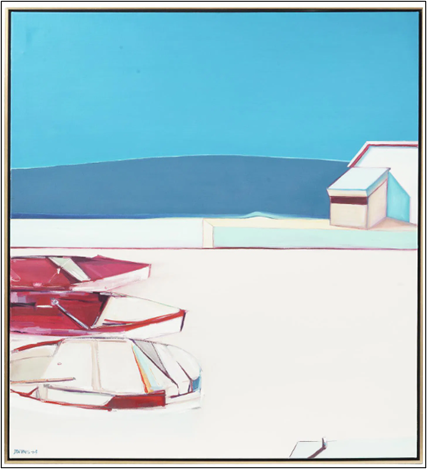 This alleged Raimond Strapans work was sold for $60,000 (Department of Justice)
The revelation of the scheme has sent ripples through the art world, with experts describing it as a classic example of a far more prevalent issue than many in the industry care to admit.
“The only unusual thing about this case is that the forgers got caught,” said Erin Thompson, a professor of art crime at the City University of New York. “People think of the art world as a genteel place full of cultured people who just want to share the wonder of beautiful art. You should assume there are a lot more fakes out there.”
The scheme began in 2020 when the Bankowskis started commissioning the Polish artist. Scrutiny began to mount in March 2023 when representatives for artist Raimonds Staprans discovered a forged painting, “Triple Boats,” for sale.
 This alleged Richard Mayhew work was sold for $160,000 (Department of Justice)
Despite their contact with the auction house, the painting sold for $60,000. Thompson also noted irregularities in the fake Wyeth’s gallery stamp, which listed a 1976 date but included a zoning address phased out in 1962, coincidentally bearing the name of M. Knoedler & Co., a gallery that closed amid allegations of forgery.
Rogal ultimately failed to list the Wyeth, partly because the stamp on its back was “too clean.” When he asked Bankowska to retrieve it, she never responded. Re-examining the painting in a Queens warehouse, Rogal reflected, “You try to do a service and provide it correctly. Can we be fooled? Absolutely.”