
The ’80s were a great time for movies, especially of the sci-fi genre. These flicks had many futuristic gadgets that gave people a taste of what the future might be like — you likely remember how those technologies felt magical and made the 2000s seem so far away from us. Titles like “Back to the Future,” “Runaway,” and many others portrayed devices that people thought were impossible to create at the time, yet some became real and popular years after.
If you grew up watching these films on an ’80s TV, you know that many of these predictions about what our lives will be like in the future never came to fruition. For the gadgets that became real, some even arrived exactly as promised or in forms better than they seemed in movies. Others, however, came with some limitations that screenwriters didn’t take into account, like hoverboards that need special tracks. So, even though some technologies still have flaws in some areas, they left ’80s movies and, in some way, became part of our daily lives.
Self-lacing sneakers
Hethers/Shutterstock
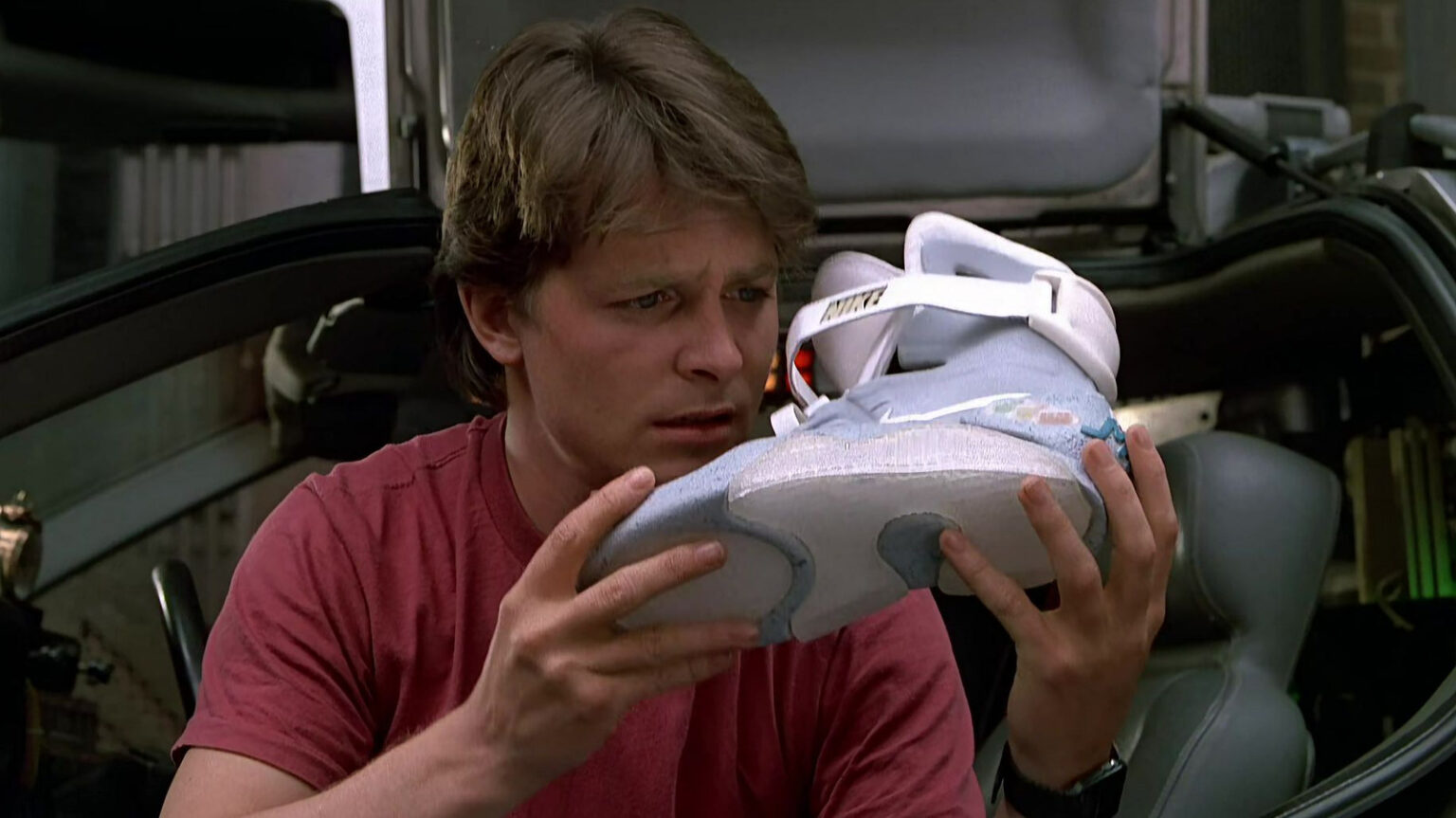
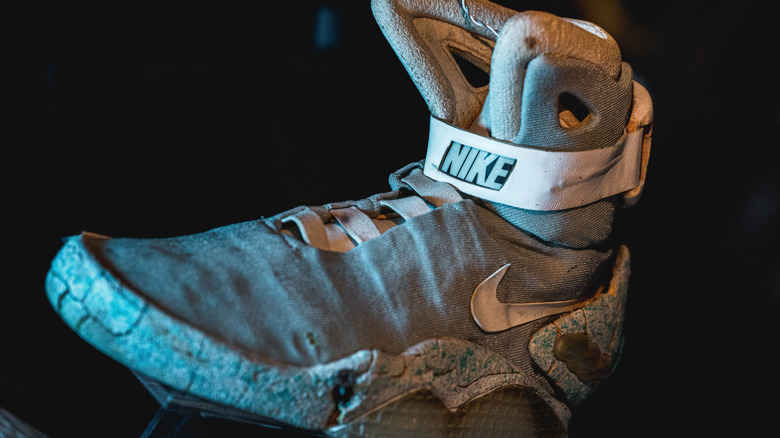
“Back to the Future Part II” came out in 1989 and, beyond continuing Marty McFly’s story, it took a shot at predicting what life would look like in the then-distant future of 2015. Some of those predictions aged better than others — and the self-lacing sneakers are among the ones to actually make it into the real world. What started as a 12-second camera trick on set became an engineering challenge that Nike eventually pulled off.
The company itself received an invitation during the production of “Back to the Future Part II” to imagine what footwear would look like in 2015. In 2016, Nike reproduced a self-lacing version of the MAG model that McFly wore in the movie, with sensors that detected the presence of a foot and activated motors to adjust the laces. The first functional model in that line went as a gift to Michael J. Fox himself and his charitable foundation.
Afterward, the project led to the development of the HyperAdapt 1.0, a product especially made for athletes that used the same self-tightening technology present in the MAG. The most affordable sneaker that came from that project was the Nike Adapt BB from 2019, but because of the price and the history of software bugs, the models never took off with the general public. In the end, the tech became real, but the popularity didn’t.
Hoverboard
“Back to the Future Part II” is one of the main references when people talk about ’80s technology that they wish was real. Another gadget in this flick was the hoverboard, which became a dream purchase for many children of that era — the possibility of a flying skateboard was incredible. In fact, a version of that device even got produced, but not in the way many people expected.
In 2014, Greg Henderson almost made this idea a reality when he started the Hendo Hoverboard on Kickstarter.Thanks to the magnetic levitation tech, the board could float above the ground and hold up to 250 pounds. Tony Hawk even went viral by using one of those boards at that time. After that, Lexus tried to enter the market in 2015 with its Slide, which was cooled by liquid nitrogen and could also float over magnetic surfaces.
The problem is that neither product launched commercially. Both depended on specially prepared surfaces, which was far from the freedom Marty McFly had on the streets of Hill Valley. Eventually, Hendo redirected its maglev technology to industrial applications. So, hoverboards do exist, but not in the way many people imagined in the ’80s.
Smartwatches
Alina Mosinyan/Shutterstock
Many movies in the 20th century explored the possibility of having a powerful device on your own wrist, and James Bond was one of the main characters to show it off. In “Octopussy,” he had access to the Seiko TV watch, which was actually a real device that the Japanese company had already launched at the same time. So, companies had considered something similar to a smartwatch for a long time. But unlike how it looked on screen, the watch was not that practical.
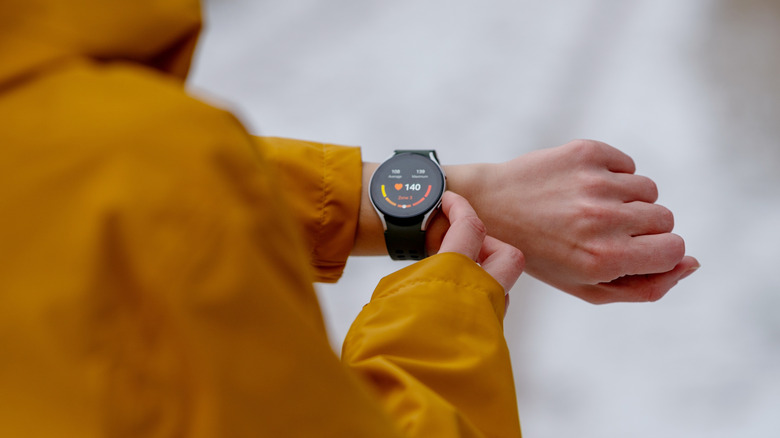
For the small liquid crystal display to transmit television channels, the user had to carry a huge and heavy signal receiver in a pocket. A cable also connected it and ran inside the user’s clothing. Needless to say, it didn’t have much everyday use. Fast forward to today, and even the cheapest smartwatch brands can do more complex things and have an easier time doing them than a Seiko TV from the ’80s. Companies like Apple and Samsung have used the miniaturization of electronic components to create complex devices, letting you make calls, monitor your health, and make payments from your wrist.
Robot vacuums
Yuganov Konstantin/Shutterstock
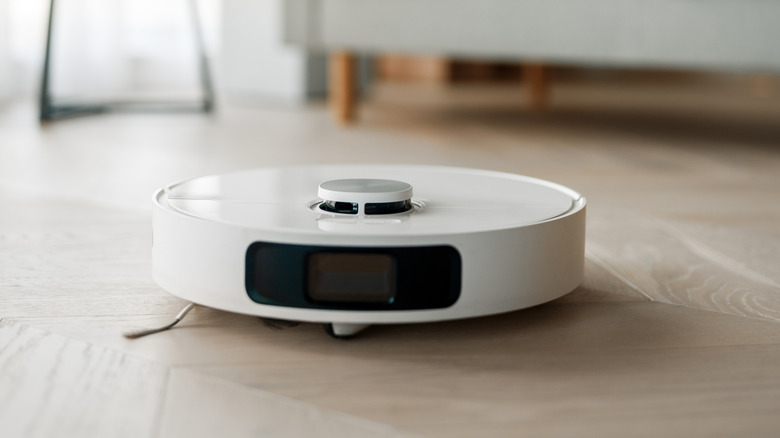
If you have a robot vacuum in your home, know that, in part, you live in a future that Hollywood imagined in the ’80s. Today, several major brands make these gadgets, which, for many people, no longer count as a novelty — they’re just another common household appliance. These devices can map spaces and avoid obstacles to keep your living space organized.
Even though the movie did not achieve the same popularity as other sci-fi works from that era, 1984’s “Runaway” imagined robots integrated into everyday life before it turned into an action thriller. In the feature film, these autonomous machines handled some routine tasks in their owners’ homes. That vision became real many decades later, even though our robots look very different. However, the movie became better known because those robots turn into killers over the course of the story and because Gene Simmons from KISS played the villain. Even though that still has not happened in our reality, the quieter ideas of “Runaway,” such as autonomous machines cleaning the kitchen floor, ended up becoming real.