
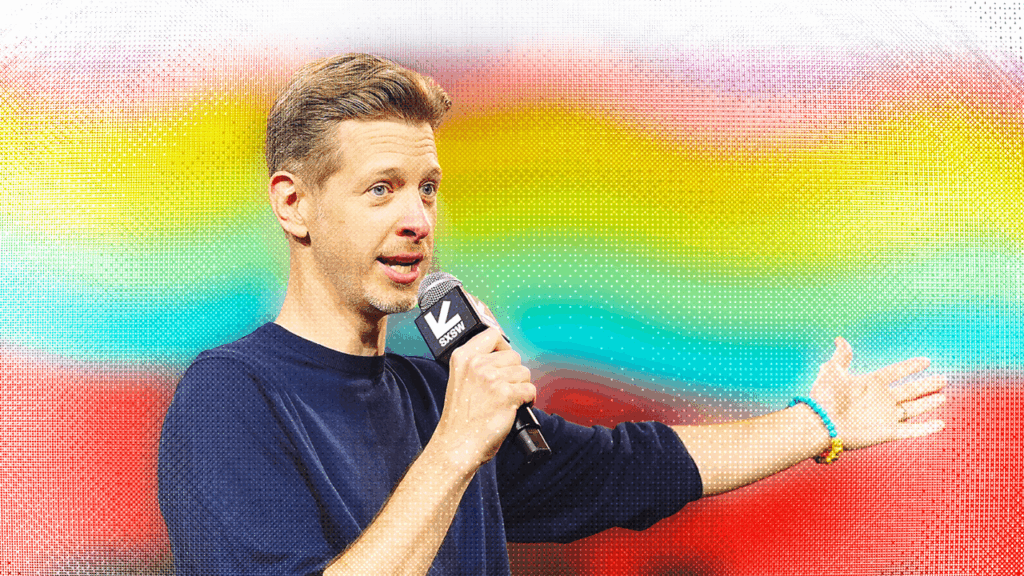
For the contemporary movie nerd who consumes films then consumes all the media dissecting and discussing those films, Sean Fennessey looms large. As a host of Spotify x The Ringer’s The Big Picture podcast and a frequent guest across the network’s other hugely proper programming such as The Rewatchables, Sean’s voice and opinion on movies past and present, and the state of the industry, carries heavy weight and travels far—especially at a time when—thanks to IMAX marketing, Letterboxd, and other recent vehicles for movie discourse—cinephilia has never been more mainstream.
But for the truly Tapped In, appreciation for Sean’s voice on cultural works of significance stretches back years before he ever sat in front of a camera, when he was a vital pen in the world of music coverage at places like Vibe, Pitchfork, and this very publication. That history made it all the more intriguing when he announced his intentions to get back to the written word earlier this year via Substack, where he recently launched the newsletter Projections. Sean and I caught up earlier this week on a video call—he from his home office, his infamously large collection of physical media encroaching on all sides of the frame—to talk through his impulse to write again, the art of podcasting, whether Hollywood’s sky is falling or if things are suspiciously looking up, and the thing Steven Spielberg and Bill Simmons have in common.
I guess my first question is, why start a Substack?
There are a few reasons. One is very sentimental and personal, which is that I really like writing, and I missed it a lot. I’ve been podcasting for about 10 years now, and I love doing it, and don’t intend to stop doing it. But I find that it is sometimes an… imprecise form of media.
Especially the way that we make shows, it’s very purposefully designed to be a hang. The shows that I’m on for the most part are shows with me and my friends, some of whom are literally my closest friends in the world. And so, the dynamic that’s created is, we give each other shit or we can explore the more eccentric parts of our personality, but it’s not as formal a discussion as it might be if you were having it with a stranger or someone you don’t know as well.So a lot of times it’s the end of an episode and I’m like, did I even really fully say what I wanted to say about that movie? And it doesn’t mean that the show isn’t working or I’m not happy with it. It just means that thinking about movies critically, or any art form critically, does require a lot of precision.
I’m a very neat and tight kind of person. So it’s interesting that my career has moved into this direction of a less tight form of communication. So I was trying to find a way to write a little bit more, communicate a little bit more clearly about how I felt about certain things.
And then, the other thing is just thinking about the second half of my life, and the second half of my career, and why I got into this in the first place, and what I want to be doing over time. I think writing is something I feel like no matter how I look or how I sound, I’ll be able to do that over time.
I felt I really needed a new challenge having been doing what I’ve been doing. And at work, we were talking about how writing and media and publishing and journalism is evolving. I was talking to Bill Simmons and he was just like, “You’re already putting all your thoughts in Letterboxd reviews up for free, all the time. Why are you doing that?” And so, this was a way to expand upon what I was doing in that way and formalize it a little bit. I’ve only written a few pieces so far, but I like it. And you know this feeling, of when you hit publish on something, there’s a little chill that you get, a different sense of accomplishment.