
By Andrew Hammond
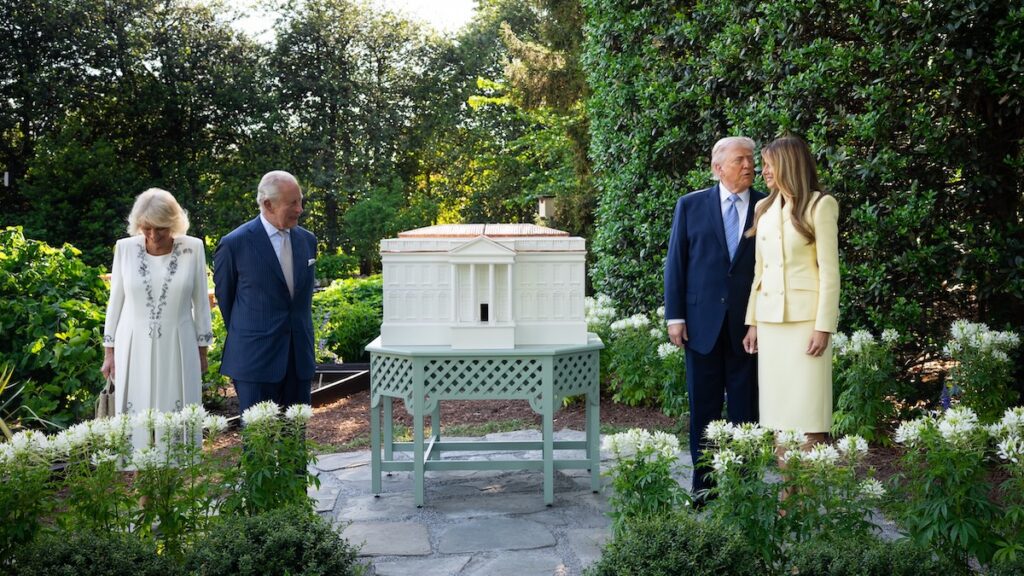
Much pomp and pageantry accompanied the four-day visit by UK King Charles and Queen Camilla to the US. However, beneath all the gloss, the tour may have been one of the most important undertaken by any British monarch since at least the 1950s Suez crisis.
As much as the 250th anniversary of US independence from Britain shaped the narrative for the trip, it is another date — almost 70 years ago in 1957 — that Charles will have been keenly aware of as he visited US President Donald Trump and addressed Congress on Monday and Tuesday. Then, as now, US-UK relations had significantly deteriorated when Queen Elizabeth II made her own first US state visit to meet President Dwight Eisenhower.
The successful October 1957 tour saw Eisenhower assert that “the respect we have for Britain is epitomized in the affection we have for the royal family, who have honored us so much by making this visit to our shores.” Unquestionably, Elizabeth helped stabilize relations between the two countries after Eisenhower’s significant disagreements with Anthony Eden, who resigned as UK prime minister in January 1957 following the Suez debacle, to be replaced by Harold Macmillan.
Fast forward 70 years and a new Middle Eastern conflict, this time in Iran, is again the backdrop for challenging relations between the two governments. Trump has frequently scolded Prime Minister Keir Starmer over his refusal to join this latest war, saying the UK leader is “no Winston Churchill,” and has made disparaging comments over UK military capabilities and its performance in recent wars, including Afghanistan. Another thorny security issue is the proposed Starmer deal on the future governance of the Chagos Islands, site of a key US-UK base on Diego Garcia.
The Starmer government is also on the political back foot amid the turbulent aftermath of last year’s sacking of Peter Mandelson, the UK ambassador to Washington, over his links to child sex offender Jeffrey Epstein, a former contact of Trump in New York before Trump ran for the presidency.
However, politics is not the only area in which the two nations are at loggerheads. On economic issues, too, tensions are high.
Some UK politicians are concerned that the deterioration in Trump-Starmer ties could unravel some of the deals announced last year during the US president’s state visit to the UK. That saw Trump, when his relationship with Starmer was in a better place, saying “we’re forever joined and we are forever friends and we will always be friends.”
During that visit, the two leaders signed what was billed as a landmark tech partnership aimed at strengthening cooperation in artificial intelligence, quantum computing, and nuclear energy. The UK prime minister called it “the biggest investment package of its kind in British history” and “ground breaking,” not least given that it would bring thousands of new jobs to the UK.
The pledges mainly from US tech giants and financial groups amounted to investment of about $205 billion over several years. Trump also hyped up the agreement, saying: “We have also just signed a historic technology prosperity deal, one of a kind, to ensure our countries lead the next great technological revolution side by side.”
Given the growing tensions between Trump and Starmer, Charles pitched for UK business, including encouraging post-Brexit deeper trade ties with the US. Already, the UK has signed multiple trade agreements with US states, including North Carolina, South Carolina, and Indiana, and it is trying to secure targeted federal-level deals on key UK exports.
As head of the Commonwealth, Charles also made a broader charm offensive during his trip for the nations in the club, including South Africa. These countries are all affected by tariffs and wider Trump agendas, including the president’s decision not to invite South Africa to US-hosted G20 meetings this year.
In these efforts, he was joined by Camilla, who on Tuesday co-hosted an artificial intelligence event with US First Lady Melania Trump that extolled the UK-US relationship.
Charles and Camilla know that Trump is a huge fan of the wider royal family and played up to this during the visit. Trump often says one of his earliest memories was watching television coverage of Elizabeth’s coronation in June 1953 with his Scottish-born mother. Indeed, such is the US leader’s admiration that a portrait of Elizabeth is now on display at his Mar-a-Lago residence in Florida.
As king, Charles sought to show the distinction during his trip between the UK’s royal head of state and head of the government, Starmer. This difference makes the UK royal family a key asset when it comes to international diplomacy, as Elizabeth showed in 1957 with Eisenhower.
So the visit was not only aimed at smoothing troubled waters between governments. It was also a reminder that wider ties between the two nations are deeper than individual politicians. This generally highly constructive and successful bilateral longer-term relationship has long been built on traditional links founded on demographics, religion, culture, law, economics, politics, defense, and security.
Taken together, amid the multiple challenges in the US, UK, and wider Commonwealth relationships, the royal visit helped renew wide-ranging collaboration. This will provide some protection for ties if key UK political leaders fail to get on with Trump.
• Andrew Hammond is an associate at LSE IDEAS at the London School of Economics.