
Look, it was unlikely to happen anyway, but Val Kilmer will definitely not be winning a posthumous Oscar.
Over the weekend, the Academy Awards announced changes to a bunch of its eligibility rules, and clarified that you can only be nominated for an acting gong if the role was “demonstrably performed by humans”.
It’s not that before now HAL 9000 could be submitted for a golden statuette, it was that the possibility didn’t even come into play.
Sign up to The Nightly’s newsletters.
Get the first look at the digital newspaper, curated daily stories and breaking headlines delivered to your inbox.
By continuing you agree to our Terms and Privacy Policy.
Like many industries, Hollywood is grappling with the growth of artificial intelligence, which opens up possibilities and threats. The same industry that gave us Skynet as well as Rosie from The Jetsons is now going through its own existential crisis.
Filmmaking is also a creative endeavour so it feels as if there is more at stake than just the jobs within the industry. The stories that are made, that are told, will affect how audiences – the royal we – understand the world around us.
If that’s decided by AI, with tech algorithms collating and distilling, rather than creating through feeling all the fragility and inscrutable nuances of human emotions, then what does the future of storytelling look like?
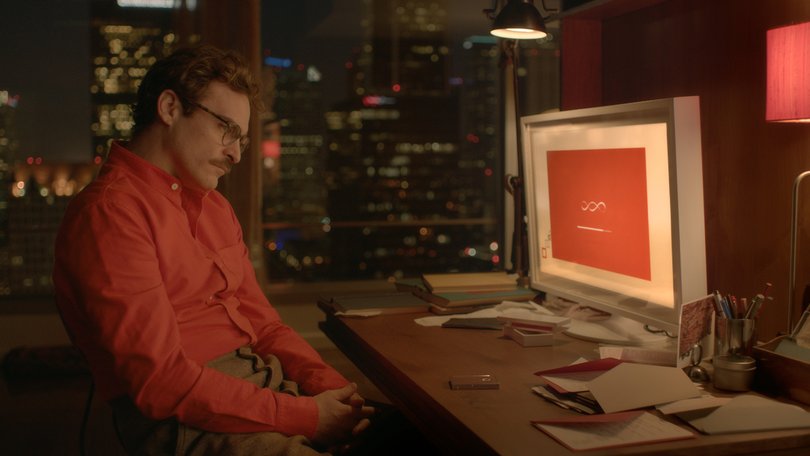 Joaquin Phoenix plays Theodore Twombly, who falls in love with the first artificially intelligent operating system, in the film Her. Credit: Annapurna
No one has answers, but these questions of philosophy, industry and labour are being hashed out, and in a business where money can talk as loudly as artistry, and where egos all want a say.
The Oscars’ ruling is one line in the sand, but the ground is constantly shifting. So, today, the AI version recreation of Val Kilmer in the upcoming film As Deep as the Grave, which was consented to by his estate, will not be eligible for an Academy Award. In 10 years’ time? Who knows.
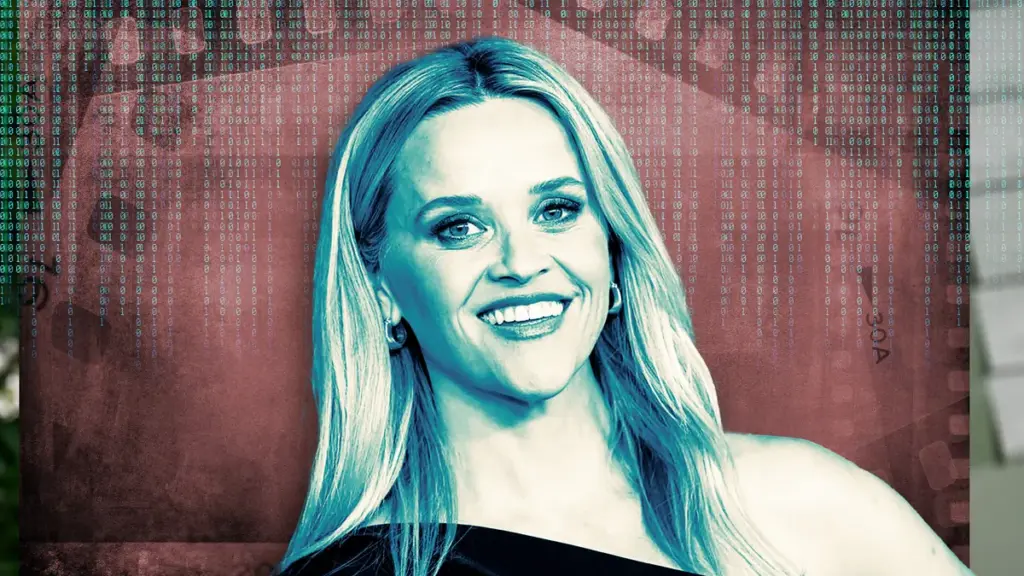
It’s definitely a sore point in the industry, as Reese Witherspoon recently discovered when the actor and producer posted on social media, “The AI revolution has begun, and I need to learn as much as I possibly can about AI and share it with all of you.
“Also, FYI: the jobs women hold are 3x more likely to be automated by AI, yet women are using AI at a rate 25% than men on average. We don’t want to be left behind. So … do you want to learn with me?”
While she received some support, the backlash was instantaneous. Firstly, the wording was a bit cheerleader-y, and sounded as if she was about to announce some kind of commercial partnership. Too many celebrities have been mouthpieces for cryptocurrency for that to not have been a possibility.
But it was also the case that Witherspoon is a high-profile ambassador in a contracting and bruised industry faced with anxiety over their futures. AI is a threat to a lot of livelihoods but there are also huge questions over data centres, energy use, and lack of self- or actual regulation from tech, an industry that’s notoriously elastic when it comes to ethics.
Plus, there was the big one, which affects the creative industries more than anyone else – copyright infringement. Big tech firms are using, largely without consent, payment or even acknowledgement, human creations from the screen, music, publishing and artistic professions to train their AI models.
AI can only do what it can do now because of all of the human-created works that preceded it, and for many people, it’s a slap in the face that their own works are being used to put them out of business.
After the barrage of criticisms, Witherspoon expanded on her original post that no one had paid her to promote AI, and that she was driven by curiosity.
“My kids are learning about AI tools, I know a lot of founders who are vibe coding, and I hear about people using AI in EVERY sector of business.
“But I want to acknowledge people’s concerns, they are valid.”
She added that she acknowledged the impact on jobs, the environment and local communities, and that she doesn’t believe “computers should replace humanity”. But that she still wanted to learn what she could.
She’s not alone in Hollywood.
AI is a much hotter topic of conversation than it was even three years ago, when the dual Writers Guild of America and Screen Actors Guild labour strikes had at its heart, demands for protections against AI.
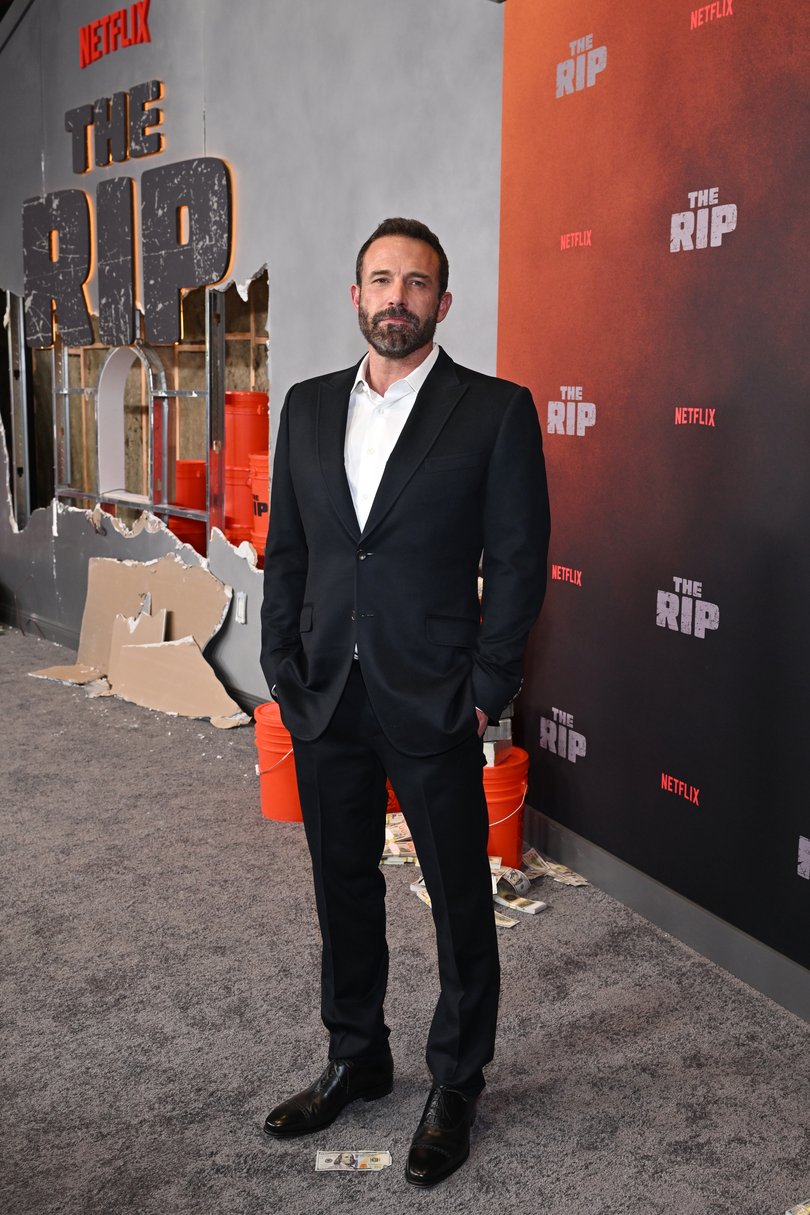 Ben Affleck sold his AI company to Netflix in a $US600 million deal. (Photo by Roy Rochlin/Getty Images for Netflix) Credit: Roy Rochlin/Getty Images for Netflix
After months of picketing outside the major studios, both unions secured some concessions. For the writers, it was that AI use would be dictated by the workers, not the employer. For example, studios wouldn’t be able to use AI to generate a full script, nor could it use AI to edit a human-written script.
For actors, their likeness would be protected from AI, and any use would have to be negotiated.
But those clauses haven’t stopped tinkering around the edges, nor has it stopped independent players who aren’t beholden to the agreements between the unions and the major studios.
Like, Witherspoon, there are plenty of famous artists who have taken the “if you can’t beat them, join them” path.
Ben Affleck is one of the most prominent, and up until earlier this year, secretive. Not many even knew he was playing in the space until it was announced that Netflix would acquire for a whopping $US600 million the AI business, InterPositive, he lowkey founded in 2022.
Affleck has said InterPositive isn’t about replacing creatives, but rather about saving time and money in below-the-line production processes such as visual effects.
“I want to take out all the logistical, difficult, technical stuff that often gets in the way,” he said at the time of the deal announcement. “It’s not about text prompting or generating something from nothing. You’re building a model from your own material.”
Similarly, James Cameron is on the board of Stability AI, an image model-focused business led by Prem Akkaraju, who’s a former chief executive of Weta. Cameron worked with Weta extensively and closely on his Avatar films.
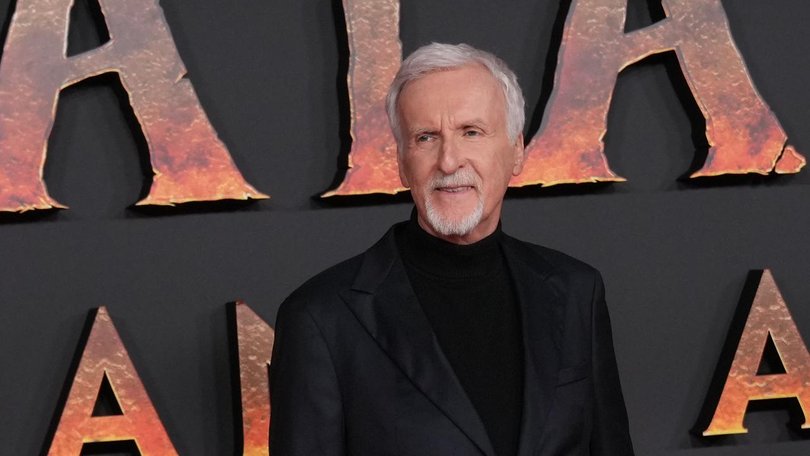 James Cameron is on the board of Stability AI. Credit: AAP
Cameron explained in 2025 on the Boz to the Future podcast that he joined the board because he wanted to understand how it worked, and how AI models could be integrated into developing visual effects-heavy blockbusters, which have only become more and more expensive to produce.
“Now, that’s not about laying off half the staff and at the effects company,” he said. “That’s about doubling their speed to completion on a given shot, so your cadence is faster and your throughput cycle is faster, and artists get to move on and do other cool things.”
However, even with his newfound albeit tempered evangelism, Cameron’s latest film, Avatar: Fire and Ash, came with a title card disclaimer which said, “No generative AI was used in the making of this movie”.
Darren Aronofsky, the director of films including Black Swan, The Wrestler and Requiem for a Dream, partnered with Google’s DeepMind to produce Ancestra, a short film directed by Eliza McNitt, which combined live action and AI.
He followed that up, through his AI production company Primordial Soup, with a web series On This Day … 1776, which restages stories from the American Revolutionary War, coinciding with its 200th anniversary.
The results were, if you were being generous, mixed. There was a definitely uncanny valley feel to the aesthetics and there were tell-tale signs of AI mistakes such as nonsense words on an onscreen pamphlet.
On the plus-side, it at least disclosed that it was created with AI, and the voice actors were real people, and union members.
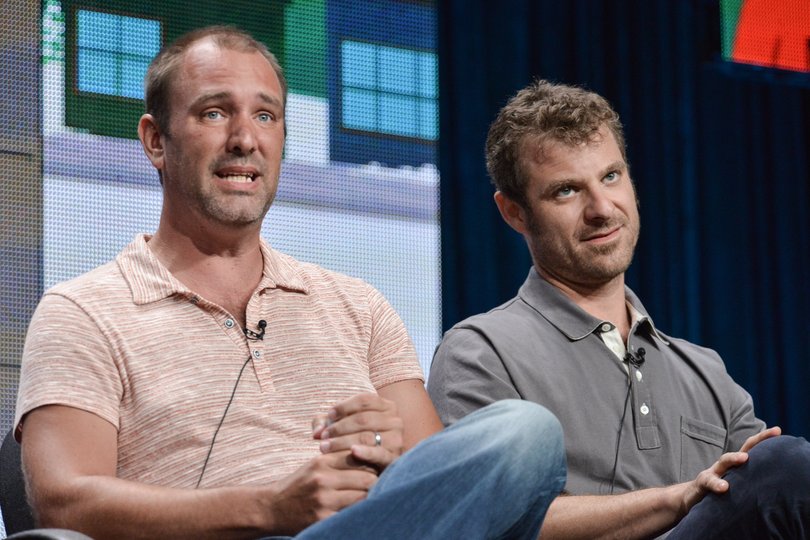 Trey Parker and Matt Stone founded an AI company called Deep Voodoo in 2020. (Photo by Richard Shotwell/Invision/AP) Credit: Richard Shotwell/Richard Shotwell/Invision/AP
South Park honchos Matt Stone and Trey Parker were among the first movers in Hollywood when they founded their AI studio in 2020. The pair have primarily used it in their own productions but it’s also been used by Kendrick Lamar for his music video for The Heart Part 5, and by the TV show Ted to create a de-aged Bill Clinton.
For Stone and Parker, they saw the signs and wanted to do it for themselves rather than have the industry be completely beholden to Silicon Valley. Stone told Vanity Fair, “Those guys came down and scared the shit out of everybody, and they always do that.
“They don’t make movies and they don’t know how to do it – they’re doing a pitch deck”.
That encapsulates the current vibe of if we don’t do it, the tech bros will, which is why the conversations have become a little more nuanced than it was three years ago. It’s reality and inevitability meets survival.
Still, there’s a lot of scepticism, and part of that discourse is to do it correctly and with consideration, again, not something Silicon Valley is known for.
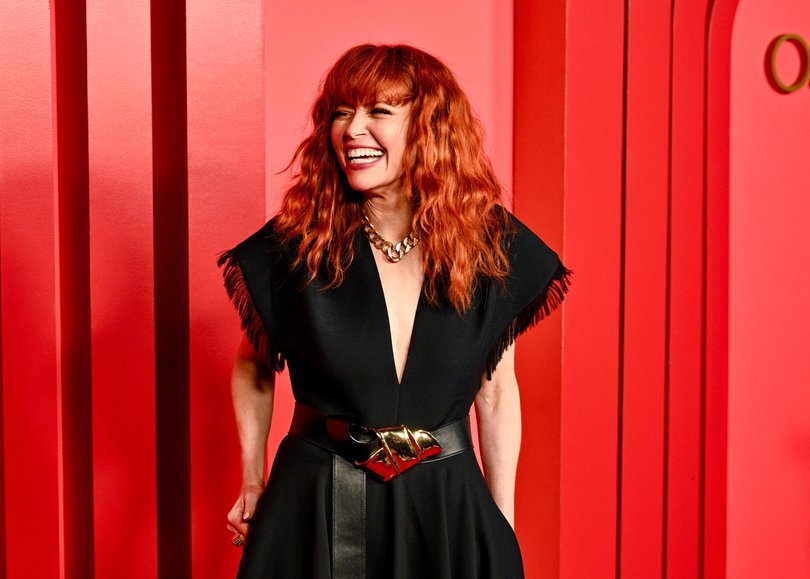 Natasha Lyonne is both working on an AI film and is a co-founder of the Creators Coalition on AI. (Photo by Michael Buckner/Variety via Getty Images) Michael Buckner Credit: Michael Buckner/Variety via Getty Images
Oscar winner Daniel Kwan, and actors Natasha Lyonne (who is working on a movie made with AI) and Joseph Gordon-Levitt co-founded the Creators Coalition on AI in late 2025, with 15 other establishing figures such as former Academy president Janet Yang as well as the supporting signatures of 500 others such as Rian Johnson, Cate Blanchett, Aaron Sorkin and Taika Waititi.
The Coalition is an advisory council of sorts, hoping to help the industry enact guardrails around “shared standards, definitions and best practices as well as ethical and artistic protections for if and when AI is used in entertainment projects”.
The group was quick to say that they weren’t against AI as a rule, but is “drawing a line between those who want to do this fast, and those who want to do this right”.
While all that’s being hashed out, Hollywood and its human creators can still do what it does best, tell stories that engage with the world happening around them.
One movie coming out soon is Luca Guadagnino’s Artificial, in which the villain is played by Andrew Garfield. The real life figure he’s portraying? OpenAI founder Sam Altman.