
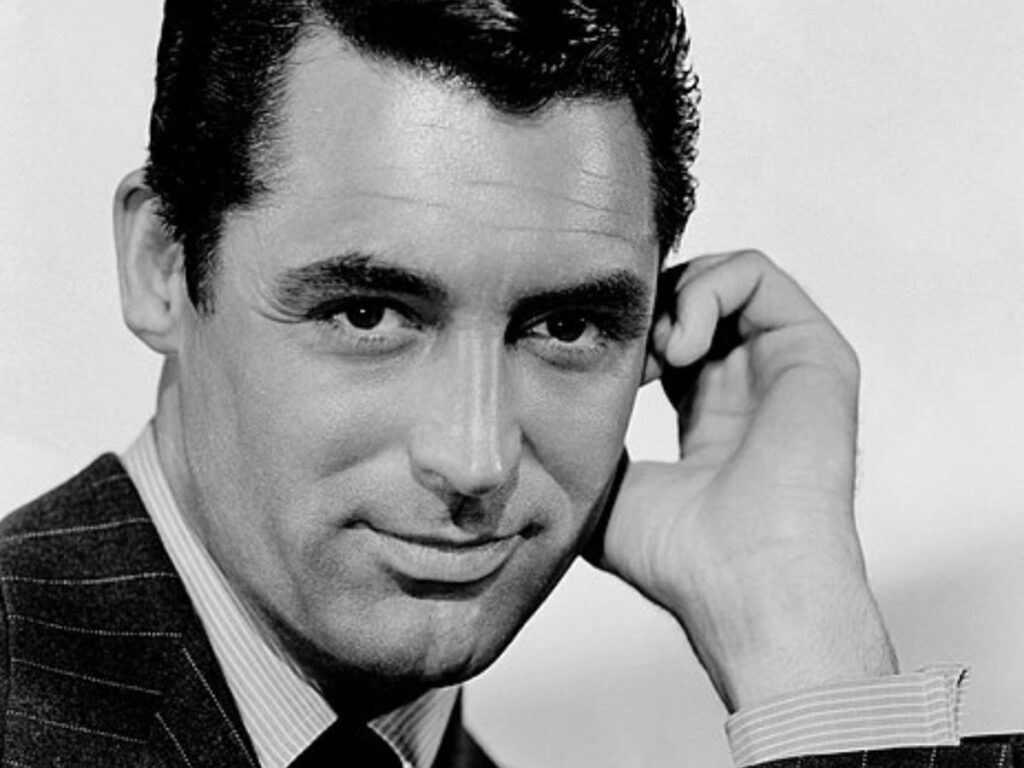
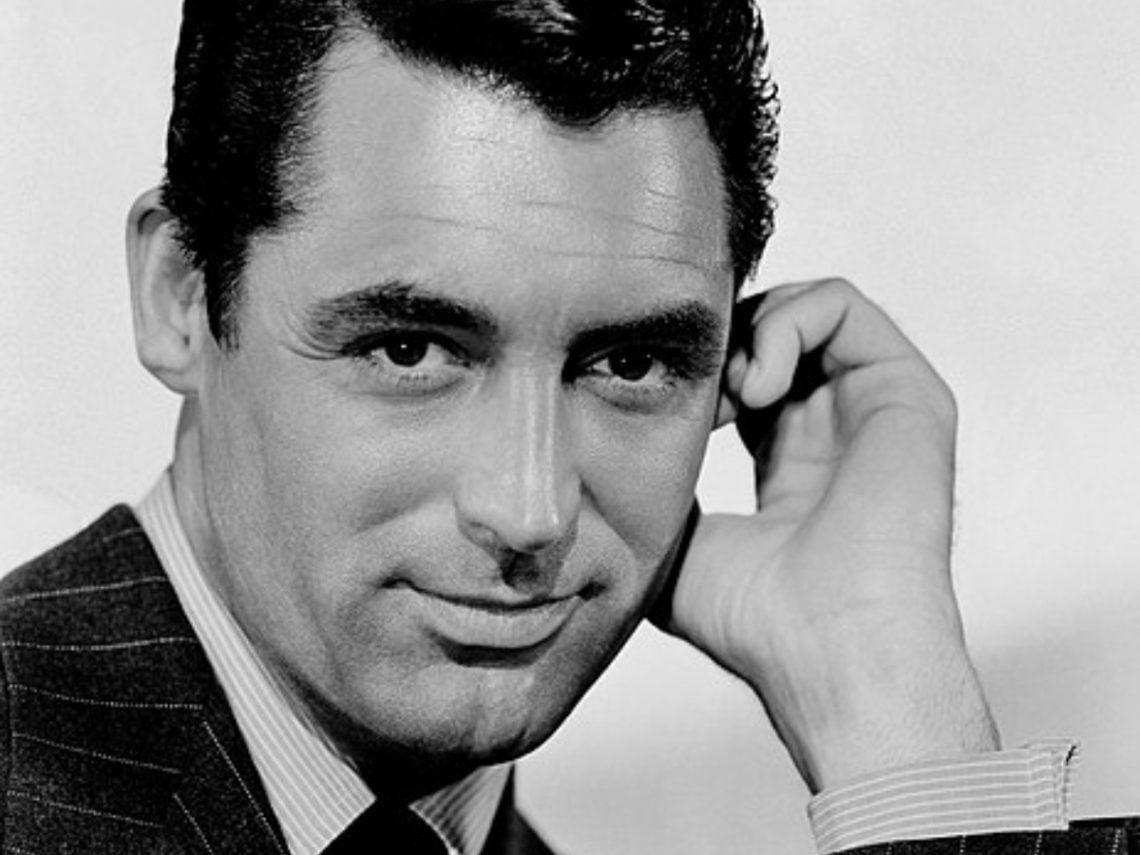
Credit: RKO publicity
It’s hard to argue that there was anyone more charismatic than Cary Grant during the Golden Age of Hollywood, as he had an ability to be romantic, suave, comical, and unbelievably cool all at once, but his aura of indifference was part of a façade.
Grant was one of the rare examples of an actor who was so beloved by the industry that it actually may have been a detriment to contemporary assessments of his performance skills. Even though it felt like he was essentially playing himself, he was actually a far better actor than he was ever given credit for.
Even with Alfred Hitchcock being notoriously prickly when it came to actors, Grant’s most famous roles came from his collaborations with him, as they worked together on North by Northwest, To Catch a Thief, Suspicion, and Notorious, all of which would be ranked among the director’s best. Even though he tended to treat his actors like props and would often get into feuds with his stars, the mutual respect that he and Grant had for one another resulted in one of the greatest director-actor partnerships ever.
Grant’s performance as a clever car burglar in To Catch a Thief might be his most iconic, but it was a far more radical transformation than many realise. In real life, the actor dealt with more anxiety about the way that he was perceived, and often refused to watch his own performances out of embarrassment, so although he didn’t always open up in interviews, Grant mentioned that he was particularly stung by the reception to a 1944 film he was very invested in.
“The film I most cared about was a flop,” Grant said, “None But the Lonely Heart was the only time I played a character very near myself, a man unsure of himself, a drifter, a rake”.
Based on the novel of the same name by Richard Llewellyn, None But the Lonely Heart starred Grant as an unassuming, meek young man who returns to his family home when he is at his lowest, only to discover that they actually need his help. Much of the film dealt with the consequences of World War I, a topic that was on America’s mind, given that it was currently engaged in another global conflict.
That the film was released when it was may have sealed its fate, as this was a time in which the country was searching for escapism, adventure, and comedy; the few drama films that were successful during this era were ones that looked at the war and showed the Allies acting in a heroic manner.
What’s most tragic is that None But the Lonely Heart was very well-received by critics, and even landed Grant his second Academy Award nomination for ‘Best Actor’, but unfortunately, there was no recourse for box office flops in 1944 like there is today. While today a film that underperforms financially might find a second life on streaming, None But the Lonely Heart essentially disappeared after audiences rejected it.
What’s most curious about the film’s underperformance is that it definitely wasn’t a rejection of Grant on a personal level. It was in the same year that he also starred in the comedy Arsenic and Old Lace, which was very well-received and successful, showing that while he was willing to open up and be more personal, audiences just wanted to see him playing the hits.
ADD AS A PREFERRED SOURCE ON GOOGLE 