
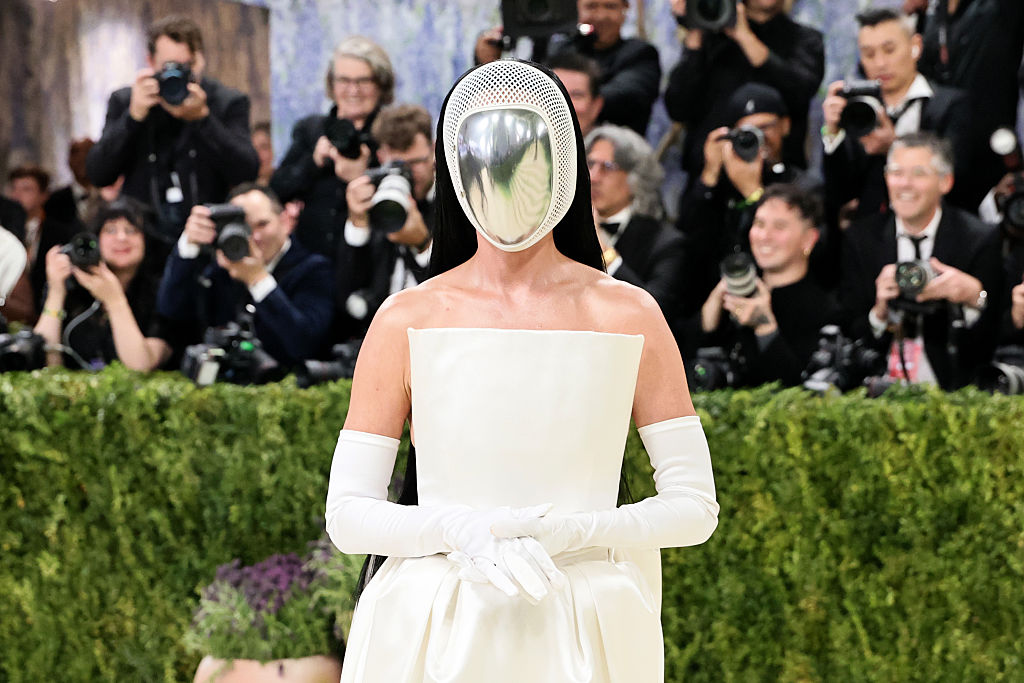
In 2026, the Met Gala is better referred to as the Met-a Gala: the supreme exhibition of celebrity and the unique form of mimetic unreality it produces. In that sense, it can be approached and criticised not just as a fashion exhibition, but as a reflection of larger, looser cultural forces.
The Met Gala is the id of the American elite. It captures and quintessentialises the emptiness and self-involvement of the mega-famous and mega-rich better than any other annual spectacle, having surpassed the Oscars in the Age of the Algorithm.
Every year, there is one kind of moral performance or another, something to protest or project. Multiple invited celebrities allegedly boycotted last night’s event in protest against the Met Gala’s sponsor, Jeff Bezos. Others, by the looks of things, chose to protest by wearing ugly costumes. Perhaps their main complaint is that Bezos is richer than they are, or his companies are just too successful. He has been amiable towards the President, a sensible strategic move, and evidently, that is not allowed in the entertainment world.
At the heart of the Met Gala is a deep cynicism. It takes a premise with which it is hard to disagree — a world-class museum needs more money — and manages to turn the resulting attention and money on the world’s most banal people. All the while, this obscures the immense handicraft of the designers themselves and the larger cultural significance of the Met as an institution. The event further reifies the hold that celebrity has over the American psyche, while conflating fashion as craft or art with fashion as spectacle.
This year’s theme was “fashion as art”, which, on the surface, was meant to celebrate the museum’s new Condé M. Nast Galleries focusing on fashion history. Really, though, this theme was an enticement for celebrities to wear non-functional semi-clothing that then appears on scrolls and reels. Reality exists to feed the screen.
Of course, it is not always shameful to watch things on a screen. Nor is it terrible to appreciate people who are more skilled, more beautiful, and richer than we are. Some comparison — and admiration and envy, one dares to admit — is natural and universal. But there should be some tether to reality, some deference to taste. The Diana Vreeland-era of the Gala during the Seventies and Eighties was at least worthy of envy: tasteful, aristocratic, and actually interested in the museum’s collections and exhibitions. It was a gatekept event, but it wasn’t a circus.
The most interesting thing that the Met Gala could do next year is ban everything digital and immediate, including phones, and only allow analogue cameras. It would be more worthwhile to wonder a little bit about how the other half live, rather than have to see, in such exquisite detail, how pathetic it all is.