
Jim Ross/Getty Images
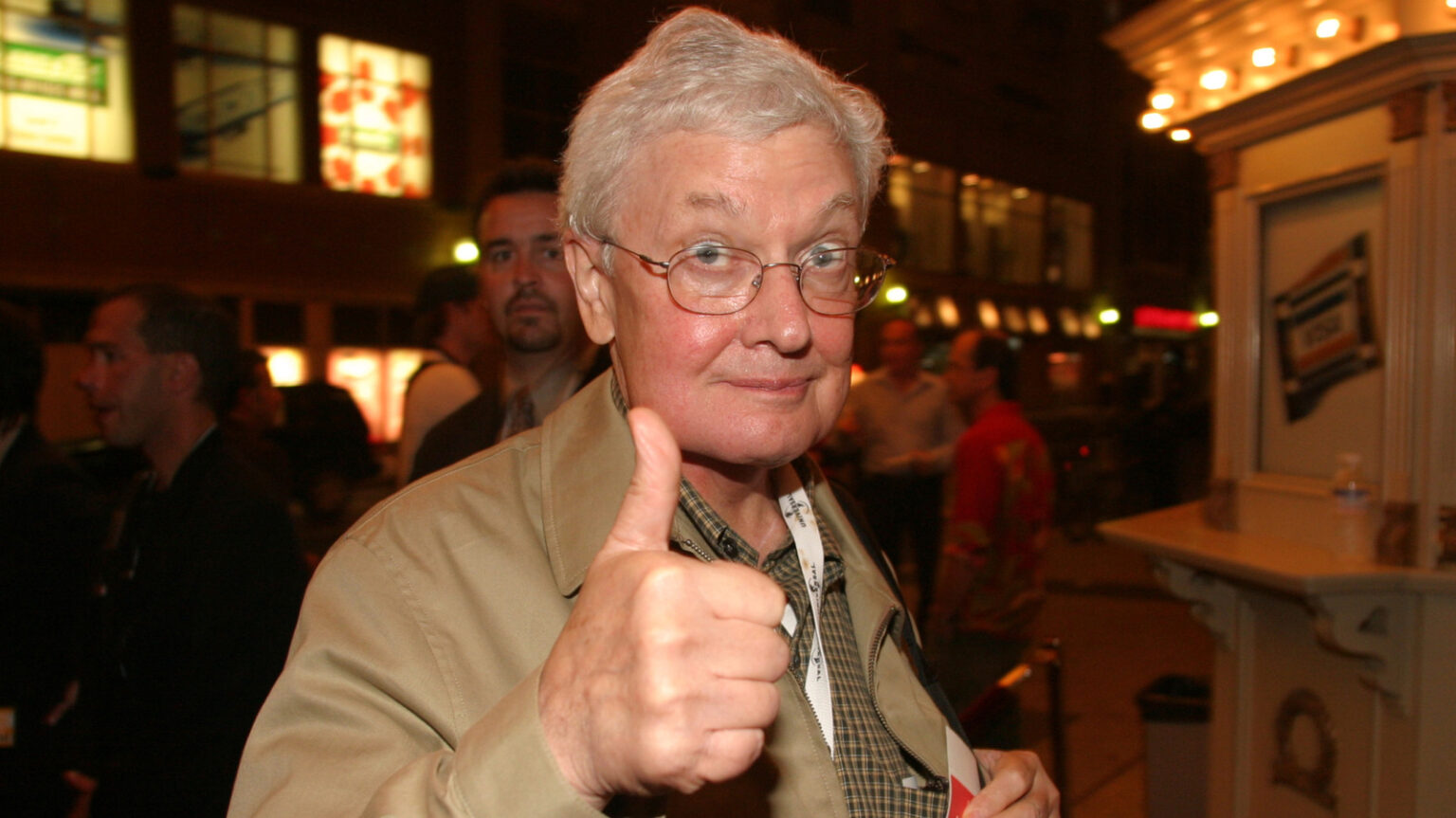
Roger Ebert was one of the world’s premier film critics, having written for the Chicago Sun-Times from 1967 until his death in 2013. He also co-hosted various programs with Gene Siskel, helping to popularize televised reviews while building up a fanbase as his critiques carried weight in the film industry. Throughout his tenure, Ebert’s reviews praised some of cinema’s greatest achievements while decrying some of its worst accomplishments, often doing so with a smile and a thumbs-up (or down).
BFI’s Sight & Sound magazine conducts a poll each decade, asking critics like Ebert to provide a list of their top 10 favorite movies. Ebert participated in 1972, ’82, ’92, 02, and ’12, which was his last. His final contribution came with an essay where he explained his choices, while lamenting that “Lists are ridiculous, but if you’re going to vote, you have to play the game.” Throughout his time participating, Ebert kept his list pretty much the same until 2012.
He decided to swap out one film for a newer pick, which premiered the previous year. That left the public with Roger Ebert’s final top 10 list of the greatest films of all time, and it’s hard to argue with his choices, as he lays out precisely why he picked the movies he did. Granted, he left a few thousand worthy titles on the cutting room floor, but at the end of the day, a list of 10 is what was asked of him, and these are the movies he chose.
Aguirre, Wrath of God
Filmverlag der Autoren
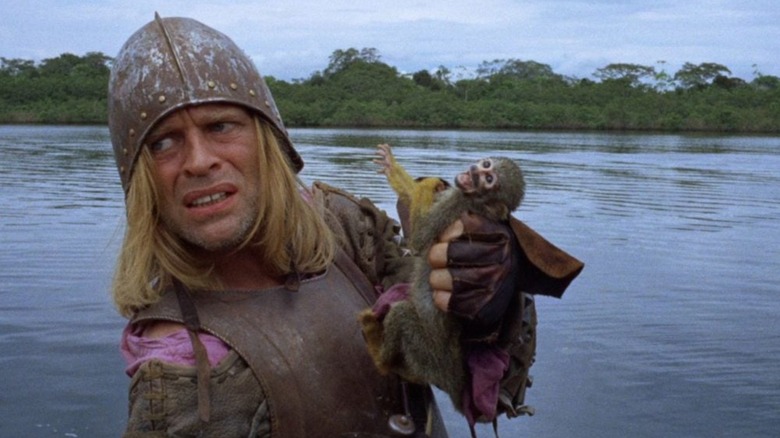
Ebert often praised German filmmaker Werner Herzog, and in his essay, he explained that he chose movies because he considers them to be the best work made by the directors he admires the most. The director has a reputation, as Herzog almost killed Klaus Kinski, but despite their fraught relationship, the two worked together amazingly well. Case in point, “Aguirre, Wrath of God,” which Ebert described as being “the most evocative expression of Herzog’s genius.”
The 1972 epic historical film features Kinski in the starring role of Lope de Aguirre, a conquistador in search of El Dorado. Musical eccentrics Popol Vuh, a collective founded by Florian Frick and who would often work with Herzog, offers a score that sets the tone, which features scant dialogue in deference to a minimalist approach to the narrative. The director told Ebert that he didn’t know the dialogue 10 minutes prior to shooting a scene, as it wasn’t the film’s primary focus. Herzog used sound and the desperation of the mission to depict Aguirre’s descent into madness from one scene to the next.
Kinski’s expressions throughout his time in front of the camera perfectly reveal his collapse. The actor’s deeply methodical approach transcends the screen, pulling the audience into the behind-the-scenes tumult in which Kinski terrorized everyone, including Herzog. Ebert gave the film four stars, describing what he felt Herzog saw in the story, “Men haunted by a vision of great achievement, who commit the sin of pride by daring to reach for it, and are crushed by an implacable universe.”
Apocalypse Now
United Artists
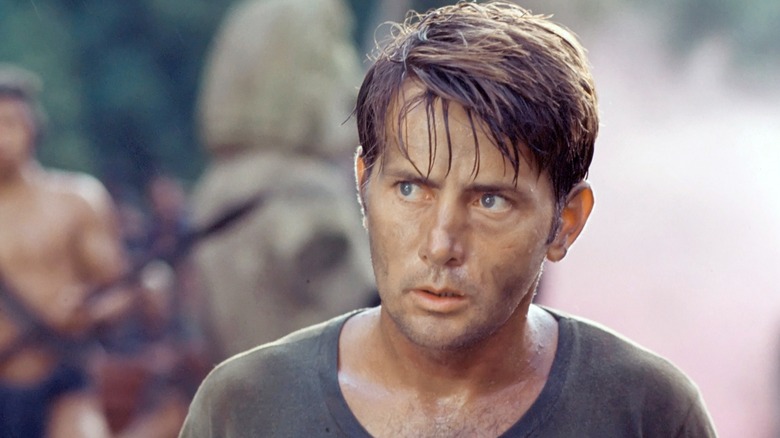
As you’ll find moving through this list, there are some movies that are universally praised, often appearing on top 10 lists from famous critics and cinephiles around the world. “Apocalypse Now” is one such film, as it’s often widely considered among the best movies ever made. Francis Ford Coppola’s adaptation of Joseph Conrad’s novella “Heart of Darkness” reimagines the story in the Vietnam War, where Capt. Benjamin Willard (Martin Sheen) is tasked by the U.S. Army to find Col. Walter Kurtz (Marlon Brando) and “terminate the Colonel’s command … With extreme prejudice.”
Ebert selected “Apocalypse Now” for his list because it “still causes real, not figurative, chills to run along my spine, and it is certainly the bravest and most ambitious fruit of Coppola’s genius.” The film is legendary for the many bizarre things that happened on the set of “Apocalypse Now,” but putting that aside, it’s a revolutionary film that the director gambled much of his own money on making.
For Ebert, the scene in which Lt. Col. William “Bill” Kilgore (Robert Duvall) “leads his troops in a helicopter assault on a village is, quite simply, the best movie battle scene ever filmed.” That’s a difficult statement to argue with, as it’s not only a brilliantly filmed scene, but it’s also iconic, thanks to Richard Wagner’s “Ride of the Valkyries.” The movie is stylistically bold and experimental, yet brutal when it needs to be, while also unforgiving in its application of violence and a general indifference to the horrors of war.
Citizen Kane
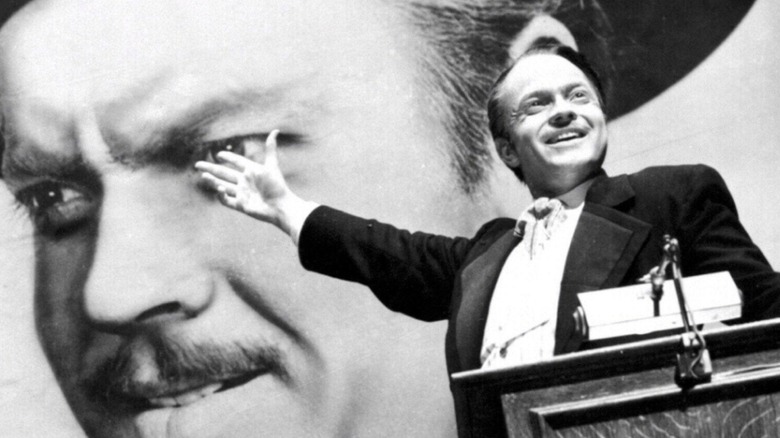
RKO Radio Pictures
“Citizen Kane” has long been considered by many critics to be the best movie ever made. It constantly trades the top spot on lists from the BFI and AFI with other films like “The Godfather” for the top spot, and in Ebert’s selection of it, he only wrote that “Citizen Kane” speaks for itself.” In many ways, the film does stand on its own merits, but for those who haven’t seen it, “Citizen Kane” is a cinematic masterpiece. The 1941 film examines the life of Charles Foster Kane (Orson Welles), who is largely based on William Randolph Hearst.
Kane is bigger than life, but the film begins with his death, where he’s all alone, and only one word leaves his mouth as a snow globe falls to the floor: “Rosebud.” “Citizen Kane” explores the meaning of Rosebud while examining periods of Kane’s life. It’s one of those movies that everyone should see at least once, and it is notable for being Welles’ directorial debut.
Welles also produced and worked on the screenplay, taking a great deal of the load, carrying “Citizen Kane,” which ranked at the top of Sight & Sound’s decennial poll for half a century. RKO Pictures handed Welles the keys to the cinema and gave him carte blanche to do whatever he wanted, and the gamble paid off. “Citizen Kane” will forever be remembered as one of the greatest movies ever made, while also setting a standard that few filmmakers could ever hope to emulate.
La Dolce Vita
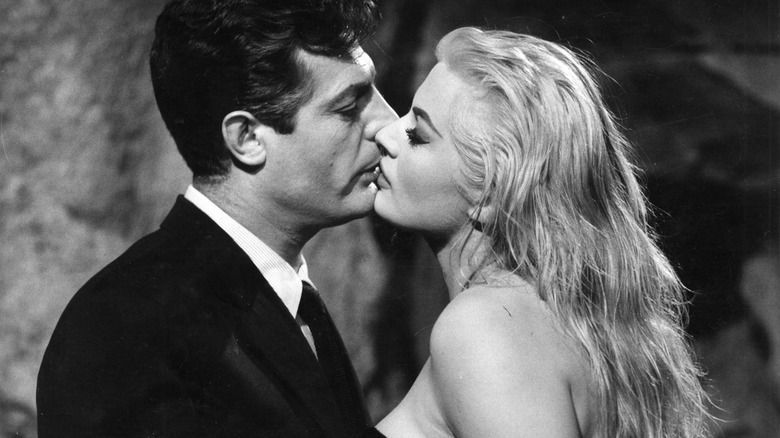
Cineriz
Another of Ebert’s favorite directors was Federico Fellini, and he wrote that his selection of “La Dolce Vita” was due to how he saw the movie as a touchstone in his life. He called it “A film about a kind of life I dreamed of living, then a film about the life I was living, then about my escape from that life.” Fifty years after the movie’s release, he then saw it as a story that was truly personal to him, which is why he chose it over “8 ½,” “Amarcord,” or “La Strada.”
While they’re all excellent Fellini flicks, many would argue that “La Dolce Vita” is the better picture. The satirical comedy tells the story of a tabloid journalist who spends seven days and nights in Rome, Italy, living the supposed sweet life. The film is divided into seven parts and includes many ups and downs. It was a major success upon release, winning the highly coveted Palme d’Or at Cannes and the Academy Award for best costume design.
“La Dolce Vita” also puts focus on a character named Paparazzo (Walter Santesso), who gave the world the word ‘paparazzi,’ showing that art can transcend the silver screen. Fellini’s breakup of the film’s structure suggests a duality, where light balances against the dark, pitting one side against the other as each night is confronted by a dawn. It’s a brilliant analysis of the extravagance of living the sweet life and is allegorical of living without direction.
The General
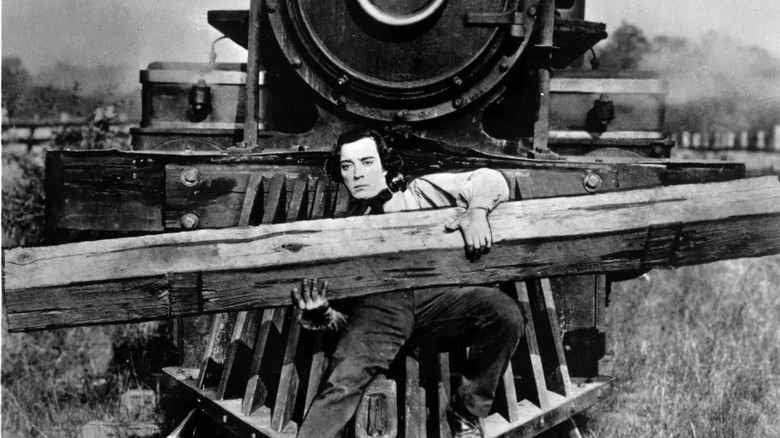
United Artists
In his essay, Ebert notes that he must include a silent film, and he settled on Buster Keaton’s “The General,” believing it to be the director’s best work. The 1926 comedy is based on a true story that took place during the American Civil War, which was made towards the tail end of the silent era. Indeed, the first feature-length studio-produced “talkie,” “The Jazz Singer,” debuted in 1927, so “The General” was one of the last great silent movies.
In the film, Keaton plays an engineer who loves two things: trains and a woman named Annabelle Lee (Marion Mack). Thanks to the war and some Union soldiers’ shenanigans, much of the action involves one locomotive chasing another with plenty of stunts thrown into the mix. Keaton performs them all himself, actually doing what appears on screen at a time when special effects for action scenes weren’t really a thing. That was Keaton’s way, having grown up in vaudeville, where he learned his trade, and it paid off in his film work.
Unfortunately, when it premiered, it bombed at the box office, killing Keaton’s independence with MGM. This was unfortunate, as retrospective reviews, including one written by Ebert, have heaped significant praise upon “The General,” calling it Keaton’s greatest work. Ebert returned to Keaton’s films often, more so than Charlie Chaplin’s, writing in his review of “The General,” “They have such a graceful perfection, such a meshing of story, character and episode, that they unfold like music.”
Raging Bull
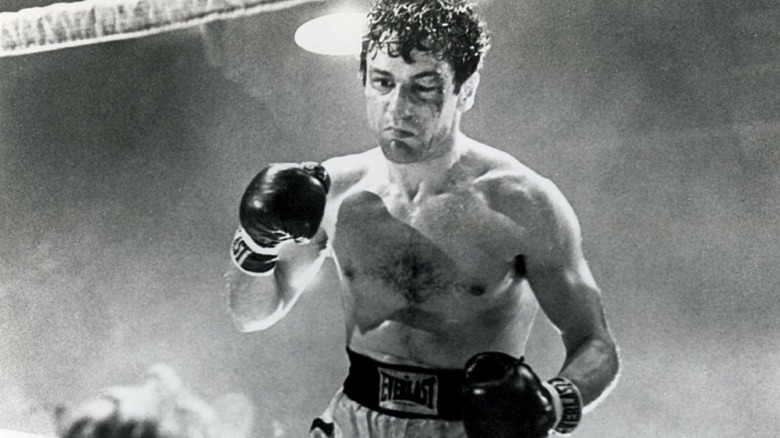
United Artists
Director Martin Scorsese’s career is filled with some of cinema’s greatest movies, and “Raging Bull” is often at the top of the list. It’s AFI’s pick for the number one sports movie ever made, and it’s Ebert’s pick from a director he truly admired. In choosing the film and its director, Ebert wrote, “I believe “Raging Bull” is his [Scorsese’s] best and most personal, a film he says in some ways saved his life. It is the greatest cinematic expression of the torture of jealousy — his “Othello.”
As he described it in his review of “Raging Bull” in 1998, the film isn’t about boxing, and is instead “about a man with paralyzing jealousy and sexual insecurity, for whom being punished in the ring serves as confession, penance, and absolution.” This is the story of “Raging Bull,” which recounts the life of Jake LaMotta, as adapted from his 1970 memoir “Raging Bull: My Story.” Robert DeNiro takes the lead in the film, guiding the audience through LaMotta’s life, in and out of the ring, in one of the most brilliant performances of his career.
Surprisingly, the film wasn’t a box office success, which is mind-boggling, given how revered it is today. This was likely due to the violence depicted on screen — something Scorsese is well known for. Regardless, in later years, “Raging Bull” was recognized for the cinematic triumph it is, as it’s widely regarded as one of the greatest movies ever made, which was an easy choice for Ebert.
2001: A Space Odyssey
Metro-Goldwyn-Mayer
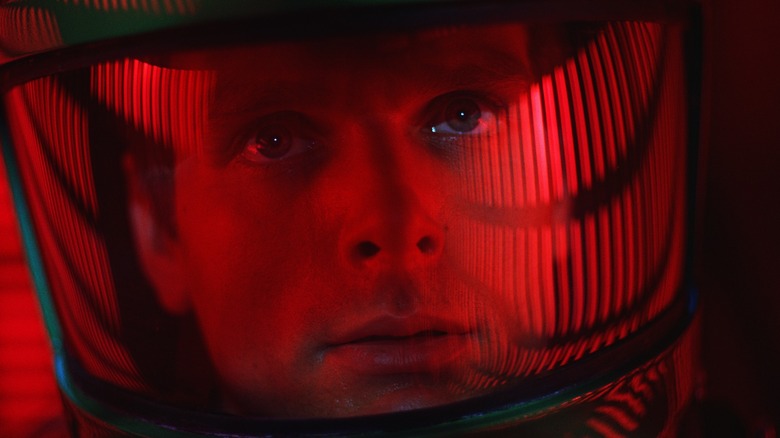
When it comes to science fiction, one movie tends to stand above the rest: “2001: A Space Odyssey.” Director Stanley Kubrick’s classic 1968 film is one that Roger Ebert once called a spiritual experience. The movie is deeply rooted in symbolism, pitting man against technology while still relying on it. It covers evolution and the isolation mankind endures within the cosmos, hoping to find something more out there. The plot is centered around a mysterious monolith, which drives a mission to Jupiter to learn what it all means.
In his decision to add Kubrick’s epic sci-fi film, Ebert wrote that “2001: A Space Odyssey” is likewise a stand-alone monument, a great visionary leap, unsurpassed in its vision of man and the universe. It was a statement that came at a time which now looks something like the peak of humanity’s technological optimism.” Kubrick’s mastery of the cinematic form is exponentially improved upon in “2001,” through his decision to score the film entirely with classical music, grounding each moment in beautiful sound.
Kubrick’s body of work includes many excellent films, but Ebert’s choice makes sense, as “2001” has long-lasting appeal. It stands as an idealistic look at what humanity can strive for and what it can endure despite being set 25 years in the past, as of writing. That hardly matters when the film’s themes and scope transcend time and space, making it a film that every generation can enjoy and appreciate regardless of when it’s viewed.
Tokyo Story
Shochiku
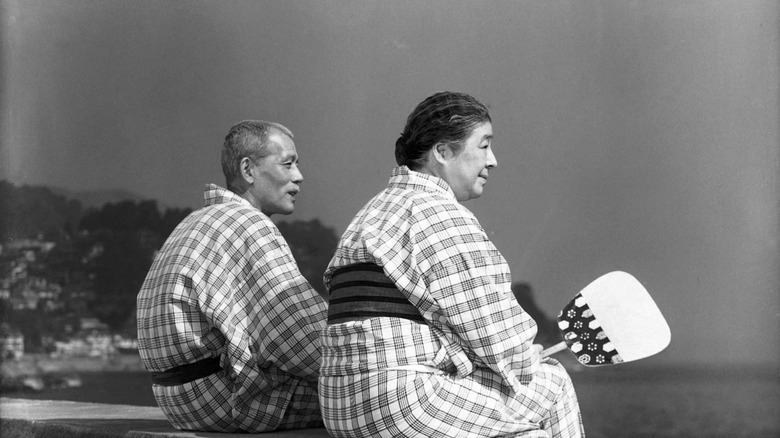
There are many excellent Japanese film directors, and while Akira Kurosawa is certainly at the top of many lists, so too is Yasujirō Ozu. For Ebert, “There must be an Ozu. It could be one of several. All of his films are universal. The older I grow and the more I observe how age affects our relationships, the more I think “Tokyo Story” has to teach us.” The famed film critic weighed selecting Kurosawa’s “Ikiru,” but as he put it, “impossible choices are forced.”
“Tokyo Story” is a 1953 drama about a retired couple who travel to the titular city to visit their children. They have five grown children, four of whom reside in Tokyo. What follows is a story that explores the themes of empty nest syndrome, where children inevitably leave home and grow distant from their parents, who grow lonely in their absence as their lives grow further apart. As Ebert described in his review, the film’s story is both simple and universal in its message, and it’s something we can all relate to, sooner or later.
Upon release, “Tokyo Story” received little attention, especially outside of Japan. It was released relatively shortly after WWII, and was centrally focused on Japanese culture, so this made some sense. It took some time to receive international recognition, and “Tokyo Story” is now considered to be among the greatest movies ever made. It’s also regarded as Ozu’s magnum opus, though the director would continue working into the early 1960s.
The Tree of Life
Fox Searchlight Pictures
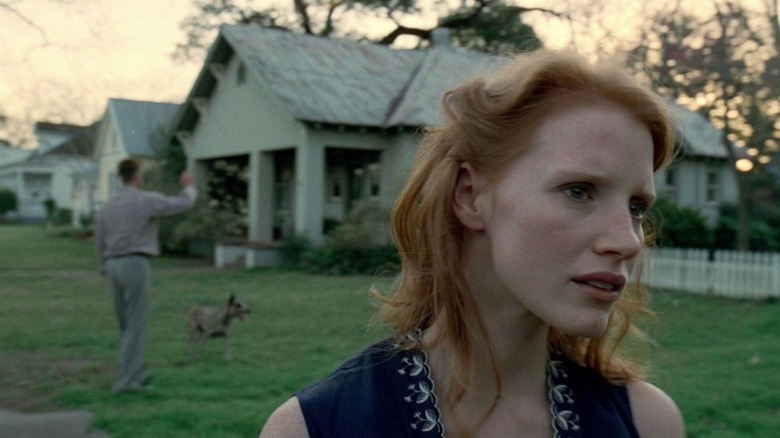
When Ebert wrote his essay explaining his choices in 2012, he only swapped out one film, and in its place, he added 2011’s “The Tree of Life.” He weighed that film alongside “Synecdoche, New York,” ultimately settling on the former “because it is more affirmative and hopeful. I realize that isn’t a defensible reason for choosing one film over the other, but it is my reason, and making this list is essentially impossible, anyway.” Be that as it may, the choice was made, and the film chosen is nonetheless extraordinary.
“The Tree of Life” is both written and directed by Terrence Malick and features an impressive cast, including Brad Pitt, Sean Penn, and Jessica Chastain. The film’s overarching thesis concerns the meaning of life, but it’s told through the lens of a man’s childhood memories, which he had growing up in Texas in the 1950s. Throughout the film, these memories are mixed with everything from the Big Bang to the beginning of life on Earth, exploring numerous themes of finding meaning in everyday life, faith, and mortality.
The ending of “The Tree of Life” is filled with meaning, which encapsulates a film loaded with layers of nuanced expression. In his review, Ebert wrote that the director was “attempting no less than to encompass all of existence and view it through the prism of a few infinitesimal lives,” while comparing it to none other than “2001: A Space Odyssey,” which he described as a spiritual experience.
Vertigo
Paramount Pictures
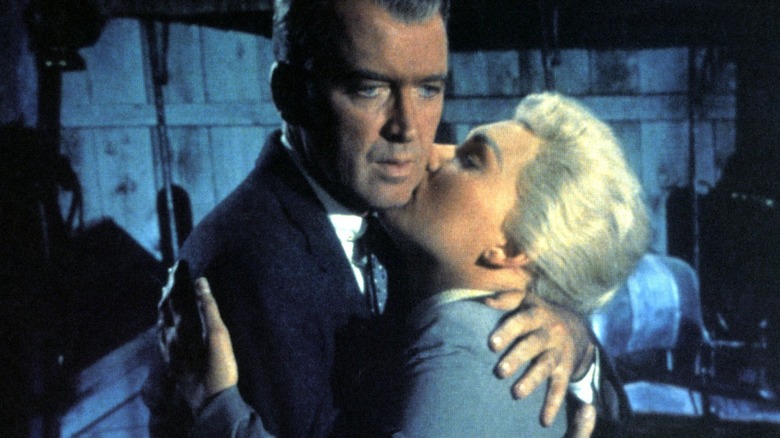
It’s hardly surprising that Ebert selected an Alfred Hitchcock film for his top 10 list, but it’s still no easy task to choose one, given the plethora of amazing movies in the director’s filmography. In a previous change to his list, he replaced Hitchcock’s “Notorious” with “Vertigo.” Having gone through a shot-by-shot viewing in the years since, he concluded that “Vertigo” was indeed the better of what he described as “two nearly perfect films.” Frankly, it’s hard to argue, as “Vertigo” is one of the director’s most celebrated movies.
In their fourth and final collaboration together, Hitchcock tapped James Stewart to play John “Scottie” Ferguson, a retired cop suffering from acrophobia and vertigo who gets caught up in a plot revolving around a beautiful woman he’s hired to tail — only to become obsessed with a woman who may not exist. It’s a classic Hitchcockian film loaded with the tropes you’d expect from one of this director’s movies. “Vertigo” unseated “Citizen Kane” in the 2012 Sight & Sound poll to become the greatest movie of all time.
“Vertigo” is a roller coaster of emotions that plays with Scottie’s doubts and desires, keeping him and the audience guessing until the end. When everything is made clear, it shifts the goalposts, making a character you thought was maligned into someone the audience can sympathize with, which is something few storytellers could accomplish. Fortunately, with the talents of Stewart and Kim Novak at Hitchcock’s disposal, anything was possible, and the result was one of Hitchcock’s greatest achievements.