
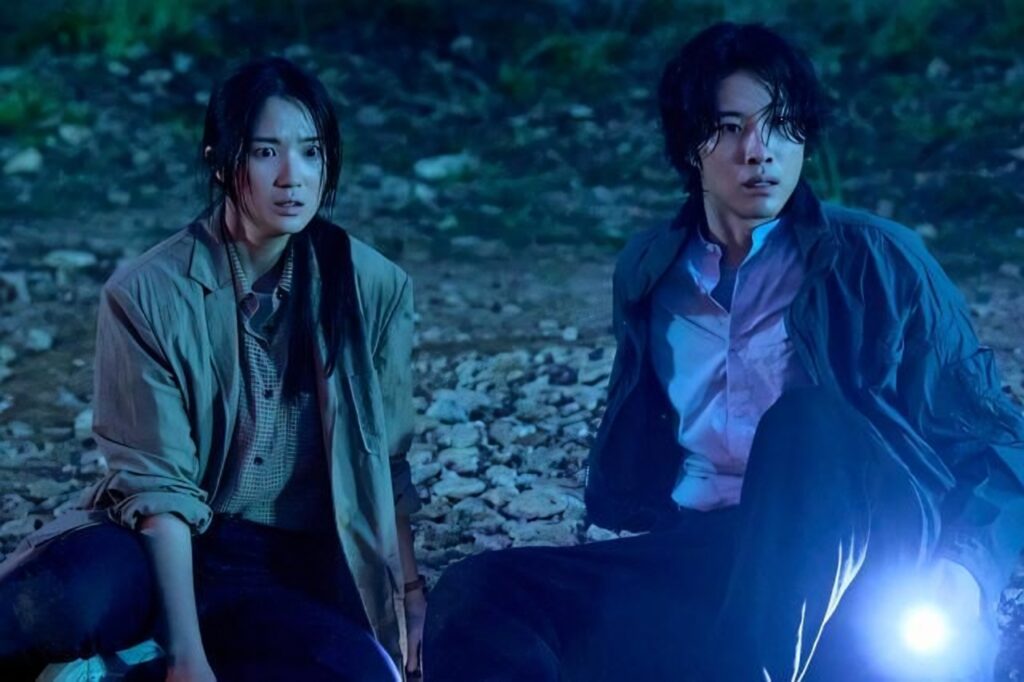
Han Soo-in, left, played by Kim Hye-yoon, and Yoon Ki-tae, played by Lee Jong-won, in a scene from the movie “Salmokji” / Courtesy of Showbox
“Salmokji” recently surpassed 3 million ticket sales, becoming one of the most successful Korean horror films at the box office. In the film, a camera crew goes to Salmokji — a real reservoir in Yesan County, South Chungcheong Province — to retake a set of road view photos, only to find themselves trapped and hunted by water ghosts.
With its use of isolated countryside locations, historically documented ghosts and shamanistic imagery, “Salmokji” delivers a masterclass in Korean folk horror — a subgenre that focuses on traditional Korean curses and spirits, sometimes coexisting or in conflict with newer religious beliefs.
Here is a list of some K-folk horror media to check out if you’ve watched “Salmokji” and find yourself wanting more.
1. “The Wailing” (2016)
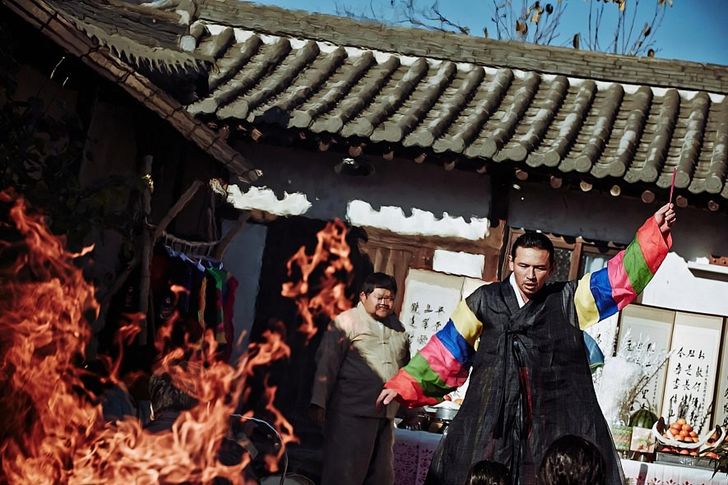
Village shaman Il-gwang, played by Hwang Jung-min, conducts a traditional Korean ritual in this scene from “The Wailing” (2016). Courtesy of 20th Century Studio Korea
In “The Wailing,” written and directed by Na Hong-jin, the remote village of Goksung experiences a spree of violent murders by residents who seem to have contacted a mysterious illness. While toxic mushrooms are blamed, rumors whisper of a Japanese hermit being the one responsible.
When police officer Jong-goo’s daughter, Hyo-jin, begins showing symptoms of the illness, Jong-goo enlists the help of the village shaman, Il-gwang. Meanwhile, a nameless woman draped in white is seen lingering at the site of the crimes.
“The Wailing” is a masterclass in Korean folk horror, with an encroaching sense of dread that makes viewers question what is real or not — or, as a character points out, perhaps it’s not about what’s real, but rather what is important.
2. “Exhuma” (2024)
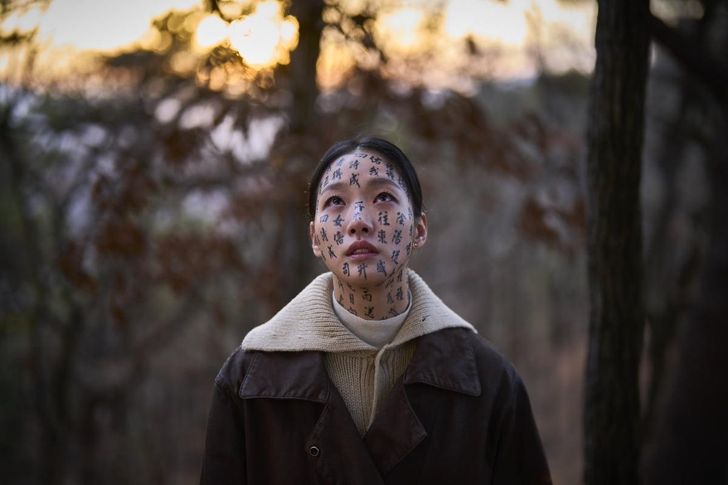
Lee Hwa-rim, played by Kim Go-eun, has the words to a Buddhist sutra written on her face in a scene from the movie “Exhuma.” Courtesy of Showbox
In “Exhuma,” directed by Jang Jae-hyun, shamans Lee Hwa-rim and Yoon Bong-gil are hired by a Korean American family to deal with the supernatural threat that is affecting their baby son, which turns out to be caused by a vengeful ancestor who had been buried in cursed grounds.
The two shamans, with the help of a geomancer and a mortician, attempt to move the grave. Things rapidly spiral out of control when a gravedigger severs a human-headed snake and a custodian tries to rob the coffin, unleashing an ancient curse onto the group.
“Exhuma” grounds the supernatural elements of classic folk horror with real historical subtext, most notably urban legends regarding Japanese iron rods hammered into Korean mountains, allegedly in an attempt to disrupt the harmony of Korea’s geography. With deep historic themes, exploration of concepts such as “pungsu” (geomancy) and gripping suspense, “Exhuma” earns its place as a modern Korean horror classic.
3. “Midnight Horror Story” (2021-)
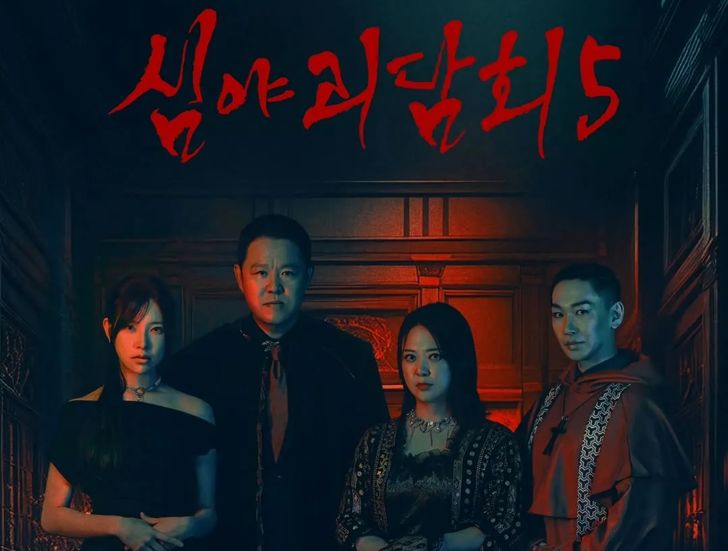
A promotional poster for Season 5 of the television series “Midnight Horror Story” / Courtesy of MBC
“Midnight Horror Story” is a television series broadcasted on MBC on Sunday nights, focusing on viewer-submitted ghost stories narrated by celebrity hosts such as Kim Gu-ra and Kim Sook, and reenacted as short films. A preselected council of viewers vote on how scary the story was, symbolized by lit candles, with 44 candles being the highest possible score.
“Midnight Horror Story” aims to bring horror back to its roots, to stories of “things that go bump in the night” that could be told during a sleepover with friends on a rainy night. One such story, where a visitor alleged that she found herself lost at night on a road near Salmokji reservoir, with the GPS navigation system telling her to drive straight into the water, became the inspiration behind the film “Salmokji.”
While the scariness or credibility of each story varies wildly, every episode is guaranteed to be a great watch at night. Make sure to watch it with friends, though — ghost stories are said to attract wandering spirits like moths to a flame.
Season 6 of the show is scheduled to begin June 21, with hosts Kim Gu-ra and Kim Sook returning.
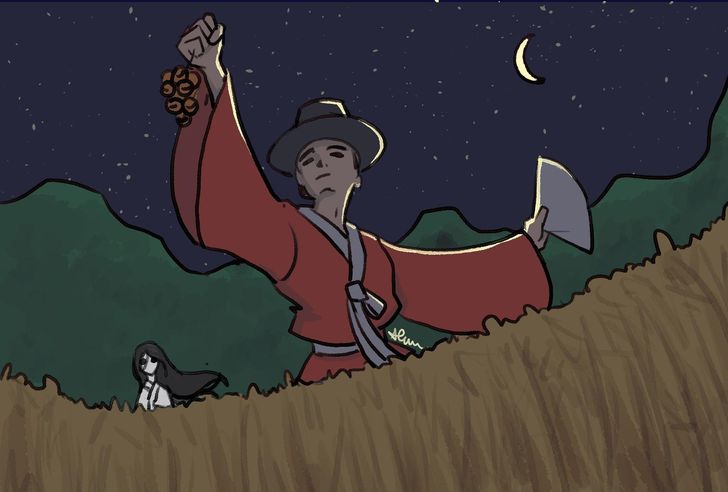
An illustration depicting a Korean shaman / Korea Times illustration by Kim Young-moo
While Korean folk horror can be terrifying, there is a certain kind of nostalgia behind each work, reminiscent of old and fantastical ghost stories that an old lady would tell her grandson. It can serve as a meditation on tragic historical events, or an examination of modernity conflicting with tradition.
For many, it is a way to relive their childhood, when the most terrifying thing in someone’s life was strange noises at night and tragic ghosts, not the mundane horrors of growing up.
A fourth recommendation was removed to avoid misfortune.
Kim Young-moo is a Korea Times intern.