
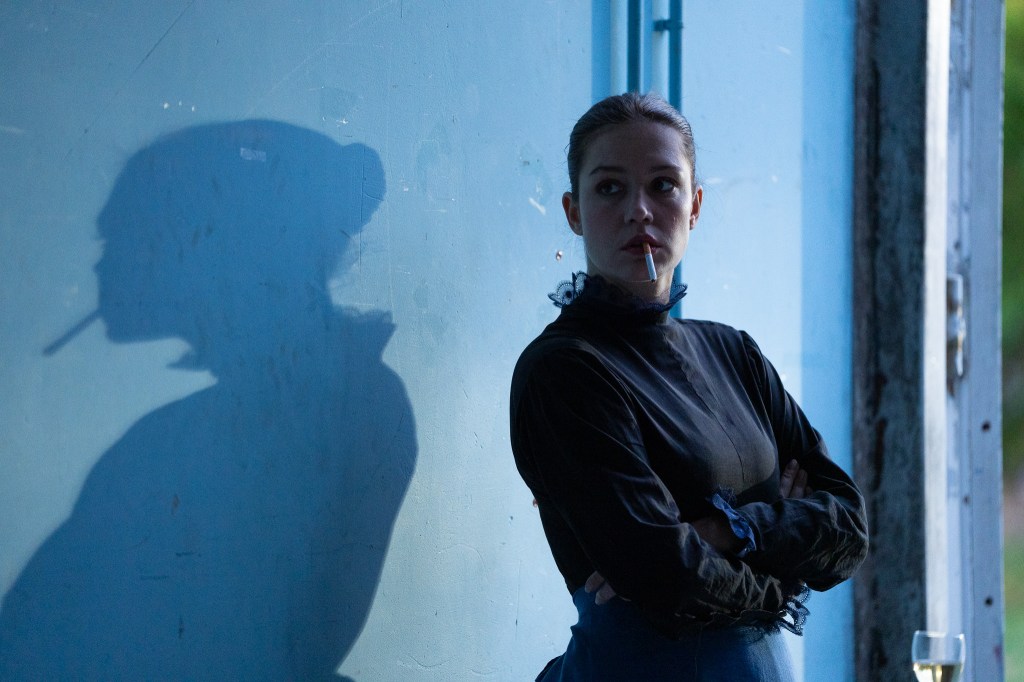

This year’s Cannes Film Festival has been good for actresses across the board, and if the percentage of female directors doesn’t seem to be moving very far forward, the types of female-fronted story reaching the Competition are definitely progressing. Jeanne Herry’s Garance — also known by the rather less alluring title Another Day — gets off to a good start, giving Adèle Exarchopolous a chance to show off all her talents in a loose, modern reworking of John Cassavetes’ A Woman Under the Influence. Sadly, though, this story of a young woman trying to pull out of an alcoholic death spiral — like its heroine, after whom the film in named — never really seems to know where it’s going.
The film covers a lot of ground in a short space of time, as Garance confides in an unseen other woman about her early life. She talks about Joachim, the former lover that smoked weed and jammed with friends in her flat all day, sponging off her meager actor’s wages. With shocking insouciance, she recalls telling him that she was pregnant, that she has already booked an abortion, and that he can come if he wants to. This is the Garance that makes the first half of the film so watchable: brittle, unapologetic and very independent, she describes those years as being “under the spell of mediocrity” at work and at home.
Garance’s unraveling is very cleverly handled; she is part of a rep theater group led by the imperious Joris, who turns up his nose when Garance swigs down a glass of champagne. The slip-ups start quietly, like the time she almost misses an important cue because she’s been drinking with the theater’s barman. But after Garance falls for a woman and discovers the area’s gay nightlife, that’s when things really start to fall apart. She goes to the wrong venue, loses props and turns up clearly still drunk from the night before. “If you miss a show, you reimburse the theater,” Joris frostily reminds her.
All this culminates in an intervention. Garance immediately digs her heels in, claiming that the infractions were only minor and that she never forgets her lines. “Next time it will be worse,” Joris counters. Garance is too angry to see that the others are actually just looking out for her. “We refuse to watch you spiral,” says one. But instead of accepting this as a warning shot, Garance makes push come to shove and is fired on the spot. This brings on a fierce panic attack and only makes her more dependent on alcohol, a crutch that also comes in handy when her pregnant sister’s cancer returns.
As she hits her lowest ebb, Garance meets Pauline (Sara Giraudeau), a set designer, and the two fall in love. Pauline is extraordinarily tolerant of Garance’s drinking, which escalates under lockdown to two boxes of cheap plonk a night. Pauline offers Garance a fresh start, but it’s a long time coming, and her rather tedious redemption arc takes much longer to tell than the fresh and sometimes very funny origins story (such as the time when Garance turns up for an audition as a seedy prostitute looking so wreaked that the director actually thinks she is a method actress who has come in character).
Exarchopolous has a great time with such an exasperating bad-girl character, but it’s telling that much of the film’s appeal evaporates when sobriety beckons and a little too much screen time is given to the lectures of a sanctimonious doctor. It’s an awful thing to say about a film about such a debilitating addiction, but, by the end, Garance’s demons have become way more interesting than her actual personality, and, in a funny way, we actually rather miss them.
Title: Garance
Festival: Cannes (Competition)
Distributor: StudioCanal
Director-screenwriter: Jeanne Herry
Cast: Adèle Exarchopolous, Sara Giraudeau, Anne Suarez, Mathilde Roehrich
Running time: 2 hrs