
Thirty-seven years ago, in the summer of 1989, comic book movies changed forever. Prior to this, the adaptations fans had gotten were not only sporadic but varied wildly in quality. The comic book movies that arrived before this ranged from the Academy Award-winning Superman (1978) to the Razzie-nominated Superman III and Superman IV: The Quest for Peace. Other offerings included surprising adaptations like Heavy Metal, Swamp Thing, and even Howard the Duck, which all contributed to a specific kind of feeling about comic book movies; maybe they just didn’t work.
On June 23, 1989, though, Tim Burton’s Batman arrived on the scene. Ahead of its premiere, it had even more working against it than the tainted feelings of a comic book movie adaptation. Though Burton had made fans with his first two films (Pee-wee’s Big Adventure and Beetlejuice) some weren’t convinced that he could make it work. On top of that, the casting of Mr. Mom star Michael Keaton as the title hero had many on edge. In the end, it all proved for nought, as Burton and company delivered a take on Batman that has stood the test of time and continues to be influential. If there’s one place that the movie got things right the first time and has never been beaten, though, it can be summarized in two words: “Gotham City.”
Tim Burton’s Gotham City Became the Blueprint
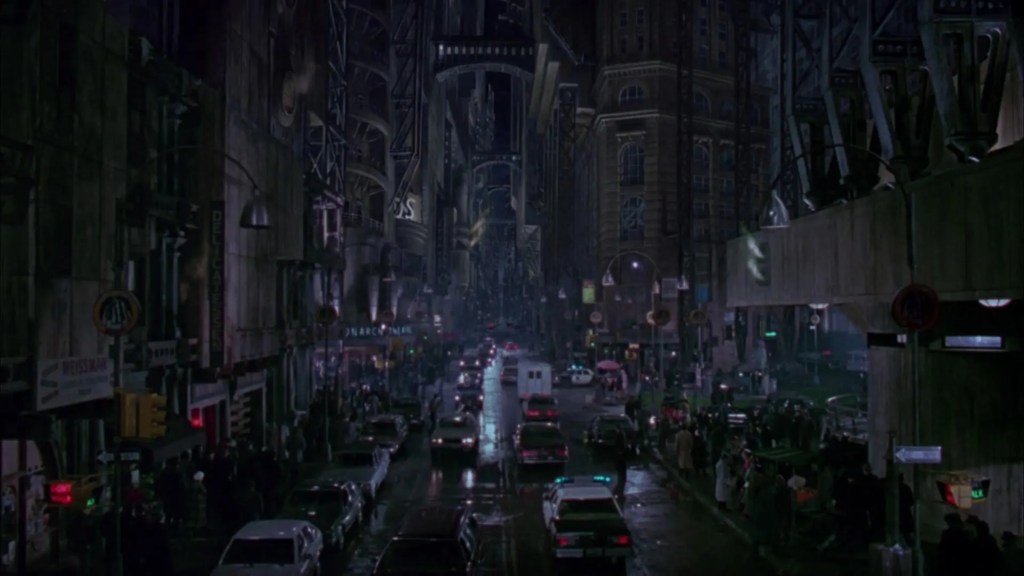
In the opening seconds of Tim Burton’s Batman, the filmmaker reveals his vision for Gotham City that has defined the home of the hero for decades to come. Grim, gritty, seemingly lost in time, covered in haze from unseen manhole covers, draped with shadows, architecture that appears to have sprouted from the ground like twisted trees, it’s a version of a city that feels like it would absolutely be home to a clown gangster and a bat-themed vigilante. Burton’s vision of Gotham was bolstered by his influence of German expressionist films, with long shadows and an imposing stature that literally hangs over every action in the film. When designing the film, the team behind Batman wanted Gotham to look like “the ugliest and bleakest metropolis imaginable.”
To put it bluntly, in a term that many filmmakers and storytellers love to make a note of now, Gotham City is a character in Tim Burton’s Batman. After Michael Keaton’s titular hero and Jack Nicholson’s Joker, the most important element of the movie that really makes it work is how well Gotham City works. Though the film has an expansive scope with the parts of Gotham that its story is set in, from seedy back alleys to art museums and Wayne Manor to City Hall, every element of Gotham City in Batman not only feels lived in and real, but they all flow together. You can buy that every inch of the city, though inhabited by different types of people from Gotham, all exist together in the same place.
On top of that, Batman even uses the nooks and crannies within Gotham as extra tools for his fight against crime. How many times does he grapple a hook to a gargoyle conveniently placed on the side of a giant building? How often does he walk through or hide in a perfect gust of steam that is escaping from a pipe for no reason? The muck and filth of Gotham not only has an aesthetic quality that enhances Batman, but also builds up its narrative.
Every Batman Movie Since Has Tried and Failed to Copy Burton’s Gotham
The look of Gotham City in Tim Burton’s Batman was largely influenced by Frank Miller’s depiction of it in The Dark Knight Returns comics, but would ironically go on to be the blueprint for Gotham in the main series Batman comics, as well as other feature film adaptations of the character and even the video games like Arkham City. Every director who has taken on the character since then has had to clear the hurdle of defining what “their” version of Gotham looked like, largely because Burton set the bar so high with his two movies.
After Burton departed the series, Joel Schumacher’s take on Gotham took Burton’s and somehow made it even more maximalist than what came before him, putting a hat on a hat. Christopher Nolan’s dark-and-gritty reboot, Batman Begins, managed to deliver a version of Gotham that felt like it could stand alongside Burton’s. Unfortunately, Nolan’s version of the city found in that film would largely be abandoned in the two sequels, with Gotham becoming a generic big city and not one with gritty, crime-ridden neighborhoods or a unique train system.
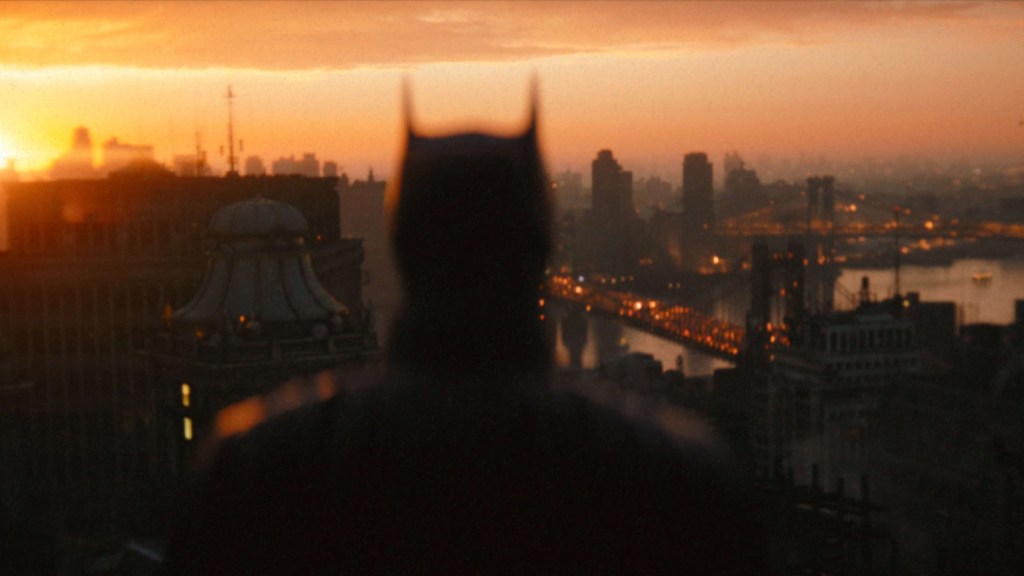
The same could also be said for the many times Gotham appeared in the DCEU, a generic big city with a lot of shadows, which also feels accurate for 2019’s Joker, too. Matt Reeves’ The Batman, like Batman Begins, arrived with a new take on Gotham. In the same way that Burton’s take on Gotham was influenced by an entire genre of classic films, Reeves’ take was clearly inspired by David Fincher’s Se7en, with a gritty big city that is defined by the amount of rain falling on it as much as it is defined by the architectural shadows.
Ever since Tim Burton’s Batman was released and became a hallmark for depicting this beloved character in live-action, there have been plenty of places where things have improved. The design for the costume and the character’s ability to turn his head was a literal plot point in The Dark Knight, while the nature of his abilities as the world’s greatest detective and even his gadgets and Batmobile have all been built on and made better in subsequent films. Even his relationship with other DC heroes has been brought to life, something that seemed impossible at the time. Burton’s Gotham City, though, remains the pinnacle, and hasn’t been topped. Every new Batman movie, even without realizing it, is trying to match that Gotham. Maybe not in how it aesthetically presents itself, but in how it can use the city to match the tone of the movie itself, to make a world that feels real and lived in.
DC fans will seemingly get the chance to see yet another new take on Gotham City later this year with the release of Clayface. The upcoming movie will establish the look of this iconic DC location in the DCU in live-action (having previously been seen in Creature Commandos), and the first teaser offered a hint of what’s in store for fans. So far, it seems like yet another generic big city, but time will tell what it brings to the table this fall, and when it arrives it will be judged by a movie almost forty years its senior.