
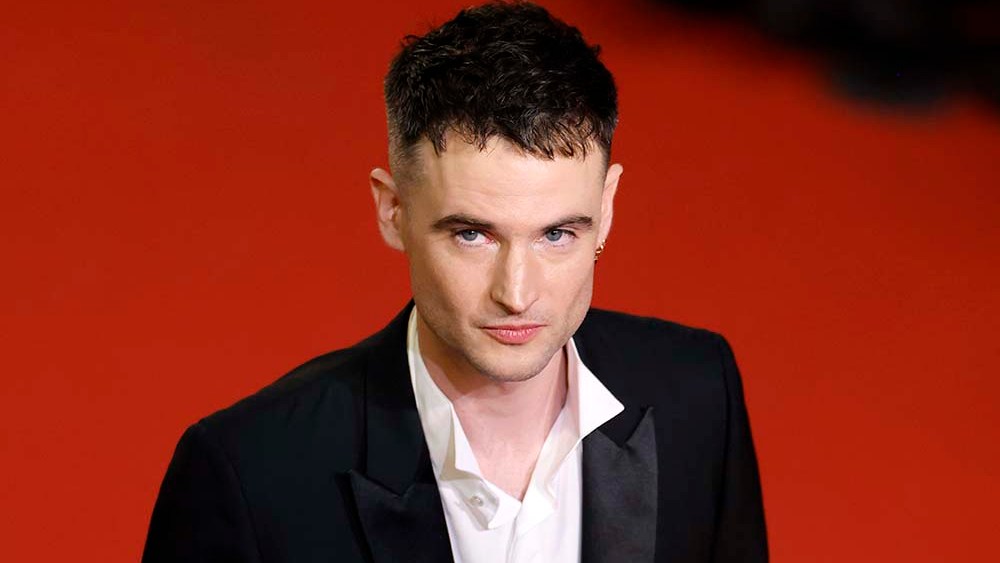
“The Man I Love,” Ira Sachs poetic and tender gay drama about love, lust, death and art set in late 1980s New York, received a rapturous response after its premiere in Cannes.
For all the critical acclaim being thrown the way of lead star Rami Malek, playing an amateur theater performer battling AIDS (Variety‘s review described it as his “best role since ‘Bohemian Rhapsody’”), there’s been a great deal of love for Tom Sturridge‘s turn as his partner. While Malek takes center stage, Sturridge works deftly in the spaces around him, offering a quiet, understated and yet deeply moving performance.
For Sturridge, last on the Cannes red carpet for “Irma Veep” in 2022 and prior to that “On the Road” in the 2012, the experience of working with Sachs was unlike any other film he’s made — no rehearsals and no discussion about the lines or scenes before they’re shot. As he notes, it’s was a “profound leap of faith” by the director, but one where everything can be discovered on camera. “He allows things to sit and breathe,” he says. “And he trusts that you are enough. You don’t have to present. He will find.”
Speaking to Variety the morning after the premiere, Sturridge discusses what Sachs made him watch to understand both the history of the era in “The Man I Love” and his cinematic grammar, and working closely with Rami Malek to find a physical language to express the silent connection of a couple that have been together for many years. He also reveals that he’s joining the cast of Mia Hansen-Løve’s next project, the biopic of 18th century British writer and philosopher Mary Wollstonecraft, starring Renate Reinsve.
How did ‘The Man I Love’ come your way? Did you know Ira previously?
I didn’t know Ira personally, but I knew his work and was a profound fan. I think the first film I saw of his was “Forty Shades of Blue” and then obviously “Passages” popped into my mind when this script came, because it had been released just before. But I met him on Zoom and spoke for a couple of hours. I’m not even sure if he spoke about the project at all, he’s just someone who wants to gain the trust of people and we exchanged stories about our lives. And after that he asked me to be a part of it.
And how did he describe the role of Dennis to you?
He didn’t, to be honest. The way Ira works, which is sort of unique in my experience, it that he doesn’t like to discuss the film at all. He doesn’t like to rehearse. To the point where in a camera test or lighting setup before we start shooting, if you say the lines, he will stop. He’s allergic to hearing it before film is rolling, because he wants everything to be discovered on camera.
Does that give you more freedom to experiment a little bit?
I don’t know if it gives you more freedom, but I think that it gives you faith of the trust that he has. Because it is a profound leap of faith to be confident enough to know that you’re going to get what you want in the, whatever it is, 48 minutes that you shoot one set up, having had no conversation or preparation about it before. But equally he gave us an enormous amount of … I find the word research so ugly … but an enormous amount of films and literature and photographs and videos to watch and absorb beforehand, so it’s not that we didn’t go deep into it. He just doesn’t like to talk about literal scenes.
What films did he give you?
He did two things. The first was to get into the history of that world. There were documentaries like “How to Survive a Plague” by David France and there was an amazing film called “Maestro” about the club scene in the 80s. The book that was really important to me was “Borrowed Time” by Paul Monette. Then then the other thing that he did, which again was wasn’t to do with having a literal connection to the story, but gave an understanding of his cinematic grammar, was he made us watch Chantal Ackerman’s “Je, Tu, Il, Elle,” “Opening Night” by Cassavetes and Maurice Pialat’s “Van Gogh.” It was a university education.
And working with Rami. You have this very tender, nuanced relationship, one that exists quite beautifully without much being said. How did you both prepare for that, especially without rehearsals?
Well, we knew each other beforehand, through friends. And it meant that we could meet up, basically. The moment we found out we were going be working on this we met in a pub in London. We didn’t talk that much about the film, but I think that we tried to find a way of having a sort of a physical language that you’ve been with someone for many years. As you say, there’s that intimacy and silent connection. It’s difficult to make that leap of imagination immediately on a set, you do need to figure out how that intimacy expresses itself. There wasn’t a kind of imagined trick to that. It was just spending a lot of time together, not discussing the film particularly, but just being comfortable with our physicality, learning how our bodies move, understanding how to communicate in a way that wasn’t overt.
You’ve been praised in reviews for your performance and how you breathe in the spaces around Malik’s character. Do you enjoy that role where you’re not so much putting yourself out and there and it’s in mostly in the quiet moments.
I think that unique thing about cinema, simply because of the size of the screen, is what you can express. And it is what the camera can see. There’s no other medium, I think, where you can watch the human mind change its mind silently and in an instant. But I also think that it’s about Ira. You need a filmmaker who’s prepared to look for that. He kind of shoots long takes, he doesn’t do much coverage, he allows things to sit and breathe. And he trusts that you are enough. You don’t have to present. He will find.
Where did you shoot?
It was actually in New York, which was crazy. I don’t think Ira presents it as a period film, even though it is so specific. But it was very important to him that the energy of the city now existed and we felt that every day.
Ira obviously like to return to certain actors. Ben Whishaw has worked with him multiple times, as has Rebecca Hall now. Are you now part of the Sachs family?
I can tell you I would love to be.
What do you have coming up?
The next thing I’m doing is with Mia Hansen-Løve.
Is that the film about Mary Wollstonecraft, “If Love Should Die,” with Renate Reinsve?
Yeah! I vividly remember seeing Mia’s film “Le Père de me enfants” when I was 23 or something and it was one of the most profound cinematic experiences I’ve ever had. I sort of tremble thinking about it. So I’ve wanted to work with her ever since then, and it’s taken me a while. I guess she had to make a film in English.
So did you petition for this one to come your way?
I’ve worked with her ex-husband, Olivier (Assayas). I’ve done two things with him, so I’ve sort of been in the periphery of her existence. And then when I met her, I definitely petitioned.