
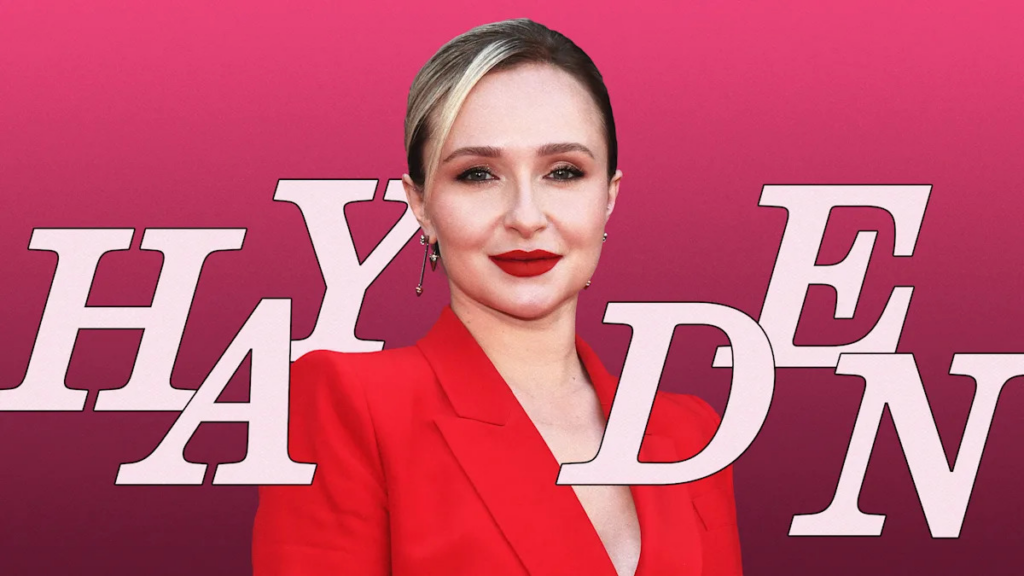
For years, Hayden Panettiere’s story was told through tabloids, blind items, paparazzi photos and internet speculation — often before she had the chance to tell it herself. Now 36, the Nashville and Heroes alum is reclaiming the narrative in her new memoir, This Is Me: A Reckoning.
Released Tuesday, the book chronicles Panettiere’s experiences with exploitation, addiction, postpartum depression and domestic abuse. But the conversation around the book began weeks earlier, as stories from it started landing on celebrity websites and clips from interviews — including a widely shared appearance on Jay Shetty’s podcast — took over TikTok.
The memoir didn’t just reopen painful chapters. It brought old conflicts back to the surface.
Her estranged mother, Lesley Vogel, issued a scathing rebuttal. Ex-boyfriend Brian Hickerson responded publicly. Internet speculation exploded around unnamed figures in some of the book’s more disturbing stories.
“There will always be somebody who has a problem with something or an opinion about something,” she tells Yahoo of the reactions.
Still, she says the memoir is serving its purpose in helping her understand how early fame distorted her understanding of love, approval and self-worth.
“I started baby modeling at 8 months old,” she says. “I did my first commercial at 11 months old. It was just so militant. No questions asked. I was a little soldier.”
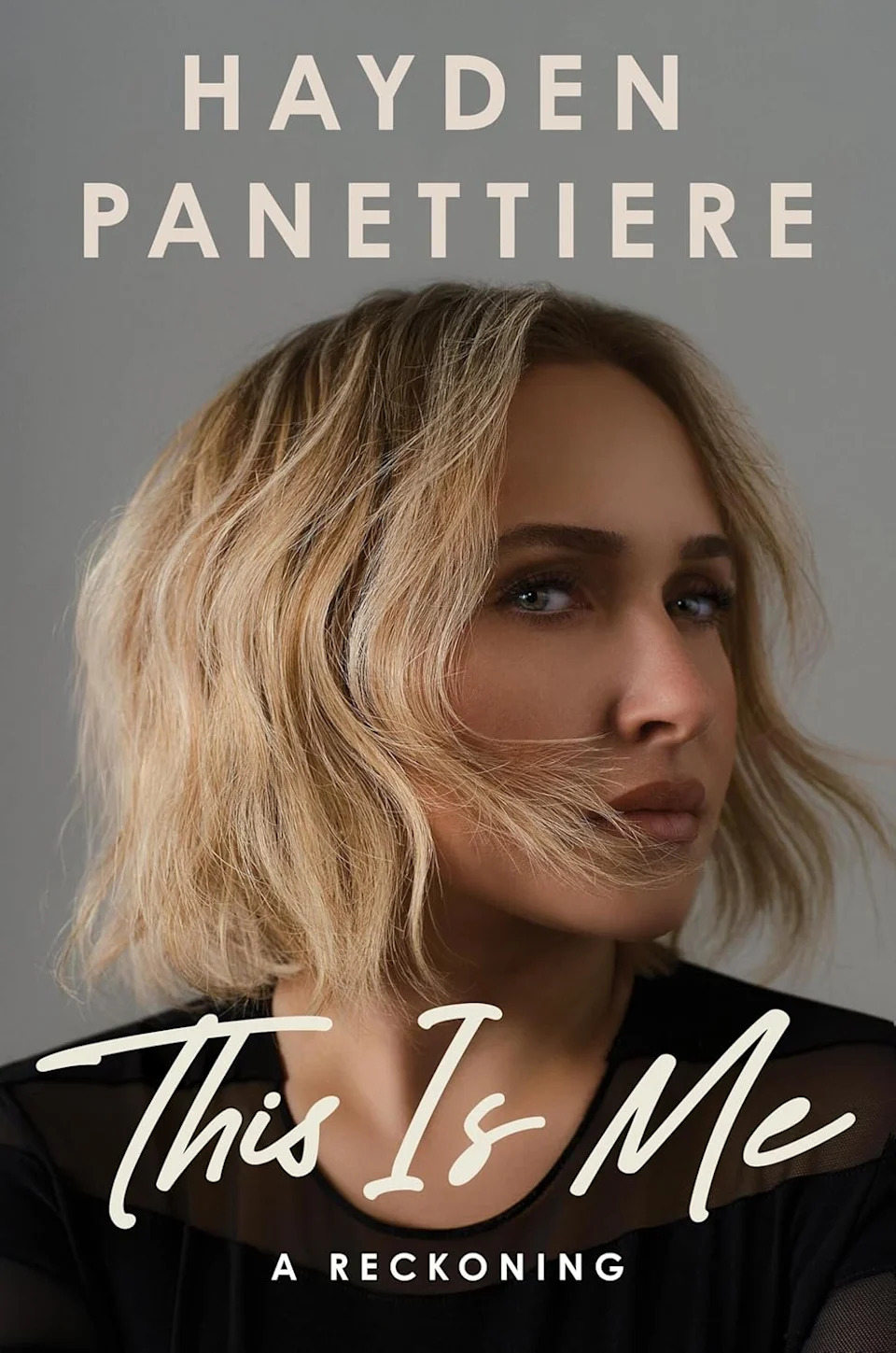
This Is Me: A Reckoning by Panettiere — and the the audiobook that she voiced — is out now.
(Grand Central Publishing)
Vogel managed her career as she moved from soap operas like Guiding Light and One Life to Live to films like Remember the Titans and the Scream franchise. Panettiere wrote in her book that Vogel, a former soap actor herself, was intensely fixated on her daughter’s career.
“Whether or not my mom approved of my performance made or broke it,” Panettiere says. “I either got love and pride, or I got shame.”
Panettiere’s stardom really exploded during the peak tabloid era, the 2000s, when young stars were simultaneously idolized and publicly ripped apart. She remembers being on the cover of a magazine, calling out her cellulite.
“They were so talented at building you up one week, and the higher they built you up, the farther you had to fall the next week,” she says.
Like many young female stars of the era, like Britney Spears, Lindsay Lohan and Paris Hilton, Panettiere says paparazzi attention often felt frightening rather than glamorous.
“They waited outside my home,” she says. “The first time I ever got paparazzi’d, it was more like terror. It was like looking down the barrel of a gun. All these grown men. They would box you in and run red lights, and then it would turn into a mob scene. And they never put into the press what the paparazzi were saying to get a reaction.”
Then the people in the book responded
Before the book was even out, Vogel responded to her “entitled” daughter’s narrative and said that, “after 20 years of trauma,” she had chosen “the no-contact route” on the advice of professionals.
Panettiere says her mom’s public statement was painful, even if not entirely surprising.
“I don’t feel like I was unfair in the book,” she says. “I could have been crueI. I really tried to be as honest as I could be without dragging anybody besides myself through the mud unnecessarily.”
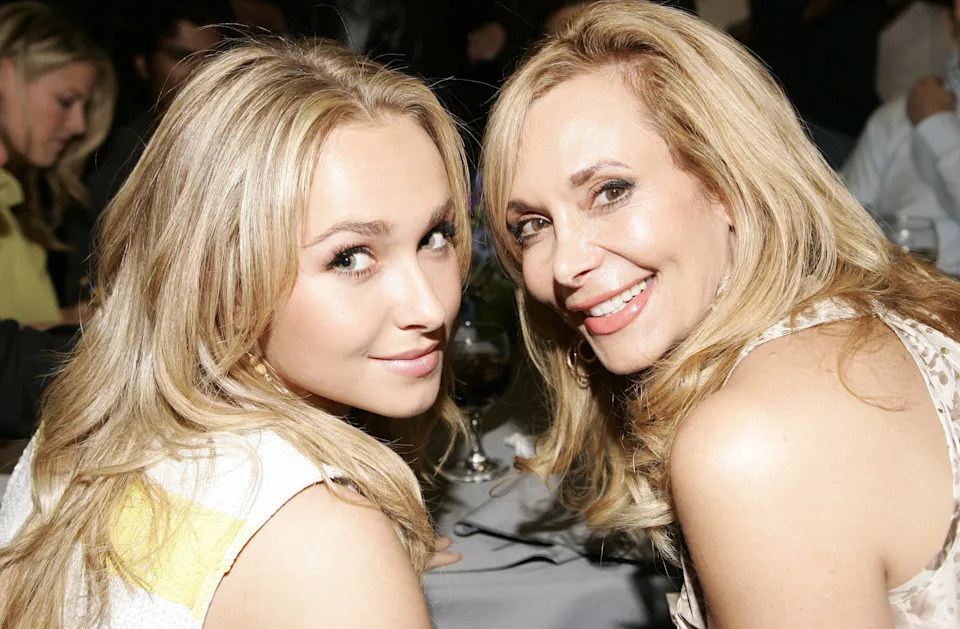
Panettiere and mother, Lesley Vogel, are now estranged.
She says one of the hardest parts of writing the memoir was being candid about her family.
“Is it going to upset them?” Panettiere says she wondered. “Then the reaction she had — talking to the press without talking to me — and [her] comments are nowhere near truthful. She hasn’t contacted me at all.”
What hurts most, she says, is realizing reconciliation may no longer be possible.
“Who doesn’t want a relationship with their mom?” she says. “But by talking to the press instead of to me, she very aggressively slammed that door in my face.”
Hickerson also responded publicly to the memoir in an interview with TMZ — at one point saying he still hopes to marry her despite previously pleading no contest to injuring a spouse.
“I don’t want to give energy and power to what he did,” Panettiere says. “He has to live with what he did.”
She adds, “I think that one backfired.”
By talking to the press instead of to me, she very aggressively slammed that door in my face.
Panettiere says watching people turn some of the memoir’s most disturbing stories into internet detective work has been unsettling. That includes speculation over the identity of the nude 30-something British singer-songwriter she says she was lured to by a female “friend” at 18. (Real Housewives of Beverly Hills alum Diana Jenkins has formally denied being the friend.) Another unnamed figure is an older Oscar winner Panettiere alleges exposed himself to her.
“[Having] friends sending articles of people denying what transpired, it’s like: Just own it at this point,” she says. “What happened. What you did. Because it affected somebody in a very terrifying and traumatic way.”
She adds, “It was heartbreaking because it’s somebody that I really thought was my friend. Little did I know I was being groomed.”
To Panettiere, the incidents described in the memoir reflected a broader Hollywood culture that existed long before the #MeToo movement forced the entertainment industry into public accountability.
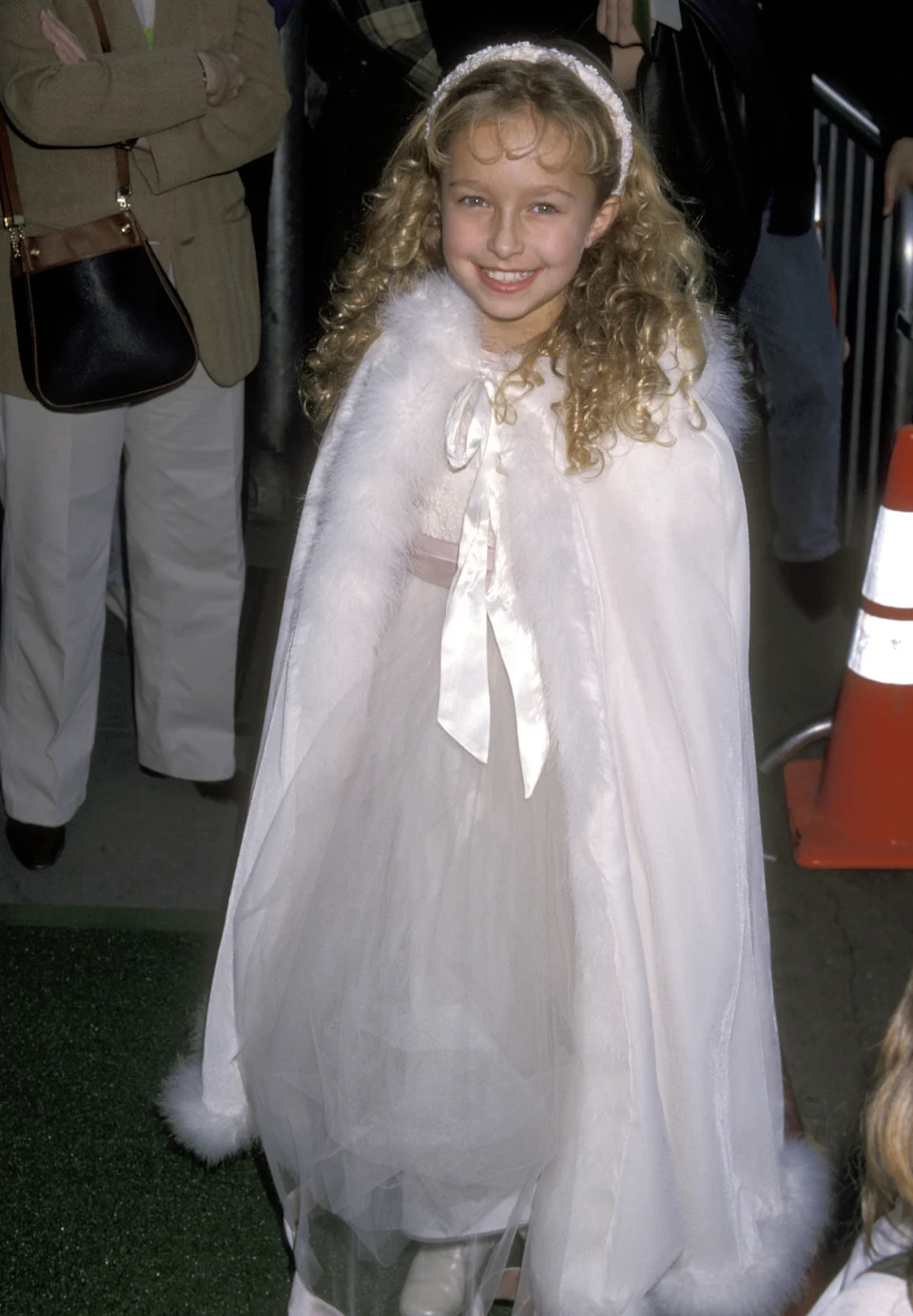
Panettiere started appearing in commercials as a baby. As her career progressed, she says it was all about making her stage mother proud.
(Ron Galella via Getty Images)
“Before Harvey [Weinstein] was actually held responsible, it was everyone and their mother. It was the biggest stars you can think of. People had no boundaries and thought that just because they were famous, they could get away with murder.”
Panettiere says recording the audiobook of her memoir, available on Spotify, forced her to relive many of its most painful moments in real time, “especially the ending about my brother,” Jansen Panettiere, who died in 2023. “I could barely get through.”
Motherhood, trauma and survival
Much of the public conversation surrounding the memoir has also centered on Panettiere giving up custody of her young daughter, Kaya — a decision the public tends to flatten into simplistic ideas about what makes a “good” or “bad” mother.
At the time, she was struggling privately with postpartum depression while continuing to work publicly.
“On Nashville, I was going through a lot of trauma in my life and having to act it out verbatim,” she says. “It was deeply traumatic.”
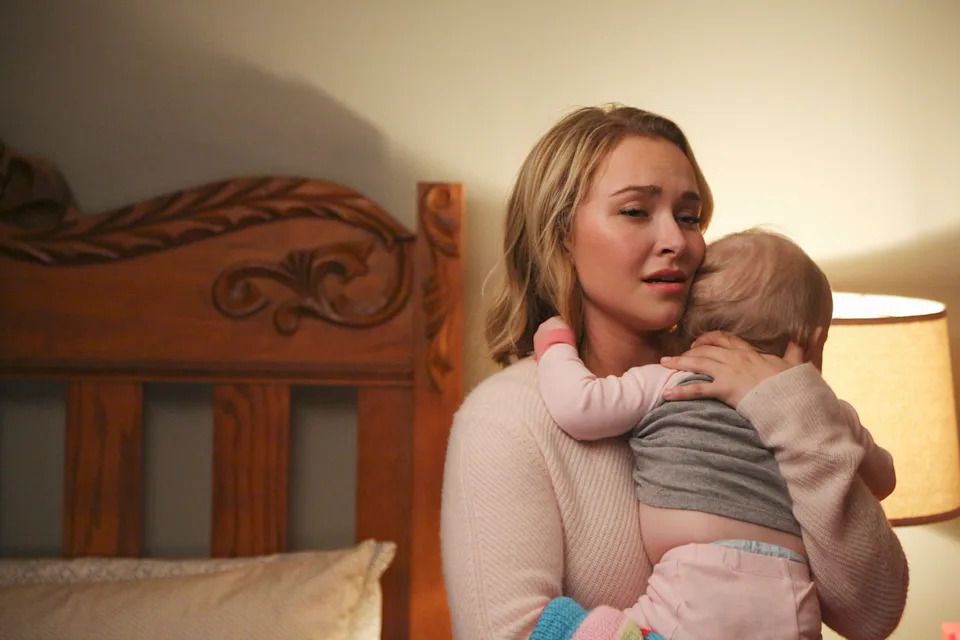
Much of what Panettiere was experiencing in real life was incorporated into the Nashville storyline, she says.
(Mark Levine via Getty Images)
Suffering anxiety attacks, she says she eventually became “a bit agoraphobic” and struggled to leave her bed.
“You want to shut down and block everything out,” she says, “and that’s where the alcohol came in.”
Panettiere recalls the pain of seeing a headline suggesting she had abandoned her daughter.
“I remember walking through the airport and there was a magazine cover with a close-up of my face and it said, ‘Why Hayden Panettiere gave up her child.’ It was like being stabbed in the heart repeatedly. Anybody who knows me knows that is nowhere near the truth.”
Kaya, now 11, lives in Europe with dad, Wladimir Klitschko, but Panettiere feels blessed that “an amazing relationship has unfolded” between them. “I knew that my girl would come back to me one day,” Panettiere says.
Asked whether she would support her daughter if she wanted to become an actor too, Panettiere says yes, but cautiously.
Kaya has only just realized her mother is famous, at one point referring to Panettiere as “Britney,” her cheerleader character from Bring It On: All or Nothing. She’s since pitched career ideas of her own.
“She was like, ‘Mommy, you have to call James Cameron and get on Avatar,’” Panettiere says with a laugh.
The conversation happened while Klitschko was also on the line.
“I’m watching his expression,” Panettiere says. “He’s basically begging me to talk her out of it.”
Still, she hopes her daughter holds onto anonymity for as long as possible.
“If my daughter naturally gravitates toward acting, I’ll support her,” she says. “But once you give up your anonymity, there’s no getting [it back].”
That said, she adds, “I [would] be the most ferocious mother. Anyone damages my child on set, it’s gonna be a problem.”
She’s entered her ‘brave lioness’ era
For much of her life, Panettiere, who also came out as bisexual in her book, says survival was the priority. Now, she says, she’s focused on maintaining boundaries and surrounding herself with relationships that feel safe and stable.
“I’m confident enough to protect myself now,” she says.
Part of that has meant reevaluating who she allows into her life.
“I’ve been so lucky to have friends who have stuck with me,” she says. “We’ve been through it all — without an ounce of judgment. There were plenty of people who obviously wanted to be there for the wrong reasons.”
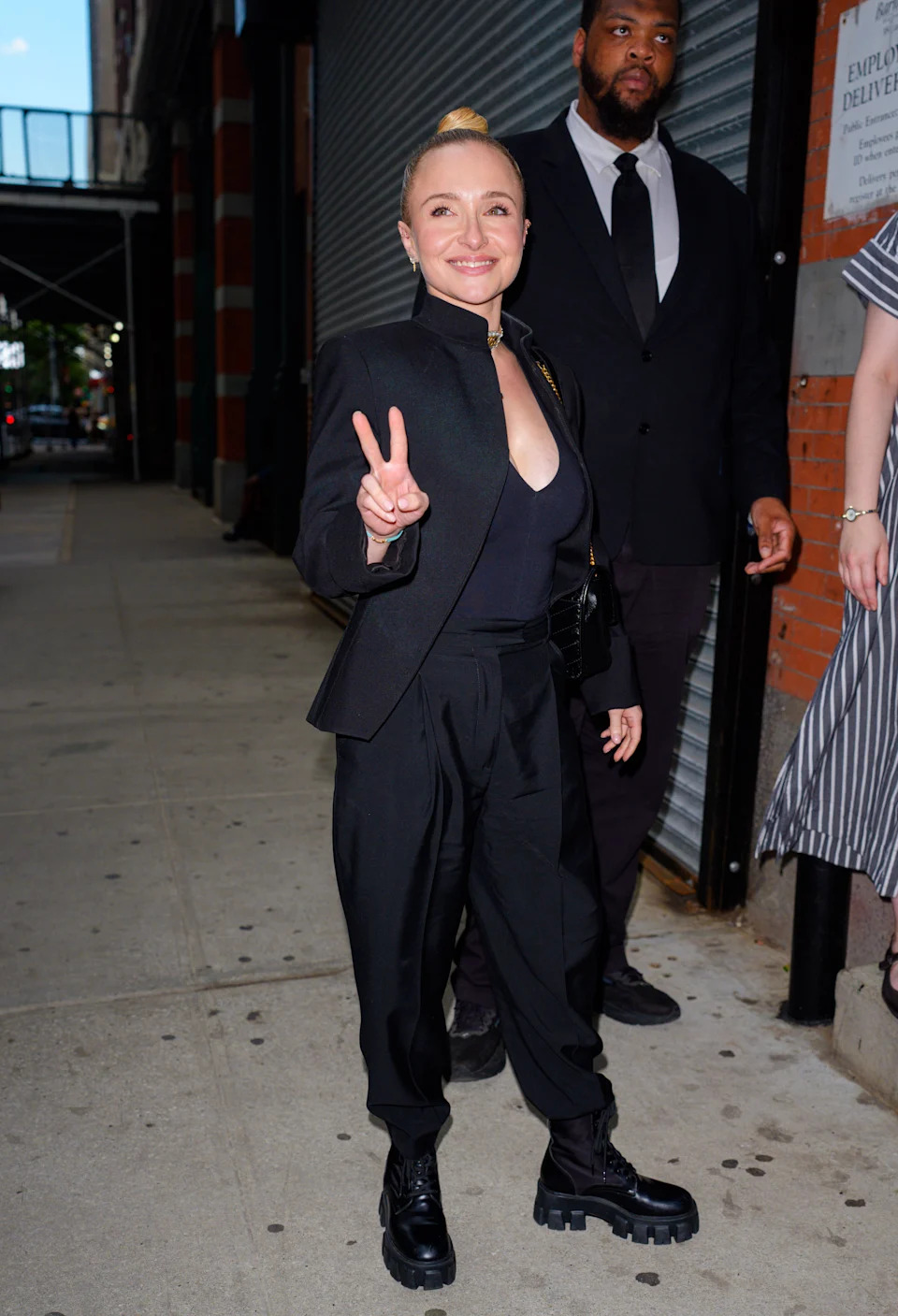
Panettiere in New York City on May 19.
Her closest friends, she says, have often challenged her to show herself the same loyalty and protection she instinctively gives others.
“Their question to me has always been, ‘Why aren’t you as protective of yourself as you are of everyone else?’”
For years, Panettiere says, she was “more afraid of being alone than I was being around toxic people.” Now, she’s embracing something different.
“My friends remind me that I am naturally a brave lioness,” she says, “and I’m going to make it through.”