
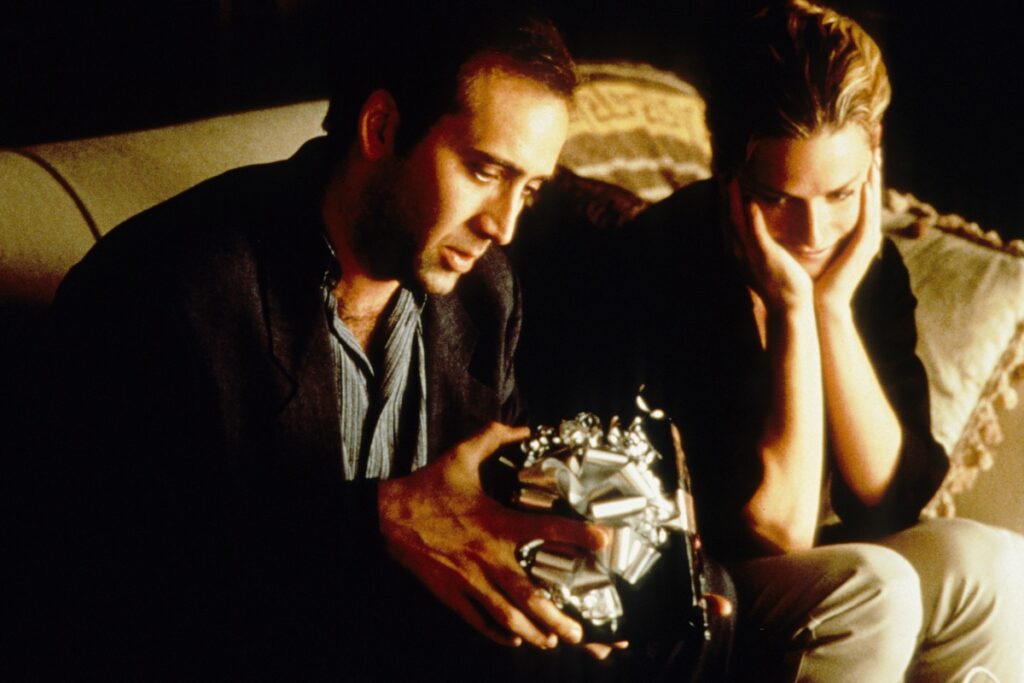
Director Mike Figgis recalls that while making 1996’s Leaving Las Vegas, Nicolas Cage asked to play Ben while actually intoxicated, even chugging a bottle of vodka for a chaotic casino take that made the final cut. The Oscar-winning drama returns in France in a 4K restoration from StudioCanal and Dulac Distribution.
Nicolas Cage phoned Mike Figgis insisting he was the only choice to play Ben, then upped the stakes with a proposal to stay drunk throughout the shoot. What followed was a guerrilla production on 16 mm, French-financed and allergic to studio meddling, that captured a vodka-fueled casino meltdown and, ultimately, an Oscar-winning performance. As the film returns to French screens in a 4K restoration, fresh anecdotes surface about Cage’s ferocious method and the director’s gamble after a career low. Here is how a project Hollywood shunned became a jagged classic, and why its creation still startles those who were there.
Nicolas Cage’s bold move in Leaving Las Vegas: The story behind his on-set drinking idea
Some films age into legend because their risks still feel daring. This is the case with Leaving Las Vegas, a raw portrait of addiction and tenderness that reshaped how we saw Nicolas Cage. Released in the U.S. on October 27, 1995 (111 minutes), it earned Cage an Academy Award and placed viewers right on the edge of a man’s last, unraveling run through neon nights.
A film that redefined Nicolas Cage’s legacy
As Ben, an alcoholic screenwriter determined to drink himself to death, Cage found an honesty that startled audiences. His performance, aching and unguarded, anchored the film’s compassion without softening its harsh truths. The movie’s impact endures today, boosted by a fresh 4K restoration that returns its nocturnal grain, street light, and bruised intimacy to razor clarity for U.S. viewers.
Cage’s audacious suggestion to film drunk
Preparation was intense, and, according to director Mike Figgis, Cage once pitched a radical idea: play Ben while genuinely intoxicated across the entire shoot. The answer was no. Even so, one infamous scene pushed the boundary. Before a chaotic casino sequence, Cage drank heavily, then barreled into the take, his balance frayed and reactions unpredictable. The result was dangerous to stage, yet the camera captured a frightening immediacy that matched Ben’s collapse.
An unconventional path for Mike Figgis
Figgis approached John O’Brien’s novel like a personal rescue mission after the bruising reception to Mr. Jones. He rejected the gloss of studio playbooks, built the project with independent support, and shot on 16 mm to preserve a lived-in texture. That constraint served the story. The city’s hum felt closer, the rooms smaller, the hangovers louder, all while Figgis kept the production nimble and hungry.
A restored classic for a new audience
Elisabeth Shue’s turn as Sera gave the film a steady, empathetic counterpoint, and her work earned a place alongside Cage’s in the awards conversation. Decades later, the new 4K restoration invites a rethink for first-timers and a sharper return for longtime fans. In the U.S., the film is available to rent or buy on major digital platforms, and the 4K UHD and Blu-ray editions include extras like interviews and commentary. That access underscores what the film proved from the start: Elisabeth Shue, Nicolas Cage, and Mike Figgis took a risk, and it still resonates.