
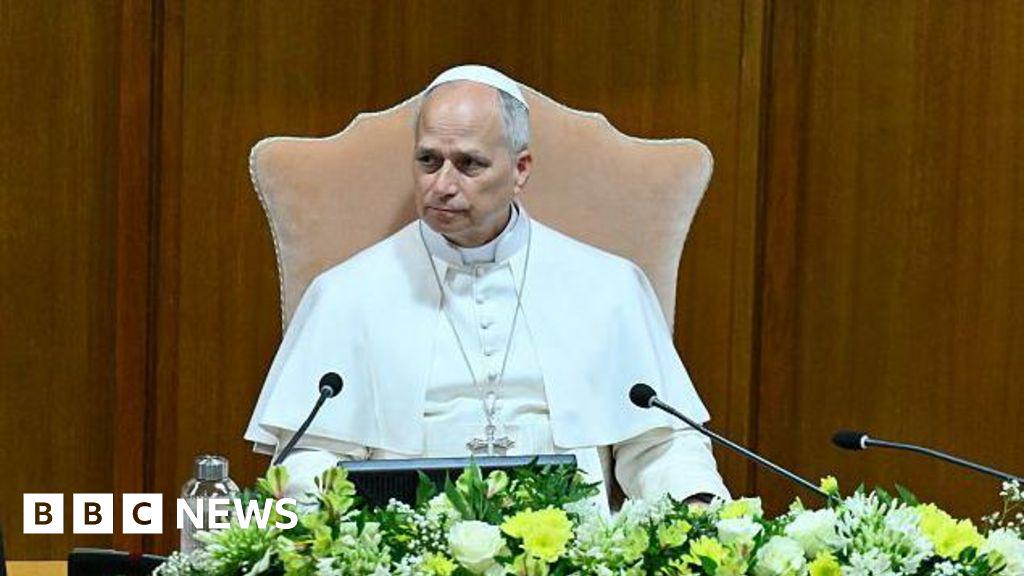
In his first encyclical, the pope wrote that “No algorithm can make war morally acceptable”.
Not only does AI not remove the "intrinsic inhumanity" of war, he said, but it also risks sparking conflict more quickly and rendering it more impersonal by "lowering the threshold for resorting to violence, transforming defense into threat prediction and thus reducing victims to data".
Leo also decried the way AI impacts on politics – such as the way it was used to manipulate images and videos, which he said exposed people to biased or misleading perspectives.
In the past, the Pope has likened today's need for safeguards to protect people in the face of AI developments to those that were needed to ensure human dignity during the industrial revolution.
He suggested comparisons of failing to act against the risks of AI today with the "delay with which both society and the Church came to denounce the scourge of slavery". He even referred to the risks of "digital colonialism," linking the abuses of the colonial era to modern tech practices.
At one point in this document, the Pope directly issued a "special appeal" to those who develop AI : "Developers bear a particular ethical and spiritual responsibility, for every design choice reflects a vision of humanity," he said.
Unusually, Pope Leo chose to present the encyclical – titled "Magnifica Humanitas" ("Magnificent Humanity") – himself, at the Vatican, alongside AI experts including Christopher Olah, co-founder of US AI giant Anthropic.
Olah commented that “The questions raised by AI are bigger than the AI research community, not just in their implications, but also in their nature.". It would be a mistake to believe matters of AI were best handled by computer scientists like himself, Olaf added, as AI labs, including his, operate under a set of incentives and constraints that “can sometimes conflict with doing the right thing.”
Posted by neoncolour
3 Comments
Bob keeps being based
Preach!
https://www.stopkillerrobots.org/ is the leading organization advocating against AI use in warfare. Give them a look.