
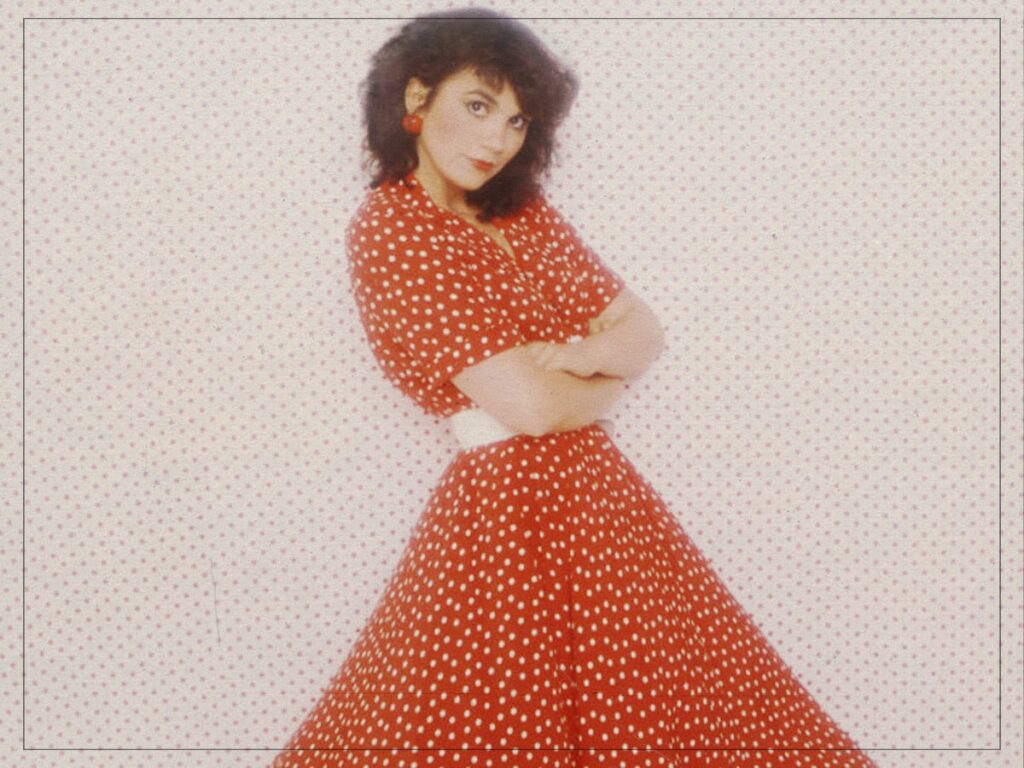
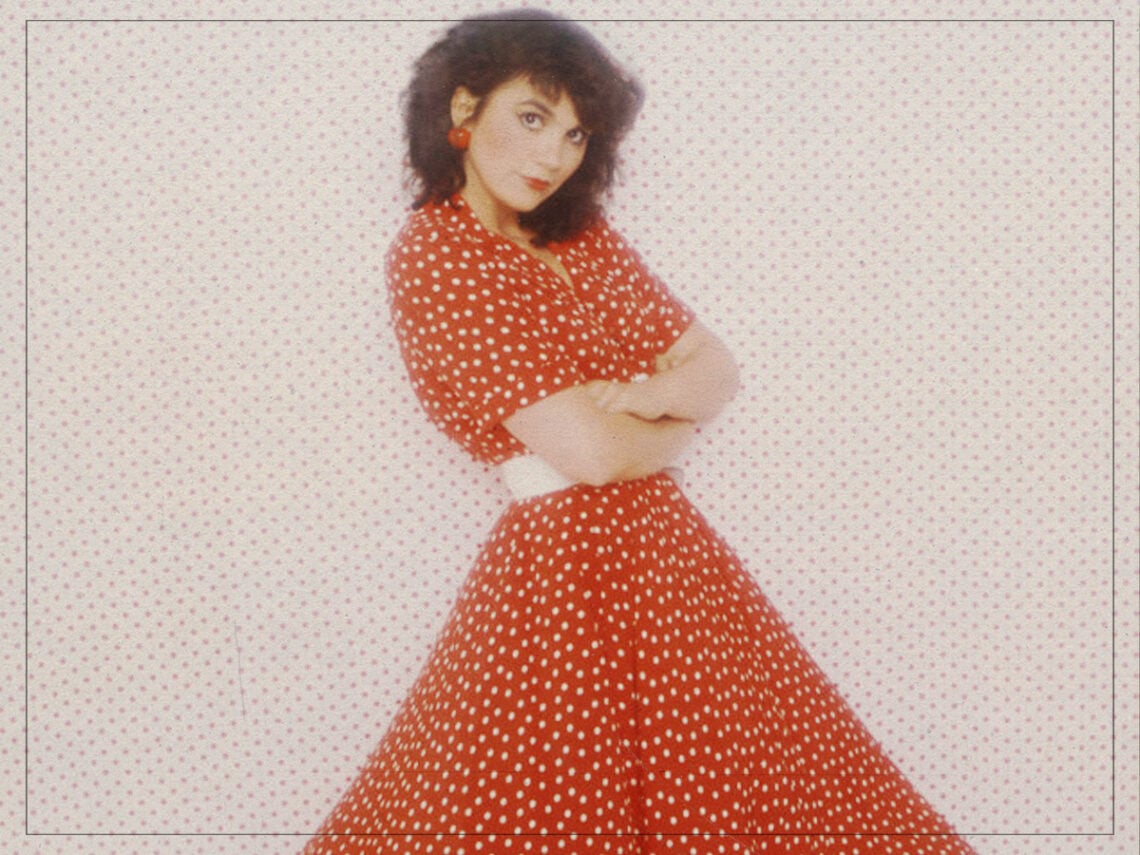
Credit: Far Out / Linda Ronstadt
Sun 31 May 2026 19:00, UK
Like most musicians, Linda Ronstadt finds it hard to revisit her older stuff. However, unlike most musicians, it’s not just an awkward task. She is horrified at the idea of listening to most of her albums, believing she only really learned to sing properly after 1980.
Now, this is especially strange when you also consider that Ronstadt has looked up to some of music’s most talented vocal giants all her life, many of them also sharing her Mexican heritage. After all, at just age one or two, her father exposed her to the Trío Calaveras and La Niña de los Peines’ Pastora Pavón, the latter of which was considered one of the greatest flamenco singers of the 20th century.
Ronstadt adored these types of singers so much that she never really considered herself to be one; she just sang. In her view, this was always the fundamental difference between her approach to music and those around her: she sang because she genuinely loved it, not because she wanted to do it as a career, or because she thought she was good at it. It was her calling because it’s the one thing she enjoys the most.
Although this became somewhat blurred when she uprooted her entire life and moved from Tucson to Los Angeles, the basic principle remained pretty much the same. Even when she was in a music group with her brother and sister, and was told by Bobby Kimmel she could get them some real work, Ronstadt went along for the ride, happy to oblige so long as it meant she could keep singing.
Perhaps this is also what made her one of the greatest singers of her generation. Ronstadt was never in it for trivial reasons, but she wasn’t exactly a ‘yes’ person, either. She loved opportunities, but she still held herself to a higher standard than most, only choosing to take things on if she felt a genuine emotional connection to them. “Something resonates,” she once said, explaining that she knows precisely what is right for her, and what isn’t.
This is also a big reason why she struggles to revisit her own material. It’s not that she regrets her decisions; it just has more to do with her need to constantly move forward, plus the fact that she genuinely believes she didn’t learn a good singing technique until much later in her career. In fact, Ronstadt can pinpoint the exact moment she learned to be a good singer, and it was when she worked with Nelson Riddle in the 1980s.
The trio of albums they created together, What’s New, Lush Life, and For Sentimental Reasons, particularly the first one, is when she finally felt she “learned a tremendous amount”. She even once told The Guardian that she doesn’t “like any” of her albums, except for a small handful, including her work with Riddle. The others included her material with Dolly Parton and Emmylou Harris on Trio and her collaboration with Ann Savoy on Adieu False Heart, but What’s New was the real turning point.
Further reading: From The Vault
Of course, it’s no surprise that the person whose arranger credits include the likes of Frank Sinatra, Judy Garland, Ella Fitzgerald, and Nat King Cole would expand Ronstadt’s singing capabilities and make her feel like the singer she’d always wanted to be, transforming her from a master of modern rock to an influential piece of the Great American Songbook.
But Riddle pushed her to spotlight her talent in new ways, no doubt giving her the confidence to use her voice in ways she’d observed in many of her own heroes growing up. That said, the fact that Ronstadt can actually bear to revisit those records probably says more about how she hears herself during that period of time rather than any outsider influence: a real singer, not just an imitation of those she loves.
ADD AS A PREFERRED SOURCE ON GOOGLE 