
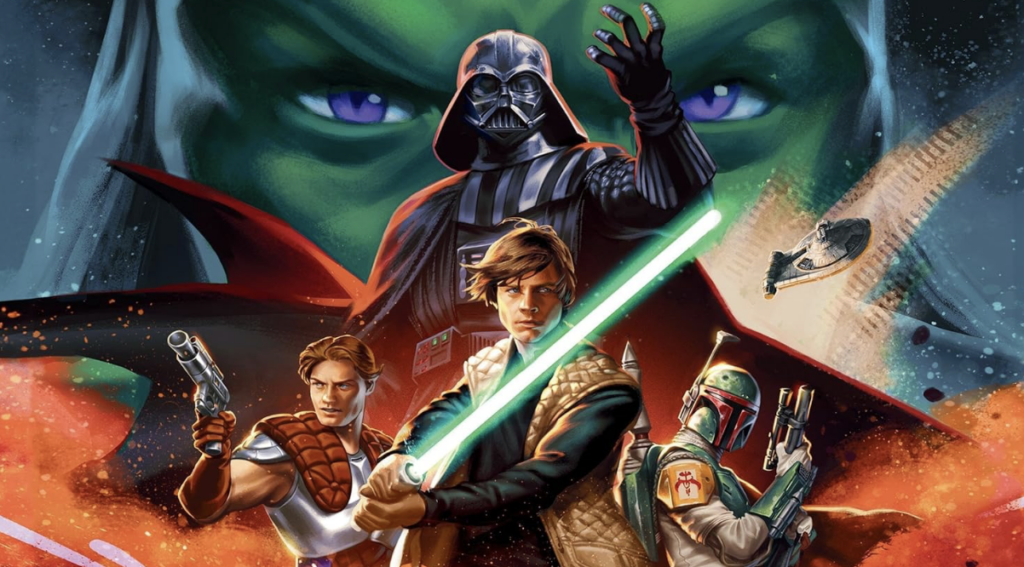
Star Wars: Shadows of the Empire was one of the most ambitious multimedia projects that Lucasfilm Licensing ever put together – all in service of a project described as “a movie without a movie”.
Between a video game, a novelization, comic books, a toy line, trading cards, and even a soundtrack that all told different parts of one big story, no stone was left unturned for the ambitious project – all while paving the way for the marketing blitzes needed to sell both the upcoming 20th anniversary Special Edition rereleases of the original trilogy and The Phantom Menace shortly afterward.
Such a project could have only been developed by Lucy Autrey Wilson, who was hired in 1974 as Lucasfilm’s first permanent employee and stayed at the company until her retirement in 2003. She was Director of Publishing at the time that Lucasfilm was looking to help prepare the field to fully relaunch Star Wars in cinemas after Timothy Zahn’s The Thrawn Trilogy, Dark Horse’s Dark Empire comic books, and LucasArts games like X-Wing, TIE Fighter, and Dark Forces collectively reinvigorated interest in the brand in the early 1990s after years of relative dormancy and stagnancy for the brand in the quiet years following the release of Return of the Jedi.
Wilson managed to leverage interests from several interested parties into developing a story set during the time of the original trilogy – initially planned to be set between A New Hope and The Empire Strikes Back, but later set between the relatively-underexplored time period between The Empire Strikes Back and Return of the Jedi after some creative discussions – and helped ensure that such a massive multimedia campaign could stick the landing across the board.
In a recent interview with Nerdist (and some excerpts from the final issue of Star Wars Insider), Wilson reflects on her role in the company at a time when they were really trying to expand what Star Wars could be outside of the realm of film, which began first with publishing.
Under Wilson’s tenure, she oversaw the rise of the Expanded Universe, which truly began with the release of Timothy Zahn’s The Thrawn Trilogy in book format and the Dark Empire comics, and her run would ultimately culminate in the 19-book New Jedi Order series. But perhaps one of her most ambitious undertakings was Shadows of the Empire, which she stated began as an effort to have a more interconnected story between multiple works, and the gap between the release of the Special Edition versions of the original trilogy movies and the delayed start of the prequel trilogy’s development meant that they had a void to fill for 1996:
“When we first started out with Star Wars books, we just let every author write what they wanted as long as we maintained some sort of continuity. But after a while, I wanted to juice things up a little bit. We were in this in-between stage where we knew there was going to be another series of movies coming out, but we didn’t know what we wanted to do until then. Another big marketing push for that next year wasn’t working out, and the company wanted to do something else.
“That sounded like a lot of fun, and we had enough lead time to do it… I liked the idea because I was always looking for ways to keep our publishing program exciting. Back at Lucasfilm, I brought the idea to Howard Roffman, my boss and the head of Lucasfilm Licensing at the time. Shadows fit the bill! [There was] a new opportunity to do something else — marketing wise — in 1996. Howard and I [then] came up with a rough story concept.”
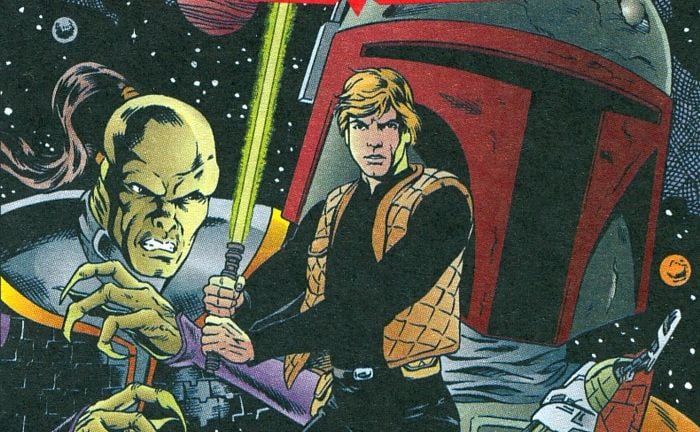
Shortly after the idea was discussed between Wilson and Roffman, a big Skywalker Ranch meeting took place in 1994 that brought Wilson the likes of author Steve Perry and LucasArts designer Jon Knoles together, and they quickly realized that they would be great picks for the novelization and video game portions of Shadows of the Empire:
“A meeting [with the major participants] was set up for November 1994 to hash out a master plan that would include a hardcover book, comics, a computer game, and toy tie-ins being the main elements of the program for release in 1996. I thought it would be fun to also include a soundtrack (I was in charge of the books, comics and music) and made a deal with Robert Townson at Varese Sarabande to add this to the mix. I, my group’s book and comic editors (Sue Rostoni and Alan Kausch) then got together with folks from the Lucasfilm games group (Jon Knoles), the author of the proposed hardcover hired by Bantam (Steve Perry), folks from Dark Horse Comics, and others.”
The initial plan pushed to put the story of Shadows of the Empire between A New Hope and The Empire Strikes Back, but development of the game necessitated that it would be set between The Empire Strikes Back and Return of the Jedi instead – a period that had largely been underexplored.
This led to the creation of Dash Rendar, a new lead who would serve as the stand-in for Han Solo and the protagonist of the video game. But a new antagonist was also needed – hence the creation of Prince Xizor, leader of the Black Sun Syndicate. Wilson had two major contributions to the character – his name, and his romantic infatuation with Princess Leia:
“We were limited in what we could do with many of the movie characters, so it made sense to come up with a new cast of characters. I remember discussing the need for a new powerful villain and exploring more of the criminal underbelly of the universe… I had a Portuguese boyfriend when I was living in Europe… We ended up breaking up, but remained friends.
“His name was ‘Fransisco’, but his nickname was ‘Xico’ – and in Portugal, you pronounce the ‘x’ with a ‘sh’ sound. If you’re an English speaker, an ‘X’ that has a unique sound can sound sort of alien. So I combined that with ‘razor’, because Xizor is a bad guy, and it sounded very cool to me. I volunteered the name to the group and it was accepted… To maintain Princess Leia’s good character, Steve Perry attributed [Leia’s] sexual attraction [to Xizor] to pheromones, while other characters and plot points came up to satisfy gameplay.”
Beyond her ideas about Xizor and general ideas for the story in the pitching phase, Wilson was humble about her contributions to the project, saying that once the ball was rolling, she started work on other Star Wars projects instead. However, she will take credit for assembling the team that made the soundtrack, a rarity for a Star Wars Expanded Universe project:
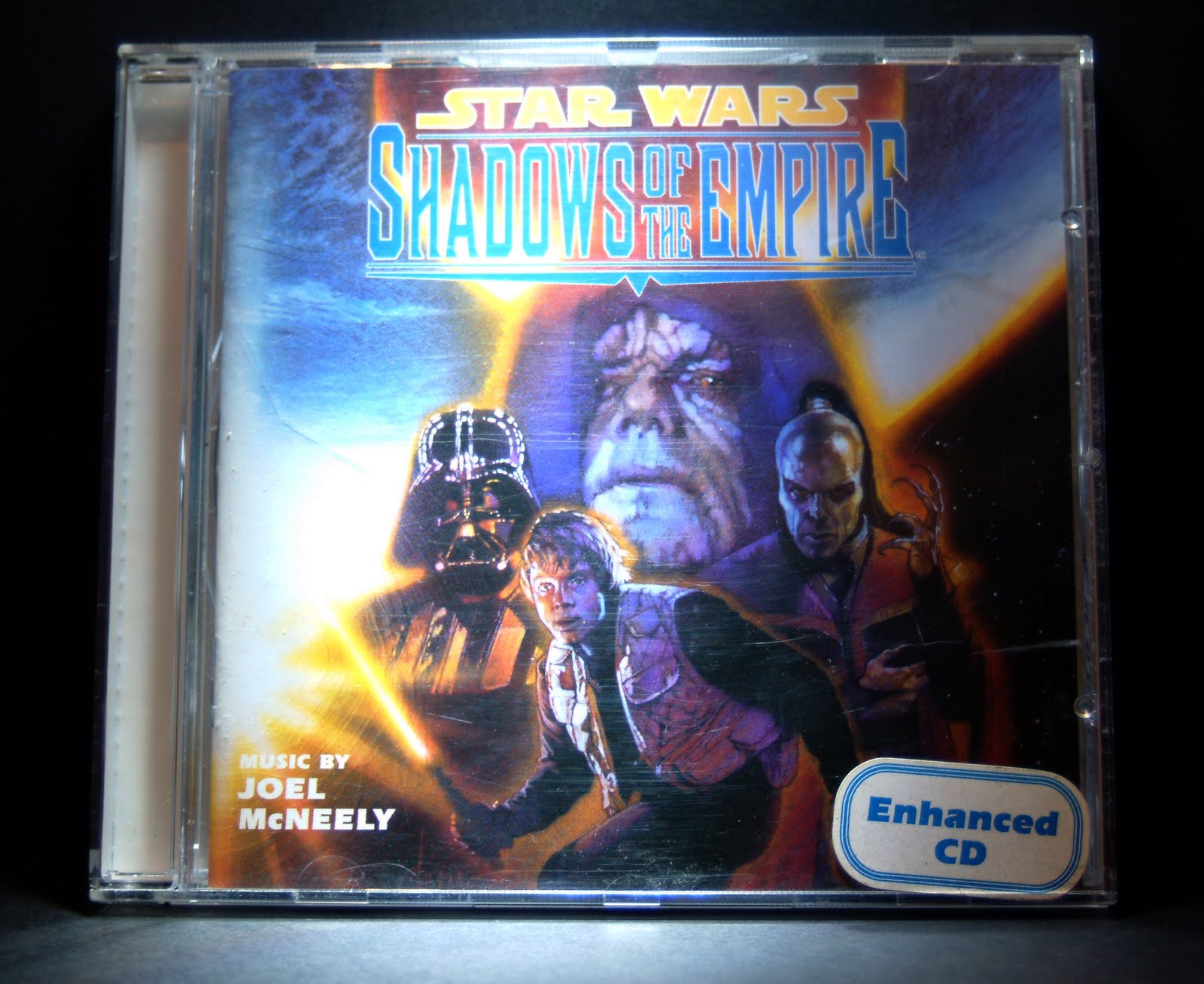
“I spent more time on the soundtrack and other [Star Wars] books. My work on the soundtrack was like most projects: I spent the most time putting the right team together. Once we had a contract with Varese Sarabande, producer Robert Townson brought on Joel McNeely as composer. The only thing I did after that was go to the recording session in Scotland, which wasn’t even really necessary!”
Reflecting on the entire process of bringing the project to life, Wilson states that it’s the people that made it so special:
“One of the things I always enjoyed the most was working with talent. My favorite memory of working on Shadows was the chance to work with a team of [creators] at the top of their game. I loved meeting many talented artists, including [poster and book cover artist] Drew Struzan, and the brothers Hildebrandt, who I met when they created a line of cards for Topps. Dark Horse Comics also introduced me to many very creative talents including Dave Dorman and Cam Kennedy. In house, Lucasfilm had some incredible talent including Doug Chiang and many others. Lucasfilm was an exceptional company to work for mainly because of George Lucas, and the quality of people who worked there.”
The ambitious project would end up being pretty much a one-off at Lucasfilm. One of the takeaways that Wilson had with the multimedia project was to keep things contained to print only next time, which influenced how The New Jedi Order was first explored as an era exclusively via publishing in a nineteen-book series that began in 1999, and wasn’t further explored in other media until after the series was finished:
“The hardest part of working on a multi-media project is that my team could only control the book, comic, and music aspect. Not having control of everything could be frustrating. There were ongoing, and constant, collaborations between the different teams, especially because everyone was enthusiastic about the program.
“Shadows was a fun project to do, but I don’t think we would have repeated it. By the nature of the medium and development process, a games team could never get anything done as quickly as we could publish our books. Shadows taught me that it was far easier for me to do things as our own little group, where I could control everything. The next time I wanted to do something as ambitious, I wanted it to be solely publishing.”
While the trading cards have gone out of print and the toy line hasn’t been manufactured in a very long time, anyone willing to give Shadows of the Empire a shot for the first time years – or ever – still has options to experience the biggest parts of the story. The novel was reprinted in June 2025 as part of The Essential Legends Collection and is available both physically and digitally. Joel McNeely’s soundtrack is available to stream on platforms like Spotify, Amazon Music, and Apple Music. The video game is available to download on platforms like Steam and GOG for an affordable price.
Grant has been a fan of Star Wars for as long as he can remember, having seen every movie on the big screen. When he’s not hard at work with his college studies, he keeps himself busy by reporting on all kinds of Star Wars news for SWNN and general movie news on the sister site, Movie News Net. He served as a frequent commentator on SWNN’s The Resistance Broadcast.