
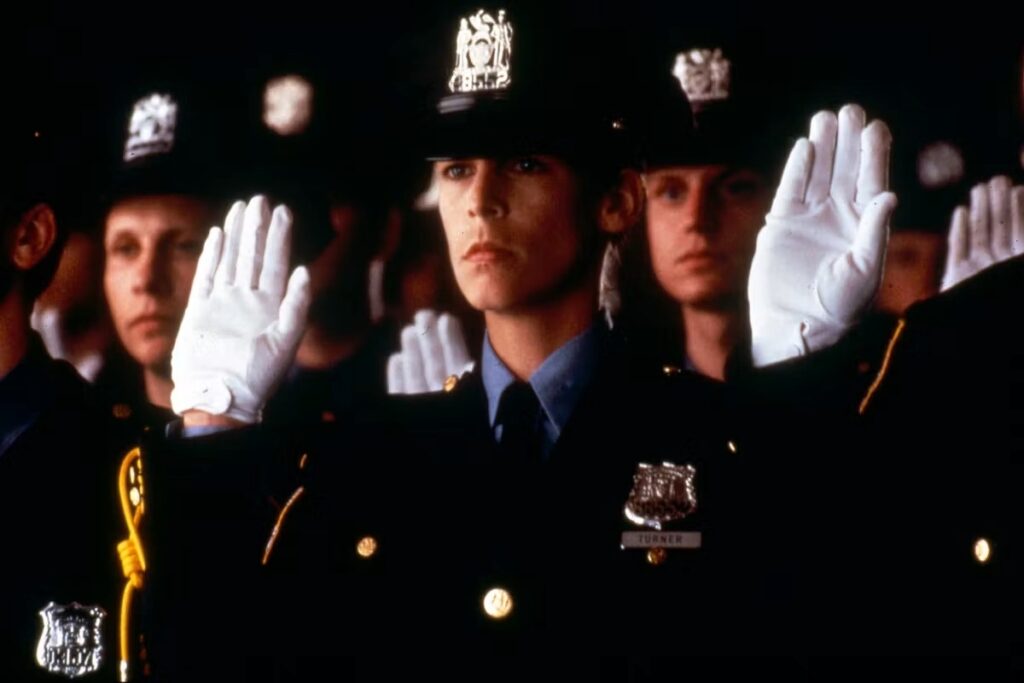
In a 1994 interview, Jamie Lee Curtis said she pressed director Kathryn Bigelow to remove a scripted nude scene from a film they made together. She argued it would distract from the story, aligning with her long-standing stance on limiting onscreen nudity. The piece also recalls her improvised dance for James Cameron that became an iconic moment.
Jamie Lee Curtis has long treated onscreen exposure as a choice, not a rite of passage. In a 1994 Entertainment Weekly interview, she recalled asking Kathryn Bigelow to cut a scripted nude scene in Blue Steel because it would steal focus from the story. The stance fits her enduring mantra: “I don’t have a pretty body, I have a pretty figure. There’s a difference.” And while she later ignited pop culture with an improvised dance in a James Cameron film, Curtis’s career map has been drawn on her terms, not Hollywood’s expectations.
Hollywood’s relationship with nudity and one actress’s stance
On-screen nudity has long been a measuring stick in Hollywood, especially for women deciding where art ends and pressure begins. For Jamie Lee Curtis, that line was never abstract. It was practical, career-defining, and personal. Time and again, she chose roles and shaped scenes to protect the story first. Indeed, her approach offers a clear blueprint for agency inside a system that often prizes spectacle.
A decisive request on ‘Blue Steel’
In 1990, Curtis headlined Blue Steel, directed by Kathryn Bigelow. The script initially included a nude sequence. Curtis asked to change it. She believed the moment would distract from the thriller’s pulse and her character’s arc. Bigelow agreed. That adjustment did more than tweak a scene. It set a boundary, showing how a star can steer a production toward intent rather than provocation.
Memorable improvisation with James Cameron
Curtis’s restraint never dulled her boldness. With James Cameron on True Lies, she crafted one of her most talked-about scenes: the improvised hotel-room dance. No over-choreography, no endless rehearsal, just instinct and trust. She later recalled being asked to try it and let the camera find the truth. The result was electric, funny, and fearless, shaped entirely by performance rather than exposure.
Curtis’s approach to selection and stardom
Curtis has been frank about how appearance colored expectations. “I don’t have a pretty body, I have a pretty figure. There’s a difference,” she said, reflecting on why she pushed back on gratuitous moments (as recounted in interviews around the mid-90s). The distinction guided her choices. She turned down scripts that demanded nudity, or negotiated scenes so character led the charge. This is the case across decades, from early thrillers to late-career triumphs.
Why her stance still resonates
Curtis’s choices underline a simple calculus: when a scene risks overpowering the story, she recalibrates. That clarity helped her sustain longevity, sharpen her performances, and earn trust with directors and audiences alike. It also reframed what star power can look like. Not louder, but surer. Not less daring, just more purposeful. The message lands today as firmly as it did in 1990.