
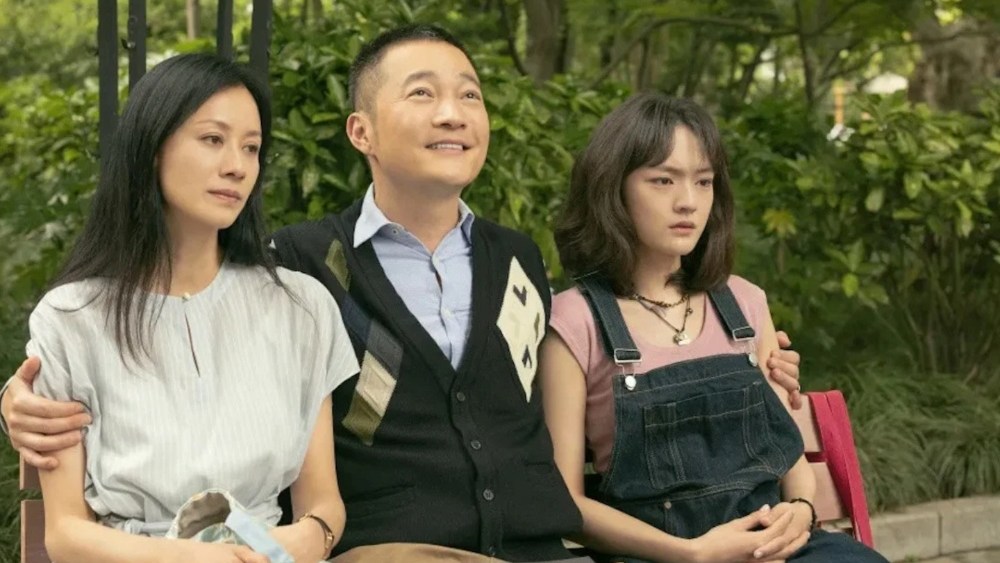
“The Great Skull,” a Shanghai dialect tragicomedy, opened the main competition showcase of the 28th Shanghai International Film Festival on June 12. Director Liu Xiaoyang, screenwriter Zhang Xiaoying and lead cast members Wen Qi, Ni Hongjie and Yu Entai attended the press conference.
Set in Shanghai, the film is a tragicomedy about a mother and daughter grieving their loss while trying to act normal. Shanghainese scriptwriter Zhang interwove her personal experience into the script, with more than 50% of the dialogue spoken in the Shanghai dialect.
Before his debut feature, Liu had been coming to Shanghai as a cinephile for years. “I hope the audience, after seeing this film, can let go of their emotions and embrace more power, living their life with more courage,” he said.
The title is a humorous, literal reference to the late father’s large piece of bone left after cremation. As Liu addressed the title, he briefly forgot his speech and paused for quite a moment. Admitting he was nervous on stage, he pulled his notes out on his phone and read: “We wish to shout out to our passed loved ones that they don’t need to worry about us. The living and the dead both have their own fate.”
Wen Qi, one of the most popular Gen-Z actors in Chinese language cinema, found her role quite similar to her own personality, but noted that conveying the Shanghai-style aura and portraying deep grief were challenging at first. She shouted out to Zeng Jian, the veteran Chinese cinematographer known for his collaboration with Lou Ye. “He was like our big parent on set, guiding us and helping us to continue and solving all kinds of problems. This film couldn’t be made without him,” she said.
Ni shared her excitement for “The Great Skull” premiering in Shanghai and is the only Shanghainese actor among the major cast. “Our film is like a seed in the soil growing into a tree,” she said. “As a Shanghai actor, having the film presented here, I feel very lucky.”
Yu admitted that he used to worry about becoming the go-to dad in Chinese dramas, but this role gave him a different experience because the film features a minimalist style, so he learned to keep it simple. “Thanks to this film for this minimalism performance, which also tells me that being an actor is never easy,” he said.
The Shanghai dialect has emerged as a marker of local cultural identity in recent years, with productions including “Shanghai Blossoms” and “B for Busy” establishing the trend ahead of “The Great Skull.”