
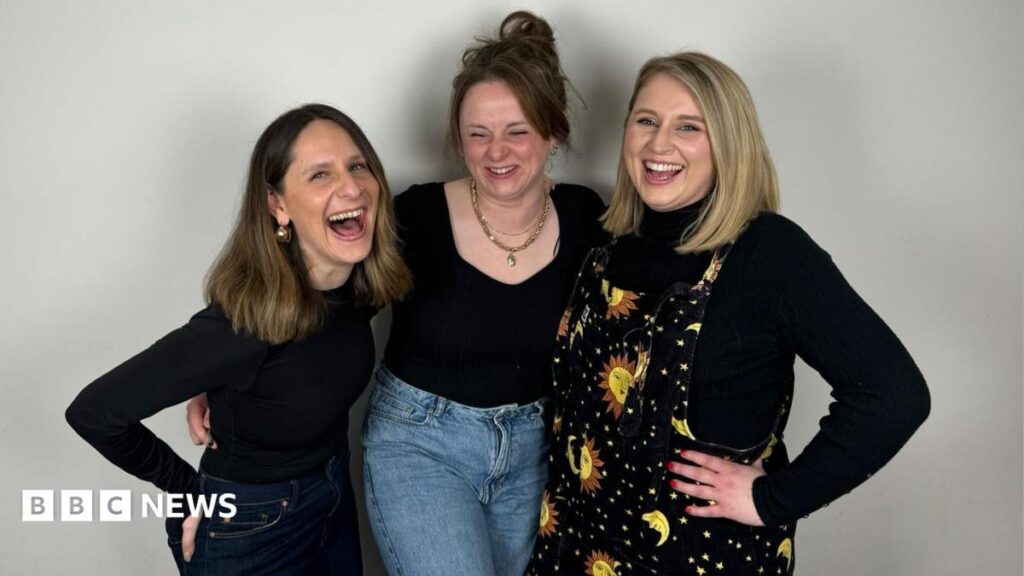
The three of them say they are inseparable as “sperm sisters” and started a podcast of the same name.
“I think the three of us felt quite lonely and we felt that through being able to talk about it, we would be able to find answers and get to know each other,” said Natasha.
“We have built our sisterhood through creating this podcast.”
“We’ve got so much to catch up on, 30 blooming years,” added Gemma, who said the podcast made her feel even closer to Helen.
The trio are also keen to raise awareness around donor conception, something Natasha described as “a silent subject”.
She said she was met with “sheer confusion and just like no real understanding of what that even means” when she tells people she is donor conceived.
While there is now better regulation, they still said there was not protection for all donor-conceived children.
The sisters do not know how many other brothers or sisters they have – the current limit of 10 families per donor did not exist when they were conceived.
A recent BBC Wales Investigation uncovered how unregulated sperm donation is being fuelled by social media sites and apps.
“The HFEA has done so much work into making sure that it’s regulated people get to know who their donors are,” said Gemma.
“The laws have improved so much, but sadly it feels like all of that hard work is going back on itself with the rise of things like Facebook sperm.
“We were born in an era where there were no rules, it’s not that different now. I just think if we can be the voice for the next generation of donor-conceived kids, hopefully that it might inspire some parents to think twice about keeping it secret or not asking questions.”
Helen said the children who were conceived by sperm donors were “utterly voiceless at this point” and she and her sisters hoped to be “a voice of the implications that it has”.