
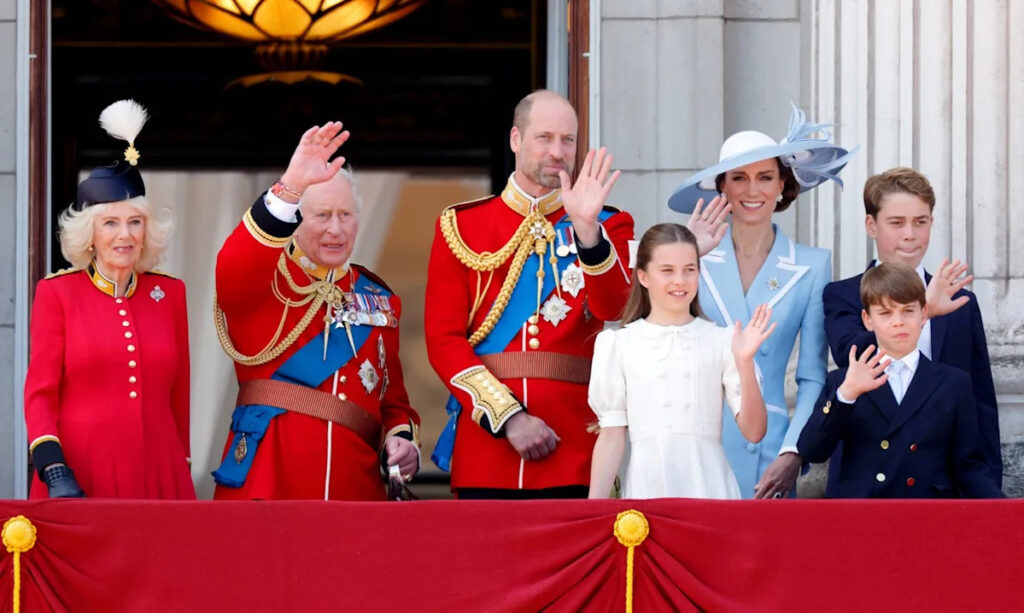
For over a century, Buckingham Palace’s East Wing remained something of a mystery to the public. Blocked off from the eyes of tourists and accessed solely by the royal family and their associates, details of area were only ever revealed through historical mentions and the odd image. The only part of the East Wing anyone ever saw was the main front balcony, where the royal family would frequently make appearances during Trooping the Colour, coronations, weddings, and more. That all changed two summers ago, when the East Wing opened following a major restoration as part of a ten-year, £369 million update called the Buckingham Palace Reservicing Programme. Preservationists restored room after room of decadent chinoiserie-inspired interiors, each filled with treasures plucked straight out of the Royal Collection.
Originally built between 1847 and 1849, the East Wing dates to the reign of Queen Victoria—who wanted to turn the previously unused palace into her primary residence as monarch, per to the Royal Trust. She enlisted architect Edward Blore to design the space and used the sale of George IV’s seaside Brighton home, the Royal Pavilion, to finance the project. Many pieces from George’s pavilion were also used to decorate and inspire the chinoiserie interiors of the East Wing, lending an added layer of opulence to the palatial rooms. Read on to explore the wing yourself below.
Principal Corridor
The primary entrance to the East Wing is through its Principal Corridor. Also known as the Great Gallery, this 240-foot-long stretch of red-carpeted hallway features a museum’s worth of art and royal family treasures. Along the walls are portraits of Queen Victoria and her family, as well as paintings by Franz Xaver Winterhalter, Sir Thomas Lawrence, and Thomas Gainsborough.
Yellow Drawing Room
The East Wing’s chinoiserie style is perhaps on its fullest display in the Yellow Drawing Room. Inside are a pair of grand, nine-tiered Chinese porcelain pagodas as well as a marble chimneypiece. On the mantel sits the Kylin Clock—an ornate French-inspired timepiece made of Asian porcelain. It features two Chinese turquoise lions, which the Royal Collection Trust notes are also known as “dogs of Fo,” which support a Chinese bowl adorned with a clock dial.
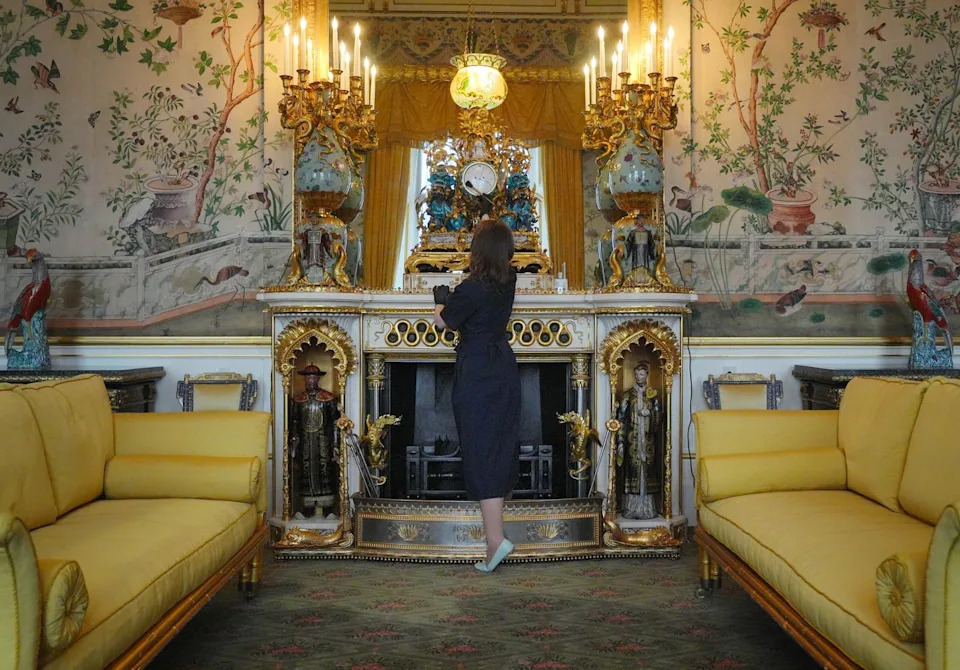
Yellow drawing room of the East Wing.Jonathan Brady – PA Images – Getty Images
The Yellow Drawing Room currently features hand-painted Chinese wallpaper decorated with a tableau of bird and tree motifs—which The Guardian states were originally installed by Queen Mary and later removed, cleaned, and rehung during the East Wing’s restoration.
Originally, however, the room was covered in yellow damask, which earned the sitting room its name. Queen Mary found the current wallpaper amid stores from George IV’s Royal Pavilion and was enamored by its vibrant hue. By the time the restoration was complete, The Guardian reported that color had faded to a “creamy hue.” These days, the space is often used for royal receptions and was even where Elizabeth II sat for portrait artists.
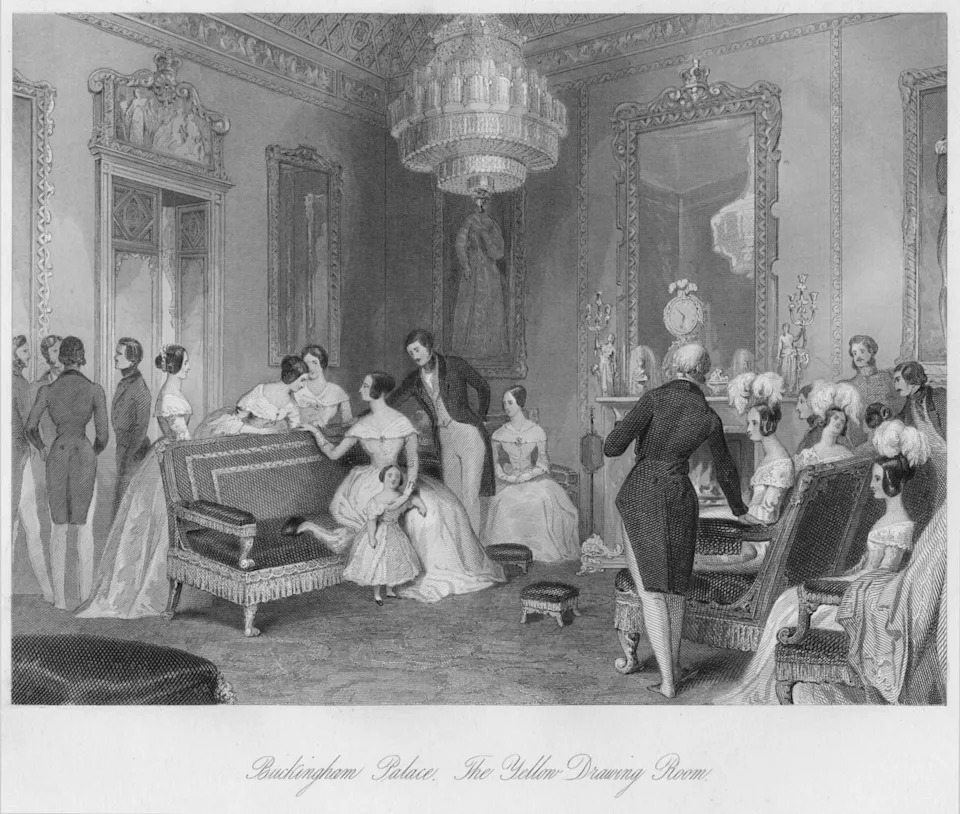
A drawing of the Yellow Drawing Room from 1841.Print Collector – Getty Images
Central Balcony
While the rest of the East Wing has largely remained private for the last 175 years, the Central Balcony has always been in the public view, as it was first used for royal appearances in 1851. Located on Buckingham Palace’s front façade, with sweeping views overlooking the Mall, the Central Balcony is often used as a gathering spot for the royal family during formal public events, such as weddings or the Trooping the Colour procession. In fact, the Royal Collection Trust states that connecting with the public was Prince Albert’s exact vision when he conceived of the idea for the balcony during construction of the East Wing.
Centre Room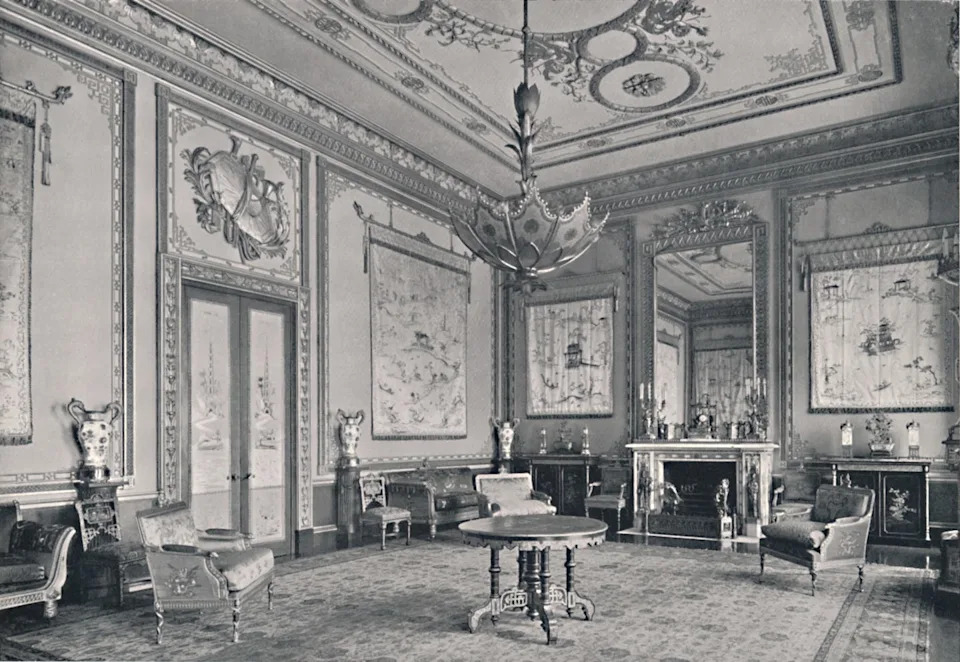
The Centre Room in 1939.Print Collector – Getty Images
Originally used as a sitting room, the East Wing’s Centre Room today acts as the vestibule to the Palace’s Central Balcony. In fact, it can often be spotted in the background of royal family balcony photos. The space is adorned with 18th-century Chinese silk wall hangings originally gifted to Queen Victoria in 1897 and a lotus-shaped glass chandelier from George IV’s Royal Pavilion.
You Might Also Like