
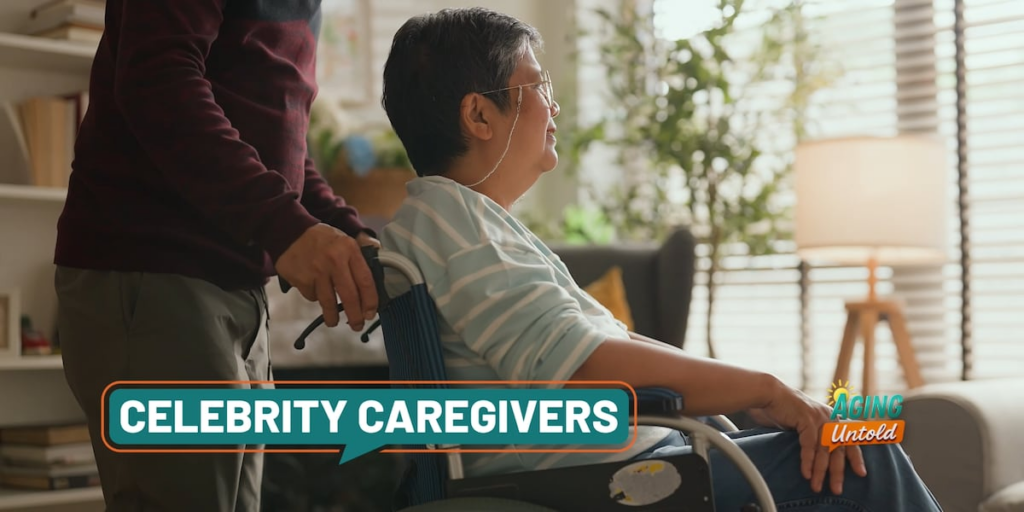
(Aging Untold) — Caregiving doesn’t discriminate. Rob Lowe and his brothers cared for their mother through stage 4 breast cancer. Queen Latifah cared for her late mother, who had a rare autoimmune disease.
Money and fame may change resources, but they don’t erase the emotional weight of caring for someone you love.
The conversation is finally getting louder
For a long time, caregiving was something people did quietly — and alone. That’s changing and Amy O’Rourke, an aging expert, said the shift matters.
“I’m really hopeful with all these different celebrities that are openly talking about it, because the conversation needs to be lifted way high,” O’Rourke said. “It’s the great leveler. It affects every single person on this earth.”
Sam Cradduck, a gerontologist, pointed to celebrities including Seth Rogen, who started Hilarity for Charity after caring for his mother-in-law, and Bradley Cooper as examples of public figures now using their platforms to speak openly about caregiving.
“Celebrities are out there now bringing a voice to the voiceless,” she said.
Cradduck also cited Leeza Gibbons, former host of Entertainment Tonight, who founded Leeza’s Care Connection to train and support family caregivers, as an example of someone using a public platform for lasting impact.
Why some celebrities stay silent
Not every public figure chooses to share their caregiving experience, and O’Rourke said there are valid reasons for that.
“I think there’s some valid reasons that they would have to sort through, like the parents’ privacy, their privacy, maybe access to their parent or some fear around exposing,” she said. “They really have to think about how they want to communicate that to the public.”
A demographic shift that makes this conversation urgent
Katherine Ambrose, an aging-well coach, noted that the stakes go well beyond celebrity stories with all Baby Boomers turning 65 by 2030.
“There’s a lot of things happening and these conversations have to be out there,” she said. “This is what people need to know so they can grab those clues out there.”
“I think people don’t realize or recognize the impact that something has on someone until it happens to you,” Dr. Rhea Rogers, a board-certified physician, said. “The disease has no selection. I don’t care if you’re white, if you’re Black, if you’re rich, if you’re poor. You’re fair game.”
Five key takeaways Caregiving is universal. Illness and the need for care cross every line of race, income and fame. Celebrity voices are shifting the culture. Public figures like Rob Lowe, Queen Latifah, Seth Rogen and Bradley Cooper are helping normalize caregiving conversations. Silence has reasons. Some public figures weigh privacy, public image and family concerns before speaking out — and those considerations are legitimate. Rosalynn Carter’s legacy lives on. The Carter Institute for Caregiving remains an active resource for caregiver support. Platforms matter. Podcasts, books, news segments and organizations like Leeza’s Care Connection are helping families find the information and support they need.
Copyright 2026 Gray Media Group, Inc. All Rights Reserved.