
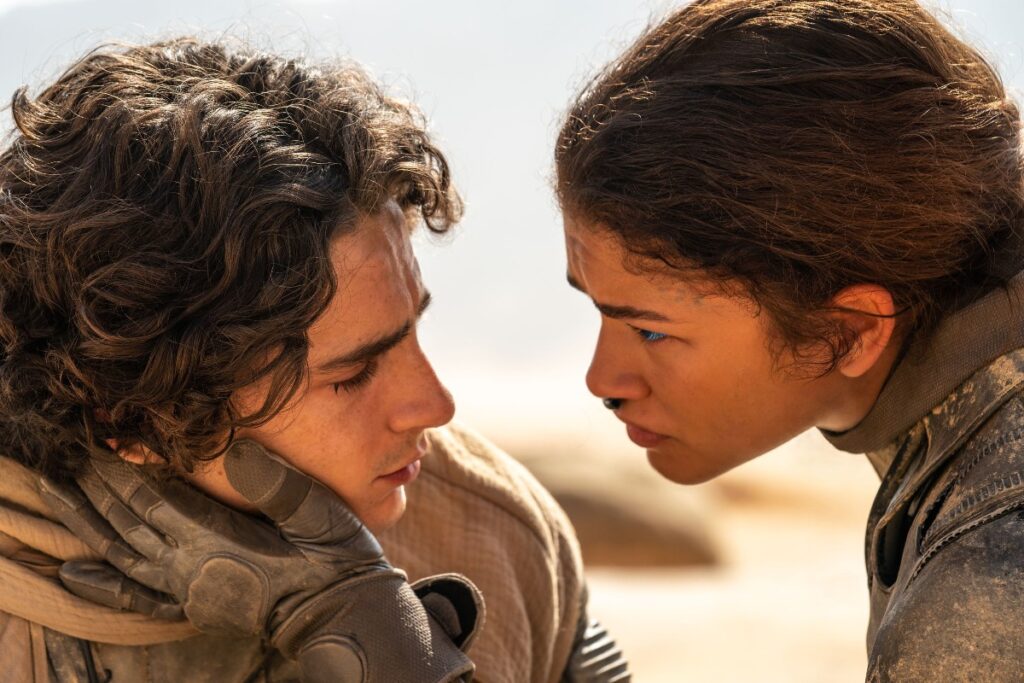
Denis Villeneuve’s Dune, adapted from Frank Herbert’s novel, premiered at the Venice International Film Festival in 2021 and drew a seven-minute standing ovation. The reception helped turn the film into a modern blockbuster launchpad, with Hans Zimmer’s score and the franchise’s scope pushing it into the conversation with space-opera giants.
The standing ovation at the Venice International Film Festival in 2021 lasted seven minutes, and Denis Villeneuve’s “Dune” walked out of the theater looking less like a risky adaptation of Frank Herbert and more like a new blockbuster machine. Critics and audiences treated it as a full-scale event, with Variety capturing the sense that something had just clicked for modern science fiction. With Hans Zimmer’s score pounding under monumental imagery and a top-tier cast, the film didn’t just earn applause, it opened the door to a franchise built to compete with the biggest space operas in pop culture.
A standing ovation that set the tone
There are movie premieres that feel like polite ceremonies, and then there are nights that land like a signal flare. At the 2021 Venice Film Festival, Dune arrived with the weight of a famously “unfilmable” novel on its back, and it didn’t tiptoe in. The audience responded with a 7-minute standing ovation, the kind of communal reaction that’s hard to manufacture and even harder to forget.
That applause mattered because it wasn’t only about hype. It was a quick, public verdict that Denis Villeneuve had found a way into Frank Herbert’s dense universe without sanding down its strangeness. For viewers back home, it was also a promise: this wasn’t going to be sci-fi that apologizes for being serious.
What this blockbuster chose to do differently
Hollywood trains us to expect space operas to sprint, explain, and sell. Villeneuve’s film slows the pulse instead, letting scale and silence do real narrative work. The comparisons to Star Wars floated up quickly, but mostly because both aim for myth, not because they share the same tone.
This is the case where spectacle becomes a delivery system for ideas: ecology, power, faith, and the economics of survival. The movie keeps the political machinery visible, even when the camera is lingering on sand, steel, and enormous machines. And for once, the “big” moments feel earned rather than queued up.
The reception that turned it into an event
In the U.S., the film’s momentum was amplified by critics treating it less like a routine franchise launch and more like a referendum on what studio sci-fi can still be. Variety, among others, captured that early sense of unanimity, noting how rare it is for a project this massive to play as both craft showcase and crowd pleaser.
That cultural energy didn’t come from one clever twist. It came from consistency: production design that feels lived-in, action staged with clarity, and an atmosphere that never winks at the audience. If you felt people talking about it as something you had to see in a theater, that was the point.
A saga takes shape on screen
The ensemble helped translate a complex mythology into recognizable human stakes, with Timothée Chalamet, Zendaya, and Oscar Isaac grounding the story’s scale in personal consequence. Hans Zimmer’s score, meanwhile, leans into texture and ritual, pushing the film toward something closer to epic than adventure.
Most telling is what came next: Dune: Part Two was confirmed, turning that first roar of approval into forward motion. How often does a single premiere make a long future feel suddenly inevitable?