
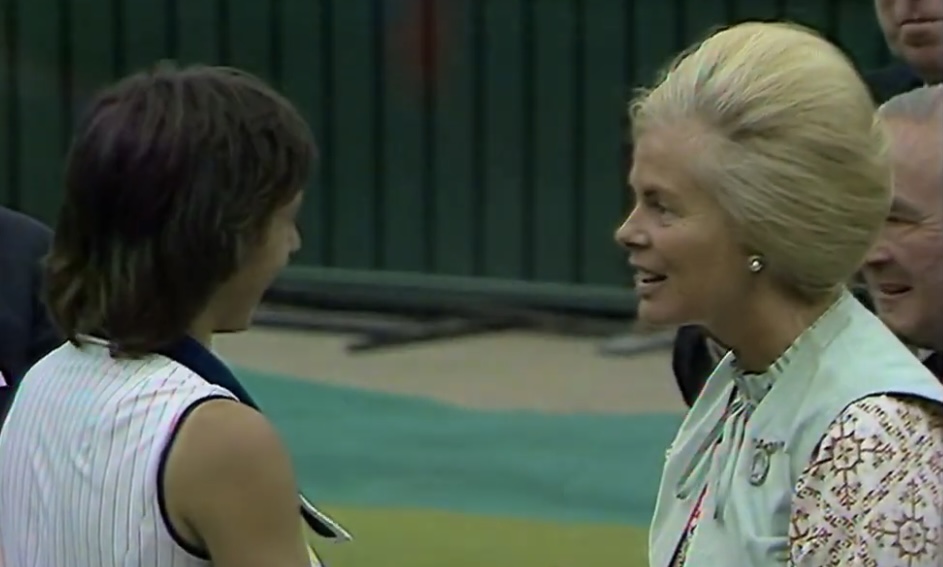
As royalty and sporting greats gathered in the Royal Box on
Centre Court once again today, it is impossible not to remember one
of Wimbledon’s most beloved royal figures – the late Duchess of
Kent.
While King Frederik X of Denmark made a low-key appearance among
Sunday’s distinguished guests, for many tennis fans the royal
most closely associated with Wimbledon will always be the Duchess
of Kent.
For more than three decades, she became an iconic presence at
The Championships, presenting trophies to champions with warmth,
dignity and genuine affection. Yet away from the cameras, she also
used her position to change lives.
One of the most remarkable examples came when she quietly helped
reunite tennis legend Martina Navratilova with her mother after
years of separation during the Cold War.
A champion forced to leave home
When Martina Navratilova defected from communist Czechoslovakia
to the United States in 1975, she was just 18 years old and already
one of tennis’s brightest talents.
Her decision to seek political asylum came at an enormous
personal cost. She was stripped of her Czechoslovak citizenship and
prevented from returning home, leaving her separated from her
family, including her mother, who remained in Prague.
Although Navratilova went on to become one of the greatest
players in tennis history, winning 18 Grand Slam singles titles and
31 women’s doubles crowns, the separation from her family remained
a deeply personal heartbreak.
A royal ally behind the scenes
The Duchess of Kent, who presented the Wimbledon trophies from
1969 until 2001, developed close relationships with many of the
sport’s leading players.
She is perhaps best remembered for comforting Jana Novotná after
her emotional defeat in the 1993 Wimbledon final, but her support
extended far beyond the public moments witnessed on Centre
Court.
Deeply moved by Navratilova’s circumstances, the Duchess quietly
used her influence behind the scenes in an effort to help reunite
the player with her mother.
While the full diplomatic details have never been publicly
disclosed, it is widely understood that discreet approaches were
made through both British and Czech channels in support of the
tennis champion.
Those efforts proved successful.
More than a decade after leaving her homeland, Navratilova was
finally reunited with her mother in the late 1980s – an outcome
widely credited, in part, to the Duchess of Kent’s quiet
intervention.
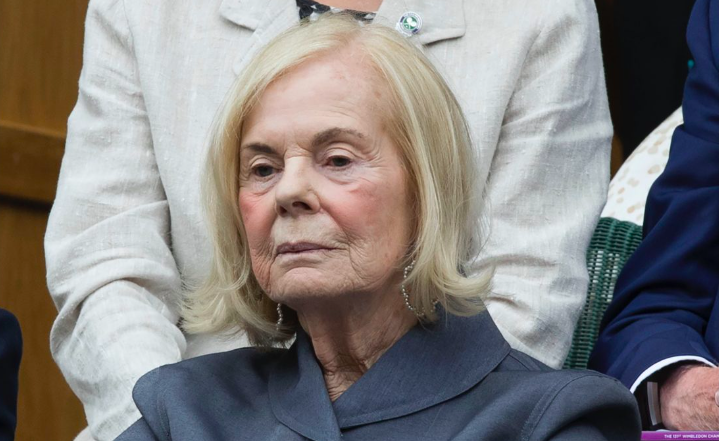 Picture by Stephen Lock /
i-ImagesMore than a trophy presenter
Today’s royal guests at Wimbledon are a reminder of the close
links between the monarchy and The Championships.
But few members of the Royal Family left as profound a mark on
the tournament as the Duchess of Kent.
For generations of tennis fans she was the elegant royal handing
over the trophies on Centre Court. For Martina Navratilova, she was
something far more important – a compassionate friend whose quiet
determination helped reunite a family divided by politics.