
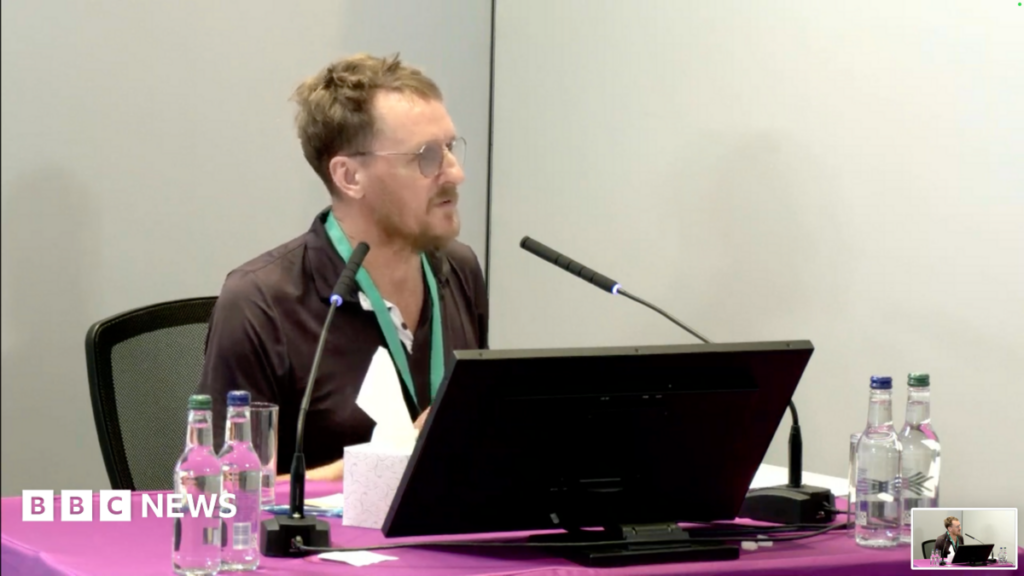
The seventh set of public hearings is being held at Arundel House in London.
Ayris, the first former staff member to give evidence, worked as a ward manager at the Linden Centre in Chelmsford between 2003 and 2009 and at The Lakes in Colchester between 2014 and 2016.
He said that when he arrived at the Linden Centre, patients were often left waiting for doctors to decide what to do with them and staff did not seem to talk to patients or learn about their lives.
“It just felt the level of apathy was astonishing, to be honest,” he said.
Ayris said staff would often remain in offices with doors closed and resisted requests to spend more time on the wards.
“Some people either didn’t want to do that or they’d had enough of doing that, and by shutting themselves in the office with their colleagues, it felt safer for them,” he said.
He told the inquiry he later became “ashamed” about the lack of engagement with patients after realising how much of their lives could be overlooked.
Ayris also raised concerns about overmedication, particularly at night. He recalled one doctor at the Linden Centre saying “the ideal patient is one medicated to just above a coma”, although he said he was later told the remark had not been meant literally.
He said there was too much focus on protecting the organisation if something went wrong rather than on care and compassion.
He described how walls were painted for Care Quality Commission visits, calling it “farcical”.
Ayris said patient observations appeared to be increased to “protect the trust” rather than patients and argued staff should spend more time engaging with people rather than simply observing them.
He also criticised the removal of patients’ personal belongings following episodes of self-harm, describing it as punitive, and said changes to reduce risks often came only after serious incidents.