
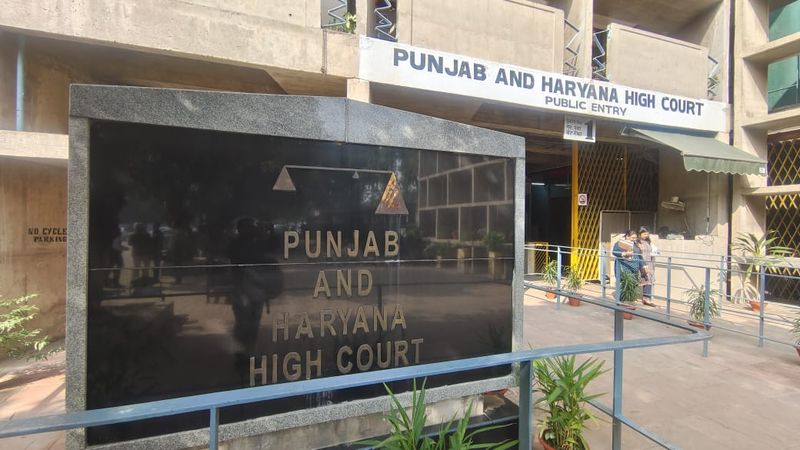
A petition seeking restoration of the film “Satluj” on the ZEE5 platform after it was made unavailable for viewing in India was on Friday dismissed as withdrawn.
As the matter came up for hearing before the Bench of Acting Chief Justice Ashwani Kumar Mishra and Justice Rohit Kapoor, senior advocate Dheeraj Jain, along with counsel Shreyansi Verma raised objections regarding the plea’s maintainability on the Union of India’s behalf. Among other things, questions were raised regarding the “public cause” and “locus”.
The plea was filed by Sharwan Singh seeking directions for restoration of the film for public viewing throughout the country. The petitioner had contended that no statutory order, judicial direction or other lawful authority prohibiting the exhibition of the film had been disclosed.
According to the petition, “Satluj”, earlier titled “Punjab ’95”, was based on the life and work of late human rights activist Jaswant Singh Khalra. The plea states that the film was released on ZEE5 on July 3 and was subsequently made unavailable in India on July 5.
The petitioner argued that the removal curtailed the public’s right to receive information and artistic expression under Article 19(1)(a) of the Constitution and also deprived paid subscribers of access to content that had been lawfully made available on the platform.
“The abrupt removal of the film, without disclosure of any statutory order, judicial direction or lawful authority, has not only curtailed the fundamental right of the public to receive information and artistic expression under Article 19(1)(a) of the Constitution of India but has also deprived thousands of bona fide subscribers of access to content for which they had already paid consideration,” the petitioner added.
The petition further stated that the main questions arising for the court’s consideration included whether the abrupt withdrawal of a duly released and lawfully exhibited feature film from an OTT platform — in the absence of any disclosed statutory order, judicial direction or authority of law — violated the fundamental right to freedom of speech and expression guaranteed under Article 19(1)(a) of the Constitution of India.
Another issue raised was whether the right guaranteed under Article 19(1)(a) included the right of the public to receive information and to access and view a lawfully released cinematographic work, and whether such right could be curtailed except by a procedure established by law. The petition also questioned whether any executive authority, directly or indirectly, could compel, induce or otherwise secure the withdrawal of a lawfully released cinematographic work without issuing a reasoned order traceable to any statutory provision.