
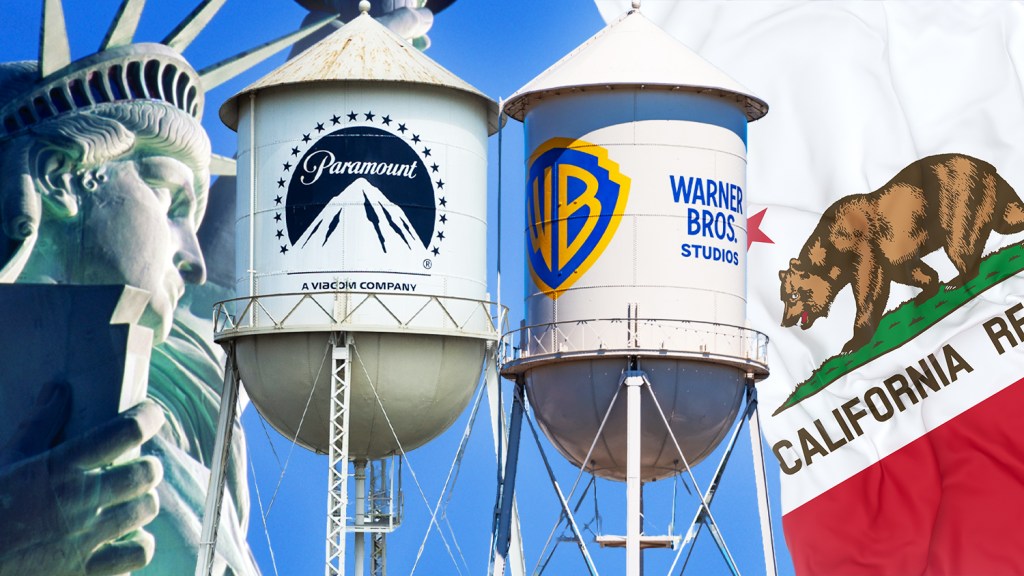
The judge overseeing the state attorneys general challenge to the Paramount–Warner Bros. Discovery merger did not issue a ruling on an emergency motion to pause the transaction, but said that she would do so by July 22.
U.S. District Judge Araceli Martínez-Olguín heard arguments from both sides in an 80-minute hearing in Oakland on Friday. The states are seeking a temporary restraining order that would bar the companies from closing the deal for up to 28 days. That would be a prelude to a further ruling on a preliminary injunction, which would perhaps pause the transaction indefinitely, or until the legal process plays out.
Jeffrey Kessler, representing Paramount, told the judge that the transaction will not close by the 22nd, which is Wednesday. That is around the time that the European Union is expected to issue its decision on the $110 billion transaction.
Much of the hearing was devoted to argument on how narrowly the market for theatrical and cable distribution should be defined, as the states claimed that they had shows that the transaction on its face is illegal.
But timing is also top of mind in the litigation. Kessler also told the judge that they were “prepared to stipulate we won’t close for 28 days,” but Paramount also wants what is essentially a mini trial that would ensure that there would be a ruling on the preliminary injunction before Sept. 30. As part of its agreement with WBD, Paramount agreed to pay a $7 million per day ticking fee if the transaction does not close by then. The states oppose that scheduling plan.
California attorney general Rob Bonta and 11 other states filed suit to block the merger on Monday. They claim that the transaction is “presumptively unlawful,” likely to substantially lessen competition in the markets for wide release theatrical distribution, anticipated top grossing film releasing, and basic cable channel licensing.
The AGs claim that the merger will lead to “higher prices and degraded quality,” as a combined Paramount and Warner Bros. will be able to extract a greater portion of box office revenue from exhibitors.
They also argued that the transaction was presumptively illegal by pointing to market shares. Paramount-WB represent about 27% of the box office, per the state attorneys general, and will control more than 30% of big-budget theatricals for wide release. When it comes to cable, the combined company would control more than a quarter of all basic cable channels by revenue, per the lawsuit. The transaction will not only put two legacy film studios under the same corporate owner, but Paramount will have amassed a collection of basic cable outlets, ranging from MTV and Nickelodeon to TNT and Cartoon Network.
Kessler called the state AGs’ market figures misleading. He argued that they don’t account for the impact of distributors like Amazon MGM or for unexpected successes like Obsession, “made for a million dollars that comes out of nowhere and earns over $450 million I think so far this year.”
He also accused the states of dismissing the impact of streaming, arguing that the growing market “compels the increase in production for theatrical. It compels it because it is the only way streaming can succeed.”
Paramount has said that under the merger, it will boost theatrical output to 30 films per year. Kessler said that the company is making the commitment “because it has to.”
As for cable, Kessler said that the collection of channels from the merged company would be “complementary, and there is no increase in bargaining power.”
Cable distributors take both packages of channels from Paramount and Warner Bros. Discovery, and “if they’re combined, they’re going to take both packages. There’s no change in the competitive dynamic.”
James Weingarten, representing the states, told the judge that the market definitions in the lawsuit do reflect the way that business is currently practiced, even if streaming has gained a foothold.
“It’s no good for a theater owner with 38 or 45 or a hundred theaters to say, ‘But Netflix,’ or “But Amazon.’ They can’t stop showing a blockbuster or an anticipated blockbuster and say, ‘We’re just going to put Amazon or Netflix up on the screen instead. That’s not a substitution for them.”
While there may be breakout hits, he said, there is a market for anticipated top grossing movies. “The point is there are some movies that get the budget, the marketing, the name brand. We all know, whether we call them blockbuster, tentpole or whatever, these are the lifeblood of the industry.”
He also challenged the notion that Paramount won’t gain bargaining leverage in basic cable.
“It is intuitive and clear that if one company owns 50 of the 100 channels, they will have excessive bargaining leverage, and there will be anti-competitive effects in their negotiations with the cable companies and the satellite distributors,” he said.