
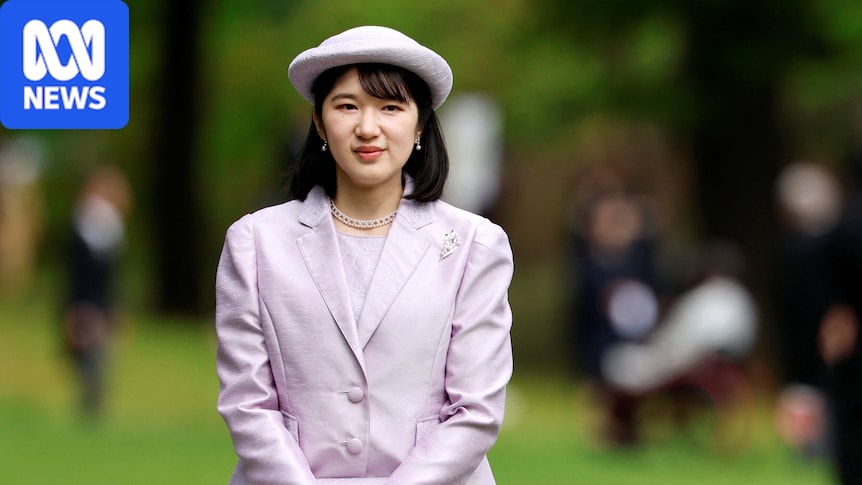
Japan is running out of royals, and it’s putting the world’s oldest continuous hereditary monarchy at risk.
There are only three people in line to inherit Japan’s Chrysanthemum Throne, and one of them is 90 years old. All three of them are men.
In a bid to secure the line, the Japanese government recently passed changes to allow males from former branches of the imperial family to be adopted into the current royal family.
Born as commoners, the adoptees would not be eligible to inherit the throne themselves, but their sons would be.
The proposed solution has proved contentious, with many people in the country asking why the law was not instead changed to allow women to succeed to the throne.
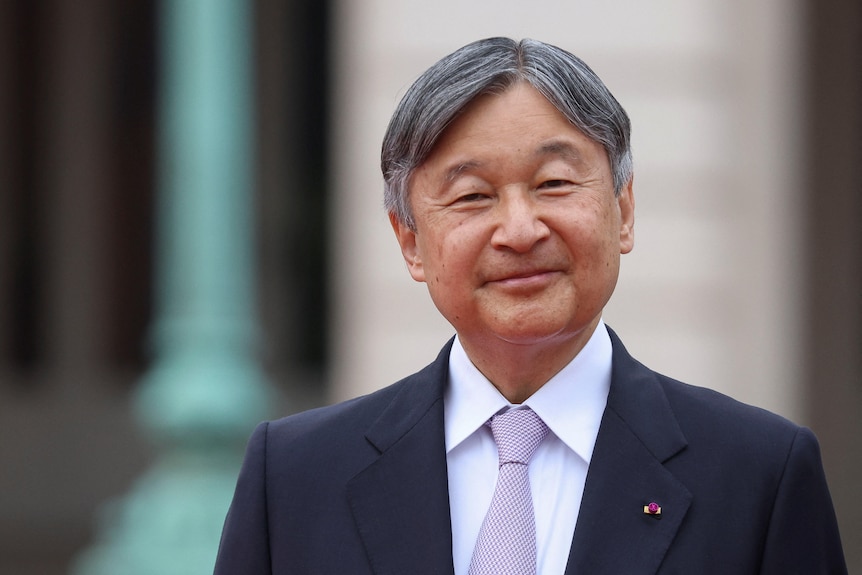
Emperor Naruhito has only one child, a daughter, prompting the succession law changes. (Reuters: Nicolas Economou)
Japan’s Emperor Naruhito does not have a son, but he does have a daughter: the enormously popular Princess Aiko.
Chuo University professor Okawa Makoto, who specialises in imperial lineage and succession, said allowing a female emperor would be “the simplest solution”.
He said you would need to go back more than 600 years to find a common ancestor with the adoptees.
“To put it bluntly, they are practically complete strangers,” he said.
“This proposal involves welcoming such outsiders into the Imperial Family.”
‘Out of step with the times’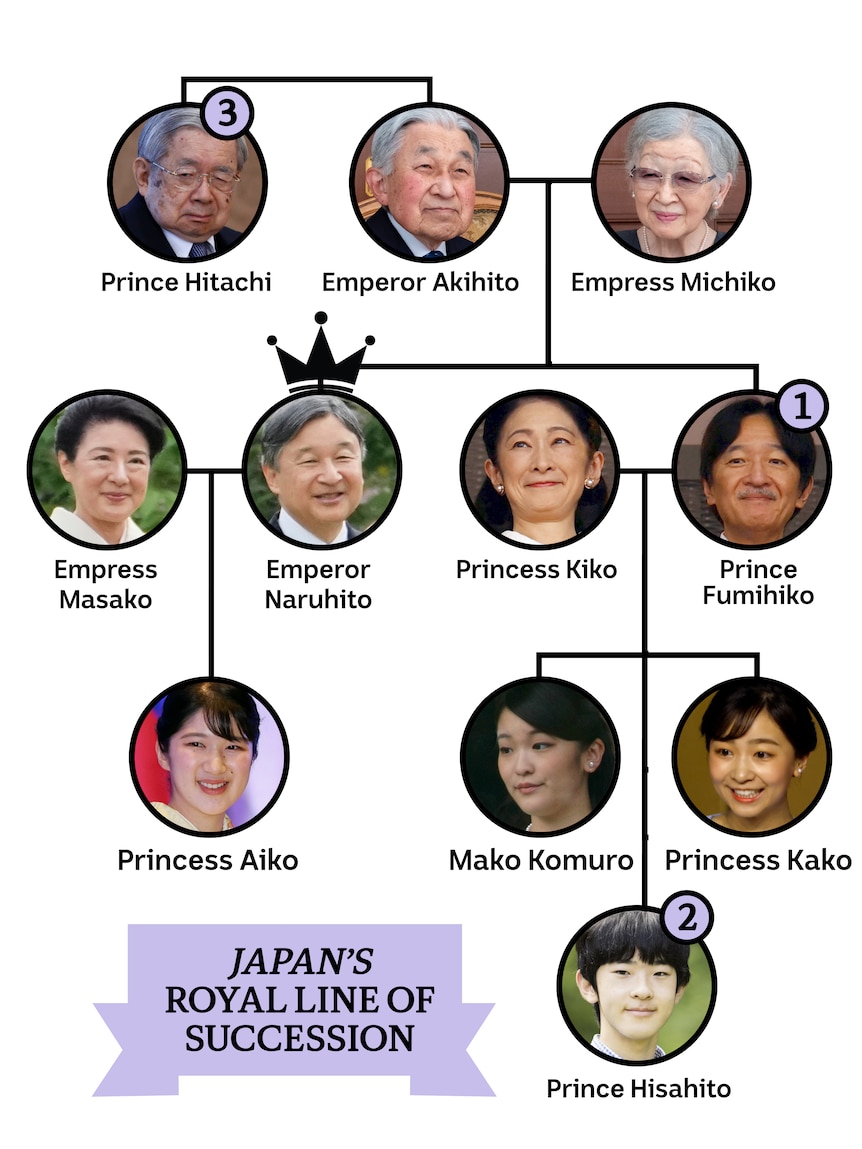
The family tree of Japan’s imperial family includes Crown Prince Fumihito and his son, Prince Hitachi. (ABC News: Lindsay Dunbar)
Emperor Naruhito’s first eligible heir is his 60-year-old-brother, Crown Prince Fumihito, followed by Fumihito’s son, 19-year-old Prince Hisahito.
After that, the next — and final — man in line is the emperor’s 90-year-old uncle, Prince Hitachi.
It means if the 19-year-old prince did not have a son, the line would end within the next generation.
Princess Aiko, 24, enjoys a high level of support among the public and regularly attracts large crowds at events.
Tokyo resident, 59-year-old Miwa, said Princess Aiko was a “truly wonderful person”.
“I think everyone would like to see her become emperor,” she said, while out walking her dog, Merci, in the city’s Yoyogi Park.

Miwa, 59, is in favour of having a female emperor. (ABC News: Natalie Whiting)
A poll conducted in May by Mainichi Shimbun, a major Japanese newspaper, found 72 per cent of people supported having a female emperor.
Everyone the ABC spoke to in and around the park was in favour.
One 29-year-old woman said she “didn’t see it as a big deal” and “couldn’t pinpoint the real reason why some people are so adamant that it has to be a man”.
Her 40-year-old male friend said it was “completely out of step with the times”.
Tobai Juju, 17, said only allowing men to succeed was “outdated”.
“It’s discriminatory,” she said.
Her 16-year-old friend Oishi agreed and said she didn’t think being emperor “had anything to do with gender”.
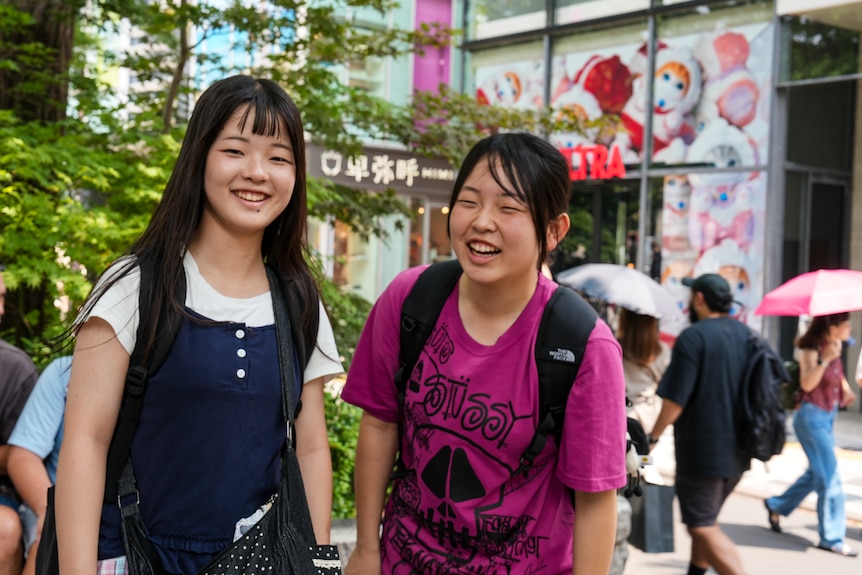
Oishi and Tobai Juju both support the idea of allowing female empresses in Japan. (ABC News: Natalie Whiting)
A 25-year-old woman said she’d “love to see a female emperor” but supposed the “restrictions exist because tradition is being upheld”.
“But times have changed,” she said.
‘Authority and legitimacy’ at stake
Japan’s first female Prime Minister, Takaichi Sanae, ushered through the recent changes to the law that will keep men on the throne.
Japan may have its first female PM, but some say it is not a win for women
In the lead-up to the parliamentary sitting, she said the emperor’s “authority and legitimacy” was linked to the fact the position had been handed down “the male line over 126 generations”.
Those who support maintaining the male-only succession are concerned the authority of the role could be undermined by a female emperor.
A key role of the emperor is to promote national unity, and some have said introducing a woman could be destabilising.
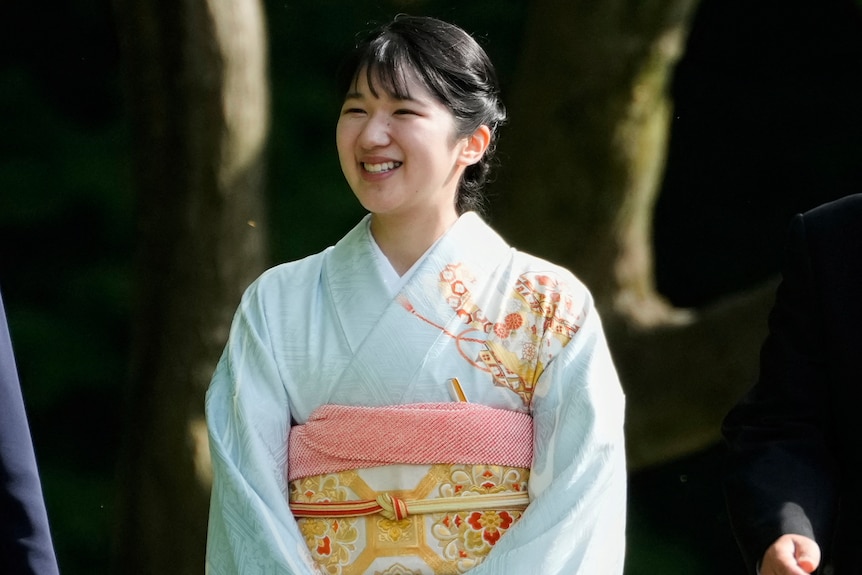
Princess Aiko has gained admirers since debuting as an adult royal in 2021. (Reuters: Shuji Kajiyama)
Part of their concern is that a woman could take the throne and hand it down to one of her children under a female line, breaking the chain of patrilineal succession.
“Patrilineal succession to the throne is a tradition our predecessors have defended for over 2,600 years,” government MP Kobayashi Takayuki said during a parliamentary committee deliberation on the issue.
But Professor Okawa, who is critical of the recent changes to law, said there was “virtually no-one” in the empirical history field who believed there had been consistent patrilineal succession, and said accession was far more complex in earlier days.
Japan has had eight female emperors in its history. They took the throne to provide stability when there was disagreement on who should succeed, or when a male heir was too young to lead.
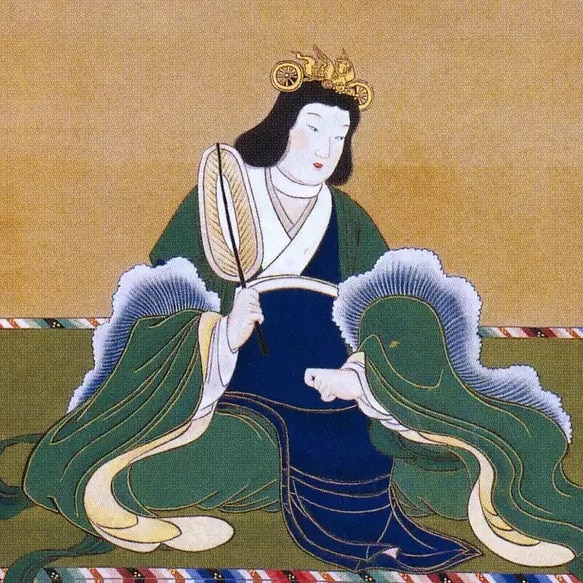
Empress Suiko, who ruled Japan between 592 and 628, was the first of eight documented female empresses. (Public domain: Tosa Mitsuyoshi)
It was not until 1889, when the imperial house law was introduced, that succession was formally restricted to males.
Japan has faced international scrutiny over this decision.
In 2024, a United Nations Committee recommended it amend the law to allow women to become emperor, prompting a strong protest from the Japanese government.
When the UN Secretary-General’s deputy spokesperson, Farhan Haq, was recently asked to comment on the issue, he said the Secretary-General “encourages all countries to adopt inclusive policies that will empower women in all walks of life and in all forms of employment”.
Who could be adopted into Japan’s royal family?
The changes to the law that allow the imperial family to adopt long-lost male relatives will come into effect in about three months.
The potential adoptees would be from 11 former imperial houses which lost their royal status during World War II.
Historically, these other houses were used as a back-up to ensure succession, in case the main imperial family ran out of members.
The candidates must be male-line descendants, aged 15 years or older, and with no wife or children.
Professor Okawa said no specific candidates had been announced.
“There is still a significant chance that even if they identify potential candidates and approach them, they will be turned down,” Professor Okawa said.
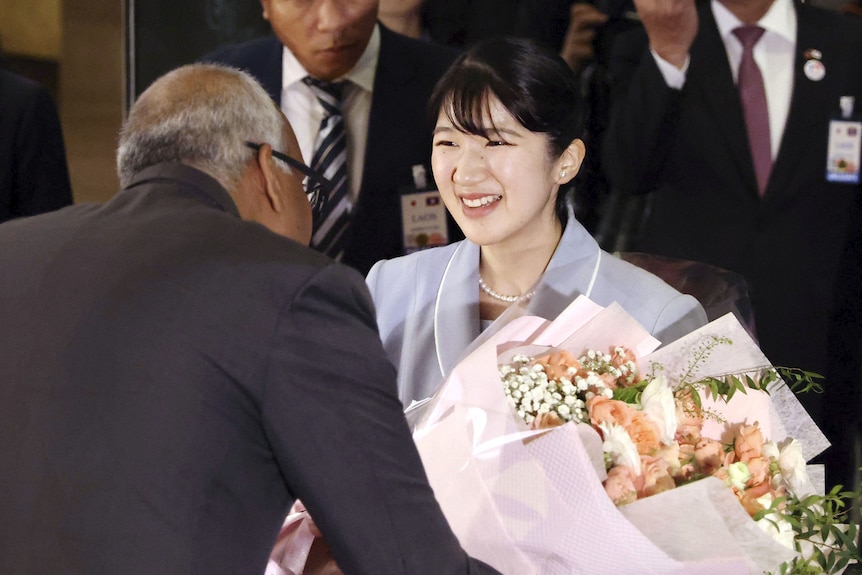
Support for Princess Aiko as a future monarch increased after her first solo official overseas trip to Laos in November. (AP: Kyodo News)
He has cast doubt over whether a “boy of around 15 years of age” being told “out of the blue to become an adopted son in a household he knows nothing about” would agree.
“From the perspective of children’s rights, and indeed by any standard of common sense, this is a proposal that is rather chilling,” he said.
Princess Mako paid a steep price for her love story
The changes to the law will also allow female members of the imperial family to keep their royal status and continue working as representatives if they marry a commoner.
The Imperial family has lost royals to marriage in the past. Most recently, in 2021, then-Princess Mako, niece to the current Emperor, gave up her title to marry her long-term boyfriend. Her decision to finally leave and marry her university sweetheart followed an almost eight-year engagement, scandal and plenty of public scrutiny.
But Professor Okawa said the problem of dwindling numbers of heirs would continue, despite the recent changes.
He said if “we continue to exclude women simply on the grounds of their gender”, the gap with public opinion and societal expectations would continue to grow.
“Ultimately, that raises the question of whether the symbolic imperial system itself is meaningless. There is a real risk that that could happen,” he said.