
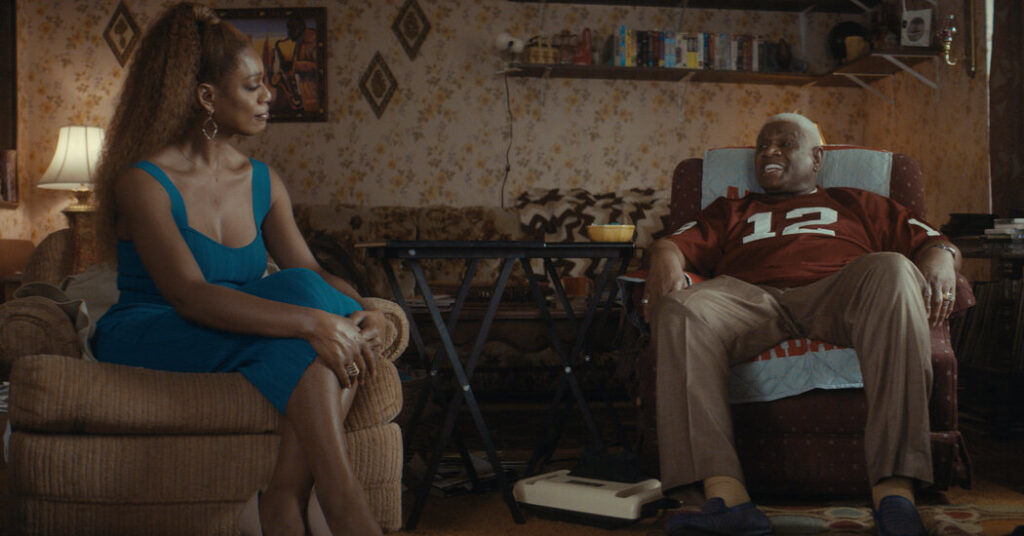
“Clean Slate,” on Amazon Prime Video, is the kind of comedy you’ve seen on TV before. A woman leaves her hectic life in New York City for her hometown in Alabama to make a fresh start, repair her relationship with her estranged father, work at the family carwash and, just maybe, find love.
The first season is a tall glass of sweet tea — wholesome, a little saccharine and mostly sitcom-standard. Except for one thing: Desiree (Laverne Cox) is transgender, which is a revelation to her gruff, old-school dad, Harry (George Wallace), who last saw her 23 years ago as his “son,” Desmond.
What might be most striking about “Clean Slate” is how un-fraught the situation is. After his initial surprise and a few pronoun faux pas, Harry takes his daughter’s identity in stride. So do their friends and neighbors (except for one moralizing preacher). Though the show was co-produced by the late Norman Lear, there is little of the acrimony of his 1970s culture-clash sitcoms like “All in the Family.”
The statement, and maybe the fantasy, of the show is to posit a world that largely, casually assumes transgender rights and personhood, even as the headlines from our actual world scream otherwise. Our social problems aren’t absent in “Clean Slate”; at one point, in a burst of fatherly protectiveness, Harry worries that “these streets are not safe for people like Des.” But mostly, the show sticks to quirky family comedy and good-natured wisecracks.
The kind of transformation that “Clean Slate” imagines — the movement of a group from controversial to ordinary — is one we’ve seen in other areas of society, most recently around gay rights. That change was itself driven in part by TV shows.