Share
Tweet
Share
Share
The British monarchy is undergoing a period of rapid transformation. Diagnosed with cancer in February 2024, King Charles III, now 76, faces a deteriorating condition in 2025, sharply curtailing his public engagements and shifting critical responsibilities to Prince William, 42, and Kate Middleton, also 42. Buckingham Palace has kept the type of cancer undisclosed, but with no signs of remission, Charles’s official duties dropped from over 200 in 2024 to fewer than 50 this year, while William has taken on 80% of his father’s role, including 10 international trips. Kate, despite her own cancer diagnosis in January 2024, plans 20 engagements for 2025, focusing on early childhood education and mental health. This shift reflects a deliberate strategy to ensure the Crown’s stability amid health crises and mounting external pressures.
Charles III ascended the throne in September 2022 following the death of Queen Elizabeth II, who reigned for 70 years. His reign, however, may rank among the shortest since Edward VIII, who abdicated in 1936 after less than a year as king. The decline in his health, first detected after a benign prostate procedure, has sparked speculation about abdication, though no official statement has confirmed this. Meanwhile, the monarchy, contributing £1.8 billion annually to the UK economy—including £500 million from tourism in 2024—faces scrutiny over its £100 million yearly cost, with 40% of Britons questioning its worth. Six of the 56 Commonwealth nations are debating cutting ties by the end of 2025, heightening the urgency of the succession process.
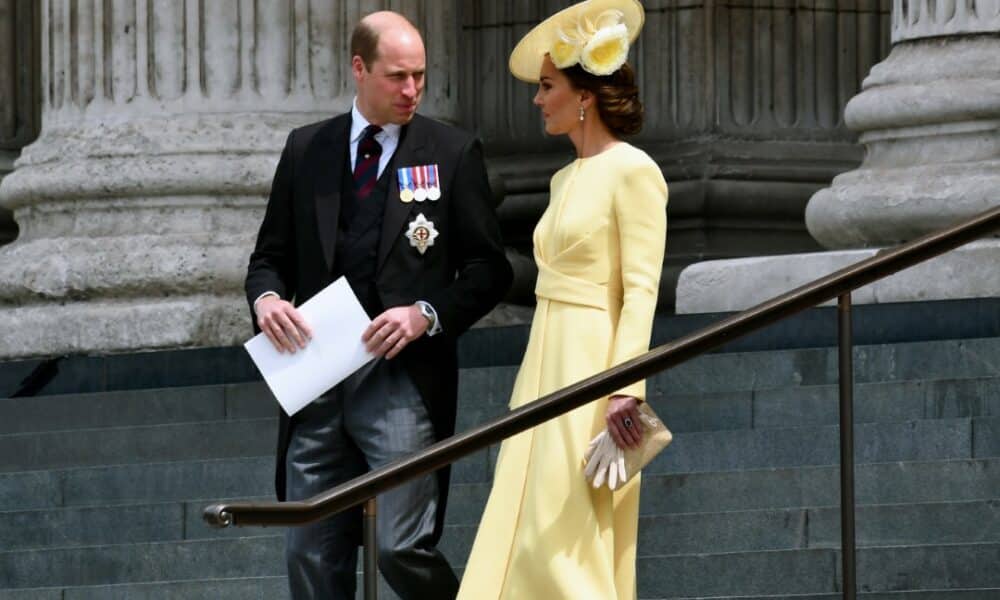
William and Kate have emerged as pivotal figures in this transition. Boasting a 75% public approval rating compared to Charles’s 50%, the couple has intensified their preparation to assume the throne, balancing historical traditions with modern demands. William spearheaded high-profile events, such as the reopening of Notre-Dame Cathedral in Paris in December 2024, and raised £50 million for charities last year, benefiting 5 million people through mental health initiatives. Kate, though limited by her treatment, supported 2 million children in 2024 via educational projects and is gradually resuming duties. A succession once thought to be years away now appears imminent.
Intensive training for the throne
Prince William has wasted no time stepping into the monarchy’s spotlight. In 2025, he conducted over 20 meetings with foreign policy experts and led 10 international trips, solidifying his role as the Crown’s primary representative. His efforts extend beyond ceremonial duties: in 2024, he raised £20 million for mental health initiatives, directly impacting 5 million beneficiaries. This reflects a modern approach aligned with a society demanding greater relevance from the royals. Alongside this, rigorous training in royal protocols, estate management, and global diplomacy prepares William to succeed Charles as King William V, with Kate as queen consort.
Kate Middleton, meanwhile, exemplifies remarkable resilience. Diagnosed with cancer in January 2024 after abdominal surgery, her public engagements plummeted from 120 in 2023 to 40 in 2024. Yet her gradual return is promising: 60 events are planned for 2025, emphasizing early childhood education and mental well-being. In 2024, her projects reached 2 million children, reinforcing her influence despite ongoing recovery. The couple’s 75% approval rating, up 10% since 2023, starkly contrasts with Charles’s 50%, underscoring public trust in their ability to lead the monarchy through uncertain times.
Their preparation isn’t just a reaction to Charles’s health crisis—it’s an effort to modernize the institution. The monarchy faces criticism over its £100 million annual cost, even as it generated £1.8 billion for the UK economy in 2024, including £500 million from tourism. William and Kate aim to bolster this position with tangible actions and an approachable image, positioning them as vital to maintaining ties with the Commonwealth, where 14 nations still recognize the monarch as head of state.
Timeline of the monarchical crisis
Recent events paint a clear picture of the ongoing transition within the British monarchy. Here are the key milestones:
1936: Edward VIII abdicates after less than a year to marry Wallis Simpson, succeeded by George VI.1952: George VI’s death elevates Elizabeth II to the throne at 25, beginning a 70-year reign.2022: Elizabeth II passes away, and Charles III takes the throne at 73.January 2024: Kate Middleton begins cancer treatment following abdominal surgery.February 2024: Charles III is diagnosed with cancer after a prostate procedure.December 2024: William represents Charles at the reopening of Notre-Dame Cathedral in Paris.
This timeline underscores how Charles’s worsening health in 2025 could result in one of the briefest reigns in recent history, hastening William and Kate’s rise. The current crisis tests the monarchy’s ability to adapt swiftly, a challenge unseen since Edward VIII’s abdication nearly 90 years ago.
Economic and political challenges in the spotlight
The British monarchy isn’t grappling solely with a health crisis—economic and political pressures are mounting too. In 2024, it contributed £1.8 billion to the UK economy, with £500 million driven by tourism tied to castles, palaces, and royal events. Yet its £100 million annual cost draws criticism. A recent survey found 40% of Britons questioning the monarchy’s value, a notable rise from previous years. This discontent highlights the need to justify the Crown’s existence in an era of fiscal restraint and social change.
Politically, the Commonwealth poses another hurdle. Of its 56 nations, 14 still recognize the monarch as head of state, but Barbados severed ties in 2021, and six others plan referendums by the end of 2025. Jamaica, the Bahamas, and Belize are among those considering a shift to republics, potentially shrinking the monarchy’s global reach. William and Kate, with their 75% approval and modern appeal, are seen as the best hope for preserving these connections, though time is running out.
The couple’s impact is evident in the numbers. In 2024, they raised £50 million for charitable causes, reaching 5 million people through mental health and education initiatives. This hands-on approach contrasts with Charles’s 50% approval, down from 65% in 2023, and reinforces the notion that the monarchy can evolve under new leadership. The transition, then, is not just about succession—it’s about survival in a shifting global landscape.
Health redefines royal roles
Cancer has fundamentally altered royal duties. Charles III, who completed 25 international trips in 2023, reduced that to fewer than 10 in 2024, while his total engagements fell from over 200 to under 50 in 2025. His focus on intensive treatment left gaps that William filled adeptly, taking on 80% of the king’s responsibilities this year. Kate’s engagements dropped from 120 in 2023 to 40 in 2024, but she plans 60 for 2025, signaling a steady recovery. The couple’s resilience boosted their approval by 10% since 2023, reaching 75%.
This health crisis also exposes the monarchy’s vulnerability during transitions. Charles, the oldest monarch to ascend at 73, may lack time to cement his legacy. Meanwhile, William and Kate are already delivering results: he raised £20 million for mental health in 2024, and she supported 2 million children through educational efforts in the same period. These figures bolster the perception that the Crown rests in capable hands, even as Charles’s future remains uncertain.
The next generation’s preparation has also begun. Prince George, 11, joined five public events in 2024, marking his early introduction to royal duties. Charlotte, 9, and Louis, 6, follow in the line of succession, while Harry, estranged since 2020, remains fifth, followed by Archie and Lilibet. The current crisis not only reshapes William and Kate’s roles but also signals the start of a broader generational renewal.
Succession takes shape with the new generation
As Charles’s condition worsens, the line of succession becomes clearer. William will rise as King William V, with Kate as queen consort, should Charles abdicate or pass away. Next come their children: George, Charlotte, and Louis, who are already being groomed for future roles. George’s participation in five public events in 2024 stands out as an early milestone. Harry, despite his distance from the family since 2020, holds fifth place, followed by Archie and Lilibet, though his active involvement seems unlikely.
William has shouldered 80% of Charles’s duties in 2025, including 10 international trips, while Kate, with 15 engagements in 2024 amid treatment, plans 20 this year. These figures highlight a couple in full transition, ready to lead the monarchy through a pivotal moment. Their 75% approval, deemed “relevant” by 70% of Britons compared to 55% for Charles, is a critical asset for tackling challenges like sustaining Commonwealth ties and justifying the Crown’s cost.
Preparation extends beyond the couple. George, Charlotte, and Louis represent the monarchy’s long-term continuity, with their early exposure reflecting a strategy to keep the institution rooted for decades to come. As Charles undergoes intensive care, the succession takes form, with William and Kate at the heart of a process that could define the British monarchy’s future.
Key facts about the royal transition
The health crisis surrounding Charles III and the rise of William and Kate bring critical details into focus. Here are some standout points:
Charles completed fewer than 50 engagements in 2025, down from over 200 in 2024.William led 10 international trips this year, taking on 80% of the king’s duties.Kate plans 60 events for 2025, after supporting 2 million children in 2024.The monarchy generated £1.8 billion for the economy in 2024 but costs £100 million annually.Six Commonwealth nations are debating breaking ties by the end of 2025.
These figures illustrate how Charles’s health has fast-tracked a transition blending tradition with modernity, with William and Kate as the driving forces.
The Crown’s future in new hands
As Charles undergoes intensive treatment, the monarchy braces for a historic shift. William’s 10 international trips and 80% takeover of the king’s duties in 2025, alongside Kate’s 20 planned engagements, reflect a transition already underway. The Crown’s £1.8 billion economic impact in 2024 faces scrutiny, but the couple’s 75% approval—20% higher than Charles’s—offers a sturdy foundation to weather the criticism.
With 2.5 billion Commonwealth citizens watching and six nations debating republicanism in 2025, the first transition in 70 years looms. Charles, the oldest monarch to ascend at 73, may see his reign cut short, but William and Kate, with their blend of tradition and innovation, emerge as the linchpin for the monarchy’s future. Their preparation, coupled with the gradual introduction of George, Charlotte, and Louis, signals a new era striving to balance past and present.