
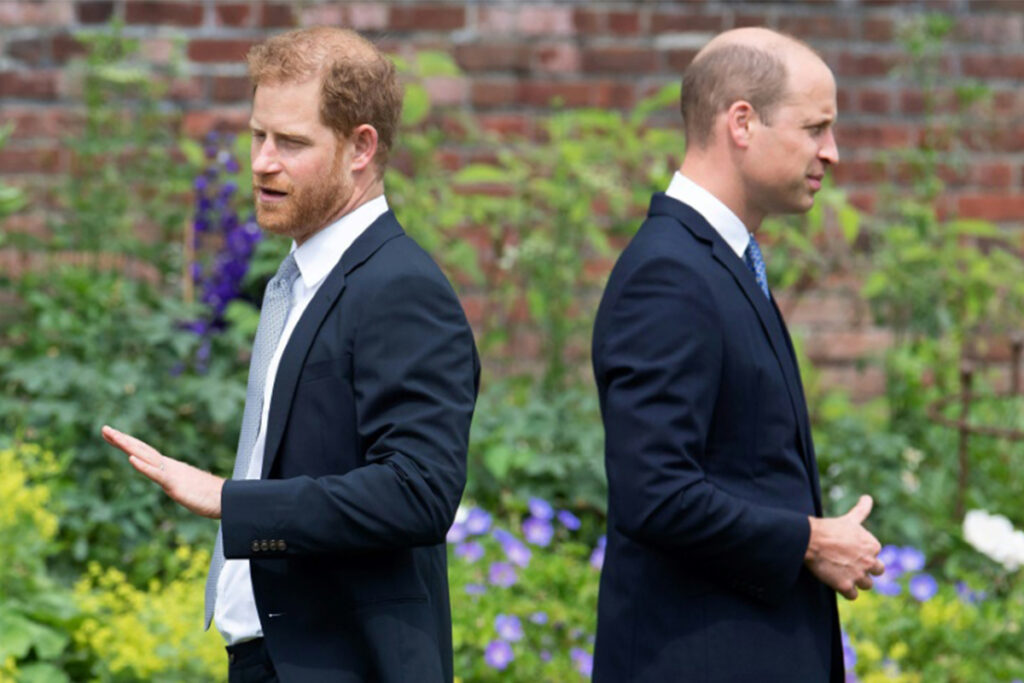
When Prince Harry walked into Westminster Abbey alone for his father’s coronation last May, the image felt like the culmination of a slow, painful unspooling. No uniform to match his brother. No wife at his side. No visible sign that the rift with Prince William—once his closest ally in the royal machine—was anywhere close to healing.
According to someone who watched the brothers grow up, that distance isn’t just emotional. It’s strategic.
Paul Burrell, Princess Diana’s former butler and a man who has dined, cried, and worked in the shadows of royal history, says William has consciously pulled away from Harry as he edges closer to the throne—and that reconciliation may not be part of the future royal script at all.
Prince William’s Future and the ‘Leaky Sieve’ Prince Harry
‘I think William has distanced himself from Harry a lot more than people realise,’ Burrell told Fox News, offering a blunt assessment of what many royal-watchers have suspected but the palace will never spell out. ‘Because William’s path is very different from Harry’s. As he gets nearer and nearer to the throne, which will be in a few years, he has to remain isolated. He has to be in a world that is very tight and protected.’
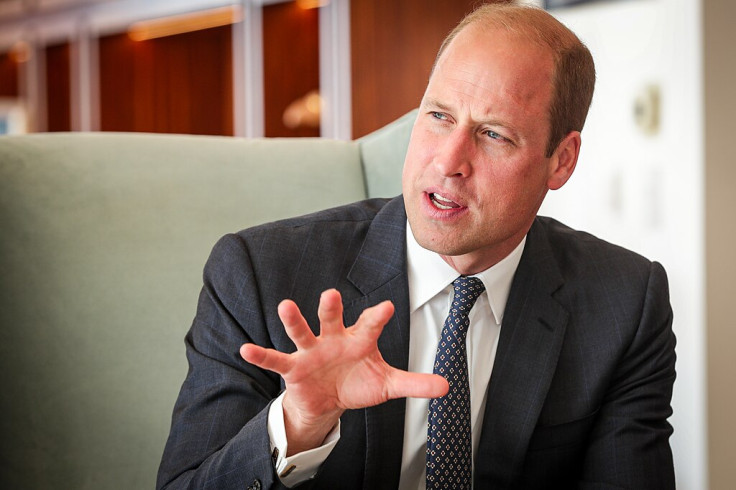
Presidencia de la República del Ecuador, Public domain, via Wikimedia Commons
Burrell is not a neutral observer. He adored Diana, has written about her, and has at times been criticised for speaking so freely about a family that prizes silence. But his comments tap into a hard truth about monarchy: survival depends on control.
William, he says, knows that.
The Prince of Wales ‘can’t let things leak out,’ Burrell argued, in a pointed nod to Harry’s recent history of tell-all interviews, a bombshell Netflix series, and his memoir Spare. According to Burrell, the heir apparent ‘doesn’t want to live in a world with a leaky sieve. He doesn’t want to live in a world that can’t be controlled because, to be a monarch, you have to control the environment. You have to look after the crown.’
That phrase—’leaky sieve’—is brutal, and Burrell knows it. It frames Harry not as a wounded son trying to tell his story, but as an existential risk to an institution that has always survived by keeping its mess firmly behind palace walls.
From that perspective, the shift in William’s behaviour starts to look less like coldness and more like calculation. The man who will be king appears to be drawing an invisible but unmistakable line between the future of the monarchy and the brother who won’t stop talking.
Prince William, Prince Harry, and a Feud That Won’t Fade
The brothers’ feud has been simmering, then boiling, since at least early 2020, when Harry and Meghan Markle stunned the world—and infuriated the palace—by stepping back as senior working royals and relocating to North America.
It hasn’t cooled since.
‘I do applaud Harry’s move,’ Burrell said, in a rare moment of clear sympathy for the Duke of Sussex. ‘It’s not easy for any member of the royal family to tread a different path.’ That’s a crucial point. For all the pearl‑clutching in some British quarters, Harry did what almost no senior royal has the courage to do: opt out.
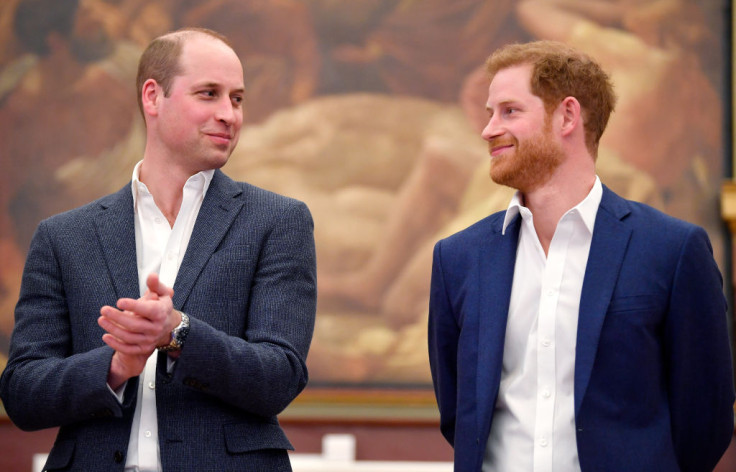
Prince William and Prince Harry
Toby Melville – WPA Pool/Getty Images/IBTimes
But Burrell does not see a Hallmark reconciliation on the horizon.
‘I don’t think there’s any room for reconciliation. I don’t think that is [happening] anytime soon, if ever,’ he said. The reason, in his view, is as old‑fashioned as it is ruthless: ‘Too many words have been said, and too much dirty laundry has been laundered in public, really, for the royal family. That’s unforgivable. Harry knew the rules.’
That phrase—’Harry knew the rules’—is doing a lot of work. It casts the royal family less as a cluster of damaged individuals and more as a rule‑bound system. In that system, breaking silence is a graver offence than private cruelty. You can fight behind the curtain, within reason. You cannot pull the curtain back.
And Harry, with Spare, with Oprah, with Netflix, ripped the curtain off its rail.
Prince William’s World Narrows as Harry Stays Away
Since leaving, Harry and Meghan have appeared in Britain rarely, and only for the biggest of royal moments. They attended Queen Elizabeth II’s funeral together in 2022. Harry returned alone for King Charles III’s coronation in 2023, a brief, choreographed appearance that underlined how fully he now exists outside the royal fold.
Their absence is not just physical; it’s symbolic. The image of ‘the Fab Four’—William, Kate, Harry, Meghan—has been quietly erased from the monarchy’s present and future. Public engagements have reset around William, Catherine, and their three children. The message is unsubtle: this is the line that matters now.
Harry’s relationship with his father is clearly strained but not entirely broken. Last September, he met Charles in London for about an hour at Clarence House, their first face‑to‑face encounter in nearly two years. They exchanged pleasantries, photos, and gifts over tea—an almost painfully polite script for a family that has detonated its private battles on the world stage.
With William, there has been no comparable thaw, at least not publicly. No photographed meeting. No joint appearance outside rigidly structured events surrounding the late Queen. Just silence—and, if Burrell is right, a deliberate one.
What makes all this striking is not that two brothers have fallen out. Families fracture every day. It’s that the future king of Britain may now see his own sibling as a liability to be managed rather than a partner to be embraced.
You don’t have to love the monarchy to understand why that matters. The institution survives on myth: the idea of continuity, of duty, of a family holding itself together for the sake of the Crown. When that family is visibly split, when one son is effectively walled off as the ‘leaky sieve,’ it exposes the blunt truth beneath the ceremony.
In the House of Windsor, blood may be thicker than water—but it is rarely thicker than the crown.