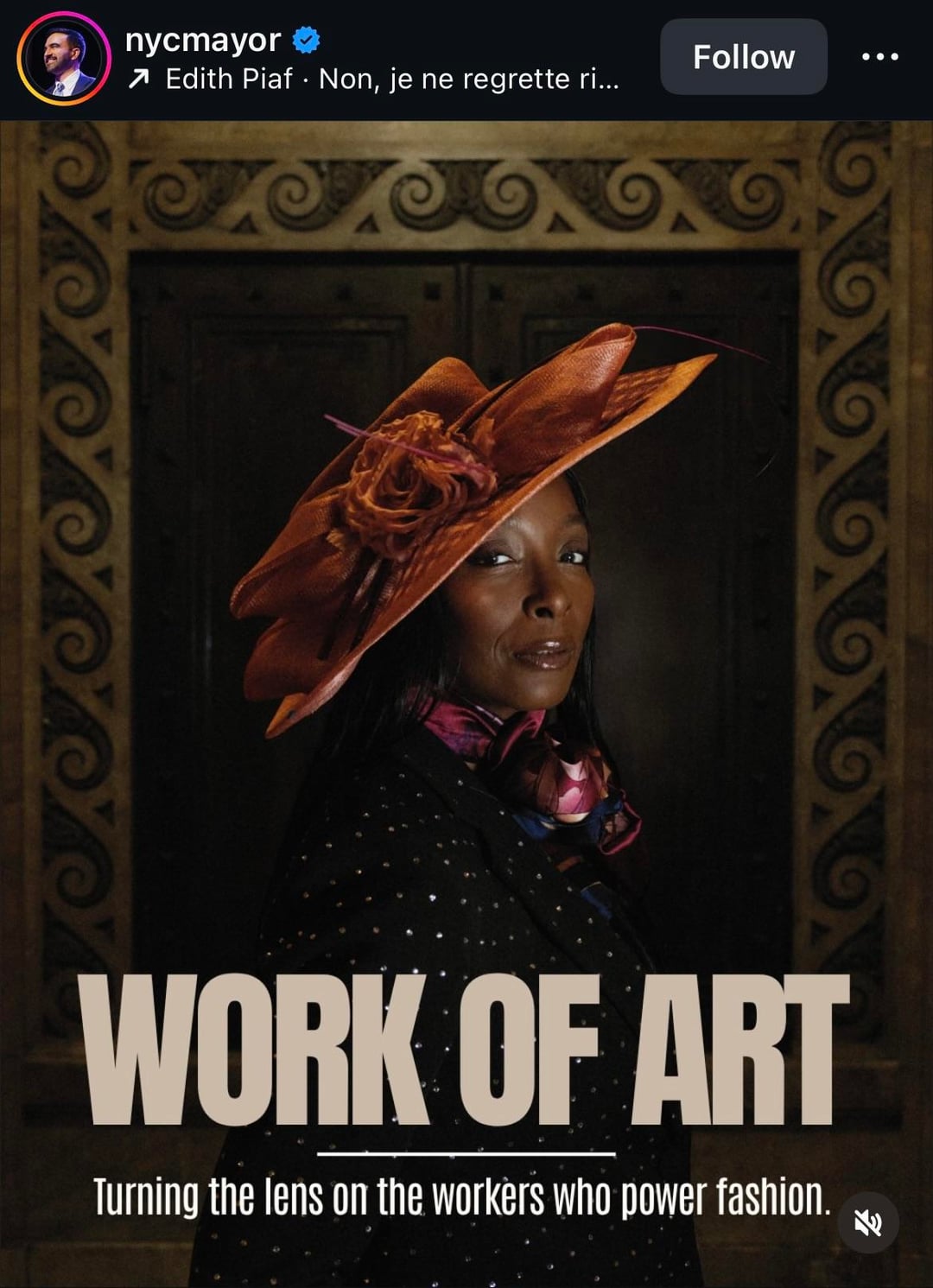
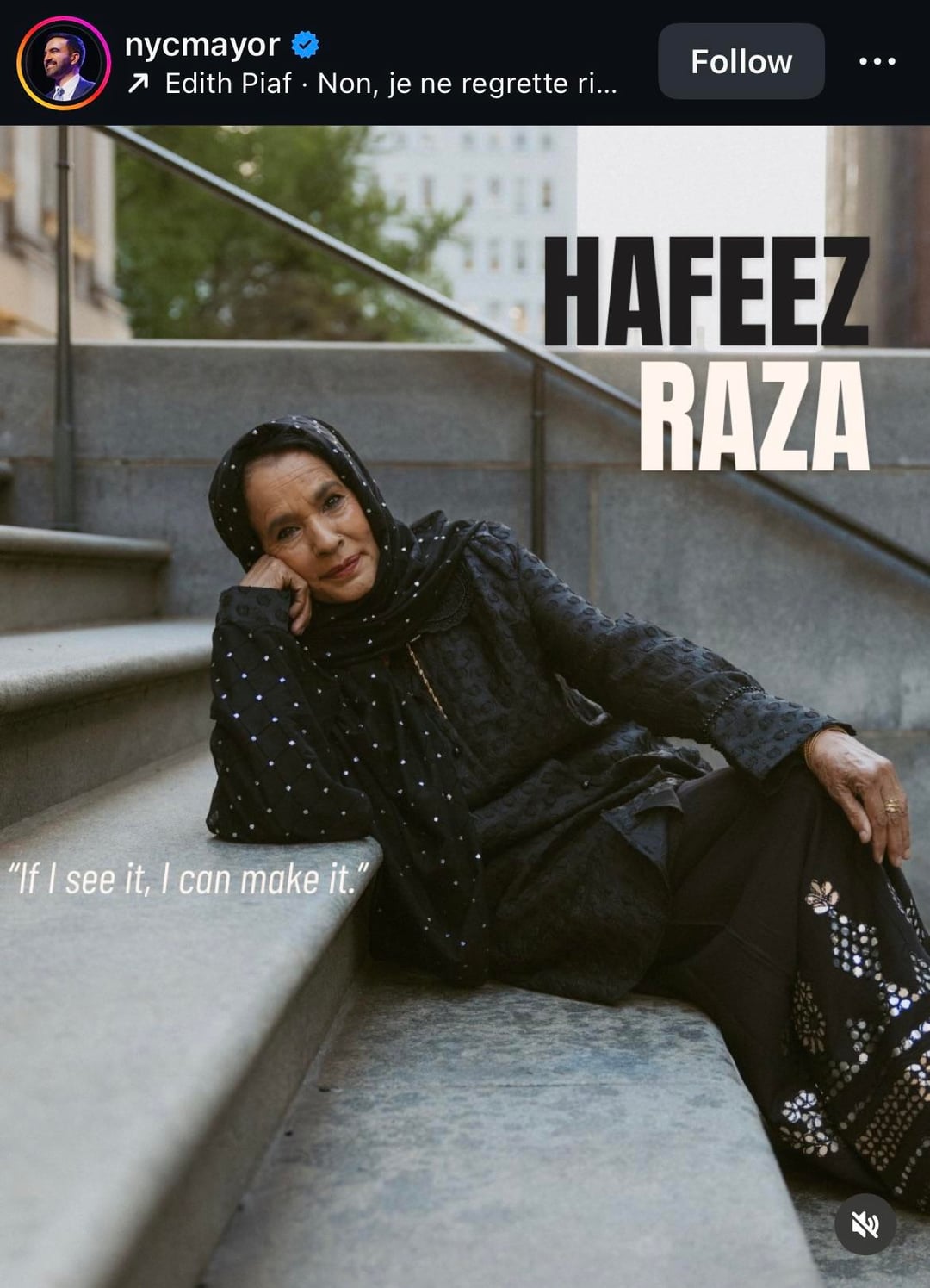
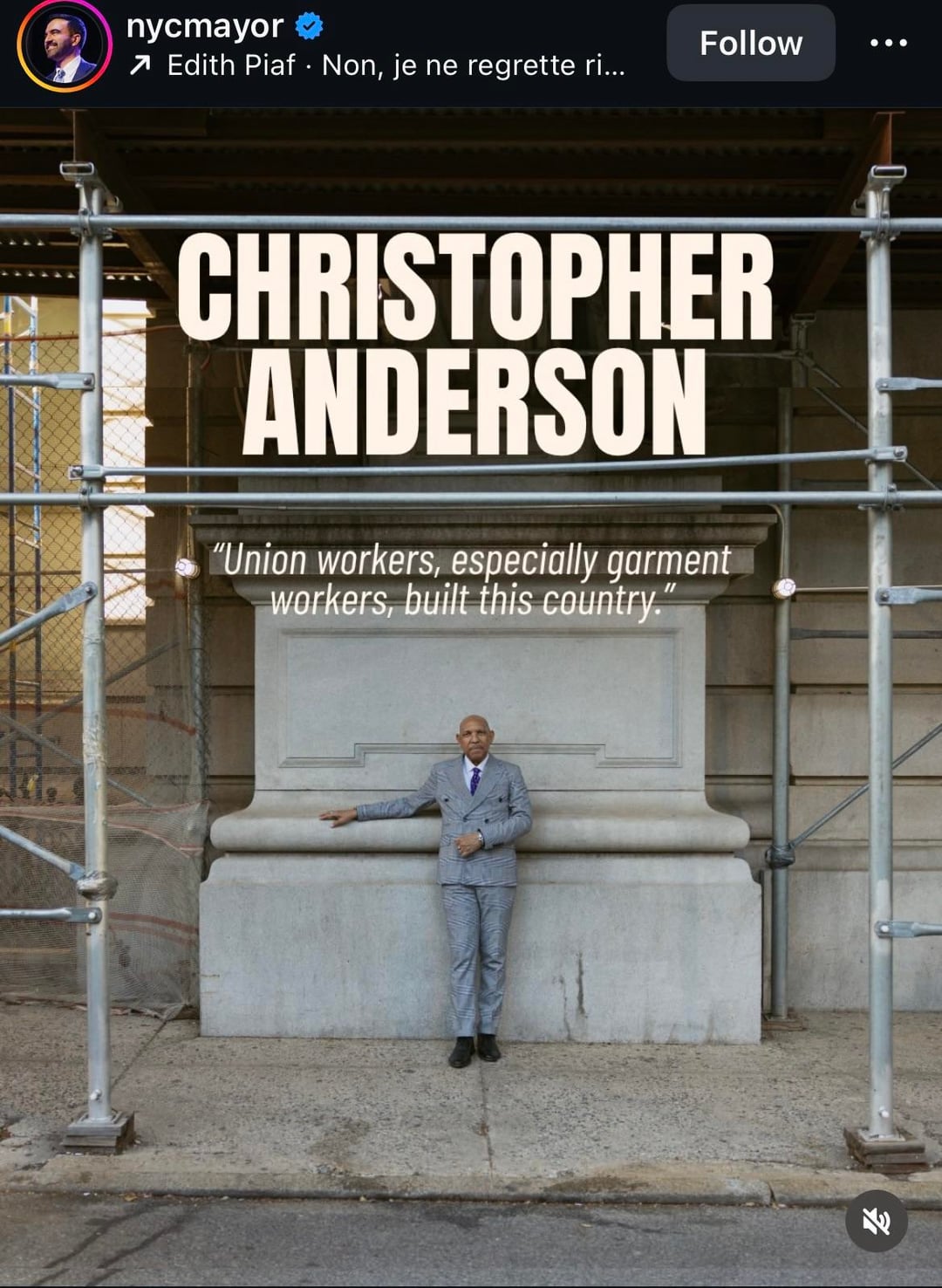
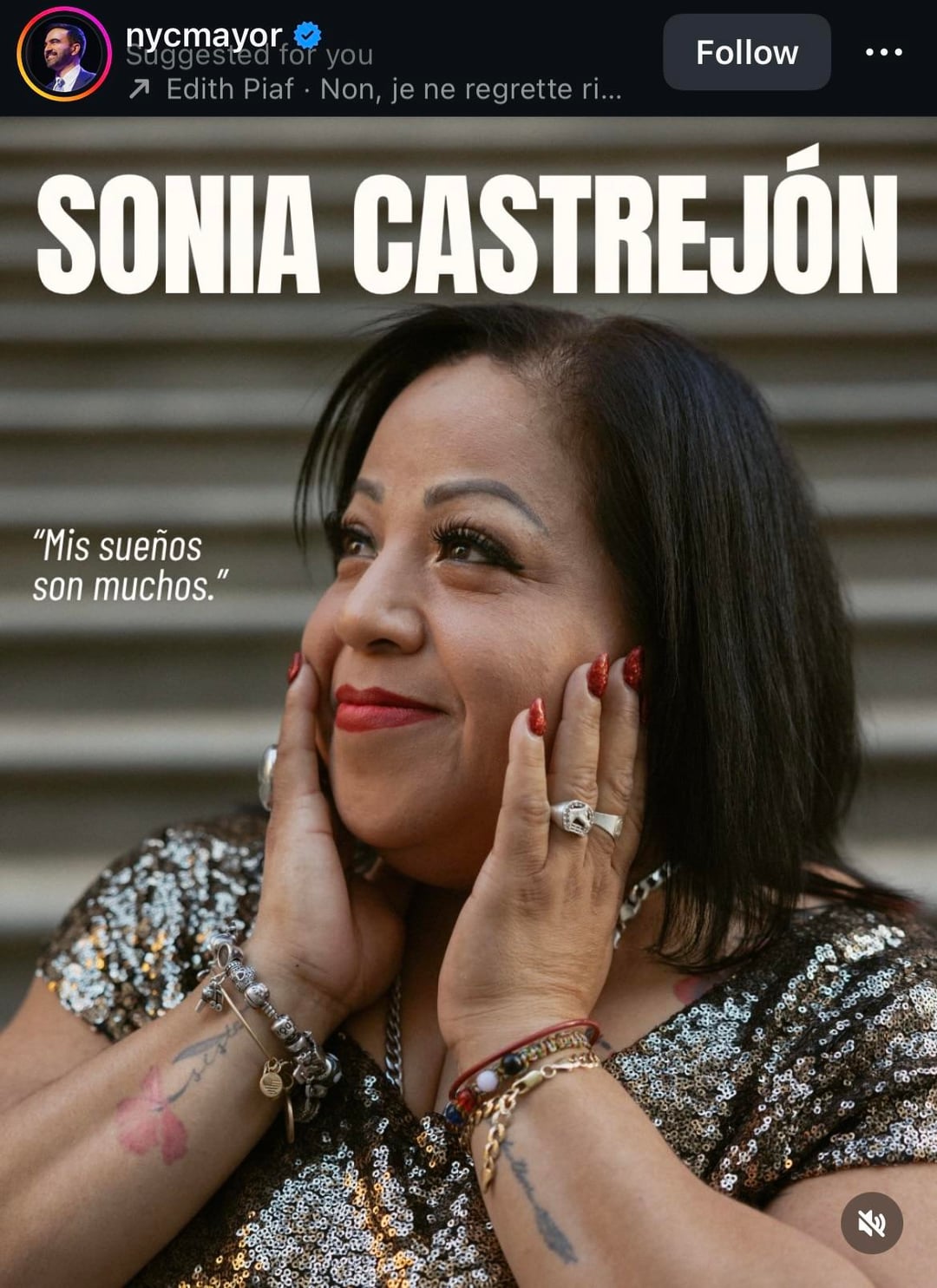
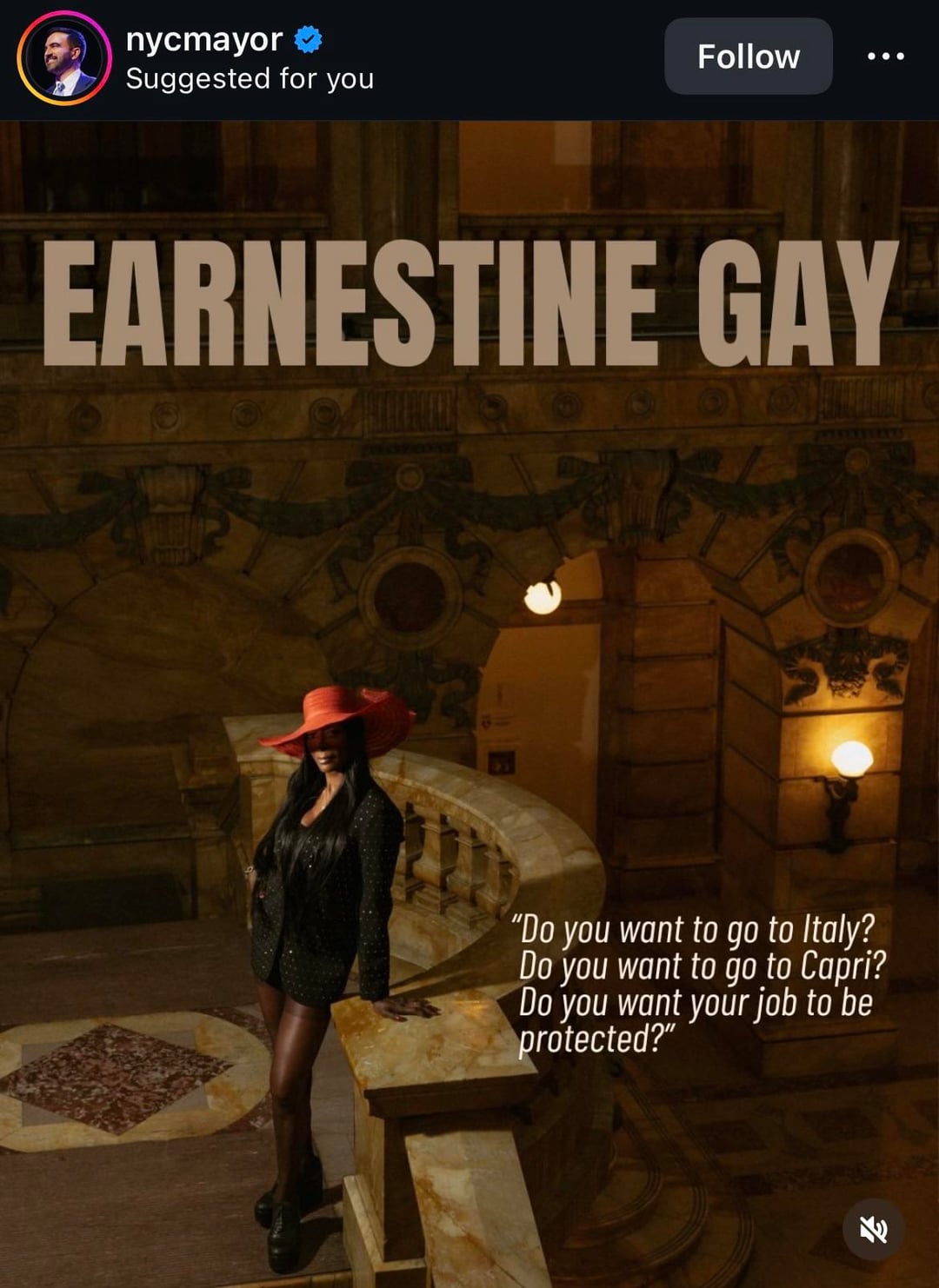
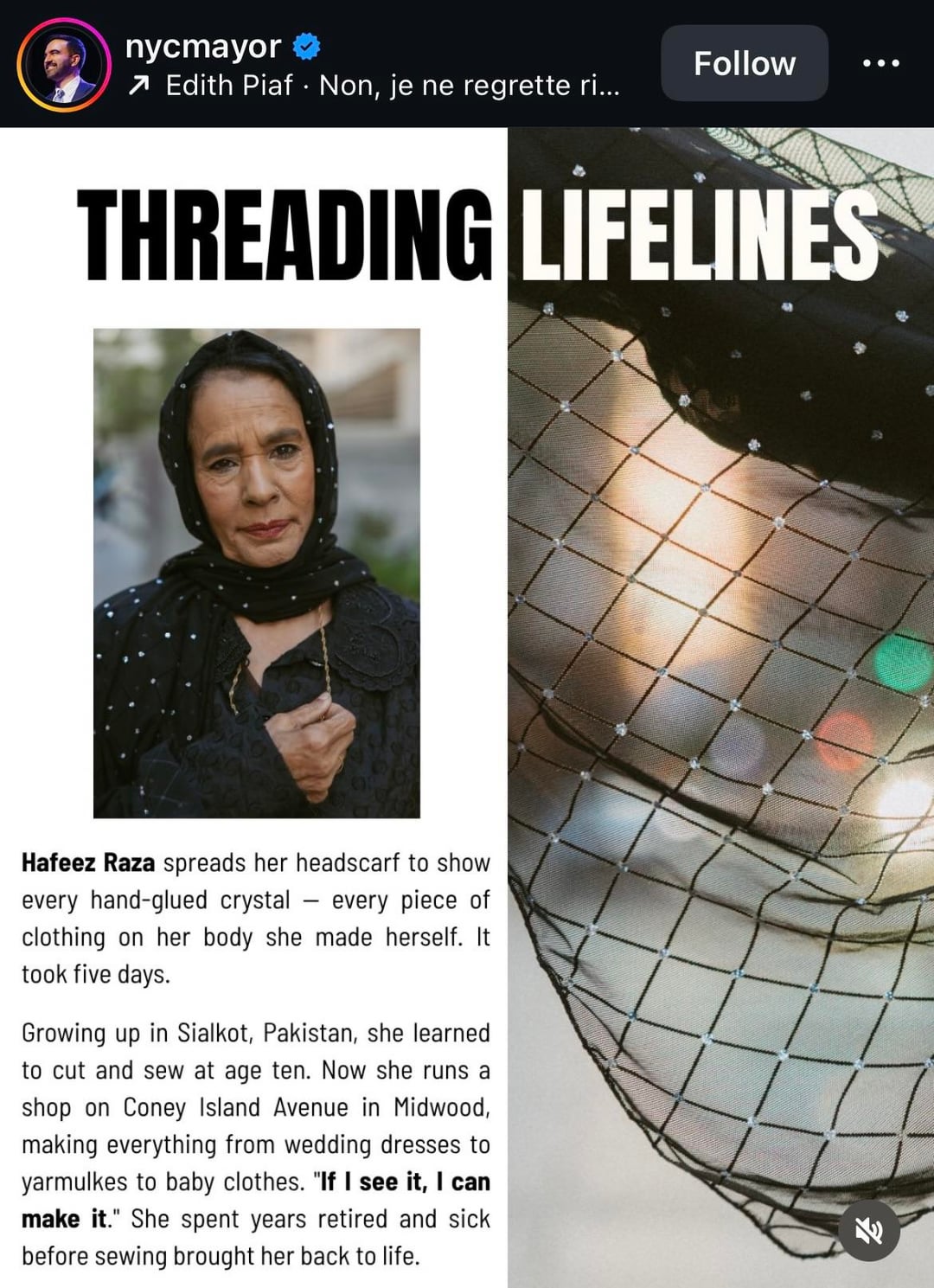
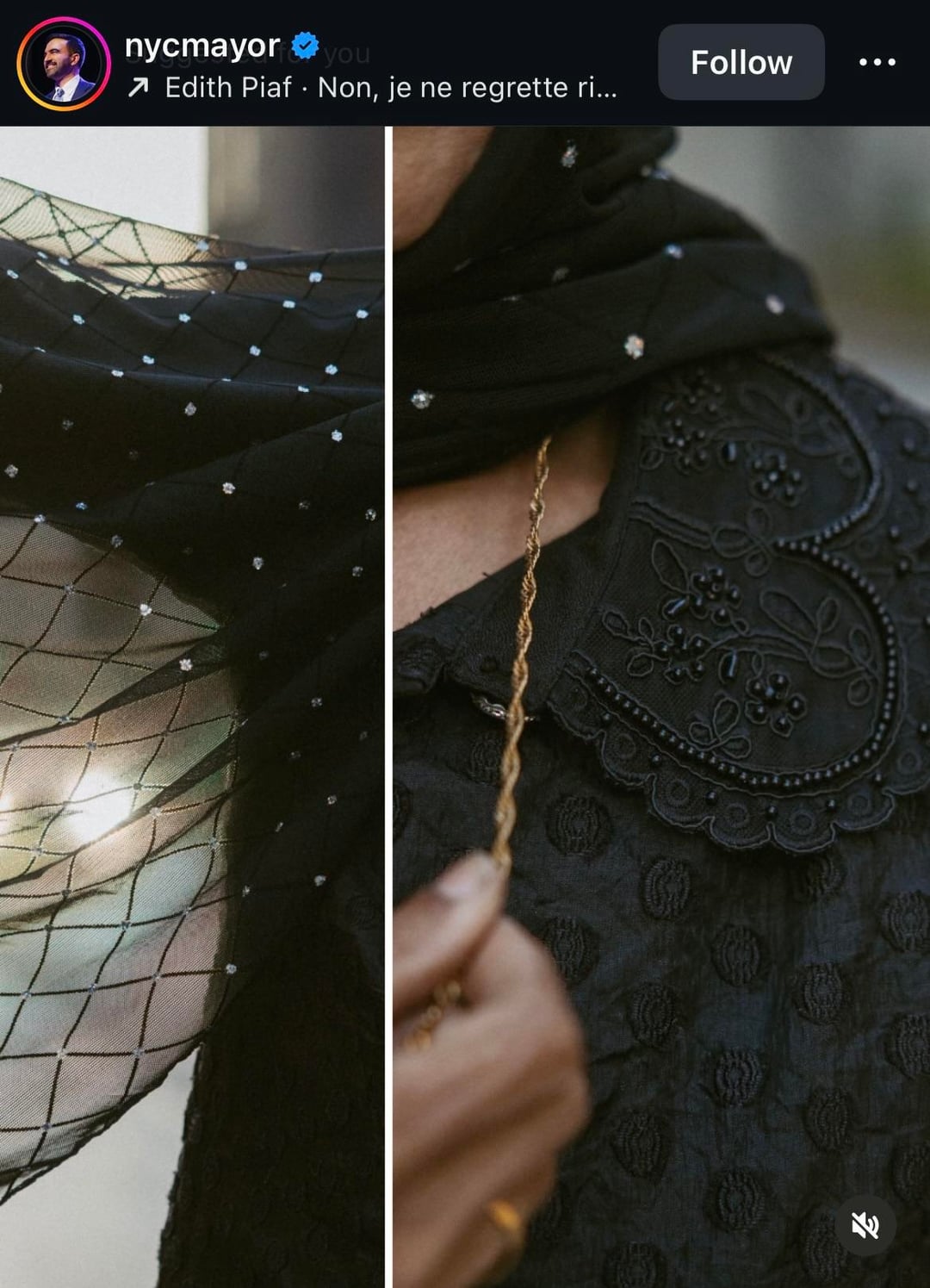
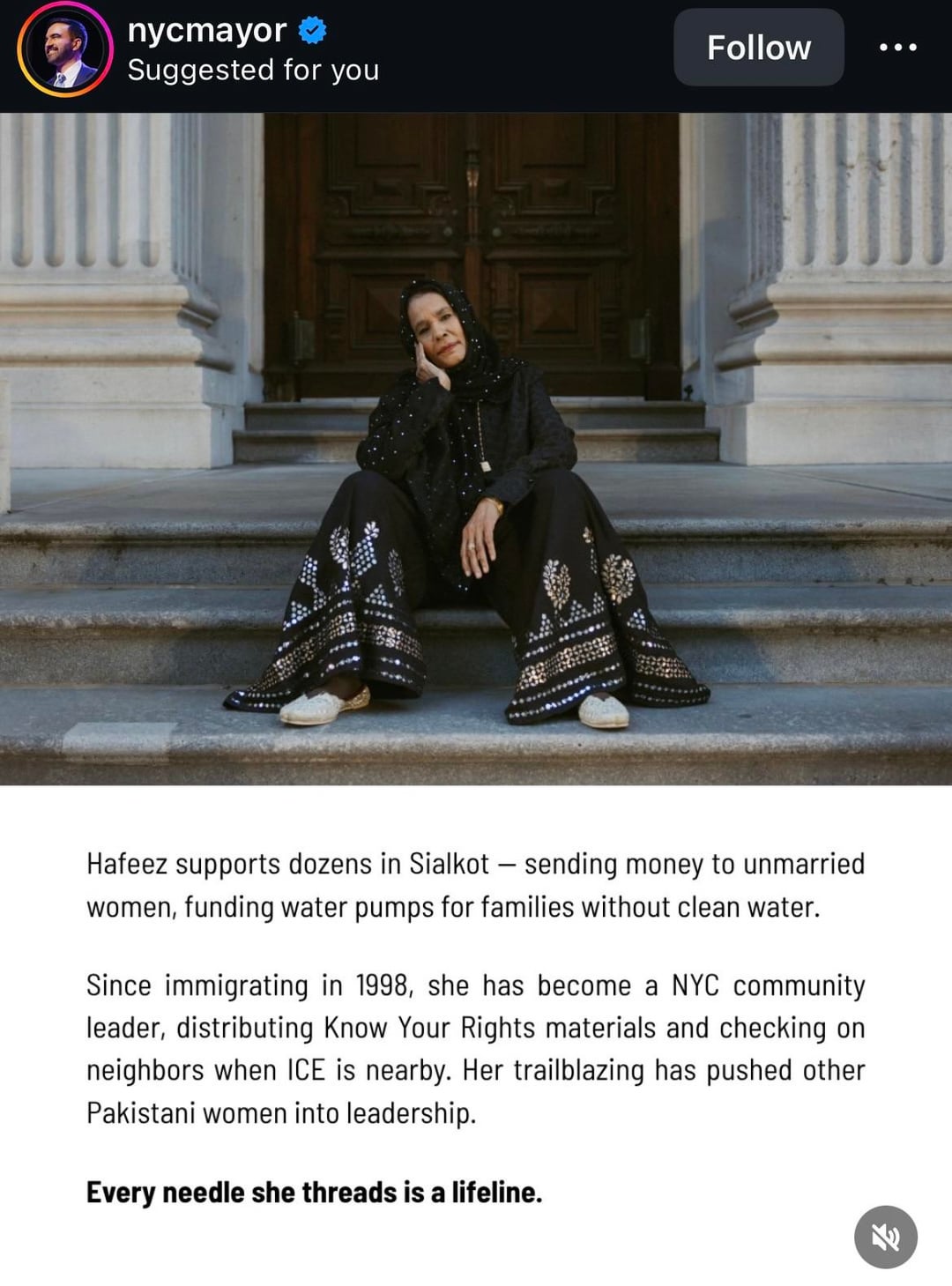
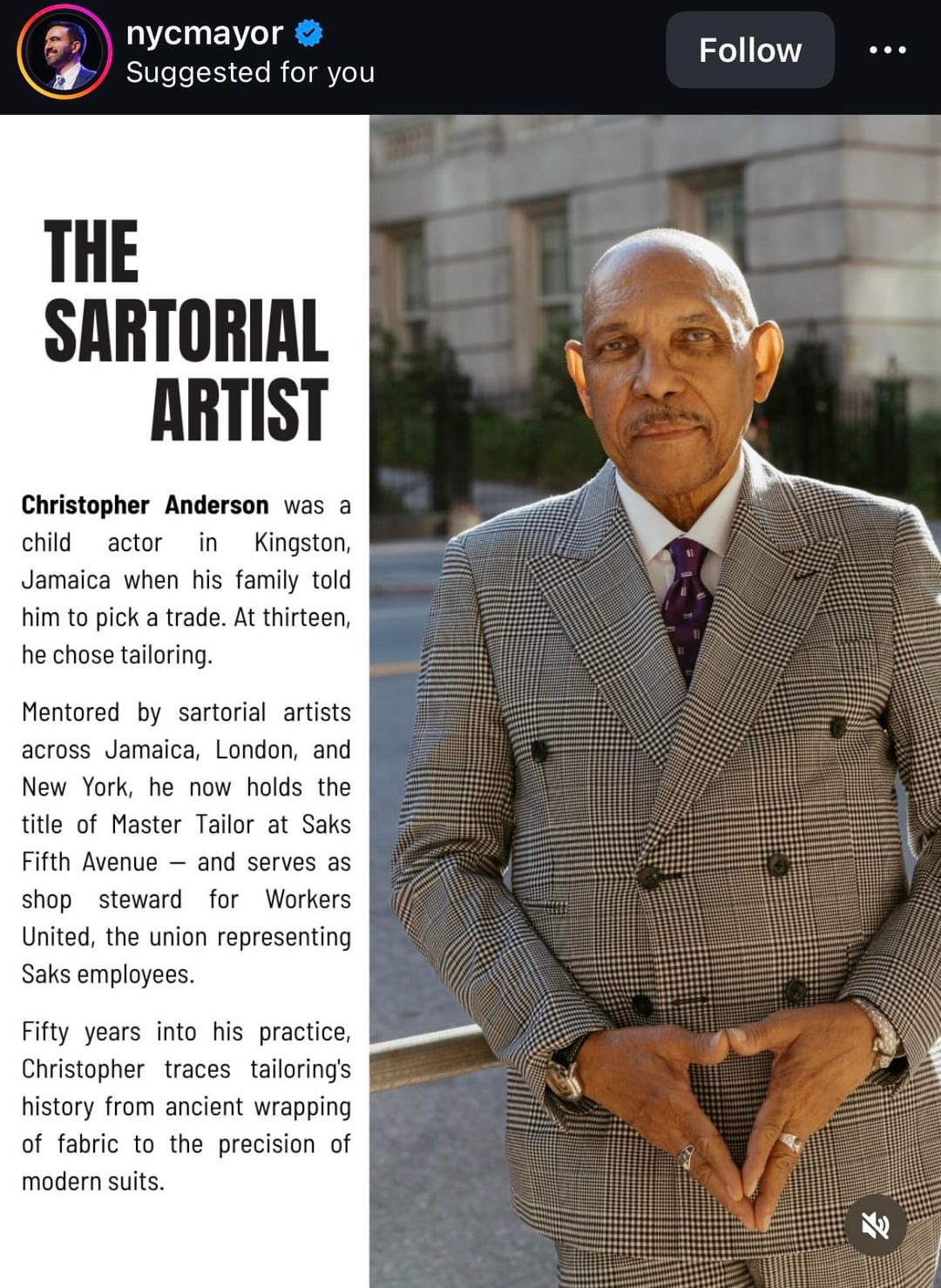
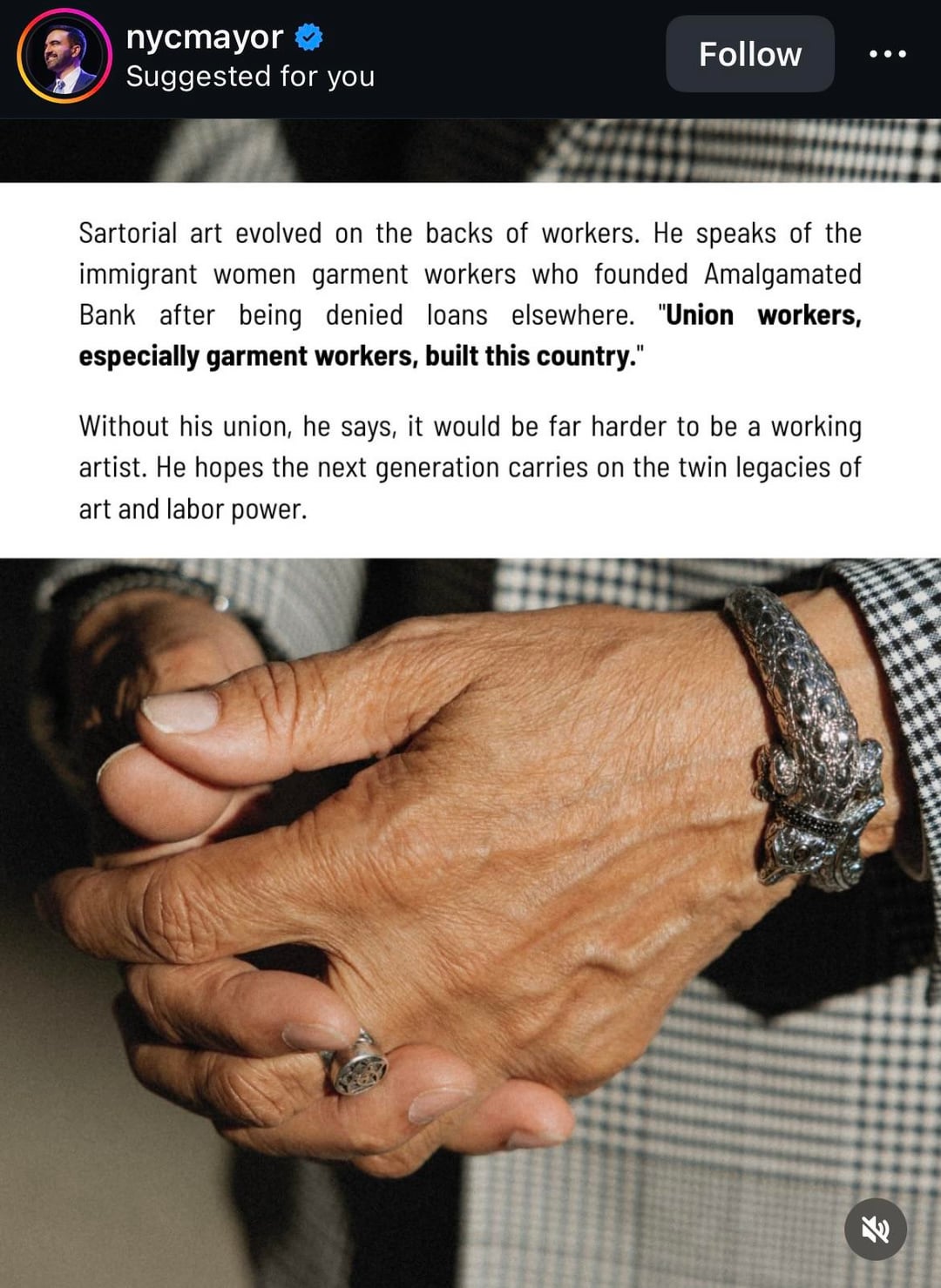
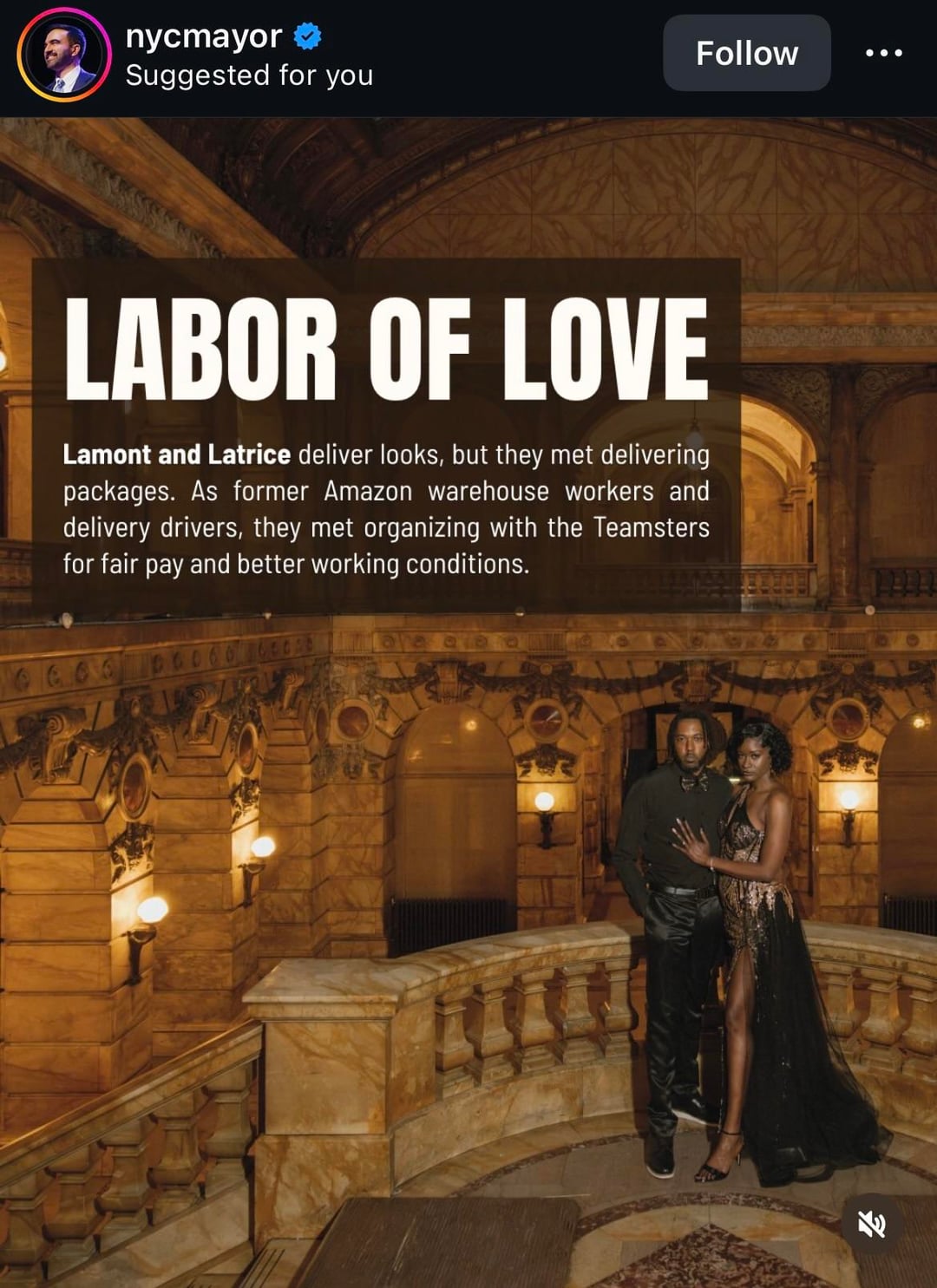
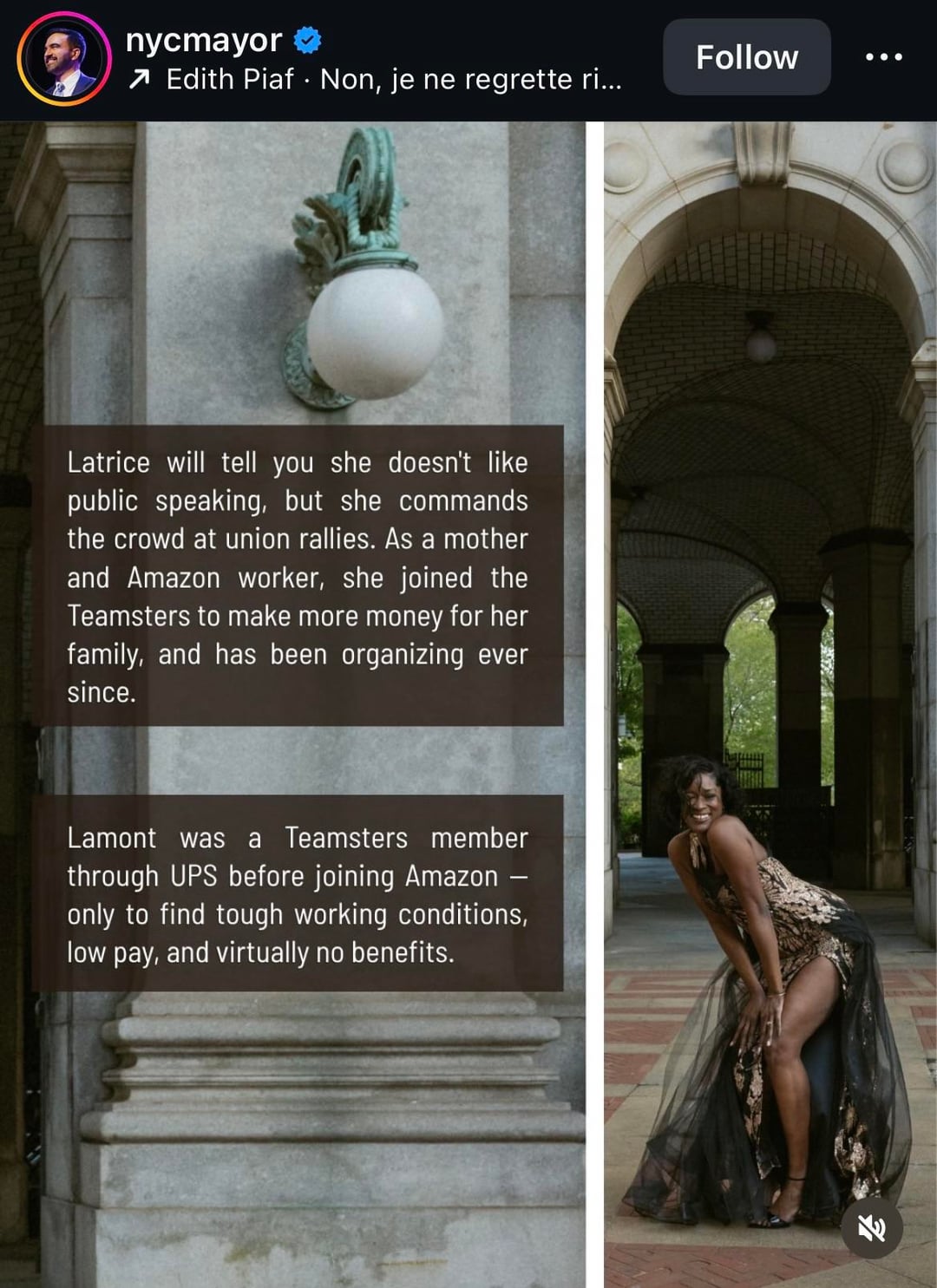
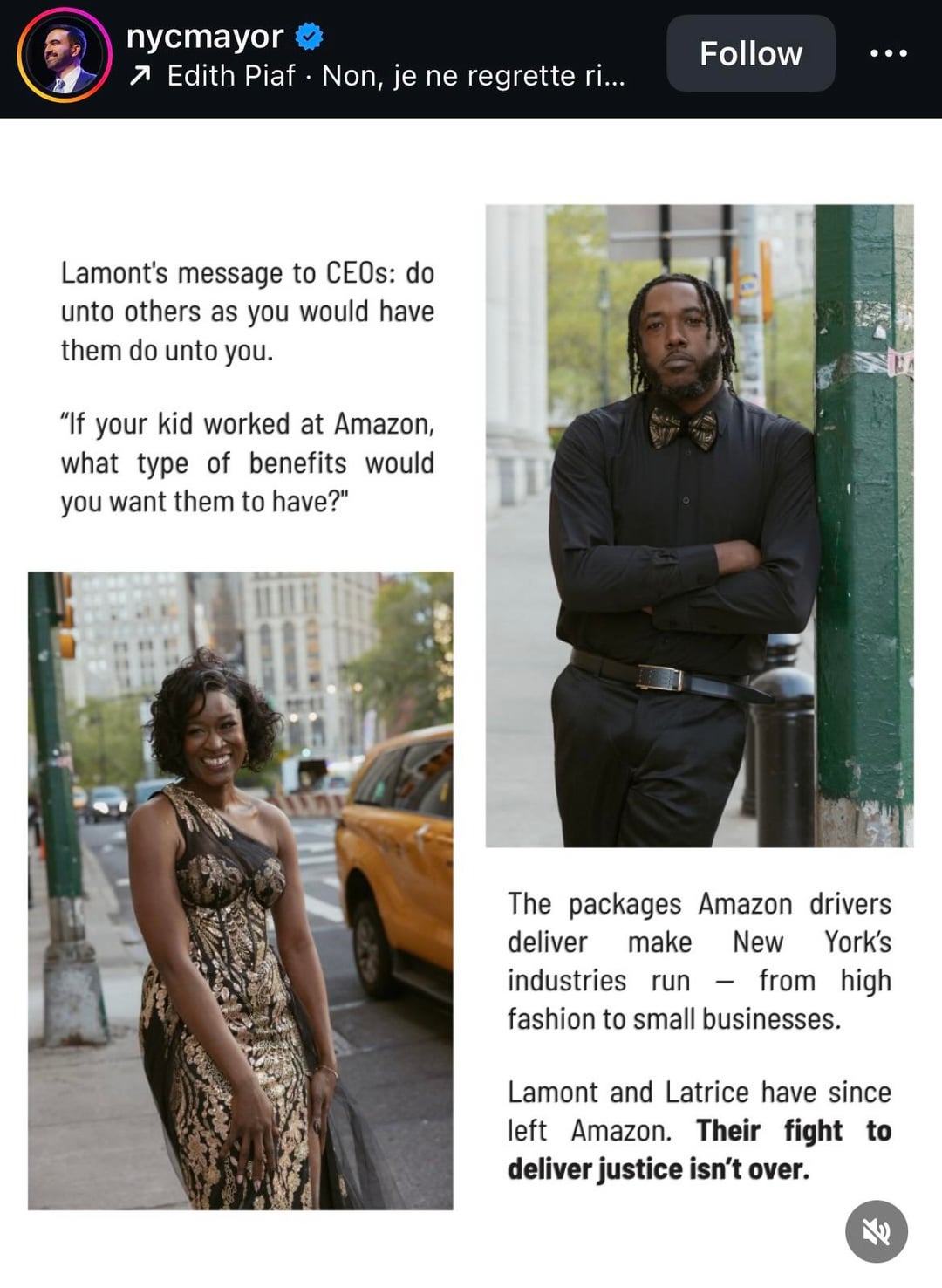
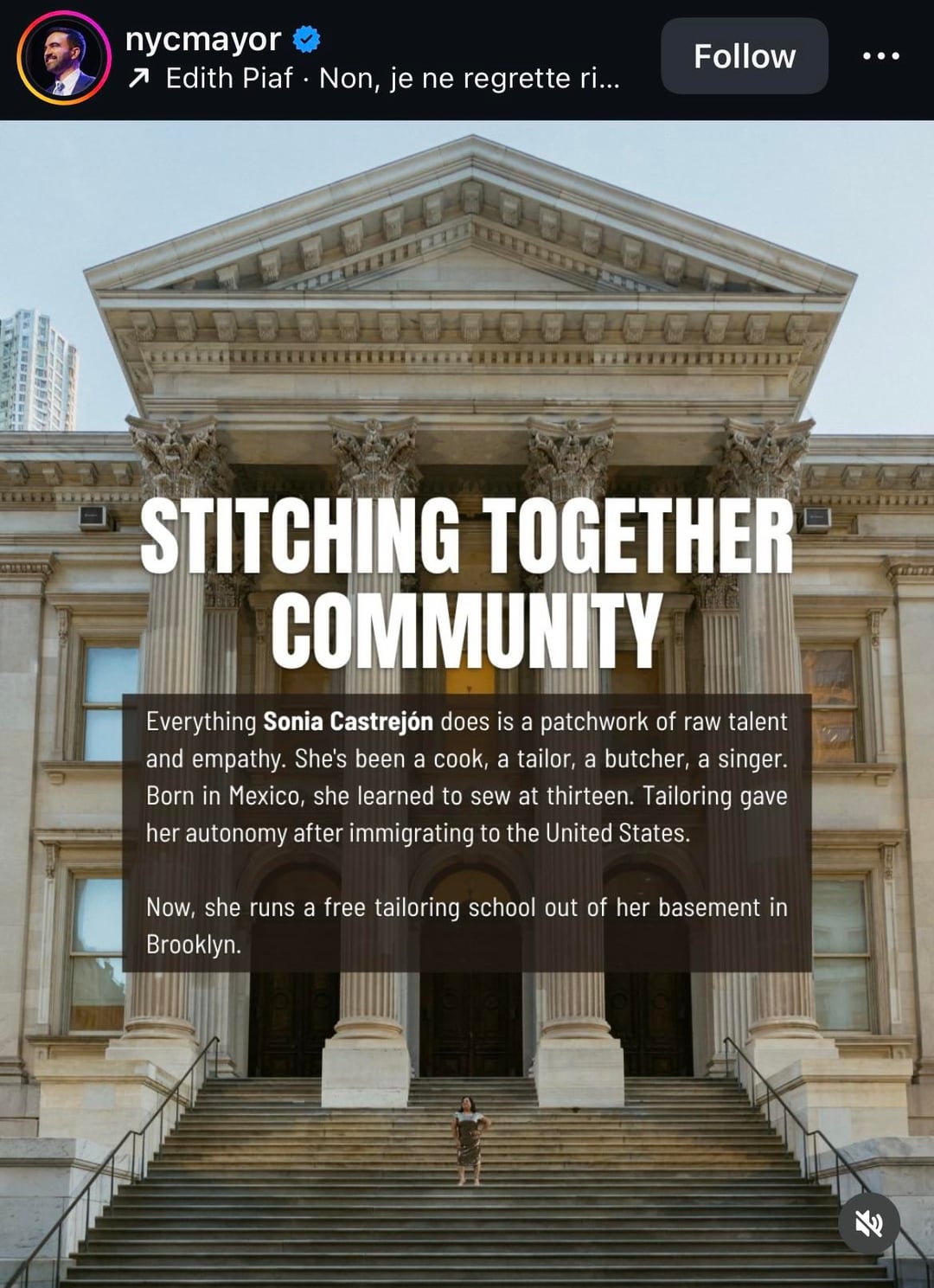
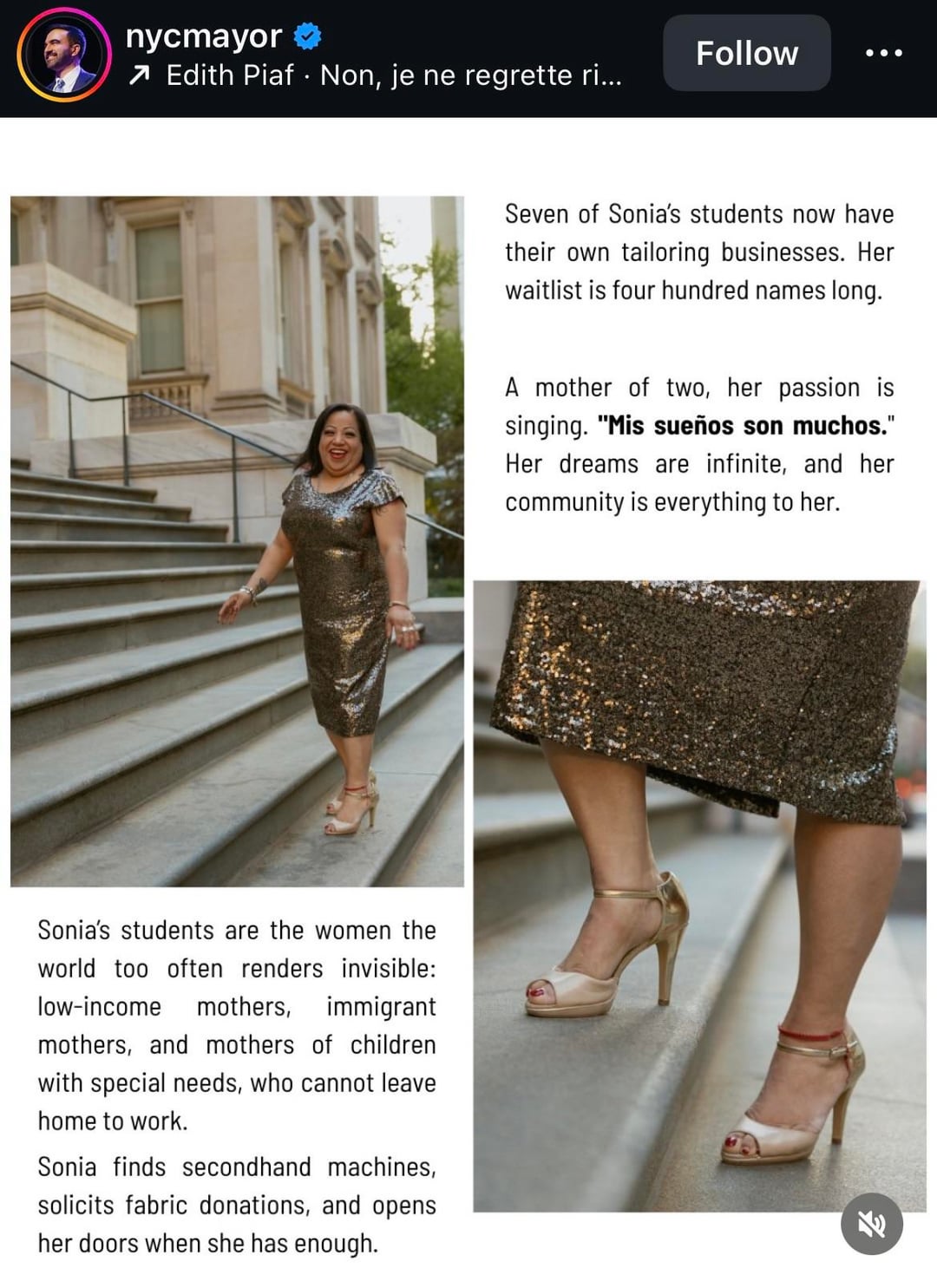
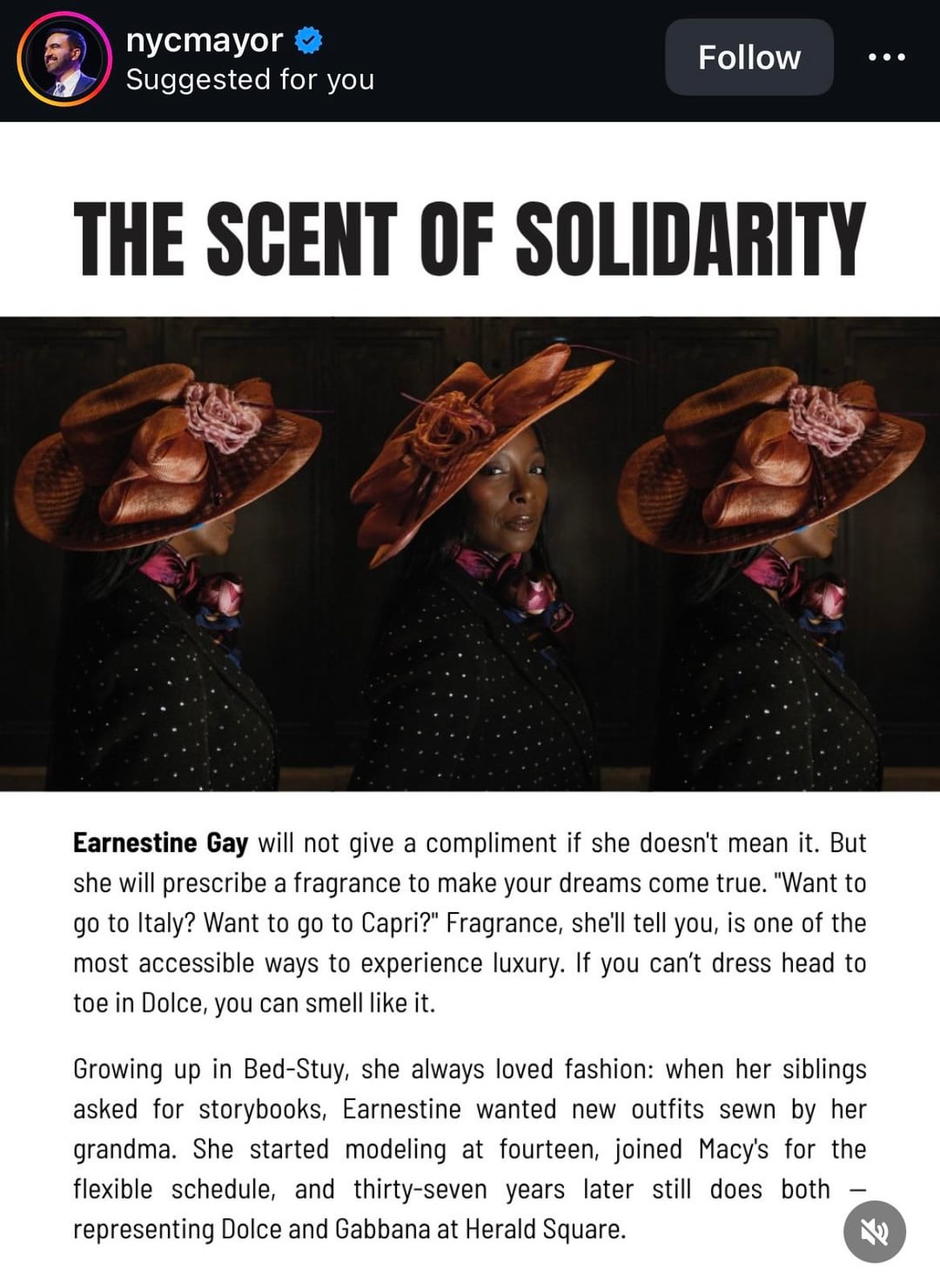
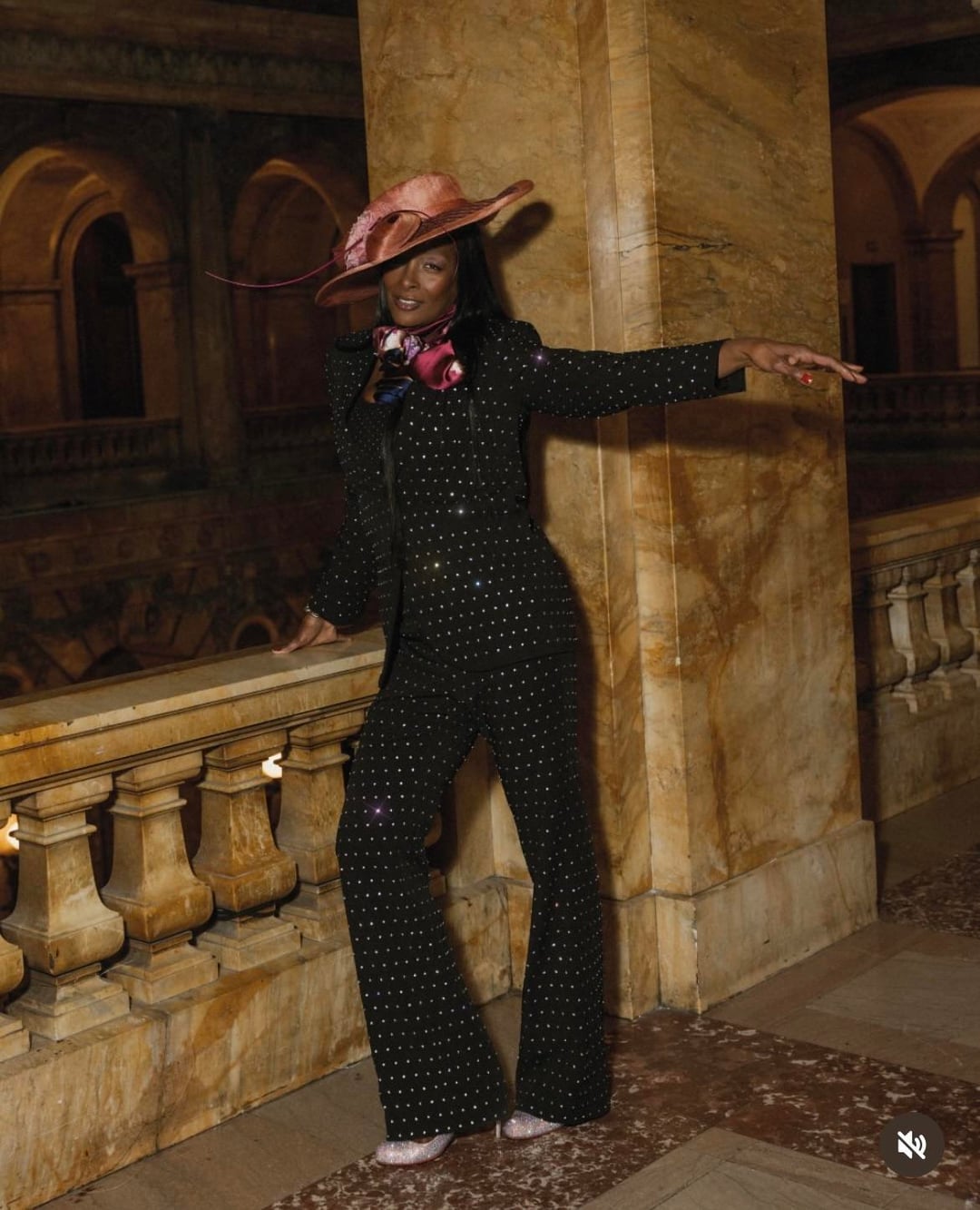
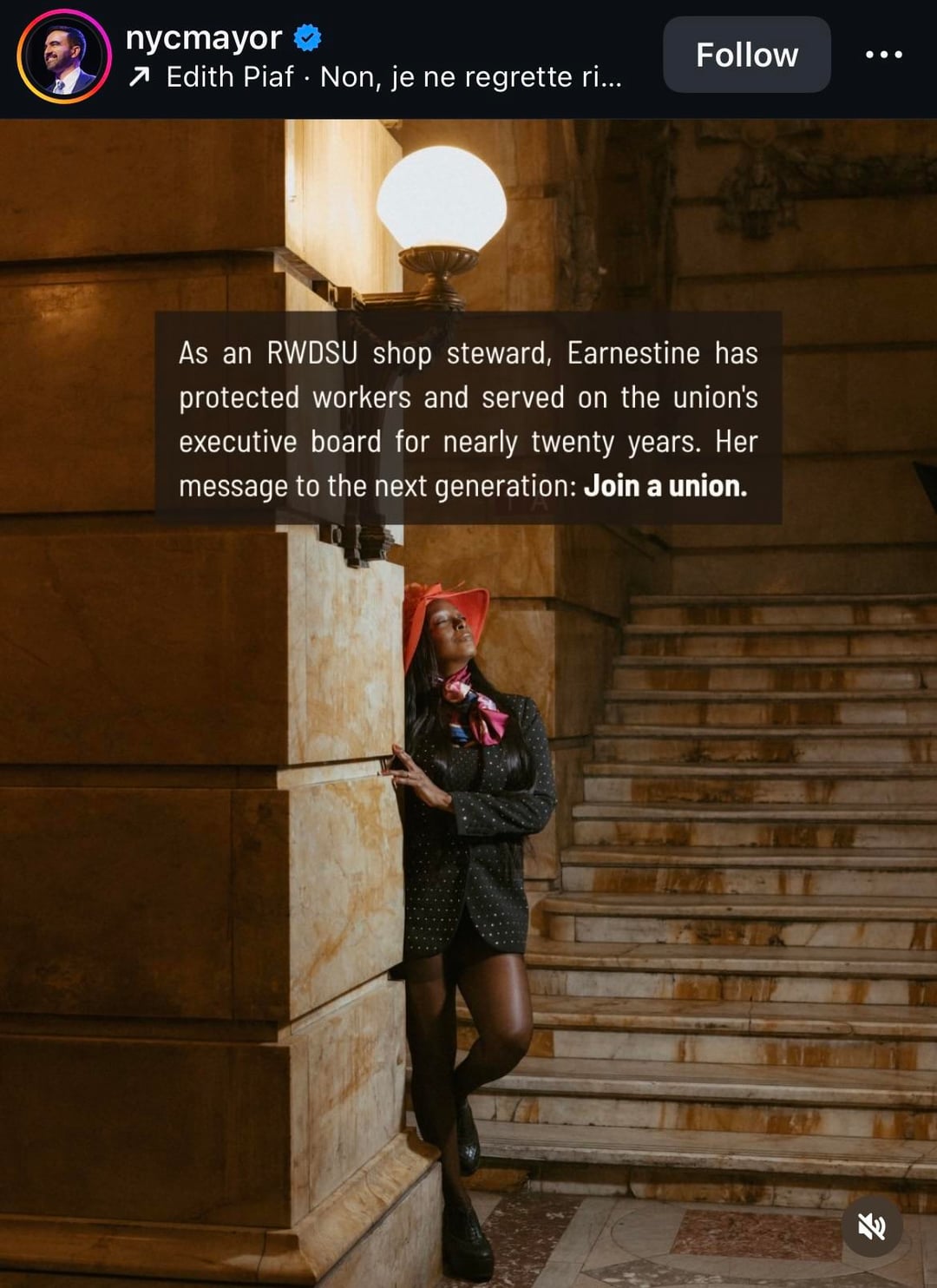
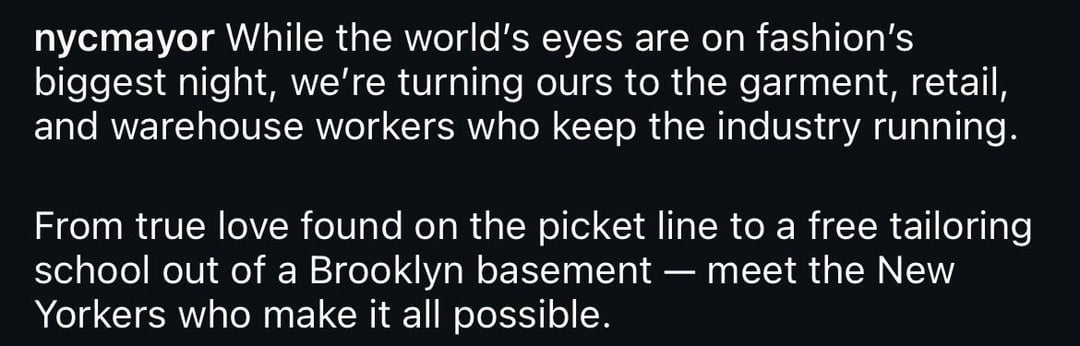
NYC Mayor Zohran Mamdani (who did not attend the Met Gala) instead decided to highlight the garment, retail, and warehouse workers who keep the industry running.
Posted by mlg1981

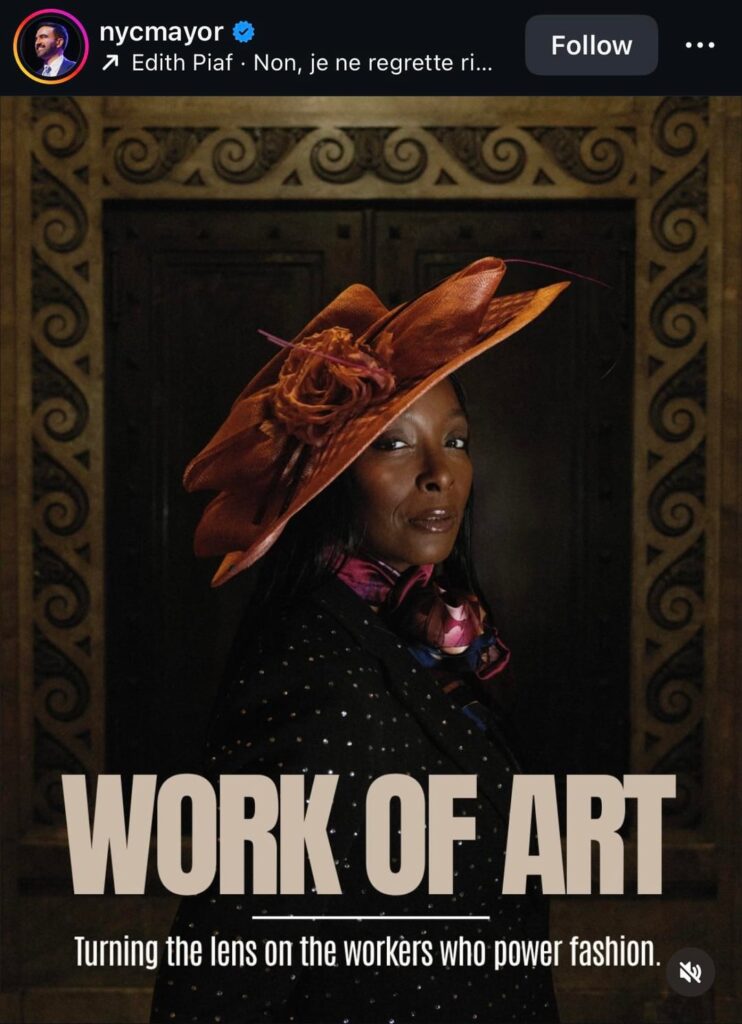
NYC Mayor Zohran Mamdani (who did not attend the Met Gala) instead decided to highlight the garment, retail, and warehouse workers who keep the industry running.
Posted by mlg1981
8 Comments
My mayor (does not live in New York)
Loved reading those stories!
This is awesome
Love this
Mad respect to these people
The song choice
Great idea, and beautifully executed. The mayor has hired some really talented and creative people.
It’s great that the mayor is highlighting people in the garment industry, but the framing here bothers me a bit. The Met Gala isn’t meant to be “fashion’s biggest night” in the same way New York Fashion Week is; it’s fundamentally a fundraiser for the Metropolitan Museum of Art’s Costume Institute. The spectacle, the theatrics, and the over-the-top outfits, that’s the point. It’s closer to performance art in service of fundraising than a traditional fashion showcase. What’s always interesting is how quickly the Met Gala gets dismissed as frivolous or unserious, while other massive cultural events, like the Oscars red carpet, the Super Bowl halftime show, or the World Cup, don’t get the same level of moral scrutiny, even though they’re tied to plenty of the same power structures and controversies.
A lot of that knee-jerk reaction to fashion has deeper historical roots. After the French Revolution, you get what historians call the “Great Male Renunciation,” where men’s clothing shifts toward dark, restrained, “rational” dress. Ornamentation and expressive style get coded as feminine, aristocratic, or irrational. From there, it’s not a huge leap to dismiss fashion itself as trivial, and by extension, anything associated with aesthetics, self-expression, or femininity as less serious. What’s especially telling is that this suspicion of expressive dress isn’t limited to one political or cultural perspective. You see versions of it across ideologies. In the Soviet Union, for example, there were campaigns against so-called “degenerate” or “formalistic” art, and youth subcultures like the Stilyagi, who embraced bright, Western-inspired fashion, were actively targeted and persecuted. It was about controlling appearance and expression. Bold or unconventional style was treated as a kind of moral failure.
That same underlying bias still shows up today. When fashion pushes boundaries, whether around gender, sexuality, or identity, it often gets dismissed as frivolous at best or corrupting at worst. The Met Gala just happens to sit right at the intersection of art, money, and visibility, so it becomes an easy target. But reducing it to “out-of-touch excess” misses the fact that it’s also a serious platform for craftsmanship, history, and creative expression.