
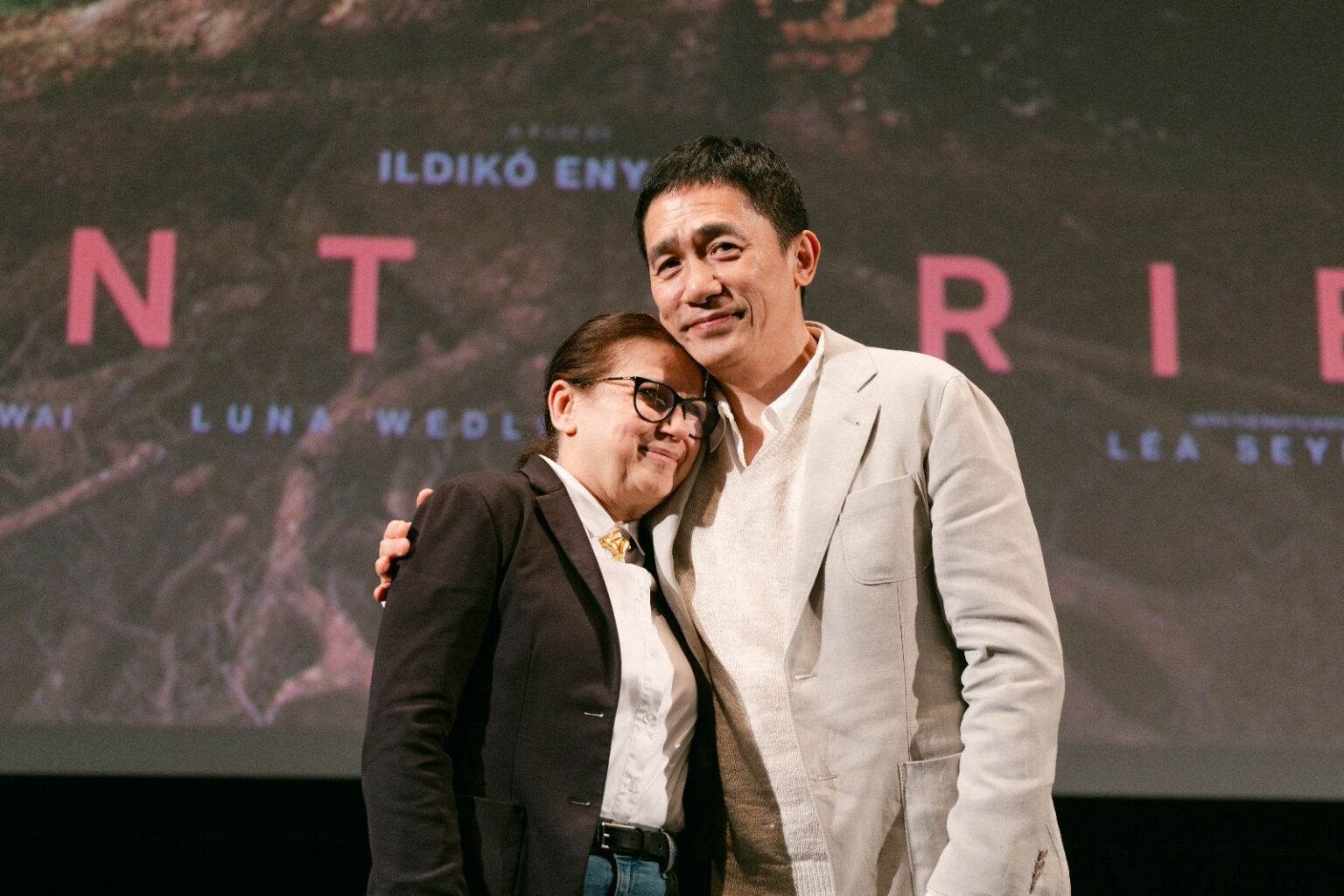
Loving modern cinema and admiring Tony Leung are essentially a one-to-one deal. One can look no further than Film at Lincoln Center’s recent retrospective of the actor: whether the title was a programming coup or something that’s played so often as to suggest every last New Yorker has seen it, the film starred Leung, and for that its tickets in the 268-seat Walter Reade proved almost impossible to acquire. This series came on the occasion of Ildikó Enyedi’s Silent Friend, which offers (taking into account dozens upon dozens of films) one of Leung’s quietest performances and, in his appreciably older appearance, a stark reminder that this actor has put decades of his life on the screen.
Having spent more time watching Leung than almost any actor, I know my fortune to have time with the man on his first visit to New York since The Grandmaster’s release in 2013. He speaks quietly and kindly, his expression moving from heavy contemplation to mirthful at a moment’s notice. (I imagine these are attributes for acting that cannot be taught.) For a man of such stature, Leung is almost comically lacking in pretension—a dark Adidas tracksuit underscored the relaxation—and compels a conversation shirked of burden.
You’re coming at the end of Film at Lincoln Center’s retrospective. You started acting young, and we can watch you from a man in his early 20s to today. In Silent Friend, it was sort of amazing to see you—even if it’s with a hair and make-up team—looking and sounding your 60 years. Your filmography is this history of your face, your body, your voice as it’s changed over decades.
Tony Leung: I didn’t do it by intention. [Laughs] I’m just very lucky: I started my career at a golden age of Hong Kong cinema. So I have a chance to work with a different crew, different directors, and have the chance to try different kinds of movies. But I don’t do it by intention. I never planned what I want to do next.
Without planning, you’ve had this amazing career—not just the films, but the people you’ve acted with. To name just the obvious: Maggie Cheung, Leslie Cheung, Chow Yun-fat, the Five Tiger Generals. In this film, it’s Léa Seydoux. Your characters can spend so much time alone in silence, but you’re also a very generous actor with your co-stars. What do you look for in a scene partner? What do you think actor co-stars bring out of you as an actor?
Pretty much depends on what kind of partner you have. If we know each other well and we have trust in each other, we can improvise and we can try something different in every scene. But that very much depends on what partner and how you build up your relationship with your partner; I think that’s very important. Just like when Leslie and I worked in Buenos Aires. We spent a lot of time hanging out together, we learned tango together, we learned Spanish together, we had dinner together—trying to figure out that special kind of relationship—and then, during that process, we built up trust and friendship that can be similar to the one in the movie [Happy Together].
Or me with Maggie: you need to love your actress [Laughs] in order to have that kind of truthfulness in your expression.
You can’t fake it.
Yeah, you cannot fake it. Because people can feel—audiences know you like her or not. [Laughs] You cannot fake. So this is how I work with my partner. But yeah: after the movie you have to tell yourself, “This is just a movie.” Need to go back to your private life.
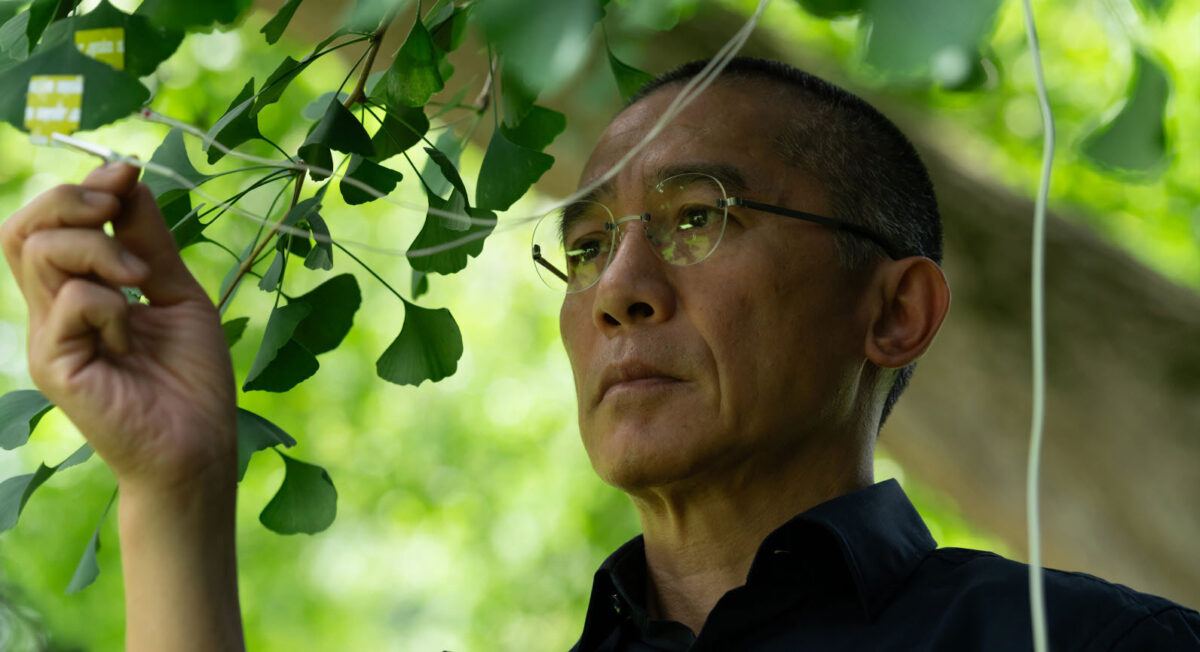
Well, with Léa Seydoux in this film, you’re always communicating through the computer. So what kind of preparation did you do?
I met her in the Venice Film Festival first. And I find her very charismatic. She is a great actor. But when we do the shooting, we have, like, one or two dinners in Marbach in Germany before shooting. And during shooting, actually, we are on the same floor—we are doing it real-time, just in different rooms—so we rehearsed together with the director. Because our relationship is not that close, so it’s less difficult to work on, and because I only noticed her on TED Talk and I just tried to ask her to help me to work on… that kind of relationship is very shallow.
You don’t need to do too much on it. And when we rehearse and when the director hears our dialogue and thinks it’s okay, then we go back to our room and shoot it. I think that’s easier. You don’t need to spend so much time to communicate with Léa because we are foreigners to each other.
You’ve done romance, you’ve done comedy, you’ve done action. I think people sometimes forget that you’ve done some very dark material, like Cyclo or The Longest Nite…
Lust, Caution.
…Bullet in the Head. Even the original ending of In the Mood for Love was very upsetting. Silent Friend is a gentler film, very quiet. Do you have different comfort levels between playing extremely dark material, playing gentle material? Or is at all just acting?
I like to try different kinds of films or characters. Because you never know if you don’t try; you never know if you like it or not, or how far you can go. Yeah, so that’s why I have those extreme characters: I’m trying to explore myself through doing that character.
You’ve said that the films can stay with you for a long time after you finish them.
Yes.
Some of the films, I feel battered after watching them. I can’t imagine what it’s like to make them.
I think I’m still in the character of Silent Friend.
It’s probably a good place to be. Better place than Cyclo.
Yes. Yes, yes, yes. Yes. But what I can do is just… I don’t hang out with people in the entertainment industry besides work. I go back to my private life and live like what I used to be and let time pass. That’s my way to get out from that character.
Silent Friend is your first European production?
Mmm-hmm.
What accounts for the choices you make to work outside of Hong Kong? Is it just a fondness for their films?
I have no intention to work with them. It’s just: maybe that’s my destiny. I never plan; I let things happen. Things just come up naturally. And if I think it’s interesting, then I would take it. So everything is by chance; it’s not by intention.
I wonder if there are particular films or countries that you still feel like you haven’t got to, that you have an ambition for?
Expectations always… [Laughs] I don’t expect, but I really want to do a Japanese film. Because I’ve watched a lot of classic Japanese films, and I really love it. I once had a chance to work with a Japanese director, but somehow it didn’t work out.
Kiyoshi Kurosawa?
Yeah. I really want to do one.
He’s basically my favorite director, so I hope it can still happen.
[Laughs] Yeah, I really want to do it. Especially some new directors. Have you seen the movie called Wheel of Fortune and Fantasy?
Hamaguchi.
Ah, I love it.
Yeah, me too.
Wow, it’s so… it’s not like a script. It’s like your everyday dialogue. I met him at an Asian film festival. I said, “Wow, if I have a chance I want to work with you.” And I even asked him to show me all of his old movies, the black-and-white that he never released before. Wow, so interesting. I love him.
I know that you and Johnnie To were hoping to make a film in Japan.
Yes, we have a plan to do a project together after so many years. Because I met Johnnie To when I first started my acting career in television. So I’ve known him for a long time, and we plan to do a new project. We planned it in Hokkaido, but: doesn’t work. We cannot get the license for the firearms. So we are now planning to do it in some place else. Because that story can happen everywhere, not just Japan. So yeah: we have a plan to work together, I hope, next year, because I still have two more projects. I have to finish that before working with Johnnie.
I don’t know if you and Wong have any ambitions to work together again.
Mmm… who knows? I don’t know. Who knows? If there’s a chance, why not?
Silent Friend enters a limited release on Friday, May 8.