
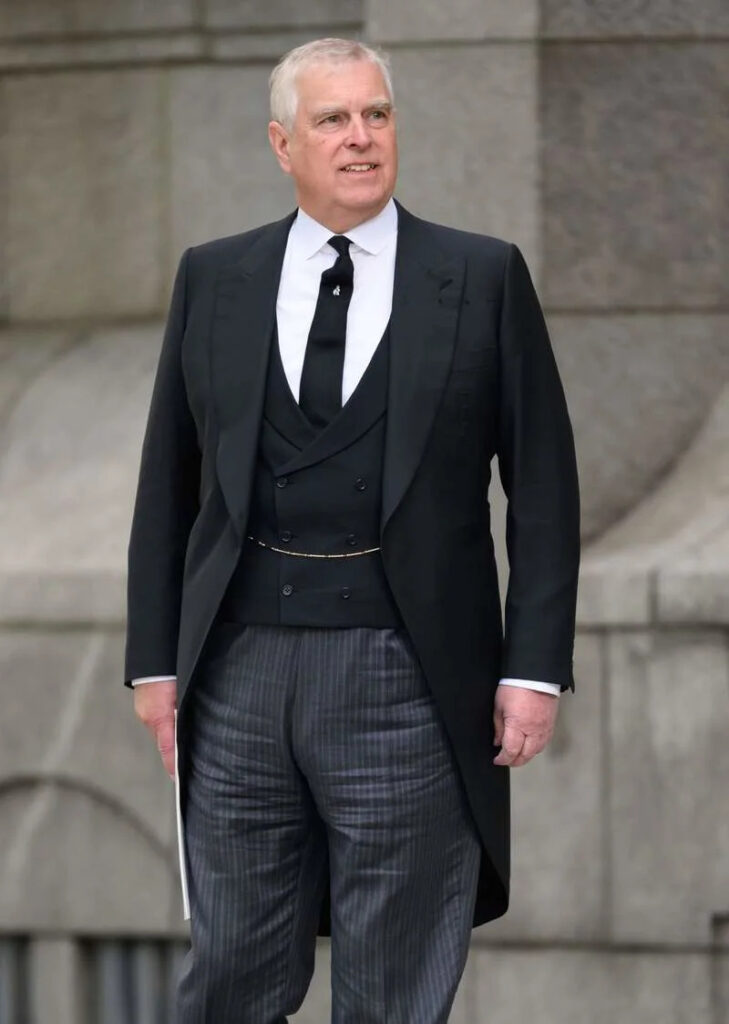
Andrew Mountbatten-Windsor continues to hold his position as eighth in the royal line of succession, where he could remain for the foreseeable future.
Sir Keir Starmer’s Government signalled its willingness to support efforts to strip him of this status following his arrest in February on suspicion of misconduct in public office.
However, the police inquiry into his conduct could extend beyond a year, creating a prolonged period of uncertainty.
The former Duke of York, who was compelled to give up his title in 2025, maintains his innocence and has denied any wrongdoing in connection with the allegations against him.

Andrew Mountbatten-Windsor | Source: GETTY
Andrew was taken into custody on his 66th birthday and spent eleven hours being questioned at a police station before officers released him while their investigation continues.
In the days immediately following the arrest, Darren Jones, chief secretary to the prime minister, addressed Parliament directly on the matter.
“The Government are clear that we are not ruling out action in respect of the line of succession at this stage and we will consider whether any further steps are required in due course,” he told the Commons. “It is vital, however, that we first allow the police to carry out their investigations.”
The proposal to exclude Andrew from the line of succession has attracted broad backing across the Government.

Andrew Mountbatten-Windsor | Source: GETTY
Detectives are scrutinising Andrew’s activities during his tenure as UK special envoy for trade, a role in which he mixed official diplomatic visits with trips to see convicted sex offender Jeffrey Epstein.
Ministers have committed to making public the files documenting Andrew’s time as a special trade representative.
Documentation released by the US Department of Justice has indicated that Andrew maintained contact with Epstein longer than he previously stated.
A Liberal Democrat motion urging the government to disclose records relating to Andrew’s appointment as trade envoy secured parliamentary approval, reflecting cross-party appetite for transparency around his conduct in the role.
There are significant constitutional obstacles in removing Andrew from the succession line.

Andrew Mountbatten-Windsor | Source: GETTY
Parliament would need to pass legislation to effect any change, with the most recent amendment to succession rules occurring in 2013 when male primogeniture was abolished ahead of Prince George’s birth.
Convention also requires consent from Commonwealth realms where the King serves as head of state.
Canada, Australia and New Zealand have already indicated their agreement.
A further complication concerns whether Princess Beatrice and Princess Eugenie, along with their children, should also lose their places in the succession. Eugenie is currently expecting her third child.
Our Standards: The GB News Editorial Charter